This site is supported by our readers. We may earn a commission, at no cost to you, if you purchase through links.
Your dog chewed something in the garden, and now drooling, unsteady, and staring at nothing.
That window between exposure and serious harm closes faster than most people expect—some toxic plants trigger neurological symptoms within 30 minutes.
Knowing signs demand immediate action, and which steps to take before you even reach the vet, can be the difference between a full recovery and organ damage.
A toxic plant dog emergency doesn’t announce itself clearly, but your response doesn’t have to be guesswork.
Table Of Contents
Key Takeaways
- Neurological and cardiovascular symptoms like tremors, collapse, or irregular heartbeat can appear within 30 minutes of ingestion, so don’t wait to see if things "get worse" before acting.
- Never induce vomiting on your own — call the Pet Poison Helpline (855-764-7661) or your vet first, because doing it wrong can cause lung damage or esophageal injury.
- The deadliest garden plants for dogs are oleander, sago palm, and yew — even small amounts can trigger cardiac arrest or liver failure within hours.
- Your fastest tools in an emergency are a clear photo of the plant and a ready list of your dog’s weight, breed, and the time they ate it — this information directly shapes treatment decisions.
Signs Your Dog Ate a Toxic Plant

Recognizing a problem early can make all the difference for your dog. Some signs show up fast, while others take hours to appear — and knowing the difference matters.
Spotting patterns early — like itchy skin or digestive upset — is easier when you know the common food allergy symptoms in dogs to watch for.
what to watch for.
Gastrointestinal Symptoms (Vomiting, Diarrhea, Drooling)
When plant toxicity in dogs hits the gut first, the signs come fast. Vomiting, diarrhea, and drooling are your earliest warnings — don’t dismiss them.
- Vomiting Triggers include direct stomach lining irritation or brain signaling.
- Diarrhea Onset can begin within hours of exposure.
- Dehydration Risks rise quickly, especially in small dogs.
- Electrolyte Imbalance and abnormal Bloodwork Indicators follow prolonged fluid loss.
Emergency veterinary care can’t wait.
Neurological Warning Signs (Tremors, Seizures, Collapse)
Gut symptoms are alarming — but when the nervous system gets involved, things escalate fast.
Watch for tremor patterns like rippling skin or limb twitching. Seizure types range from blank staring to full-body convulsions. Collapse indicators include sudden loss of posture or a "drunk" gait. Behavioral shifts — pacing, circling, ignoring you — signal neurological timeline urgency.
Call your vet immediately.
Cardiovascular and Organ Damage Indicators
When the nervous system falters, the heart often follows. Abnormal heart rate — whether racing or dangerously slow — signals cardiotoxic effects at work.
Blood pressure changes show up as pale gums or sudden weakness.
Organ perfusion deficits can quietly damage kidneys and liver before obvious symptoms appear.
Watch for kidney function markers like reduced urination, and liver enzyme elevations may confirm that organ damage is already underway.
persistent hypertension signs may also emerge, indicating early cardiovascular stress.
Skin and Oral Irritation Symptoms
Beyond heart and organ stress, some plants strike closer to the surface — literally.
Skin contact and oral exposure often produce immediate, visible reactions:
- Drooling and lip licking — early signs of oral burning or mouth irritation
- Lip swelling and tongue changes — possible swelling signals an allergic or toxic reaction
- Mouth sores and bleeding gums — inflamed tissue breaks down quickly
- Skin redness and contact dermatitis — patchy rashes appear where leaves or sap touched skin
These are classic symptoms of plant poisoning in dogs. Preventing exposure starts with choosing pet-safe plants.
How Quickly Symptoms Appear After Ingestion
Timing isn’t always predictable. Some toxins trigger immediate onset within minutes — vomiting, drooling, sudden restlessness.
Others follow a delayed symptoms pattern, with clinical signs appearing 6 to 12 hours later. Early hours often reveal gastrointestinal upset, but organ-specific lag means liver or kidney damage can quietly progress before symptoms of plant poisoning in dogs become obvious.
Dose-dependent timing and body size both influence symptom onset considerably.
Smaller dogs often show faster reactions to lower doses, which is worth keeping in mind when weighing Shih Tzu pet insurance costs against unexpected vet bills.
What to Do if You Suspect Poisoning

Finding your dog near a chewed plant is alarming, but what you do in the next few minutes matters more than you might think. There’s a clear order of actions that can make a real difference in how things turn out.
Here’s exactly what to do, step by step.
Step 1 — Remove Your Dog From The Area Immediately
Every second your dog stays near a toxic plant, more damage can happen. Move fast — but move smart.
- Use Secure Leash Handling to guide your dog away calmly without dragging through plant debris.
- Apply Calm Relocation Techniques — keep stress low to slow toxin response.
- Use Barrier Setup Strategies like closed doors or gates.
- Practice Avoid Contamination Transfer by wiping paws with a damp cloth.
Step 2 — Do Not Induce Vomiting Without Professional Guidance
Don’t induce vomiting — not yet, and not without calling a veterinarian or the Pet Poison Helpline (855-764-7661) first.
Aspiration Risks are real: vomit can enter your dog’s lungs, causing pneumonia. Esophageal Injury from repeated vomiting is also possible, as can Medication Hazards from home remedies.
Timing of Treatment matters enormously. Professional Assessment through a poison control hotline or emergency response guidelines for pet poisoning ensures the safest next move.
Step 3 — Identify or Photograph The Plant
A clear photo is one of the fastest tools you have right now. Before you call anyone, grab your phone and document the plant thoroughly — it helps the vet identify it immediately.
- Capture a Whole Plant Image showing full structure
- Photograph Leaf Upper Lower surfaces separately
- Take a Flower Close-up if blooms are present
- Use Natural Lighting — no flash
- Shoot Multiple Angles for toxic plant identification
Step 4 — Call Your Vet or Pet Poison Helpline (855-764-7661)
Once your dog has been removed and the plant is photographed, call your veterinarian or the Pet Poison Helpline at 855-764-7661 without delay. This pet poison control hotline runs a helpline triage process 24/7 — trained toxicologists assess urgency criteria immediately and determine whether emergency veterinary clinic care is needed or if home monitoring is safe.
Call 855-764-7661 immediately — toxicologists are standing by 24/7 to determine if your dog needs emergency care
Don’t wait for symptoms to worsen before making that call.
Step 5 — Information to Have Ready When You Call
When you reach the Pet Poison Helpline or your veterinarian, every second counts — so have these details ready before you dial:
- Plant ID details: common name, part eaten, fresh or dried
- Dog weight, age, and breed: affects dosing decisions
- Ingestion timing and amount consumed: even a rough estimate helps
- First aid steps already taken: vomiting attempts, mouth rinsing
- Current symptoms: tremors, drooling, collapse, or none yet
Most Dangerous Plants That Poison Dogs
Some plants look harmless but can put your dog in serious danger within hours. Knowing which ones carry the highest risk is the first step toward keeping your yard and home safe.
Here are the most dangerous plants dog owners need to watch out for.
Deadly Garden and Outdoor Plants (Oleander, Yew, Sago Palm)

Three garden plants stand out as especially deadly: Oleander, American Yew, and Sago Palm.
| Plant | Key Toxin | What It Does |
|---|---|---|
| Oleander | Cardiac Glycoside Risk | Disrupts heart rhythm, can cause cardiac arrest |
| American Yew | Taxine Alkaloid Poisoning | Triggers sudden collapse, often without warning |
| Sago Palm | Cycasin Liver Toxicity | Destroys liver tissue within 12 hours |
Seasonal Plant Hazard awareness matters — these thrive in everyday gardens. If your dog chews any part, call the Pet Poison Helpline immediately. Plant toxicity in dogs from these species is severe. Pet-Safe Garden Design starts with removing them entirely.
Toxic Flowering Bulbs (Daffodils, Autumn Crocus, Foxglove)

Flowering bulbs look harmless — but daffodils, autumn crocus, and foxglove rank among the most dangerous plants your dog can encounter.
- Daffodils contain lycorine, an alkaloid that triggers vomiting fast — bulbs hold the highest concentration.
- Autumn crocus colchicine toxicity affects every plant part; seeds carry peak levels and can cause organ failure.
- Foxglove cardiac glycoside effects directly disrupt heart rhythm.
- Seasonal exposure risks spike in spring when curious dogs dig.
- Symptom management requires immediate veterinarian contact or the Pet Poison Helpline.
Hazardous Houseplants (Dieffenbachia, Philodendron, English Ivy)
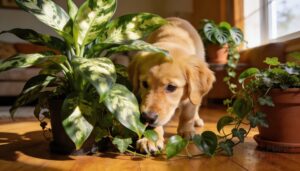
While bulbs can threaten from below, household greenery like Dieffenbachia and Philodendron pose risks right at paw level. Calcium Oxalate crystals spark oral swelling and burning, often within minutes. English Ivy’s saponin irritation brings vomiting and drooling.
Using a Plant ID Guide and Pet Safe Alternatives forms a smart prevention strategy—these toxic plants belong on your list of poisonous houseplants and shrubs.
Plant Parts That Carry The Highest Toxicity

Not every plant part carries equal risk.
Bulbs and Corms store the heaviest chemical load — daffodil bulbs trigger severe vomiting quickly.
Seeds and Pods deliver concentrated doses; a single sago palm seed can be fatal.
Leaves and Stems from oleander and foxglove contain cardiac glycosides that disrupt heart rhythm.
Roots and underground parts hide toxins too, while some species carry Whole Plant Toxicity — lily of the valley included.
Plants Safe Enough to Keep Around Dogs

Not all greenery is a threat. For indoor pet foliage, spider plants, Boston ferns, and cast iron plants are solid pet-safe houseplant care choices.
Outside, non-toxic garden flowers like snapdragons, sunflowers, and fuchsia support dog-friendly landscaping without the risk.
Safe herb selections — basil, rosemary, thyme — work beautifully in pet-friendly plant gardens. Still, even pet-safe plants should stay out of easy reach.
How Vets Treat Plant Poisoning in Dogs

Once your dog reaches the vet, the real work begins. Treatment depends on what was eaten, how much, and how fast you got there.
Here’s what vets usually do to manage plant poisoning.
Decontamination Methods (Emesis, Activated Charcoal, Gastric Lavage)
When your dog eats a toxic plant, vets act fast using three decontamination methods for toxic plant ingestion.
To induce vomiting safely, apomorphine dosing (0.02–0.04 mg/kg) is the professional protocol — never a DIY step, since aspiration risk rises if your dog is drowsy.
Activated charcoal timing matters too: it works best within the first hour.
Gastric lavage safety depends entirely on controlled clinical technique.
Supportive Care (IV Fluids, Anti-Seizure Drugs, Organ Support)
Once decontamination is complete, supportive care becomes the backbone of recovery. Vets tailor intravenous fluid therapy using careful IV Fluid Strategies to restore Electrolyte Balance and protect against kidney damage and liver damage.
- IV fluids correct dehydration and low blood pressure
- Benzodiazepine Dosing controls active seizures fast
- Organ Function Monitoring tracks heart, kidneys, and liver
- Nutritional Support aids healing during recovery
How Long Plant Poisoning Recovery Takes
Recovery timelines vary widely depending on which plant your dog ingested. Symptom Onset Timing matters here — mild cases may resolve within 24 to 48 hours with proper veterinary care.
The Gastrointestinal Recovery Window usually spans 3 to 6 days.
Neurological Recovery Duration and Cardiovascular Healing Timeline can stretch longer in severe exposures.
Long-Term Organ Impact — particularly liver and kidney damage — may require weeks of continued supportive care measures for poisoned dogs.
What Veterinary Treatment Typically Costs
Costs add up fast. An emergency exam plus Emergency Service Fees alone can run several hundred euros.
Diagnostic Fees for bloodwork, X‑rays, or ultrasound are billed separately — generally €60 to €200 each.
Add Medication Pricing for IV fluids, activated charcoal, or anti‑seizure drugs, and Hospitalization Costs for overnight monitoring, and your total vet costs can climb well beyond €1,000.
When Pet Insurance Covers Poisoning Emergencies
Most pet insurance plans treat plant poisoning as an accident — meaning you’re likely covered.
Here’s what generally applies:
- Accidental Definition classifies ingestion as an accident, not illness
- Reimbursement Rates vary by plan, often 70–90%
- Coverage Limits and deductibles reduce your final payout
- Pre-Existing Conditions can disqualify related claims
- Claim Documentation — vet records, plant photos, incident details — speeds reimbursement
Prevent Your Dog From Eating Toxic Plants

Prevention is really where you take back control. A few practical changes around your home and yard can make a significant difference in keeping your dog safe.
Here’s what you can do to reduce the risk.
Remove Known Toxic Plants From Home and Yard
Start with a full Inventory Plant List — walk every corner of your yard and home, including deck planters and garage shelves. Once identified, use proper Root Extraction Techniques to remove toxic species completely, because regrowth brings the same danger back.
Follow Safe Disposal Methods and add Barrier Installation Strategies during cleanup. This is the foundation of any solid Pet-Friendly Landscape Design.
Pet-Safe Plant Alternatives for Indoor and Outdoor Spaces
Once toxic plants are out, you don’t have to live with bare shelves or a stripped yard. Spider Plant, Boston Fern, and Christmas Cactus are solid safe indoor plants for dogs. Orchid Varieties and Peperomia Options work well on window sills.
For pet-friendly landscaping outdoors, look into pet-safe landscaping recommendations that list verified pet-friendly plants before anything goes in the ground.
Supervising Dogs Around Plants and Using Physical Barriers
Replacing plants is only half the job. Keeping your dog away from what remains takes active effort.
Here are 5 physical and behavioral barriers that work:
- Leash Management — A short leash near foliage lets you redirect instantly.
- Raised Planters — Lift pots above nose height to limit reach.
- Garden Fencing — Install ground-level mesh around beds.
- Baby Gate Placement — Block houseplant rooms entirely.
- Basket Muzzle — Use for habitual chewers during outdoor time.
Teaching Household Members to Recognize Dangerous Species
Physical barriers only work if everyone in the home knows what they’re guarding against. Walk family members through leaf arrangement cues and silhouette recognition — a quick “this is what oleander looks like” goes a long way.
Practice label reading basics together, and save photos for documentation. Plant toxicity awareness matters too — check the ASPCA toxic plant list with your household so identifying toxic and nontoxic plants for dogs becomes second nature.
Pet-Proofing Strategies for Habitual Plant Chewers
For dogs that chew everything in sight, one strategy rarely does the job alone.
Bitter deterrent sprays discourage nibbling, while elevated plant stands and physical barrier fencing block access entirely.
Chew toy substitution redirects the habit before it starts.
Don’t overlook soil containment methods — fallen petals and loose soil carry real risk.
Combining these approaches creates a genuinely petproof home with pet-friendly landscaping, your dog can’t dismantle.
Frequently Asked Questions (FAQs)
How long does plant poisoning last in dogs?
Plant poisoning can last anywhere from a few hours to several weeks.
recovery timeline variability depends on influencing factors like which plant was eaten, how much, and how fast your dog received care.
Are certain dog breeds more vulnerable to plant toxins?
No breed is immune. Breed metabolism differences, genetic liver sensitivity, size-based dosage, and breed-specific chewing habits all shape risk. Activity-driven exposure matters too — curious, high-energy dogs simply encounter more plants.
Which seasons increase dogs exposure to toxic plants?
Spring Bloom Surge and Summer Garden Foraging carry the highest risk. Autumn Leaf Scavenging adds ground-level hazards. Winter Indoor Risks shift danger inside.
Seasonal hazards and common pet poisons exist year-round.
Conclusion
Like a ticking clock, a toxic plant dog emergency demands swift action. Your dog’s life hangs in the balance, and every minute counts. Knowing the signs and taking immediate steps can be the difference between life and devastating organ damage.
Stay vigilant, and keep toxic plants out of reach. In a toxic plant dog emergency, your prompt response is the lifeline that can lead to a full recovery and a second chance at a happy, healthy life together.
- https://www.petpoisonhelpline.com/
- https://www.aspcapro.org/animal-health-toxicology-poison-control/clinic-resources-other-animal-care-hazards
- https://apps.apple.com/au/app/plantnet/id600547573
- https://thefabulousgarden.com/blog/2018/05/04/how-to-photograph-plants-for-identification/
- https://www.eatweeds.co.uk/photographing-plants