This site is supported by our readers. We may earn a commission, at no cost to you, if you purchase through links.
Some of the prettiest yard plants can do the most damage. I’ve seen dogs chew a fallen yew clipping or dig up a sago palm root, then crash into vomiting, tremors, or worse within hours.
That’s what makes garden safety tricky: danger often hides in ordinary beds, shrubs, and spring bulbs you pass every day.
Knowing the outdoor plants dogs avoid isn’t about fear. It’s about spotting the highest-risk plants early, reading the warning signs fast, and choosing safer flowers and shrubs that won’t turn your yard into a hazard when your dog starts sniffing, chewing, or digging.
Table Of Contents
- Key Takeaways
- Outdoor Plants Dogs Should Always Avoid
- Symptoms That Signal Your Dog Ate a Toxic Plant
- Gastrointestinal Warning Signs — Vomiting, Drooling, and Diarrhea
- Neurological Red Flags — Tremors, Seizures, and Loss of Coordination
- Cardiovascular Symptoms — Irregular Heartbeat and Sudden Collapse
- Organ Damage Indicators — Jaundice, Dark Urine, and Lethargy
- Skin and Oral Irritation From Plant Contact
- My Dog Ate a Poisonous Plant — What Should I Do?
- Which Plants Are Safe for Dogs in Your Yard?
- How to Prevent Your Dog From Eating Garden Plants
- Frequently Asked Questions (FAQs)
- Conclusion
Key Takeaways
- Common yard plants like oleander, yew, sago palm, and daffodil can cause life-threatening symptoms in dogs after even brief contact or ingestion.
- Fast action is crucial if your dog eats a toxic plant—call your vet or poison control, take photos of the plant, and never induce vomiting without guidance.
- Safe garden choices include sunflowers, marigolds, zinnias, rosemary, and lavender, which won’t put your dog at risk.
- Regular yard checks, secure barriers, and clear household education help prevent accidental poisoning and keep your dog safe outdoors.
Outdoor Plants Dogs Should Always Avoid
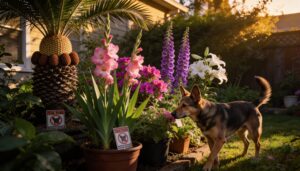
Your yard might look beautiful, but some of the most common plants out there are genuinely dangerous for dogs. A curious sniff or quick chew is all it takes to trigger serious harm.
If you’re unsure which greenery poses a risk, this comprehensive list of toxic plants for dogs and their symptoms can help you spot hidden dangers in your home or garden.
Here are the outdoor plants your dog should never get near.
Cardiac-Toxic Plants — Oleander, Foxglove, and Yew
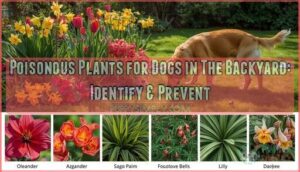
Oleander, foxglove, and yew are three plants that can stop your dog’s heart. Each one contains cardiac glycosides that disrupt the heart’s electrical rhythm — that’s the glycoside mechanism at work, and the arrhythmia risk is real.
Even burning oleander produces toxic smoke. Veterinary monitoring is critical after any exposure.
Safe landscape swaps exist, and making them now could save your dog’s life. A hallmark sign of oleander poisoning is bidirectional ventricular tachycardia.
Liver and Organ-Damaging Plants — Sago Palm and Autumn Crocus
Cardiac toxins aren’t the only killers lurking in your yard. Sago Palm is just as dangerous — cycasin hepatotoxicity can trigger acute liver failure quickly. Even one seed can cause multi-organ collapse.
Autumn Crocus carries colchicine, which disrupts cell division throughout your dog’s body, leading to organ failure.
Both plants demand immediate veterinary diagnostic testing if ingested.
Gastrointestinal Hazards — Tulip, Daffodil, and Ivy
Not every garden threat targets the heart. Some hit the stomach fast.
Tulip bulb irritation starts the moment your dog chews — tulipalins inflame the mouth and gut immediately. Daffodil lycorine effects trigger rapid vomiting onset within hours. Ivy leaf toxicity causes oral mucosal damage alongside diarrhea. Watch for:
- Drooling after tulip contact
- Vomiting from daffodil bulbs
- Oral mucosal damage from ivy
- Diarrhea following any ingestion
- Abdominal pain and lethargy
Toxic Trees and Shrubs — Azalea, Rhododendron, and Black Walnut
Trees and shrubs can be just as dangerous as flowers. Azalea and rhododendron release grayanotoxins that lock sodium channels open, causing vomiting, drooling, weakness, and cardiac shock. Even small amounts matter — leaves and nectar both carry the toxin.
Black walnut spreads juglone through the soil up to 80 feet out, making it a hidden threat to your sensitive companion plants and your dog.
Dangerous Fruit Trees — Apple Seeds, Cherry Pits, and Peach Kernels
Fruit trees look harmless, but fallen apples, cherries, and peaches hide a real danger. Their seeds and pits contain amygdalin, which releases cyanide when chewed.
That’s the cyanide mechanism pet owners rarely hear about. Pit crushing hazard increases when small or young dogs gnaw on dropped fruit.
Seed ingestion dose adds up fast.
Swap these trees for safe ornamental plants for canines like sunflowers or marigolds.
Symptoms That Signal Your Dog Ate a Toxic Plant

Dogs can’t tell you when something’s wrong — but their bodies usually do. Knowing what to watch for could save your dog’s life before things spiral.
Dogs can’t say they’re poisoned, so noticing the warning signs fast could save their life
Here are the key symptoms that may mean your dog ate something toxic.
Gastrointestinal Warning Signs — Vomiting, Drooling, and Diarrhea
Your dog’s gut often sounds the alarm first. After contact with toxic garden plants for dogs, watch for these warning signs:
- Vomiting — especially bile vomiting or vomiting shortly after outdoor play
- Persistent retching — dry heaving signals ongoing stomach distress
- Excessive drooling — sudden and heavy, not normal
- Diarrhea with fecal blood detection — a serious red flag
Combined symptoms accelerate dehydration risk and electrolyte imbalance quickly. Don’t wait.
Neurological Red Flags — Tremors, Seizures, and Loss of Coordination
When your dog starts shaking or stumbling after being outside, that’s your nervous system sending a distress signal you can’t ignore. Neurotoxicity from plants like sago palm or autumn crocus can trigger these symptoms fast.
| Neurologic Sign | What It Looks Like |
|---|---|
| General Tremors | Full-body shaking, rhythmic jerks |
| Focal Seizure Signs | Staring, twitching one side |
| Sudden Ataxia | Falling, veering, can’t walk straight |
Post-ictal confusion — that dazed, exhausted state after seizures — confirms a neurologic emergency indicator. Don’t wait.
Cardiovascular Symptoms — Irregular Heartbeat and Sudden Collapse
Some plants don’t just upset your dog’s stomach — they attack the heart directly. Oleander, foxglove, yew, and sago palm all contain cardiac toxins that can turn a quiet afternoon into a crisis.
Watch for these cardiovascular red flags:
- Palpitations precursor: restlessness and visible chest fluttering
- Irregular or racing pulse — a cardiac arrest warning you can’t ignore
- Sudden weakness, like the legs just gave out
- Ventricular fibrillation can cause collapse within seconds
- Unresponsiveness requiring immediate emergency CPR steps
Heart rate monitoring matters here. Act fast.
Organ Damage Indicators — Jaundice, Dark Urine, and Lethargy
Yellow eyes, tea-colored urine, and unusual tiredness aren’t random — they’re your dog’s body waving a red flag.
Bilirubin accumulation causes that telltale yellowing, while kidney function decline darkens the urine.
Liver enzyme elevation and hemolysis indicators often show up together in bloodwork interpretation.
Lethargy signals worsening organ system effects of plant toxins.
Don’t wait — these clinical signs mean liver or kidney failure may already be starting.
Skin and Oral Irritation From Plant Contact
Some plants don’t need to be swallowed to cause harm — contact alone can trigger serious reactions.
Oxalate crystal irritation feels like ground glass scraping your dog’s tongue and throat. Sap-induced dermatitis from plants like English Ivy can cause burning, swelling, and redness within hours. A phototoxic rash response may worsen with sun exposure.
Watch for these signs:
- Intense pawing at the mouth or face
- Swelling of the lips, tongue, or gums
- Skin redness or hives at contact points
- Drooling that won’t stop
- Hoarseness or difficulty swallowing
For mouth burning management, wipe residue away and offer cool yogurt or water. Hydrocortisone topical use can ease mild skin inflammation. Poison Ivy, Poison Oak, and Poison Sumac are common outdoor culprits — even "nontoxic" plants can cause irritation in sensitive dogs.
My Dog Ate a Poisonous Plant — What Should I Do?
Watching your dog eat something from the garden is every pet owner’s worst nightmare. The next few minutes matter more than you might think. Here’s exactly what you should do.
Call Your Veterinarian or Animal Poison Control Immediately

The moment you suspect your dog ate something toxic, don’t wait — call your vet or the Pet Poison Helpline (855-764-7661) right away.
Emergency Contact Info matters because timing of intervention changes outcomes dramatically.
Have your dog’s weight ready for weight-based dosage guidance, plus what was eaten and when.
Early contact with your vet is the fastest path to follow-up monitoring and survival.
| What to Share | Why It Matters | Example |
|---|---|---|
| Dog’s weight | Weight-based dosage risk assessment | "She’s 12 lbs" |
| Toxin identification details | Guides treatment protocol | "Ate sago palm seeds" |
| Time of ingestion | Timing of intervention urgency | "About 20 minutes ago" |
| Amount consumed | Determines emergency vet response | "A few leaves" |
| Current symptoms | Shapes veterinary emergency hotline advice | "Drooling, seems wobbly" |
Take Photos of The Garden Plant You Suspect is The Culprit

While vet is on the line, grab your phone and photograph the suspected plant.
Capture the leaf shape documentation first — narrow, smooth, or compound?
Then get flower color capture, fruit pod imaging, and a stem bark close-up.
Finally, crouch low for a base area perspective showing roots or bulbs.
These shots give your vet everything needed for identifying toxic yard plants for dogs fast.
Act Quickly — Do Not Wait for Symptoms to Worsen
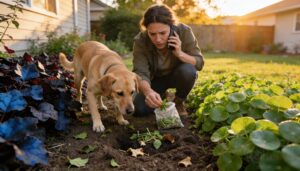
Photos taken — now move fast. With dog poisoning, time is everything. The window of absorption closes quickly, and early intervention benefits are real. Don’t wait for symptoms of plant toxicity in dogs to appear.
- First‑Aid timing starts the moment ingestion is suspected
- Prompt sample collection speeds diagnosis
- Early treatment keeps options open
- Critical observation period begins immediately
- Emergency vet assessment can start before symptoms escalate
Never Induce Vomiting Without Veterinary Guidance

Never induce vomiting unless your vet says so — full stop. It feels instinctive, but it can make things worse.
Caustic toxins burn on the way back up. Airway safety becomes a real concern if your dog is already weak or drooling.
Timing and dose matter too. Veterinary decontamination done right protects your dog. Call first, act second.
What to Expect at The Emergency Vet

Once you arrive, the emergency vet moves fast.
Triage Process starts immediately — staff check breathing, circulation, and stability before anything else.
Stabilization Care follows: expect IV fluids, oxygen, or pain relief depending on symptoms.
Diagnostic Testing like bloodwork and urinalysis helps assess organ damage.
Your vet will walk you through the Treatment Plan and Treatment Cost upfront.
Ongoing Monitoring continues until your dog is stable.
Which Plants Are Safe for Dogs in Your Yard?
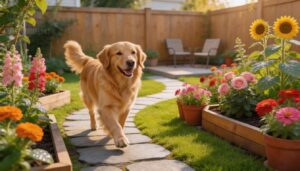
Good news — your yard doesn’t have to be a minefield for your dog. There are plenty of beautiful plants that won’t send you rushing to the vet.
Here are some safe options worth adding to your space.
Non-Toxic Flowering Plants — Sunflower, Marigold, and Zinnia
Some plants actually pull double duty — they’re beautiful and safe. Sunflower’s tall stature adds bold structure to your yard without putting your dog at risk. Marigolds do even more, acting as a natural pest deterrent while staying non‑toxic. Zinnias bring vibrant colors through the season and are equally pet‑friendly.
All three thrive with good soil drainage and offer reliable seasonal bloom succession.
Safe Herbs and Foliage — Rosemary, Lavender, and Bamboo
Herbs like rosemary and lavender are genuinely pet-friendly options for your yard — but dosage and form still matter. Whole plants are far safer than concentrated lavender oil, which can irritate your dog’s stomach.
Bamboo chewing risks include mouth cuts and potential blockages from swallowed chunks.
Keep your herb garden layout tidy with these nontoxic basics in mind:
- Rosemary: safe in small amounts; avoid essential oil form
- Lavender: nontoxic dried or fresh; keep oils locked away
- Bamboo: not poisonous, but monitor for chewing and remove fallen clippings promptly
Pet-Safe Landscaping Swaps for Common Toxic Plants
Swapping out toxic garden plants for dogs doesn’t have to feel overwhelming. Replace daffodils and tulips with grape hyacinth or calendula for safe Seasonal Bloom Swaps.
Try penstemon instead of foxglove. For Groundcover Alternatives and Low-Height Substitutes, violets and vinca minor work well.
Skip cocoa mulch — standard wood mulch is a smarter Mulch Choice. Smart Barrier Plant Placement keeps nontoxic, pet-friendly landscaping intact.
Tips for Designing a Dog-Friendly Garden
Think of your yard as a living floor plan — every choice either protects your dog or puts them at risk.
Use Secure Perimeter Barriers and Elevated Plant Beds to block access to any remaining ornamentals. Choose Dog Friendly Mulch, never cocoa hulls.
Add Enrichment Dig Zones to redirect curiosity. Clear Sightlines let you supervise easily, making non‑toxic landscaping ideas and pet safety in garden design work together seamlessly.
How to Prevent Your Dog From Eating Garden Plants
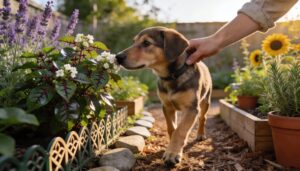
Knowing which plants are dangerous is only half the battle. The other half is making sure your dog never gets close enough to take a bite.
Here are some practical ways to keep your curious pup safe in the yard.
Conduct Regular Yard Surveys to Identify Hazardous Flora
Your yard deserves a weekly walkthrough — especially in spring and summer. Build a simple Hazard Mapping Grid to track where hazardous plants grow near Dog Activity Zones, like gates and pathways.
Schedule Leaf Litter Checks after storms.
Use a Photo Identification Log for identifying toxic plants for dogs accurately.
These garden safety tips make staying ahead of new growth genuinely manageable.
Use Fencing and Barriers to Block Access to Toxic Areas
Once you’ve mapped your hazard zones, it’s time to act on them. Aim for at least 1.5 meters in height — Fence Height Guidelines matter because determined dogs jump.
Add Dig-Prevention Barriers along the base, use Double-Gate Systems near garden entries, and create Plant Isolation Enclosures around toxic beds.
Visual Buffer Zones with hard edging add one more layer of protection.
Supervise Dogs Outdoors and Keep Them Leashed in New Spaces
Fences handle the physical boundaries, but your eyes handle everything else. Leash Length Choice matters here — a standard six-foot leash keeps your dog close enough that real-time cues like "leave it" actually work.
sightline management by walking new spaces first. secure holding methods near planting beds, and apply handoff rules at every gate.
preventing dog poisoning in action.
Educate Every Household Member About Poisonous Plants
Leashes keep dogs safe, but knowledge keeps everyone else on the same page.
Share Plant ID Basics with every household member — show them photos of oleander, yew, and sago palm.
Post your Emergency Contact List on the fridge. Review Protective Gear Guidelines before pruning.
A quick Family Knowledge Refresh and Toxic Labeling system turns preventing dog poisoning in the garden into a team effort.
Replace Toxic Plants With Verified Pet-Safe Alternatives
Once your household knows the risks, the next step is replacing what’s dangerous.
Swap toxic garden plants for dogs with verified pet-safe border plants like marigolds or sunflowers. Groundcover swaps like bamboo or violets work beautifully.
Try rosemary or oregano as herb bed alternatives.
Use non-toxic mulch options in digging zones.
These nontoxic landscaping ideas give your yard color without the worry.
Frequently Asked Questions (FAQs)
What three meats should dogs avoid?
Dogs should steer clear of fatty meats like ham, processed meats such as sausage, and raw or spoiled meat.
These choices carry fatty meat risks, processed meat additives, raw meat bacteria, sodium toxicity, and pancreatitis triggers—serious threats to dog health.
What outdoor plants do dogs hate?
If you’re looking for Aromatic Repellents, lavender and rosemary top the list.
Thorny Shrubs like barberry, Bitter Herbs such as rue, and Scented Groundcovers including lemongrass often deter dogs, offering pet‑friendly garden alternatives.
Do dogs instinctively avoid certain plant scents?
You can’t count on scent avoidance alone. Some breeds show learned scent aversion, but curiosity often wins.
Odor intensity impact varies, so olfactory deterrent plants won’t guarantee pet safety in garden design or dog health risk prevention.
Are there plants that naturally repel dogs from gardens?
If you want to keep your dog from “sniffing out trouble,” aromatic deterrent herbs like rosemary, lavender, and sage work well.
Prickly texture barriers and border planting strategies boost scent intensity effectiveness for pet-friendly, dog-friendly gardening and landscaping.
How does weather affect dogs’ interest in plants?
Temperature-driven activity, barometric scent changes, rain-intensified odors, wind pollen dispersion, and daylight seasonal shifts all shape your dog’s curiosity.
For instance, hot weather or heavy rain can steer them toward safe ornamental plants in pet-friendly landscaping.
Will mulching with aromatic herbs deter dogs?
Mulching with potent herb scents like lavender or rosemary can help deter dogs, but success depends on mulch placement strategy and seasonal scent degradation.
Dogs’ olfactory response varies, so use pet-friendly, non-toxic aromatic options for dog-friendly gardening.
Conclusion
Imagine your yard as a minefield of hidden dangers, where a single misstep could spell disaster for your furry friend. But with knowledge comes power.
By steering clear of outdoor plants dogs avoid and opting for pet-safe alternatives, you can create a haven where your dog can thrive.
Take control, make informed choices, and breathe easy knowing your outdoor space is a sanctuary, not a threat. Your dog’s life depends on it; make every plant count.
- https://www.dogstrust.ie/dog-advice/life-with-your-dog/at-home/keeping-your-garden-dog-friendly
- https://fotp.com/learn/dog-health/plants-that-dogs-dont-like
- https://www.plowstreeservice.com/blog/pet-friendly-yard-guide
- https://toegrips.com/garden-plants-dangerous-to-dogs/
- https://www.aspca.org/pet-care/animal-poison-control/dogs-plant-list