This site is supported by our readers. We may earn a commission, at no cost to you, if you purchase through links.
You’d never hand your dog a bottle of bleach, but a single sago palm seed in the backyard can be just as deadly. The truth is, some of the most common houseplants and garden favorites pack more punch than you’d expect—one mouthful can send a dog from tail wags to the ER in no time.
Most people don’t realize how quickly a daffodil bulb or a nibble of English ivy can trigger vomiting, tremors, or even heart trouble.
Knowing what plants make dogs sick isn’t about paranoia—it’s about giving your best friend a yard and home they can safely explore.
Table Of Contents
- Key Takeaways
- Common Plants That Make Dogs Sick
- Toxic Houseplants (Sago Palm, Cyclamen, Dieffenbachia, English Ivy)
- Poisonous Garden Plants (Oleander, Azalea, Rhododendron, Foxglove)
- Dangerous Flowers and Bulbs (Daffodil, Autumn Crocus, Lily of The Valley, Amaryllis)
- Toxic Trees and Shrubs (Chinaberry, Horse Chestnut, Japanese Yew, Black Walnut)
- Risky Seeds, Nuts, and Plant Parts Dogs Often Chew
- Symptoms of Plant Poisoning in Dogs
- What to Do if Your Dog Eats a Toxic Plant
- How to Keep Dogs Away From Toxic Plants
- Dog-Safe Plants to Use Instead
- Frequently Asked Questions (FAQs)
- Which flowers are toxic to dogs?
- Are outdoor plants toxic for dogs?
- What if my dog eats a toxic plant?
- Which houseplants are toxic to dogs?
- What is the most toxic plant to dogs?
- What is a silent killer for dogs?
- How do dogs say "I love you"?
- What plants can make a dog vomit?
- Can dogs develop allergies to non-toxic plants?
- Are dried or wilted plants more dangerous to dogs?
- Conclusion
Key Takeaways
- Some common houseplants, garden plants, bulbs, trees, and seeds can seriously poison dogs, and sago palm is one of the most dangerous because even one seed can cause fatal liver failure.
- Plant poisoning in dogs can show up quickly as vomiting, diarrhea, drooling, tremors, seizures, irregular heartbeat, collapse, or signs of organ damage like jaundice and trouble breathing.
- If your dog eats a toxic plant, call your vet or poison control right away, identify the plant and amount if you can, and never try to make your dog vomit unless a professional tells you to.
- The best protection is prevention: remove or block access to risky plants, teach everyone in the home what’s dangerous, inspect the yard often, and choose dog-safe plants instead.
Common Plants That Make Dogs Sick
Some plants look harmless but can seriously hurt your dog. The danger isn’t just in the garden — it’s inside your home, too. Here are the ones worth knowing about.
For a detailed list of plants that could put your pup at risk, check out this guide to indoor plants dangerous to dogs.
Toxic Houseplants (Sago Palm, Cyclamen, Dieffenbachia, English Ivy)

Some of the most dangerous plants for dogs are sitting right on your windowsill. Sago palm, cyclamen, dieffenbachia, and English ivy are all common houseplants toxic to pets.
Sago palm’s cycasin can trigger fatal liver failure — even one seed. Dieffenbachia and English ivy work through direct toxin absorption mechanisms, causing mouth irritation and vomiting fast.
Dose variability matters too: smaller dogs feel effects sooner. Pet owners should also be aware that sago palm ingestion can be fatal for dogs, as highlighted by the sago palm toxicity warning.
Poisonous Garden Plants (Oleander, Azalea, Rhododendron, Foxglove)

Your garden might look gorgeous, but some plants out there are quietly bad news for dogs. Oleander, azalea, rhododendron, and foxglove are four you really want to know about.
- Oleander — all parts contain cardiac glycosides; even dried clippings stay toxic
- Azalea/Rhododendron — chewing a few leaves can cause vomiting, weakness, and coordination problems
- Foxglove — cardiac glycoside effects can trigger fatal heart rhythm changes
- Plant part toxicity varies — leaves, flowers, and seeds each carry risk
- Seasonal growth patterns matter; fresh spring growth is especially tempting to curious dogs
Dangerous Flowers and Bulbs (Daffodil, Autumn Crocus, Lily of The Valley, Amaryllis)
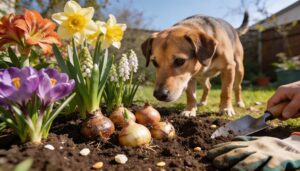
Flowers and bulbs bring just as much risk as shrubs — sometimes more.
Daffodil bulb part toxicity hits quickly, causing vomiting and drooling shortly after chewing. Autumn crocus carries colchicine neurological signs like trembling and weakness. Lily of the valley’s cardiac glycoside risk can throw your dog’s heart rhythm off completely. Amaryllis follows the same pattern.
Seasonal exposure risk spikes whenever you’re planting or dividing bulbs outdoors.
Toxic Trees and Shrubs (Chinaberry, Horse Chestnut, Japanese Yew, Black Walnut)
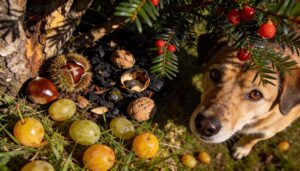
Trees and shrubs can be just as sneaky as bulbs — your dog doesn’t need to eat much.
- Chinaberry – The fallen fruits are the biggest trap. Vomiting and diarrhea can start within an hour of canine exposure.
- Horse Chestnut – Tree bark toxicity, leaf ingestion risks, and seeds all count. Those nuts look harmless but aren’t.
- Japanese Yew – Nearly every part carries taxine alkaloids. Black Walnut adds mold-related seizure risk from ground debris.
Risky Seeds, Nuts, and Plant Parts Dogs Often Chew
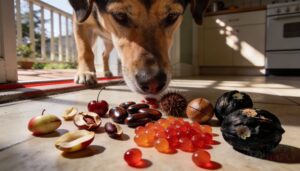
Seeds and nuts are sneaky — small, chewy, and everywhere.
Apple seeds and cherry pits carry cyanogenic compounds that release cyanide when digested. Castor beans contain ricin, one of nature’s deadliest substances. Macadamia nut effects include weakness and hyperthermia. Sago palm seeds can trigger liver failure fast. Even molded nut toxicity from black walnuts can cause seizures. Don’t let size fool you.
Symptoms of Plant Poisoning in Dogs

When a dog eats something toxic, its body usually doesn’t stay quiet about it. Symptoms can show up fast, and they don’t all look the same — it really depends on what they got into.
Some foods contain natural toxins or tough bits that can seriously harm your dog’s organs, so it’s wise to check this guide to dangerous foods for puppies before sharing snacks.
Here’s what to watch for.
Gastrointestinal Signs (Vomiting, Diarrhea, Drooling)
Your dog’s gut talks first. Before anything else shows up, the stomach sounds the alarm — and it usually starts with drooling and lip‑smacking, not full vomiting. Here’s what to watch for after plant ingestion:
- Nausea Indicators – drooling triggers include stomach irritation; excess saliva often appears before the first vomit.
- Vomiting Patterns – Repeated vomiting, sometimes green or yellow, signals serious gastrointestinal upset.
- Diarrhea Color – Brown, bloody, or watery stool can mean deeper intestinal damage.
Dehydration signs follow fast when both vomiting and diarrhea hit together — that combination drains fluids quickly.
Neurological Signs (Tremors, Seizures, Incoordination)
gut signs ease up, the nervous system may be just getting started.
Neurotoxic effects from plants like azalea — grayanotoxin poisoning — or cherry pits — cyanide poisoning in dogs — can trigger tremors, seizures, and serious incoordination indicators quickly.
Tremor types range from subtle shaking to full-body convulsions.
Seizure triggers vary by toxin.
proper neurological assessment by your vet, including anticonvulsant therapy if needed, cannot wait.
Cardiovascular Signs (Irregular Heartbeat, Weak Pulse, Collapse)
Some plants don’t just upset the stomach — they go straight for the heart. Cardiac glycosides from foxglove and oleander, or grayanotoxin from azalea, can trigger cardiac arrhythmia in dogs, fast.
Watch for these cardiovascular warning signs:
- Irregular heartbeat — arrhythmia detection matters here; even subtle fluttering counts
- Weak pulse — pulse assessment should happen immediately
- Fainting or collapse — syncope triggers include sudden drops in circulation
- Cardiogenic shock — cold limbs, clammy skin, confusion
- Heart rate irregularities — too fast, too slow, or just "off"
Heart rate monitoring and cardiac failure aren’t things to wait out.
Organ Damage Signs (Liver Failure, Kidney Damage, Respiratory Distress)
Some toxins don’t stop at the stomach — they quietly damage organs deeper inside.
Watch for Jaundice Appearance (yellowing eyes or skin), Abdominal Swelling from fluid buildup, or Reduced Urine Output, signaling kidney failure.
Cyanotic Lips mean your dog isn’t getting enough oxygen.
Mental Cloudiness — confusion or unusual sleepiness — shows liver failure or respiratory distress affecting the brain.
Don’t wait.
Skin and Oral Irritation From Plant Contact
Some plants attack before your dog even swallows them. Chewing oxalate crystal‑pain plants like Dieffenbachia triggers a ground‑glass sensation in the mouth — instant oral irritation mechanisms at work.
Watch for:
- Excess salivation and drooling from oral tissue swelling
- Sap dermatitis management needs after skin contact with toxic sap
- Contact dermatitis, rashes, or hives on paws and belly
- Stinging hair urticaria from nettles within minutes
- Phototoxic sunburn when certain sap meets sunlight
What to Do if Your Dog Eats a Toxic Plant

Finding out your dog just chewed something toxic is one of those moments where every second counts. The good news is that knowing exactly what to do next can make a real difference.
If your dog chews a toxic plant, acting fast and knowing what to do next can save its life
Here’s what you need to do right away.
Call Poison Control or Your Vet Immediately
The moment you suspect your dog chewed something toxic, call the Animal Poison Control Center (APCC) at 1-888-426-4435 or the Pet Poison Helpline for emergency contact info fast. Don’t wait for symptoms — some toxins work silently.
Have dog’s weight, age, and accurate exposure timing ready. A vet consultation or poison control number call buys your dog precious time.
Follow professional guidance adherence completely, no guessing.
Identify The Plant and Estimate Amount Ingested
Once you’ve made that call, your next job is plant detective. Snap a photo for photo documentation — leaf morphology like shape, edges, and arrangement helps narrow things down fast.
Milky sap clues also signal Milky sap. Grab a sample if you can.
Then estimate dose calculation: what part did your dog eat, how much, and its weight. Dosage and severity of plant ingestion go hand in hand.
Symptoms to Monitor and Record Before Arriving at The Vet
While you wait to be seen, your notes become the vet’s first clues. Track these four things:
- Symptom Timing — when did vomiting, diarrhea, or drooling start?
- Severity Scale — mild stomach upset or full collapse?
- Behavioral Changes — is your dog responsive, or wandering and confused?
- Hydration Status and Breathing Rate — are gums moist, and is breathing steady?
What Not to Do (Do Not Induce Vomiting Without Guidance)
Once you’ve tracked those symptoms, here’s what NOT to do — and this matters. Never induce vomiting on your own. Skip home emetics entirely. No hydrogen peroxide, no salt emesis, and never force vomit by other means. These can cause more harm than the plant itself.
For first aid and emergency response for dog poisoning, contact your vet or a pet emergency hotline first. Always.
Veterinary Treatment Options (Activated Charcoal, IV Fluids, Supportive Care)
Once your dog is at the clinic, the vet takes over quickly.
Activated charcoal may be given to trap toxins still in the gut — charcoal dosing depends on your dog’s weight and the specific plant.
IV fluid bolus therapy restores circulation, while supportive monitoring and electrolyte management keep vitals stable.
Antidote integration and full treatment protocols follow veterinary toxicology guidelines from there.
How to Keep Dogs Away From Toxic Plants

Knowing which plants are dangerous is only half the battle — keeping your dog away from them is the other half. The good news is there are practical ways to do that, and most don’t require a complete garden makeover.
Here’s what actually works.
Remove or Replace Hazardous Plants in Your Home and Yard
Ever wonder how many common garden and houseplants toxic to pets lurk in your yard? Start by identifying poisonous plants for dogs using the ASPCA toxic plants list.
Schedule removal with a Removal Scheduling Guide, bag debris with Containment Bag Usage, and swap in safe houseplants for dogs or non‑toxic ground mulch.
Professional Plant Removal ensures a pet‑friendly yard layout—prevention beats regret.
Use Barriers, Fencing, and Supervision Outdoors
When you’re aiming for garden safety for dogs, chain link fences and solid privacy barriers block curious noses and paws. Electric boundary collars add another layer if your pup’s a jumper. Raised bed barriers keep roots and bulbs out of reach.
Supervised leash walks let you redirect before trouble starts, preventing dog exposure to toxic foliage. That’s pet poison prevention through smart, preventive landscaping.
Educate Everyone in The Household About Dangerous Species
Want to make your home safer for your pup? Try Family Plant Workshops and Labeling Hazardous Species—turn learning into teamwork.
Keep an Emergency Contact Chart handy, plus Visual Identification Cards for common garden and houseplants toxic to pets. Practice Regular Safety Drills so everyone knows first aid and emergency response for dog poisoning. Vet and poison control resources should be visible, not buried.
Regular Yard Inspections for Newly Sprouted Toxic Flora
Think spring means safety? Think again—new toxic shoots pop up fast.
Use a Visual ID Checklist and Location Mapping for seasonal hazards of garden plants for dogs.
Here’s your five-step routine:
- Sprout Timing checks
- Identifying toxic foliage
- Ground Truth from paw and mouth signs
- Evidence Collection photos
- Map common garden and houseplants toxic to pets
Dog-Safe Plants to Use Instead
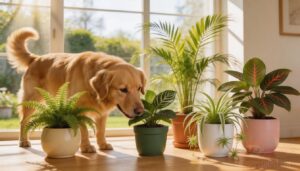
You don’t have to settle for a bare home or garden just because you have a dog. There are plenty of plants that look great and won’t put your pup at risk.
Here’s a quick rundown of safe choices you can use instead.
Safe Houseplants (Spider Plant, Ponytail Palm, Hens and Chicks)
Looking for safe houseplants for dogs? Spider plant, ponytail palm, and hens and chicks are top safe plants.
These thrive in bright rooms, need well-drained pots, and don’t mind if you forget to water now and then. They’re gentle on curious pups, help purify indoor air, and make preventive pet care easy—just keep leaves out of reach for extra pet safety.
Safe Garden Plants (Bamboo, Camellias, Sword Ferns, Thyme)
If you’re after pet‑safe gardening, Bamboo barrier design keeps roots contained and paws safe.
Camellia bloom management means fewer petals for dogs to munch.
Sword fern control prevents stray fronds from tempting chewers.
Thyme aromatic deterrent discourages nibbling and offers a low‑maintenance garden.
These choices—Bamboo, Camellias, bold sword ferns, and Thyme—help you create a safer outdoor space for your dog.
How to Verify a Plant is Safe Before Bringing It Home
You’ve picked out sword ferns and thyme—nice work. But before you grab anything new, run this five-step check:
- Botanical Name Check
- Trusted Database Match (ASPCA toxic plant resource)
- Seller Questions on plant history
- Plant Part Risk (bulbs, seeds, sap)
- Home Safety Check for chewing habits
That’s smart pet safety for indoor and outdoor plants.
Frequently Asked Questions (FAQs)
Which flowers are toxic to dogs?
Funny how something beautiful can be dangerous—lilies, azaleas, tulips, chrysanthemums, daffodils, cyclamen, and foxglove all real risks for dogs.
Lily Toxicity, Azalea Cardiotoxicity, Oleander Cardiac Effects, and Foxglove Glycosides are no joke.
Are outdoor plants toxic for dogs?
Yes, plenty of outdoor plants are toxic for dogs. Seasonal Plant Risks and Regional Toxic Flora mean the danger shifts year-round.
Fallen nuts, bulbs, and leaves can trigger dog poisoning symptoms—so prevention and pet safety tips for indoor and outdoor plants matter.
What if my dog eats a toxic plant?
If your dog eats a toxic plant, call your vet or poison control right away. Gather plant samples for diagnostic testing.
Don’t induce vomiting unless told.
Treatment protocols and risk assessment depend on dog poisoning symptoms and recovery timeline.
Which houseplants are toxic to dogs?
If houseplants had a secret club, Sago Palm would be president—every part is toxic to dogs. Cyclamen, Dieffenbachia, English Ivy, and Philodendron join the lineup.
Always check houseplant safety for pets before bringing home new greenery.
What is the most toxic plant to dogs?
Most vets fear Sago Palm Toxicity the most: Sago Palm and cycad liver failure can kill fast.
But Foxglove Cardiac Risk, Lily Valley Toxicity, Hemlock Neurotoxicity, plus Yew, Oleander, Lily, and Azaleas are also severe emergencies too.
What is a silent killer for dogs?
Yew is a silent killer: taxine poisoning can cause cardiac failure in dogs without warning.
Plant ingestion toxicity from cardiac glycosides or cyanide plants may hide until symptoms of plant poisoning in dogs appear.
How do dogs say "I love you"?
You’ll see love in Tail Wagging, Soft Blinks, Body Leaning, Gift Bringing, and Vocal Affection; think loose, happy body language, not stress.
Unlike vomiting, diarrhea, drooling, these signals support dog health safety and trust.
What plants can make a dog vomit?
Cyclamen, sago palm, dieffenbachia, and daffodil bulbs are toxic plants for pets that trigger vomiting, diarrhea, and drooling.
Saponin plant toxicity, cyanide plant symptoms, and cardiac glycoside risks all cause symptoms of plant toxicity in dogs.
Can dogs develop allergies to non-toxic plants?
Absolutely—dogs can develop allergies to non-toxic plants. Pollen sneezing, ear itching, and seasonal flare-ups are common.
Inhaled allergens from allergy-triggering plants or garden debris cause hay fever in dogs. Allergy testing helps pinpoint dog allergy causes from garden plants.
Are dried or wilted plants more dangerous to dogs?
Like a VHS tape, wilted or dried plants aren’t automatically worse, but they stay toxic.
Chewing Behavior, Plant Part Risks, and Mold Toxicity matter more.
Seasonal Leaf Accumulation and brittle pieces increase Toxin Concentration exposure.
Conclusion
It’s a cruel twist: the plants that beautify our lives can be toxic to our loyal companions. Knowing what plants make dogs sick is a simple yet powerful step toward safeguarding their health.
By swapping hazardous species for dog-friendly alternatives and staying vigilant, you can create a safe haven for your furry friend to thrive. Take control, stay informed, and give your dog the gift of a worry-free home and yard to enjoy.
- https://www.battersea.org.uk/pet-advice/dog-advice/search-dog-advice/poisonous-plants-for-dogs
- https://ccspca.com/blog-spca/education/poisonous-plants-for-dogs/
- https://blog.homesalive.ca/dog-blog/dangerous-garden-plants-for-dogs
- https://firstvet.com/us/articles/what-plants-are-toxic-to-dogs
- https://www.lawnstarter.com/blog/landscaping/plants-poisonous-to-dogs/