This site is supported by our readers. We may earn a commission, at no cost to you, if you purchase through links.
A dog can go from curious to critically ill in under two hours—and a houseplant is often the reason.
Sago palm, oleander, autumn crocus: these aren’t rare botanical curiosities.
They’re sitting in living rooms and garden beds across the country, well within reach of a dog who treats every leaf like a snack.
Toxic plant symptoms don’t always announce themselves dramatically at first.
A little drooling, some vomiting—easy to dismiss as a minor stomach upset.
By the time organ damage sets in, that window for intervention has quietly closed.
Table Of Contents
- Key Takeaways
- What Are The Symptoms of Plant Poisoning in Dogs?
- Which Indoor Houseplants Are Toxic to Dogs?
- Which Outdoor and Garden Plants Are Toxic to Dogs?
- Can Plants or Flowers Be Deadly to Dogs?
- What Toxic Compounds Cause The Most Harm?
- What Should You Do if Your Dog Eats a Toxic Plant?
- How Do Vets Treat Plant Poisoning in Dogs?
- Which Plants Are Safe to Have Around Dogs?
- How to Prevent Plant Poisoning in Dogs?
- How to Identify a Toxic Plant Your Dog May Have Eaten?
- Frequently Asked Questions (FAQs)
- What if my dog ate a poisonous plant?
- Which flowers are toxic to dogs?
- Are outdoor plants toxic for dogs?
- How to prevent plant poisoning in dogs?
- How to treat plant toxicity in dogs?
- Can puppies react differently to plant toxins?
- Are some dog breeds more sensitive to plant poisoning?
- How long does plant poisoning take to resolve?
- Can secondhand plant exposure harm dogs?
- Does plant toxicity risk change with seasons?
- Conclusion
Key Takeaways
- Common houseplants like sago palm, pothos, and peace lily can send a dog into organ failure fast—don’t assume a plant is safe just because it’s sitting on your windowsill.
- Early symptoms like drooling and vomiting are easy to dismiss, but they can signal serious internal damage that’s already underway.
- If your dog eats a toxic plant, call the ASPCA Poison Control (888-426-4435) or Pet Poison Helpline (855-764-7661) immediately—don’t wait for things to get worse before acting.
- You can keep a beautiful home and garden without putting your dog at risk by choosing verified safe plants like spider plants, Boston ferns, and marigolds.
What Are The Symptoms of Plant Poisoning in Dogs?

Plant poisoning in dogs doesn’t always look the same — symptoms depend on what your dog ate and how much. Some signs show up fast, while others take hours to appear.
If your dog’s acting off and you suspect a plant, this guide on emergency treatment when a dog eats poison can help you figure out what to do next.
Here’s what to watch for across the main symptom categories.
Gastrointestinal Signs (Vomiting, Diarrhea, Drooling)
Gastrointestinal upset is usually the first thing you’ll notice — and it moves fast. Vomiting often starts within hours, sometimes bringing up bile-induced vomiting of yellow fluid if the stomach is empty. Diarrhea may follow, occasionally mucus-rich diarrhea or bloody. Drooling signals oral irritation or nausea.
Together, these cause dehydration indicators like dry gums, plus electrolyte imbalance — and repeated vomiting raises aspiration pneumonia risk.
Neurological Signs (Tremors, Seizures, Ataxia)
Beyond gut symptoms, some plants attack the nervous system directly. Cycasin from sago palm and grayanotoxins from azaleas drive serious neurotoxic effects — producing distinct Tremor Patterns, Seizure Behaviors, and Ataxia Gait instability.
Your dog may stagger, twitch, or collapse.
These signs demand immediate Neurologic Evaluation, as they’re key Prognostic Indicators. Seizures especially signal how far toxin exposure has progressed.
Cardiovascular Signs (Abnormal Heart Rate, Collapse)
When the nervous system is struggling, the heart often follows. Cardiac glycosides — found in Oleander and Lily of the Valley — directly disrupt heart signaling, triggering abnormal heart rhythms and dangerous cardiac arrhythmias.
Watch for these cardiovascular warning signs:
- Tachycardia — heart racing too fast
- Bradycardia — heart slowing dangerously
- Perfusion deficit indicators — weakness, pale gums, cold limbs
- Heart rate irregularities — skipped or erratic beats
- Sudden collapse — circulation failing without warning
Don’t wait for things to worsen.
Mouth and Skin Irritation Signs
Not all toxic reactions go straight to the heart or gut. Some hit closer to the surface — literally.
Sap irritation from plants like Dieffenbachia causes red oral mucosa, lip swelling, and excessive drooling almost immediately.
| Sign | What You’ll See |
|---|---|
| Oral irritation | Pawing at mouth, reluctance to eat |
| Drooling | Thick, continuous saliva |
| Lip swelling | Puffy, inflamed mouth edges |
| Itchy skin patches | Scratching contact areas |
| Scaly rash spots / Small blister lesions | Weepy, cracked, or bumpy skin |
A skin rash or weeping blister means the plant’s compounds are still active on the tissue.
Organ Damage Signs (Liver, Kidney, Bleeding)
Some toxic plants hit organs you can’t see from the outside.
Liver damage may show up as jaundice signs — yellowing around the eyes — or dark urine and ascites development, meaning a swollen belly from fluid buildup.
Kidney damage can cause reduced urine output.
Gastrointestinal bleeding may turn stool black and tarry.
Coagulopathy symptoms like unexplained bruising signal the blood isn’t clotting right.
Which Indoor Houseplants Are Toxic to Dogs?
Your living room might be hiding a real danger for your dog. Some of the most common houseplants are surprisingly toxic — and a curious chew can turn serious fast.
Here are the indoor plants you need to know about.
Sago Palm and Risk of Liver Failure

Sago palm is one of the most dangerous plants your dog can encounter indoors. Cycasin absorption begins in the gut, then targets the liver fast.
Within 2–3 days, hepatic failure can set in—bringing jaundice detection, coagulation factor loss, and hypoglycemia management into play. Early hepatic biomarkers shift quickly. Even few seeds can kill.
Don’t wait for symptoms of plant toxicity in dogs to worsen. The primary hepatotoxic agent cycasin is found in highest concentrations in the seeds.
Dieffenbachia, Pothos, and Peace Lily

Three popular houseplants—Dieffenbachia, beautiful pothos, and Peace Lily—share a troubling trait: sap toxicity and leaf tissue irritation that hits fast. Chewing behavior risks spiking when curious dogs gnaw leaves or stems, releasing calcium oxalate crystals that burn the mouth and throat.
Symptoms of plant poisoning in dogs include drooling, vomiting, and swelling.
Emergency veterinary care may be needed.
Owner education strategies and home safety measures matter here.
Snake Plant, Aloe Vera, and Kalanchoe

Snake plant, aloe vera, and Kalanchoe look harmless on a windowsill—but each carries real risk. Saponins in snake plant and aloe vera trigger vomiting and diarrhea. toxin concentration variability means even small bites matter.
Watering frequency risks, light requirement impacts, and seasonal leaf production can affect how much sap is present.
If your dog chews any of these, call the Pet Poison Helpline immediately as first aid for dogs starts with that call.
Toxic Compounds Found in Common Houseplants

Most houseplant toxicity comes down to four main compounds.
Calcium oxalates cause immediate Oxalate Irritation — those needle-like crystals shred mouth tissue on contact.
Saponins drive Saponin GI Effects like vomiting and diarrhea.
Some plants release Proteolytic Enzymes that damage soft tissue directly.
Others carry Alkaloid Cardiac compounds affecting heart rhythm.
Dose-Dependent Toxicity applies across all of them — more plant eaten means a worse outcome.
Which Outdoor and Garden Plants Are Toxic to Dogs?

Your backyard and garden can hide some serious dangers for a curious dog. Many common outdoor plants are far more toxic than most people realize, and a few are outright deadly after even a small amount of contact.
Here are the outdoor and garden plants you need to know about.
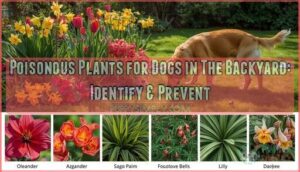
Toxic Flowering Plants (Azalea, Rhododendron, Oleander)
Azalea, rhododendron, and oleander are common yard plants that carry serious risk — and seasonal blooming risk makes spring especially dangerous.
Azalea and rhododendron contain grayanotoxins, triggering vomiting, drooling, tremors, and collapse. Oleander’s cardiac glycosides can cause abnormal heart rhythms within hours.
Regional plant distribution means these grow nearly everywhere. Pet owner education is your dog’s first line of defense.
Suspect ingestion? Emergency veterinary care can’t wait.
Poisonous Bulbs and Flowers (Daffodil, Foxglove, Autumn Crocus)
Flowering bulbs sit right at ground level — exactly where curious dogs dig and sniff. Daffodils carry lycorine, which triggers severe vomiting, drooling, and abdominal pain. Foxglove disrupts heart rhythm through cardiac glycosides. Autumn crocus is deceptive: symptoms may be delayed, then hit multiple organs at once.
Seasonal bloom risks peak in spring and fall — plan accordingly.
5 key facts:
- All daffodil parts are toxic, but the bulb causes the worst reaction.
- Foxglove poisoning can cause collapse, shock, and irregular heartbeat.
- Autumn crocus contains colchicine — concentrated enough to be fatal in small amounts.
- Pet curiosity triggers most exposures during planting and digging seasons.
- Emergency treatment for canine plant poisoning works best when started immediately.
Dangerous Trees and Shrubs (Sago Palm, Yew, Buckeye)
Trees and shrubs bring a different kind of danger. Sago palm is the most alarming — every part is toxic, but seed potency is extreme, with cycasin causing rapid organ damage and liver failure within days.
Yew’s leaf vs. bark risk peaks with seasonal toxicity in winter, triggering vomiting and collapse fast. Buckeye follows a similar pattern.
Emergency treatment for canine plant poisoning can’t wait.
Toxic Nuts and Seeds (Black Walnut, Chinaberry)
Nuts and seeds hiding in your yard can be just as deadly as any shrub. Black walnut’s juglone soil persistence means the danger lingers long after leaves fall — even decayed roots keep leaching toxins. Chinaberry’s meliatoxin fruit toxicity hits fast, with symptoms appearing within hours of seasonal fruit drop.
Both exploit canine chewing behavior. Vomiting is often the first warning. Call your vet immediately.
Can Plants or Flowers Be Deadly to Dogs?

Yes, some plants can kill a dog — and faster than most people expect. Certain species don’t just cause stomach upset; they attack the heart, destroy the liver, and can be fatal even in small amounts.
Some plants don’t just sicken dogs — they destroy the heart and liver, killing in small amounts
Here’s a closer look at which plants carry that level of risk and why.
Plants That Cause Fatal Cardiac Toxicity
Some plants don’t just make your dog sick — they stop the heart.
Oleander, foxglove, and lily of the valley all contain cardiac glycosides that block the heart’s electrical signaling. Oleander fruit toxicity is especially concentrated. Foxglove leaf effects can trigger fatal abnormal heart rhythms within hours. Thevetia cardenolide danger mirrors this. Japanese yew causes cardiac arrest rapidly.
These cardiotoxic plant mechanisms act fast — waiting isn’t an option.
Plants That Trigger Acute Liver Failure
While cardiac toxins grab attention fast, liver damage can be just as deadly — only slower.
Sago palm is the biggest offender. Its seeds contain cycasin, which triggers acute necrotic hepatitis and liver enzyme spikes within days. Amanita mushrooms follow a similar path.
Herbal hepatotoxicity is also real — some "natural" supplements destroy liver cells quietly. Bile pigment accumulation causes jaundice. These toxic plants don’t always show their hand early.
How Toxin Type and Dose Affect Survival
Not all poisons work the same way — and that distinction can mean the difference between a sick dog and a dead one. Toxin type, toxic dose, and your dog’s size all shape the outcome.
A dose-response curve shows survival dropping sharply past LC50 thresholds.
Mechanism severity matters too: cardiac glycosides hit fast; cycasin destroys the liver slowly.
Exposure route impact and individual susceptibility mean clinical signs vary widely between dogs.
What Toxic Compounds Cause The Most Harm?

Not every toxic plant works the same way inside your dog’s body. The danger depends on which compound is doing the damage — and some are far more destructive than others.
Here are the main offenders worth knowing.
Cardiac Glycosides and Heart Arrhythmias
Some of the most dangerous toxins in your dog’s environment work silently — right inside the heart.
Foxglove, lily of the valley, and oleander all contain cardiac glycosides that cause Na/K ATPase inhibition, flooding heart cells with calcium. calcium overload mechanism triggers cardiac arrhythmia in dogs, including AV node blockade and even bidirectional ventricular tachycardia — a tell‑tale sign of severe toxicity:
- Abnormal heart rhythms can appear within hours of ingestion.
- AV block slows electrical conduction, dropping heart rate dangerously.
- Digoxin serum monitoring helps vets gauge toxicity and guide treatment.
Cycasin and Hepatic Necrosis
Sago palm looks harmless sitting in your garden — but its seeds contain cycasin, a toxin with a deceptive metabolic activation pathway. Once swallowed, gut bacteria use beta-glucosidase to convert cycasin into methylazoxymethanol, which attacks liver cells directly.
This dose-response relationship matters: even a few seeds can trigger hepatic necrosis. Organ damage signs in dogs develop fast, making emergency veterinary care non-negotiable.
Calcium Oxalate Crystals and Oral Swelling
Some plants don’t poison slowly — they attack instantly.
Calcium oxalates, shaped like microscopic needles called raphides, pierce soft mouth tissue, the moment your dog starts chewing.
This Crystal Needle Pain triggers immediate oral irritation, heavy drooling, and Raphide Edema — visible swelling of the tongue and lips.
Throat Irritation Risk and Swallowing Difficulty can follow fast.
These symptoms of plant toxicity in dogs from toxic plants warrant an Immediate Veterinary Assessment.
Saponins, Grayanotoxins, and GI Damage
Two lesser-known troublemakers — saponins and grayanotoxins — cause serious gastrointestinal upset through different mechanisms.
Saponins trigger Membrane Disruption in the gut lining, producing what amounts to Leaky Gut Syndrome.
Grayanotoxins cause Sodium Channel Overstimulation, hitting both the digestive and nervous systems.
Both show Dose-Dependent Irritation: the more your dog ingests, the worse the vomiting and the symptoms of plant toxicity in dogs become.
What Should You Do if Your Dog Eats a Toxic Plant?

Finding a chewed plant and a guilty-looking dog is enough to spike anyone’s anxiety. The good news is that acting quickly — and in the right order — makes a real difference.
Here’s exactly what to do, step by step.
Immediate First Aid Steps at Home
The moment you suspect ingestion, start with a Mouth Inspection — gently remove visible plant debris, then follow a Safe Rinse Procedure using small amounts of cool water.
Stabilize Temperature by wrapping your dog in a blanket if needed.
Document Symptoms as they appear.
Don’t induce vomiting or give activated charcoal without guidance from the Pet Poison Helpline (855-764-7661) or a vet.
When to Go to an Emergency Veterinary Clinic
First aid at home buys time — it doesn’t replace emergency care.
Go straight to an emergency veterinary clinic if you notice any of these:
- Critical respiratory distress: persistent coughing, open-mouth breathing, or bluish gums
- Severe neurological collapse: seizures, tremors, sudden inability to stand
- Life-threatening arrhythmia: irregular, very fast, or very slow pulse
- Rapid systemic toxicity: pale gums, collapse, or extreme lethargy signaling shock
- High-risk plant ingestion: sago palm, foxglove, or oleander — don’t wait for symptoms
Renal failure, abnormal heart rhythms, and worsening signs need immediate professional treatment, not home observation.
Poison Helpline Numbers (ASPCA and Pet Poison Helpline)
While your dog is being rushed to the clinic — or if you’re unsure whether the situation warrants a trip — call poison control immediately.
| Service | Hotline Numbers | 24/7 Availability |
|---|---|---|
| ASPCA Animal Poison Control Center | (888) 426-4435 | Yes, 365 days/year |
| Pet Poison Helpline | (855) 764-7661 | Yes, always open |
| Consultation Fees | May apply (ASPCA) | Per-incident fee (PPH) |
Both dog poison hotlines connect you with toxicology specialists who can assess risk quickly—because response time matters.
Information to Have Ready Before Calling
When you call the Pet Poison Helpline or your veterinarian, every second counts—so have your answers ready.
Know dog’s breed, age, and weight. Identify the plant as specifically as you can and note the exposure timing.
Share what symptoms of plant toxicity in dogs you’re seeing and any first aid steps already taken. Clear owner contact details keep things moving fast.
How Do Vets Treat Plant Poisoning in Dogs?

Once your dog is at the clinic, the vet’s main job is to get the toxin out and keep your dog stable.
Treatment depends on what was eaten and how much time has passed.
Here’s what that process usually looks like.
Decontamination (Emesis, Gastric Lavage, Activated Charcoal)
Getting toxins out fast is the whole game here. Vets use three main decontamination methods for canine poisoning, and timing emesis matters most — the earlier, the better.
- Induced vomiting: Safe only when directed by a vet; inducing vomiting risk rises with certain toxins or airway concerns
- Gastric lavage: A tube flushes the stomach with saline — lavage technique requires sedation and careful airway protection
- Activated charcoal: Binds remaining toxins; charcoal contraindications include absent bowel sounds or caustic ingestions
- Monitoring after decontamination: Vets watch closely for aspiration, obstruction, or worsening signs
Supportive Care (IV Fluids, Pain Management, Nutrition)
Once decontamination is complete, supportive care strategies for poisoned dogs become the backbone of recovery.
Your veterinarian will start intravenous fluid therapy to flush toxins, maintain electrolyte balance, and protect the kidneys. Fluid Rate Titration ensures your dog gets the right amount — not too much, not too little.
Analgesic protocols manage pain, while Enteral Feeding Strategies and Nutritional Monitoring keep the body strong enough to heal.
Specific Treatments for Cardiac and Neurological Symptoms
When cardiac or neurological signs appear, your vet shifts into targeted mode. Antiarrhythmic Protocols address abnormal heart rhythms using ECG‑Guided Therapy to track every change in real time.
Seizure Medication Strategies stop convulsions fast before oxygen deprivation sets in. Temperature Management Techniques protect the brain during neurological crises.
If a known antidote exists, Antidote Administration Timing is critical — delays cost lives.
Prognosis and Recovery Timeline
Recovery depends on how fast you acted and what your dog ate. Early Intervention is the single biggest factor in a good outcome.
- Symptom onset and plant type shape everything
- Organ Monitoring catches hidden liver or kidney damage
- Recovery Milestones vary — mild cases resolve in 24–48 hours
- Long-Term Follow-Up matters for severe ingestions; Age-Related Prognosis worsens in older dogs
Which Plants Are Safe to Have Around Dogs?

Good news — not every plant is a threat. There are genuinely beautiful options that won’t put your dog at risk, whether you’re decorating indoors or planning your garden.
Here are some safe plants worth knowing about.
Safe Indoor Houseplants (Spider Plant, Parlor Palm, Boston Fern)
Not every houseplant is a threat. Spider Plant, Parlor Palm, and Boston Fern are all confirmed non-toxic to dogs — safe indoor gardening starts here.
| Plant | Key Benefit |
|---|---|
| Spider Plant | Air Purification + Easy Propagation |
| Parlor Palm | Low Light Tolerance + Pet-Friendly Decor |
| Boston Fern | Humidity Boost + lush, dog-friendly houseplants appeal |
| All Three | Zero systemic toxicity risk |
Dog-Friendly Outdoor and Garden Plants
Your backyard can be both beautiful and safe.
For dog-friendly landscaping ideas, start with marigolds, zinnias, snapdragons, and coneflowers — all non-toxic and low maintenance foliage options.
Build in shade cooling spots using dogwoods or lindens.
For edible garden treats, green beans, blueberries, and pet-safe herb selection like basil, thyme, and rosemary work well.
These safe plant alternatives for dog owners make outdoor spaces practical without compromise.
How to Verify a Plant is Non-Toxic Before Buying
Before you buy, don’t trust a "pet-safe" label alone — that label safety claim isn’t always verified. Do a quick database cross‑reference using the ASPCA toxic plant database with the plant’s scientific name check.
- Confirm the scientific name matches the listing exactly
- Review the vendor reputation review for accurate sourcing
- Note which plant parts pose risk
Common names mislead. Scientific names don’t.
How to Prevent Plant Poisoning in Dogs?

Prevention is mostly common sense, but a few specific steps make a real difference. The good news is you don’t have to overhaul your entire yard or home to keep your dog safe.
Here’s what actually works.
Removing and Replacing Toxic Plants at Home
Removing a toxic plant isn’t as simple as pulling it out and tossing it. Glove use matters — nitrile gloves protect your skin from irritating sap. Tool sanitization prevents residue from spreading to other surfaces. Disposal methods should include sealed bags, not open compost piles.
| Step | Why It Matters |
|---|---|
| Bag all clippings immediately | Dogs scavenge fallen pieces |
| Replace potting soil if chewed | Sap residue lingers in mix |
For replacement plant selection, verify safe plant alternatives — like spider plants or parlor palms — against a reputable pet‑safety resource before buying. Pet safe gardening and dog‑friendly landscaping ideas don’t require sacrificing aesthetics. Safe houseplants for canine owners exist in every style. Prevention of dog plant poisoning starts with what you choose to bring home.
Physical Barriers and Supervision Strategies
Once toxic plants are gone, keep remaining greenery out of reach with layered barriers.
- Use Hanging Planters with locked mounts — retractable brackets reduce knock-down risk.
- Install Caged Plant Enclosures with small wire openings dogs can’t bite through.
- Try Raised Bench Storage with latched cabinet doors blocking pot and soil access.
- Set Supervised Access Zones using baby gates as Window Shelf Guards near reachable ledges.
Training Dogs to Avoid Chewing Plants
Barriers help, but they don’t teach. That’s where training your dog to leave plants alone becomes a real preventive measure.
Use a consistent "leave it" cue, then apply targeted redirection — immediately offer an approved chew toy.
Immediate reward within seconds seals the lesson.
leash supervision, use a crate boundary when you can’t watch, and rotate chew toys to keep your dog’s foraging instinct satisfied safely.
Educating All Household Members on Plant Hazards
Your dog’s safety depends on everyone in the house knowing the rules — not just you. Short family safety workshops, even 15 minutes, help children and guests recognize dangerous species.
Use visual labeling systems with color-coded tags on pots and hang emergency contact cards near the fridge. Routine plant audits, interactive plant apps, and shared digital checklists keep owner education on pet safety consistent year‑round.
How to Identify a Toxic Plant Your Dog May Have Eaten?

Figuring out what your dog ate isn’t always easy, especially when you’re panicked and the plant is already half-chewed.
But few simple steps can help you identify it quickly and give your vet the information they need. Here’s what to do.
Collecting a Plant Sample or Photo for The Vet
When your dog may have eaten a plant, getting the right sample to your vet makes all the difference for vet triage.
Wear protective gloves, then collect leaves, stems, and any flowers or seeds. Photograph from multiple angles. Seal everything in a labeled bag with the time and location documentation of where the plant was found.
Store it cool until you contact your vet or the ASPCA Animal Poison Control Center — accurate identification of toxic indoor and outdoor plants, and identifying poisonous plants for dogs, starts here.
Using The ASPCA Toxic Plant Database
Once you’ve collected your sample, the ASPCA Animal Poison Control Center’s toxic plant database is your next stop. Search by name using species specificity filters to confirm plant toxicity in dogs specifically — toxicity varies across animals.
Each entry outlines symptoms of plant toxicity in dogs and severity levels to help you gauge urgency. This directly informs first aid steps after your dog ingests a toxic plant and guides veterinary care for toxic plant ingestion.
Signs That Help Narrow Down The Plant Type
Even without a name tag, most plants leave clues. A few quick observations can help your vet identify what your dog ate — and how serious it might be.
- Leaf arrangement: Opposite or alternate? Compound or single blade?
- Flower part count: Multiples of 3 suggest monocots like lilies.
- Stem texture and sap characteristics: Milky sap or hairy stems signal higher risk.
- Habitat clues: Garden, shade, or waterside growth narrows options fast.
Frequently Asked Questions (FAQs)
What if my dog ate a poisonous plant?
If your dog just ate something from the garden, don’t wait for symptoms.
Remove any plant material, call a poison hotline immediately, and get to emergency veterinary care fast — every minute matters.
Which flowers are toxic to dogs?
Several common flowers hide real danger. Lily of the valley, daffodil, tulip, foxglove, and hydrangea all carry meaningful toxin concentration levels — some affecting the heart, others the gut.
Are outdoor plants toxic for dogs?
Your backyard can be just as dangerous as any pharmacy shelf. Yes, many outdoor plants are toxic to dogs — from azaleas to yew — and exposure often happens fast.
How to prevent plant poisoning in dogs?
Prevention starts with your yard and home.
Remove toxic plants, swap in safe alternatives, and use dog-proof pot placement. Seasonal garden audits, pet-safe mulch options, and training your dog to "leave it" close the gap.
How to treat plant toxicity in dogs?
There’s no antidote for most plant toxins. Treatment focuses on decontamination, supportive care like IV fluids and electrolyte replacement, and liver protective agents when needed. Emergency veterinary care is essential.
Can puppies react differently to plant toxins?
Yes.
Puppies face size-dependent toxicity in dogs — their lower body weight means higher dose sensitivity. Faster metabolic rate and incomplete immune development accelerate clinical signs, making symptom onset and organ damage signs appear sooner than in adult dogs.
Are some dog breeds more sensitive to plant poisoning?
No single breed is immune.
Smaller dogs hit toxic thresholds faster, brachycephalic breeds struggle more with vomiting complications, and seniors with pre-existing disease face steeper odds — size dependent toxicity in dogs is very real.
How long does plant poisoning take to resolve?
Recovery depends on the plant and how fast you act. Mild GI recovery takes 24–48 hours. Neurological improvement window spans 1–2 days. Organ damage timeline stretches weeks, sometimes months.
Can secondhand plant exposure harm dogs?
Secondhand plant exposure is a real risk. Residue transfer risks, pollen ingestion effects, sap contact irritation, and surface contamination all threaten dogs through indirect contact — not just direct chewing.
Does plant toxicity risk change with seasons?
Plant toxicity risk does shift with the seasons.
Seasonal bulb exposure peaks during spring planting, autumn berry ingestion rises in fall, and winter holiday plants introduce new indoor hazards for dogs year-round.
Conclusion
Imagine a scenario where a curious dog and a seemingly harmless houseplant intersect, leading to devastating consequences. Toxic plants and dog symptoms are a lethal combination.
Familiarize yourself with toxic plants like sago palm and oleander, and recognize early signs of poisoning, such as vomiting and drooling, to protect your pet.
The risks are real, and knowledge is key. Stay vigilant, and keep your home and garden safe; your dog’s life depends on it, and toxic plant awareness is always essential.