
This site is supported by our readers. We may earn a commission, at no cost to you, if you purchase through links.

Most dogs don’t dislike their crate—they dislike being pushed into one before they’re ready. That one distinction changes everything about how training should go.
A crate, when introduced correctly, connects with something deeply wired in your dog: the instinct to seek out a quiet, enclosed space where they feel protected.
The problem is that most people skip the groundwork and wonder why their dog panics the moment the door clicks shut.
Getting a dog to like their crate isn’t about tricks or forcing the issue—it’s about building a genuine sense of safety, one small step at a time.
Table Of Contents
- Key Takeaways
- Why Crate Training Helps Dogs Feel Safe
- How to Choose The Best Crate for Your Dog
- Preparing The Crate to Be Inviting
- Introducing Your Dog to The Crate Gradually
- Using Positive Reinforcement Effectively
- Step-by-Step Crate Training Process
- Managing Crate Time and Routines
- Overcoming Common Crate Training Challenges
- Making The Crate a Positive Space
- Signs Your Dog is Comfortable in Their Crate
- Frequently Asked Questions (FAQs)
- Should you teach your dog to love a crate?
- Do dogs like crates?
- How can I Help my Dog Love his crate?
- Does my dog need a crate?
- How do I know if my dog’s crate is too small?
- What should you do if your dog won’t go in their crate?
- Can I put a blanket in there for my dog?
- What do I do if my dog hates his crate?
- What is the 7 7 7 rule for dogs?
- What is the 2:1 crate rule?
- Conclusion
Key Takeaways
- Dogs don’t dislike crates by nature—they dislike being rushed into one before they’ve learned to trust it, so slowing down your introduction is the single most important thing you can do.
- Every reward, routine, and calm moment you create inside the crate builds a real sense of safety, and that’s what makes your dog choose it on their own instead of avoiding it.
- Getting the basics right—correct crate size, comfortable bedding, good placement, and consistent meal times inside—does more heavy lifting than any training trick ever could.
- When your dog walks into the crate without being asked, settles quietly, and retreats there after stress, that’s not luck—it’s the result of patient, reward-based training done at your dog’s pace.
Why Crate Training Helps Dogs Feel Safe
Crate training isn’t about locking your dog away — it’s about giving them a space that feels like their own.
When done right, it becomes a calm retreat your dog actually chooses — here’s a helpful guide on when to stop using a dog crate so you know when they’ve outgrown the need for one.
Dogs are naturally drawn to small, cozy spaces, and a well-introduced crate taps right into that instinct.
Here’s why it works, and how it can make a real difference for your dog.
Natural Instincts and Denning Behavior
Before you even start crate training, it helps to understand what’s already built into your dog. Maternal denning is real — pregnant females actively scout multiple den sites before settling on the right one. That comfort-seeking instinct doesn’t disappear in domestic dogs.
Through positive reinforcement and thoughtful crate introduction, you’re not forcing anything new; you’re tapping into canine behavior that’s been there all along.
Benefits for Anxiety and Stress Reduction
That denning instinct does more than just explain crate comfort — it helps explain why crate training benefits dogs dealing with anxiety and stress.
A crate creates a calm environment with fewer triggers to process.
Think of it as stress trigger control built into your dog’s daily routine.
Add a predictable routine, some positive reinforcement, and you’re also giving your dog real confidence-building and self-soothing practice that pays off during stressful moments.
Incorporating desensitization techniques can further ease crate anxiety.
Creating a Positive Association With Crates
Building that calm confidence starts with one simple idea: the crate should always predict something good.
Toss high-value treats inside, pair a consistent cue-word like “crate” with each short play session, and practice quiet door closing while your dog works a chew‑only toy.
That’s positive reinforcement doing its job — and one of the most effective crate training tips any dog owner guidance can offer.
A study found that 96% of relinquished pets lack of obedience training.
How to Choose The Best Crate for Your Dog

Picking the right crate makes a bigger difference than most people expect.
The size, material and a few key features can determine whether your dog sees it as a safe haven or something to avoid.
Here’s what to look for before you buy.
Selecting The Right Size and Material
Getting the crate size and material right is half the battle. A dog crate that’s too big lets your dog use one corner as a bathroom — not ideal. Measure your dog from nose to tail, then add 2–4 inches for crate length and height.
- Crate size: Use weight-based sizing and breed-specific dimensions as starting points
- Wire vs plastic: Wire crates offer airflow; plastic crates feel more den-like
- Adjustable dividers: Perfect for puppies — one crate grows with them
- Travel-friendly crates: Plastic styles are often airline-approved
- Crate material: Match durability to your dog’s chewing habits
Features to Look for in a Crate
Once you’ve nailed crate size and material, focus on the details that make a real difference. Look for a secure latch system your dog can’t nudge it open, rounded interior corners to protect against scrapes, and a leak-proof tray for easy cleanups.
Adjustable divider panels help the crate grow with your pup, while a noise-reducing cover turns any spot into a calm retreat.
Where to Place The Crate in Your Home
Crate placement matters more than most dog owners realize. A quiet corner in the family room keeps your dog close to daily life without the chaos.
Move it to the bedroom at night so puppies can hear you nearby. A home office works well too. Just avoid radiators and drafty windows — a temperature‑stable spot helps your dog actually relax inside their crate.
Preparing The Crate to Be Inviting
Once you’ve picked the right crate, the next step is making it somewhere your dog actually wants to be.
A few simple touches can turn a plain crate into a space your dog seeks out on their own.
Here’s what to focus on first.
Adding Comfortable Bedding and Toys
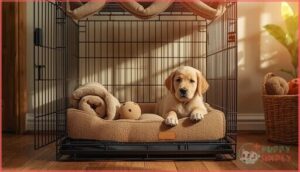
Think of the crate as your personal den — it should feel snug, not sterile.
Lay down a non-slip mat base first, then add orthopedic foam bedding for older dogs or chew-resistant pads for chewers.
Temperature-regulating blankets work well in cooler months.
For den-style toy placement, tuck one solid rubber toy toward the back so your dog has something to settle with.
Ensuring Proper Ventilation and Safety
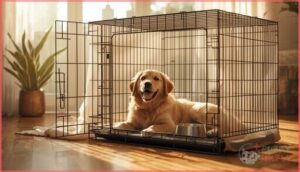
Good ventilation isn’t optional — it’s a crate safety essential. Wire crates win here, since airflow passes through all sides, helping with temperature monitoring on warm days.
Watch mesh size too; openings should be small enough that paws and noses can’t get stuck.
For car crate safety, never let direct sunlight bake the interior.
Cover breathability matters as well — heavy blankets trap heat fast.
Making The Crate a Cozy Retreat

true retreat takes more than just soft flooring — it needs atmosphere.
Warm ambient lighting nearby softens the mood, while calming scents like lavender on custom blankets signal rest.
temperature control in mind; avoid direct heat sources.
crate decor thoughtfully and use crate games and crate conditioning with positive reinforcement to keep creating a positive association with the crate, session by session.
Introducing Your Dog to The Crate Gradually

first few minutes your dog spends near the crate can set the tone for everything that follows. There’s no rushing this part — slow and steady really does win the race here.
three simple ways to help your dog warm up to the crate on their own terms.
Using Treats and Praise for Encouragement
Treats and praise are your most powerful tools here. Use high‑value treats — think small chicken pieces or soft training bites — and drop one inside the moment your dog glances toward the crate.
That marker word timing matters: say “yes” the instant they step in. Over time, shift to intermittent reinforcement and calm‑behavior rewards, keeping your praise tone warm but quiet.
Leaving The Crate Door Open at First
Once your dog starts responding to treats near the crate, resist the urge to shut that door right away. Leaving it open builds Open Door Confidence and facilitates a Stress‑Free Introduction by letting your dog move freely.
Most puppies develop a Self‑Settle Habit within a few days, naturally choosing the crate on their own — no pushing needed.
Allowing Voluntary Exploration
With the door staying open, let your dog call the shots.
Self-initiated visits — even just a few seconds of Threshold curiosity — build real confidence.
Watch for relaxed body cues: loose tail, soft ears, easy breathing.
Short open-door sessions with Treat-guided entry work far better than pressure.
Most dogs naturally linger longer after just a few days of low-stakes exploration.
Using Positive Reinforcement Effectively
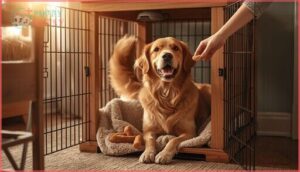
Positive reinforcement is what makes crate training actually stick.
When your dog learns that good things happen inside the crate, they stop seeing it as a trap and start seeing it as their spot. Here’s how to use rewards, boundaries, and consistency to build that trust.
Rewarding Calm Behavior in The Crate
Catching calm moments early makes all the difference. When your dog settles quietly inside, that’s your cue — drop a treat within 1–3 seconds using a soft marker word like "good" to signal the exact behavior that earned it.
- Timing of rewards matters: reward quiet, loose body language, not alert sitting
- Reward types count: high-value treats or a crate‑only chew builds stronger positive associations
- Thinning the schedule gradually extends quiet reinforcement from seconds to minutes
Avoiding Punishment or Negative Associations
Once you’ve nailed reward-based entry and calm exit routine, don’t undo that progress by using the crate as a timeout spot. Dog behavior modification hinges on association — and if the crate means "you’re in trouble," positive reinforcement loses its power.
The quiet ignoring technique works because it removes attention, not comfort. Keep the crate neutral, stress‑free, and never a consequence.
Building Trust and Confidence
Trust builds slowly, and that’s okay. Every calm moment your dog spends inside the crate is a small win worth noticing. Positive Reinforcement Training works best when you lean into Choice Freedom, Predictable Routines, and Calm Human Presence consistently.
Trust builds slowly, but every calm moment your dog spends in the crate is a small win worth celebrating
Watch for these Reading Comfort Signals that show Gradual Duration is working:
- Soft, relaxed eyes inside the crate
- Loose, wiggly body when entering voluntarily
- Quiet settling without whining
- Playful interest in crate toys
- Confident, unhesitant entries
Step-by-Step Crate Training Process

Now comes the part where things actually start to click.
Crate training works best when you break it into small, manageable steps, your dog can handle without feeling overwhelmed.
Here’s how to move through the process from the very first session to longer stretches of crate time.
Short Initial Sessions With Open Door
Start crate training with just one to five minutes per session, door wide open. Let your dog sniff, step in, and step right back out — that’s the whole goal.
Quiet environment, no rushing. Toss treats just inside the entrance to make treat placement feel natural and rewarding.
Watch for stress indicators like yawning or lip‑licking. Owner presence nearby keeps everything calm and positive.
Gradually Increasing Crate Time
timed door closures — just 2 to 3 seconds at first. Here’s your stepwise duration roadmap:
- Close the door briefly after meals
- Extend by 2–3 seconds each quiet session
- Apply quiet session criteria — 3 calm rounds before moving forward
- Practice progressive absence, stepping out for just 1 second
- Use treat duration extension with frozen Kongs for longer stays
Managing Crate Time and Routines

Once your dog feeling comfortable in the crate, the next step is building a routine around it. Consistency is what turns crate time from something stressful into something predictable — and dogs genuinely thrive on knowing what comes next.
Here’s how to manage crate time in a way that works for both of you.
Establishing a Consistent Crate Schedule
Dogs thrive on predictability — a consistent training schedule is one of the biggest crate training benefits you can offer. Fix your wake-up time, plan morning potty timing right away, and repeat the same cue word timing every session.
Keep weekend schedule consistency tight, too, because dogs don’t understand days off. Positive reinforcement works best when dog behavior patterns stay stable and crate time feels expected, not random.
Balancing Crate Time With Exercise
A tired dog is a happy crate dog. Your Pre‑Crate Workout directly shapes dog behavior inside the crate — a worn-out pup settles far faster than a restless one.
- Adult dogs need 30–60 minutes of exercise before crate time
- Mental‑Physical Pairing, like a quick training session plus a walk, doubles the calming effect
- Breed‑Specific Energy matters — Border Collies need far more than Pugs
Balance Exercise‑Crate Scheduling with Post‑Crate Play for lasting dog health and wellness.
Recognizing When Your Dog Needs Breaks
Your dog can’t say "I’ve had enough," but their body says it loud and clear.
Watch for vocal cues like persistent whining or high-pitched yelps, restless movements like pawing and pacing, and physiological signs such as heavy panting or excessive drooling.
These body language alerts and behavioral flags — including accidents or treat refusal — signal it’s time to pause crate time and reassess your approach.
Overcoming Common Crate Training Challenges

Even the most patient training plan runs into a few bumps along the way. Some dogs whine, some have accidents, and others just flat-out refuse to go near the crate — and that’s completely normal. Here are the most common challenges you might face and how to work through them.
Dealing With Whining or Barking
Hearing your dog whine can feel discouraging, but it’s one of the most common crate training challenges.
Use Short Session Timing — let brief whining settle on its own for a minute or two, then try Calm Exit Training: only open the door during quiet moments. Crate Covering with a light blanket, White Noise Background sounds, and Quiet Ignoring of attention‑seeking barking all reinforce positive reinforcement and help create a positive association with the crate.
Addressing Accidents in The Crate
Accidents happen — and when they do, don’t panic.
Check your Crate Size first; a space that’s too roomy lets your dog sleep on one end and potty on the other, which quietly undermines all your housebreaking progress.
Your Bedding Choice matters too — absorbent padding can encourage repeat accidents.
Stick to your Potty Schedule, clean thoroughly with an enzymatic cleaner, and watch for Medical Red Flags like sudden frequent accidents, which may signal a vet visit.
Helping Dogs With Crate Resistance
Some dogs don’t just resist the crate — they’ve built a wall around it. Before jumping into Desensitization Techniques, run a quick Health Check Screening: pain or discomfort often hides behind crate refusal.
Then try:
- Tossing High-Value Lures like cheese inside, no pressure attached
- Pairing Counterconditioning Cues like "crate" with treats until it clicks
- Managing Environmental Noise to keep sessions calm and distraction-free
Making The Crate a Positive Space
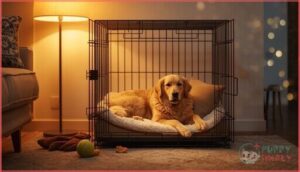
Once your dog stops dreading the crate, the next goal is making them actually want to be in it.
A few small, consistent habits can turn that space from “fine, I guess” into a spot they genuinely enjoy.
Here are three simple ways to make the crate feel like their own little haven.
Rotating Toys and Enrichment Items
Even the best toy loses its magic fast. That’s why a smart rotation strategy keeps crate time genuinely exciting. Swap toys every 7 days — or every 2–3 days for high-energy dogs. Store unused items out of sight so reintroduction feels brand new.
| Toy Type | Rotation Benefit |
|---|---|
| Puzzle Rotation Schedule | Refreshes problem-solving challenges weekly |
| Lick Mat Rotation | Extends engagement up to 45 frozen minutes |
| Snuffle Mat Variety | Satisfies natural foraging instincts |
Combining a Chew Toy Rotation with Sensory Toy Rotation and Crate Games builds lasting positive reinforcement through variety.
Feeding Meals in The Crate
Mealtime is one of the fastest ways to build a positive association with the crate. Your dog’s bowl becomes a powerful tool for Positive Reinforcement Training and overall Dog Wellness.
- Start your Kibble Placement Strategy just inside the door
- Follow a consistent Meal Timing Routine daily
- Practice Clean Crate Hygiene by removing bedding before feeding
- Use spill-proof Food Bowl Selection for Multi‑Dog Feeding households
Using Safe Chew Treats for Relaxation
Picking the right chew treat can turn your dog crate into a genuine sanctuary.
For crate training to stick, focus on Ingredient Safety — choose treats with real proteins like duck or salmon and calming compounds like L‑theanine or chamomile for natural Calming Effects. Match Texture Duration to your session length, time treats with Treat Timing 15–30 minutes before stress, and always practice Monitoring Safety with new chews.
Signs Your Dog is Comfortable in Their Crate

All that training work you’ve put in will start to show in ways that are hard to miss.
Your dog’s body and behavior will tell you exactly how they feel about their crate. Watch for these three clear signs that they’ve truly made it their own.
Calm Entry and Exit Behavior
One of the clearest signs that crate training is working? Your dog walks in and out without drama. Cue consistency matters here — using the same word and calm tone every time builds quiet, predictable behavior.
Watch for these positive reinforcement wins:
- Waits at the threshold instead of bolting
- Enters on cue without hesitation
- Stays still for a quiet release word
- Shows pre‑crate calm after a short routine
Relaxed Body Language Inside The Crate
Body language tells the whole story. A truly comfortable dog shows a soft eye expression, loose tail posture resting gently on the crate floor, and a gentle breathing rhythm — slow, even, relaxed. Watch for slow positional shifts and subtle self‑grooming like a few calm paw licks.
| Signal | What It Means |
|---|---|
| Soft, squinty eyes | Feels safe, not threatened |
| Loose tail, soft wags | Content and calm |
| Deep sighs, still body | Fully releasing tension |
Willingness to Use The Crate Voluntarily
The clearest sign that crate training is working? Your dog walks in without being asked. That’s self-initiated entry — and it’s worth celebrating.
Dogs with a strong denning instinct naturally seek enclosed calm resting spots, especially during routine-driven visits like late evenings or post-walk wind-downs.
Watch for these five voluntary behaviors:
- Entering the crate before any cue
- Choosing it over open beds for naps
- Returning after getting water or attention
- Staying relaxed with the door wide open
- Retreating there after mild stress, like guests leaving
Reward-based access and consistent positive reinforcement make this happen naturally.
Frequently Asked Questions (FAQs)
Should you teach your dog to love a crate?
Yes — when done right, crate training benefits dog’s confidence and safety.
It works with natural dog psychology, not against it, and sets the foundation for a calmer, more secure companion at home.
Do dogs like crates?
Most dogs don’t hate crates — they just need time to trust them.
With the right approach, crate training leverages dog psychology to create a space your dog actually chooses to use.
How can I Help my Dog Love his crate?
Turn the crate into a food zone, use scented bedding, and practice gradual door-close sessions.
Calm alone time, positive reinforcement training, and den-like comfort help your dog build genuine trust with their crate.
Does my dog need a crate?
Not every dog needs one — but most benefit from it.
Crate training facilitates veterinary visits, rescue adoption transitions, travel requirements, and emergency preparedness, making life calmer and safer for your dog when it matters most.
How do I know if my dog’s crate is too small?
If your dog shows joint stiffness, pressure marks on elbows, pawing behavior at the door, or signs of overheating, the crate size is likely too small.
Restricted movement is a clear red flag.
What should you do if your dog won’t go in their crate?
Start by ignoring avoidance cues and letting the crate sit open in the room. Use a high-value treat lure and gradual door-open exercises to build comfort at the dog’s pace.
Can I put a blanket in there for my dog?
Yes, a blanket is a great idea — just choose the right one.
Opt for breathable cotton or light fleece, watch for chewing risks, and remove it if your dog overheats or shreds it.
What do I do if my dog hates his crate?
If dog hates his crate hates panic — it’s one of the most common crate training challenges.
Start with gradual desensitization and positive reinforcement techniques to rebuild trust in his comfort zone.
What is the 7 7 7 rule for dogs?
The 7 7 7 rule breaks your dog’s first 21 days into three seven-day blocks — settling in, learning routines, and finally feeling at home — giving you a realistic adjustment timeline for crate training.
What is the 2:1 crate rule?
Two hours in, one hour out — that’s the 2:1 crate rule. This rest-activity balance keeps puppies calm, helps house-training, and builds confidence without overstimulation.
Conclusion
It’s no coincidence that dogs who take to their crate quickly share one thing in common—their owners slowed down. Learning how to get a dog to like their crate isn’t about finding a shortcut; it’s about respecting the pace your dog sets.
Every small step you’ve taken has been building something real: a space your dog doesn’t just tolerate, but genuinely chooses. That kind of trust, once earned, doesn’t disappear.
- https://www.petbehaviorchange.com/blog/2017/9/8/crate-training-done-right
- https://www.thenakeddogtraining.com/traininghowtos/2019/2/8/so-you-wanna-crate-train-your-dog
- https://www.diggs.pet/blogs/posts/why-does-my-dog-hate-their-crate
- https://www.pawsandwillow.com.au/blogs/news/how-to-make-a-dog-crate-comfortable-calm-setup-checklist
- https://transgroom.com/de/advice/dog-crate-training.html