
This site is supported by our readers. We may earn a commission, at no cost to you, if you purchase through links.

Most dog owners get the crating question backwards—they ask how long they should crate their dog, when the more important question is whether their dog has earned the freedom yet. A crate isn’t a punishment or a permanent arrangement; it’s a training tool with an expiration date that’s different for every dog.
Some dogs are ready to sleep uncrated by 10 months, while others need the structure well past their first birthday. Knowing when to stop crating a dog at night comes down to reading specific behavioral milestones, not following a one-size-fits-all timeline—and getting that timing right makes all the difference.
Table Of Contents
- Key Takeaways
- What is The Purpose of Crating at Night?
- When Can Most Dogs Stop Nighttime Crating?
- Signs Your Dog is Ready to Sleep Uncrated
- Risks of Ending Crate Use Too Early
- How to Safely Transition Out of The Crate
- Addressing Nighttime Accidents and Setbacks
- Supporting Your Dog’s Comfort and Security
- Special Considerations for Puppies and Adult Dogs
- Alternatives to Nighttime Crating
- Frequently Asked Questions (FAQs)
- What is the 7 7 7 rule for dogs?
- What is the 2:1 crate rule?
- Do dogs feel abandoned when boarded?
- Are dogs happier sleeping in a crate?
- What bedding works best for newly uncrated dogs?
- How does diet timing impact overnight accidents?
- Should rescue dogs follow a different crating timeline?
- Can sleeping near owners speed up the transition?
- Conclusion
Key Takeaways
- Stop crating when your dog hits real behavioral milestones—two solid months without a single overnight accident is your clearest green light, not a birthday on the calendar.
- Breed size shapes the timeline more than most owners expect, with small dogs often ready around 8–12 months while giant breeds may need the structure well past their second birthday.
- Ending crate use too soon can quietly unravel weeks of progress—expect accidents, spiked anxiety, and chewed furniture if your dog wasn’t truly ready for the freedom.
- When it’s time to transition, don’t go all-in overnight; start with one puppy-proofed room, keep the crate nearby as a comfort option, and expand space only after more accident-free nights stack up.
What is The Purpose of Crating at Night?
Crating at night isn’t just about keeping your dog out of trouble — it fulfills a few real purposes that make life easier for both of you. Understanding why it works helps you know when it’s actually safe to stop.
If barking is part of the nighttime struggle, these tips on stopping dog barking at night pair well with a solid crate routine.
Here are the three main reasons dog owners rely on nighttime crating.
Benefits for House Training
Nighttime crating is one of the most effective housebreaking tips you’ll use during early dog training. When your dog can’t roam freely, they’re far less likely to sneak off and use a corner of your living room as a bathroom.
Pairing crate training with a consistent nighttime routine — final potty break, crate, then outside first thing — builds reliable house training habits fast. Establishing a crate training routine is essential for successful housebreaking.
Safety and Security for Dogs
Beyond house training, nighttime crating provides your dog’s safety in ways that are easy to overlook. A well-chosen crate placement keeps your dog away from real hazards while you sleep:
- Hazard prevention from toxic substances, cords, and open doors
- Emotional comfort through den-like secure sleeping
- Dog monitoring made easier with one predictable resting spot
That sense of security matters more than most owners realize. Effective crate training involves understanding the benefits of crate safety measures to guarantee a dog’s well-being.
Preventing Destructive Behaviors
A crate also acts as your first line of defense against destructive behavior. Without nighttime supervision, even a well-behaved dog might chew baseboards, shred bedding, or raid the trash.
Crate-free solutions come later, once your dog has earned that trust. Until then, crate training keeps both your home and your dog’s habits intact — no separation anxiety, no surprises.
When Can Most Dogs Stop Nighttime Crating?

Most dogs don’t need to sleep in a crate forever — but the right time to stop depends on a few key factors. Breed size, house training progress, and your dog’s individual temperament all play a role in determining when nighttime freedom makes sense. Here’s what to keep in mind for each.
Typical Age Ranges by Breed Size
Every dog runs on its own clock, and breed size is one of the biggest factors in crate timing. Here’s a rough guide to nighttime transitions based on dog development and breed maturity:
- Small breeds: Ready around 8–12 months
- Medium breeds: Generally 10–14 months
- Large breeds: Usually 18–24 months
- Giant breeds: Often closer to 24 months
Temperament always matters too.
House Training Milestones
Milestones matter more than calendars when it comes to crate weaning. The clearest green light is two full months with zero overnight accidents — that’s your dog’s bladder and housebreaking habits working together reliably.
Consistent potty schedules, predictable nighttime routines, and accident prevention go hand in hand with dog development. Once those dry nights stack up, your dog is telling you something important.
Individual Dog Temperament Factors
Temperament is the wildcard no age chart can predict. A dog’s personality shapes how quickly nighttime crating can end — more than breed characteristics or birthday milestones alone.
- Clingy dogs with canine anxiety often need slower transitions than confident, independent dogs
- Crate dependence develops when dog behavior signals the crate feels like the only safe space
- Temperament testing through short freedom trials reveals your dog’s true separation anxiety and readiness
Signs Your Dog is Ready to Sleep Uncrated

Knowing when your dog is truly ready to sleep without a crate isn’t guesswork — there are real, observable signs that tell you it’s time. Most of them come down to consistency, calmness, and trust built over weeks of good behavior.
Before you ditch the crate entirely, setting up a safe, confined space using secure indoor fencing and baby gates can help you test your dog’s independence without giving them full run of the house.
Here’s what to look for before you make the switch.
No Overnight Accidents for 2+ Months
Two months with zero overnight accidents isn’t just a lucky streak — it’s your clearest signal that bladder control has genuinely matured. Most trainers treat that 8-week dry stretch as the real turning point in house training, where nighttime freedom starts feeling less like a gamble and more like a natural next step in your crate shift.
Eight consecutive dry weeks is not luck — it is proof your dog is ready to sleep without a crate
| Dry Night Streak | Readiness Level | Recommended Action |
|---|---|---|
| Under 2 weeks | Not ready | Continue nighttime crating |
| 2–4 weeks | Early signs | Monitor closely, maintain routine |
| 4–6 weeks | Progressing | Start supervised short trials |
| 6–8 weeks | Nearly ready | Test open sleeping in small area |
| 8+ weeks | Strong readiness | Begin gradual crate shift |
Track those dry nights on a calendar. Consistent housebreaking success over two-plus months shows your dog understands the overnight routine — and that’s the foundation every successful dog training technique is built on.
Calm Behavior When Left Alone
A dog that copes well with alone time doesn’t just tolerate it — they barely notice you’re gone. Watch for a relaxed posture, slow breathing, and quiet nights where they settle within minutes.
These signs of independent sleeping suggest your crate training work is paying off. Dogs showing no separation anxiety, low stress, and calm environments overnight are strong candidates for ending nighttime crating.
Absence of Destructive Chewing or Barking
If your dog can spend a relaxed evening without destroying a cushion or sounding the alarm at every passing car, that’s a real green light. Dogs with strong nighttime self-control and emotional regulation show it in small ways:
- No chewing on furniture, cables, or shoes for several weeks
- Quiet sleep patterns without repeated barking at normal sounds
- Calm evening routines with settled, relaxed body language
Reduced anxiety and consistent dog behavior modification work together here — and that’s when stop crating becomes a safe next step.
Risks of Ending Crate Use Too Early

Stopping crate use before your dog is truly ready can undo months of progress faster than you’d expect. It’s not about being overly cautious — it’s about protecting the good habits you’ve both worked hard to build.
Here are the most common risks to watch for if you make the switch too soon.
Regression in House Training
Ending crate training too soon can quietly unravel weeks of housebreaking progress. Regression signs often appear within days — accidents near doorways, silent house soiling, or renewed marking. Use this quick reference to recognize common training setbacks:
| Trigger | Regression Sign | Response |
|---|---|---|
| Routine change | Nighttime accidents | Reinstate crate temporarily |
| Removed crate boundary | House soiling near exits | Tighten potty schedule |
| Medical causes | Accidents in sleep area | Consult your vet promptly |
Increased Anxiety or Restlessness
Beyond house training setbacks, ending nighttime crating too early can spike anxiety levels in dogs that weren’t quite ready. Restlessness signs like pacing, panting, or whining after lights out often signal separation issues rather than stubbornness.
Your dog’s nighttime fears are real — stress management starts with recognizing anxiety triggers before removing the one structure that kept them feeling safe.
Potential for Destructive Behavior
Anxiety isn’t the only thing that creeps in when nighttime crating ends too soon — destructive behavior often follows right behind it. A bored or under-stimulated dog will find their own entertainment.
- Destructive chewing on furniture legs, door frames, or electrical cords
- Nighttime accidents from reduced routine structure
- Household damage from pulling cushions or shredding rugs
- Separation anxiety triggering repetitive pacing or object destruction
- Crate alternatives like baby gates help with dog proofing during the shift
How to Safely Transition Out of The Crate
Moving out of the crate isn’t a one-night decision — it’s a process that works best when you take it one small step at a time. The good news is that a few simple strategies can make the whole shift feel natural for your dog, not stressful.
Here are three practical ways to ease them into their new sleeping freedom.
Gradual Expansion of Sleeping Space
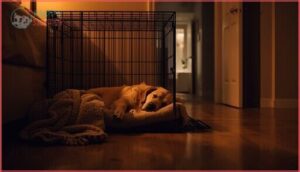
Think of it as earning privileges—your dog doesn’t go from crate to full house overnight. Start with one puppy-proofed room, keeping the crate open nearby so they can choose.
Place the dog bed where the crate stood; familiar crate placement tips like this ease nighttime routine adjustments.
Gradually expand room access only after several accident-free nights, using freedom shift techniques that build confidence slowly.
Using Baby Gates or Playpens
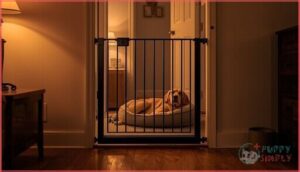
Once your dog is comfortable in that first room, baby gates become your best tool for expanding nighttime freedom without going too far too fast. Smart gate placement keeps pet safety intact while giving your dog more breathing room than crate training allowed.
- Choose metal gates for dogs that lean or jump
- Match gate height to your dog’s shoulder height
- Pick playpen materials suited to your dog’s size and chewing habits
- Secure latches tightly to prevent nudging open overnight
- Define nighttime boundaries with a bed, water, and safe toys inside
Monitoring With Cameras or Check-Ins

Even with gates in place, knowing what actually happens after lights out is the real breakthrough. A well-positioned camera gives you that visibility without disrupting nighttime routines for dogs or your own sleep.
| Feature | Why It Matters |
|---|---|
| Night Vision + Camera Placement | Spots restlessness in complete darkness |
| Motion Alerts + Video Recording | Flags chewing or accidents instantly |
| Audio Feedback | Soothes mild anxiety without entering the room |
Manual check-ins work too—just keep them quiet and brief.
Addressing Nighttime Accidents and Setbacks

Even with the best preparation, setbacks happen — and a nighttime accident doesn’t mean you’ve failed or that your dog isn’t making progress. What matters most is how you respond and adjust.
Here’s how to troubleshoot the most common bumps in the road.
Troubleshooting Pee or Poop Accidents
An accident after weeks of dry nights isn’t always a training failure. Start by ruling out medical causes — a UTI, diabetes, or kidney issue can suddenly undermine your dog’s bladder control overnight.
If the soiling causes seem unclear, track accident patterns for several days. Nighttime anxiety and irregular schedules are common culprits too.
Simple training adjustments and consistent housebreaking methods usually get things back on track quickly.
Managing Chewing or Mischief at Night
Chewing rarely means your dog is being defiant — it usually signals boredom or separation anxiety. Before nighttime freedom fully replaces nighttime crating, set your dog up for success with these boredom reduction strategies:
- Offer a frozen Kong or durable toy at lights out
- Close doors to tempting rooms for effective dog proofing homes
- Use calming aids like white noise or a worn T-shirt
- Designate safe sleeping areas with approved chews nearby
- End high-energy play 30 minutes before bed
Returning to Crating if Needed
Sometimes, stepping back is the smartest move forward. If nighttime setbacks keep happening, a crate reintroduction gives your dog a chance to reset without rehearsing bad habits.
| Phase | Action | ReCrating Benefits |
|---|---|---|
| Week 1 | Full nights crated | Stops accidents, restores routine |
| Week 2 | Short uncrated trials | Tests crate readiness safely |
| Week 3 | Alternate nights | Builds confidence gradually |
| Week 4 | Monitor anxiety reduction | Confirms crate comfort progress |
| Week 5 | Reassess stop crating timeline | Facilitates long-term success |
Supporting Your Dog’s Comfort and Security

Once your dog starts sleeping outside the crate, your job isn’t done — it’s just different. The goal now is making sure they feel safe, settled, and secure in their new sleeping setup.
A few simple habits can make all the difference.
Creating a Safe Sleeping Area
Think of your dog’s new crate-free space as their personal sanctuary. Place a supportive dog bed in a quiet corner against a wall — away from drafty windows and exterior doors — for solid temperature control and noise reduction.
Safety features matter too: clear loose cords, toxic plants, and small objects. A designated sleeping area your dog returns to nightly builds real confidence.
Maintaining Consistent Nighttime Routines
Your dog’s internal clock is surprisingly precise. Keeping bedtime within the same 30-minute window nightly — part of a solid bedtime routine — aids nighttime routine establishment and smoother nighttime transitions.
A simple evening calming sequence: a short walk, final potty break, then a quiet cue like "bedtime," repeated consistently.
Routine consistency in sleep environment signals safety, making the shift from nighttime crating feel natural.
Providing Comfort Items and Toys
Once the routine clicks, the right comfort items seal the deal. Think of it as building a little sanctuary — the crate becomes a place your dog chooses, not tolerates.
Here are the essential items to transform the crate into a cozy haven:
- Crate Bedding that covers the full base keeps joints supported overnight
- Familiar Scents like your worn t-shirt ease separation anxiety instantly
- Durable Toys such as frozen KONGs redirect chewing safely
- Calming Aids like heartbeat simulator toys tap into deep dog psychology
- Comfort Objects with sibling scents support dogs still adjusting to nighttime crating
Special Considerations for Puppies and Adult Dogs

Not every dog follows the same timeline regarding leaving the crate behind. A puppy’s small bladder, an anxious rescue, or a busy multi-dog home all call for a slightly different approach.
Here’s what to keep in mind depending on your dog’s unique situation.
Small Vs. Large Breed Timelines
Breed size matters more than most owners expect regarding nighttime crating timelines. Small breeds usually reach house training reliability around 9 months, while large breeds often need crating until 12–18 months due to slower maturity levels and growth rate differences.
| Breed Size | Stop Crating Age | Key Factor |
|---|---|---|
| Small/Toy | 7–9 months | Faster bladder control |
| Medium | 9–12 months | Moderate training pace |
| Large/Giant | 12–24 months | Extended growth rate |
Dogs With Anxiety or Medical Needs
While breed size shapes the timeline, anxiety disorders and medical restrictions add another layer to keep in mind. Some dogs simply aren’t good candidates for stopping nighttime crating — or for dog crating at all. Watch for these stress signals and special needs situations:
- Separation anxiety triggers panicking, drooling, or crate bar-biting
- Medical restrictions like arthritis or incontinence require uncrated access
- Crate alternatives like playpens suit dogs with high anxiety levels
- Post-surgery dogs need strict but time-limited confinement with vet guidance
Multi-Dog Household Strategies
Managing a multi-dog household adds another layer to crate-free transitions. Each dog’s readiness differs, so nighttime crating decisions shouldn’t be all-or-nothing.
Give each dog its own crate zone, stick to individual dog sleep schedules, and let multi-dog dynamics guide your pace.
When household hierarchy stays calm and separation anxiety isn’t flaring, you can gradually open up space for each dog.
Alternatives to Nighttime Crating

Crating isn’t the only way to keep your dog safe and settled at night. Once your dog shows signs of readiness, there are a few practical alternatives worth considering.
Here are some options that can make the shift feel less like a leap and more like a natural next step.
Using Dog Gates or Exercise Pens
If you’re ready to stop crating but not quite ready for full freedom, dog gates and exercise pens are your middle ground. Pressure-mounted gates work well for doorways, while freestanding pens—expandable up to 90 inches wide—contain larger areas.
For effective pen setup and containment, choose bar spacing under four inches and select extra-tall options if your dog jumps. It’s a smart, graduated step in any freedom training plan.
Training for Open Sleeping Arrangements
Open Space Management starts with a simple cue like ‘bed’ or ‘place’ so your dog always knows where to settle. During the Crate Free Shift, keep nighttime routine consistent—a final potty trip, then reward calm behavior on their bed.
This builds Canine Independence gradually, improving sleep environment comfort and nighttime routine and sleep quality without abandoning the structure crate training established.
Monitoring for Behavioral Changes
Once your dog is sleeping freely, behavior tracking becomes your most reliable tool. Watch for anxiety signs that suggest the crate shift happened too soon:
- Pacing or whining after lights-out
- Disrupted sleep patterns or repeated nighttime roaming
- Regression in nighttime habits like indoor accidents
- Destructive behavioral signs or trust issues around being alone
A camera makes monitoring straightforward.
Frequently Asked Questions (FAQs)
What is the 7 7 7 rule for dogs?
The 7 7 7 rule is a puppy socialization framework built around structured exposure — seven surfaces, seven people types, and seven environments — to build canine confidence through early, positive dog habituation and crate introduction experiences.
What is the 2:1 crate rule?
The 2:1 crate rule means for every two hours of crate time, your dog gets one hour of supervised freedom — balancing rest, potty breaks, and activity to support crate training without overdoing confinement.
Do dogs feel abandoned when boarded?
Most dogs don’t truly feel abandoned when boarded, but they do experience emotional distress and separation anxiety. With familiar scents and consistent care, boarding stress fades quickly as they settle into routine.
Are dogs happier sleeping in a crate?
It depends on the dog. Some thrive with crate comfort and den-like canine security, while others sleep better uncrated.
Watch your dog’s sleep patterns and body language — they’ll tell you what works.
What bedding works best for newly uncrated dogs?
Orthopedic bedding with washable covers and calming bolsters works best. Look for chew-resistant, durable fabrics that support joints, reduce anxiety, and simplify cleanup — making your dog’s adjustment smoother and sleep quality noticeably better.
How does diet timing impact overnight accidents?
Meal scheduling and water intake directly shape overnight accidents. Feed dinner by 5–6 PM, limit water after 7 PM, and digestion time works in your favor for dry, accident-free nights.
Should rescue dogs follow a different crating timeline?
Yes — rescue dogs often need a longer, more flexible crating timeline. Trauma recovery, decompression needs, and anxiety factors mean their readiness depends on individual canine behavior, not age alone.
Can sleeping near owners speed up the transition?
Owner proximity genuinely helps. Dogs near their owners settle faster, feel less anxious, and wake less often. It’s one of the simplest change strategies you can use to ease the shift away from crate training.
Conclusion
The crate that once felt like a limitation becomes the very thing that sets your dog free. Every night without accidents, every calm hour alone, every chewed toy instead of a chair leg—those aren’t small wins, they’re your dog writing their own permission slip.
Knowing when to stop crating a dog at night isn’t about hitting a magic age; it’s about trusting the progress you’ve both earned together.
- https://spiritdogtraining.com/behavior/stop-crating-dog/
- https://www.country93.ca/2025/09/05/4-signs-your-dog-no-longer-needs-to-sleep-in-a-crate/
- https://www.rover.com/blog/blog-crate-training-schedule/
- https://www.dialavet.com/vet-answers/dog-restless-at-nighttime-32314
- https://smartdoguniversity.com/dog-training-ask-the-trainer-when-can-i-get-rid-of-the-crate/