
This site is supported by our readers. We may earn a commission, at no cost to you, if you purchase through links.

Most dogs can handle a crate just fine—until they can’t. A healthy adult dog generally tolerates 4 to 6 hours without much trouble, but pushing past that regularly, and you’ll start seeing signs that something’s off: accidents, anxious pacing, or a dog that tenses the moment you reach for your keys.
The crate itself isn’t the problem. The duration is.
Knowing how long a dog can stay in a crate depends on their age, health, bladder control, and temperament—and getting it wrong has real consequences. The guidelines ahead cut through the guesswork.
Table Of Contents
- Key Takeaways
- How Long Can a Dog Stay in a Crate?
- Factors That Influence Safe Crate Time
- Risks of Excessive Crating
- Best Practices for Humane Crate Use
- Alternatives and Tips for Reducing Crate Time
- Frequently Asked Questions (FAQs)
- Can a dog stay in a crate overnight?
- How long can a dog stay crated during the day?
- How often should you let a dog out of a crate?
- How long can a puppy stay in a crate without a break?
- What is the 7 7 7 rule for dogs?
- What happens if a dog is caged too long?
- Can two dogs share the same crate together?
- Should you cover a crate with a blanket at night?
- Is crating a dog cruel if done regularly?
- What should you put inside a dogs crate?
- Conclusion
Key Takeaways
- Most healthy adult dogs can stay in a crate for 4 to 6 hours, but puppies follow the "one hour per month of age" rule, and seniors do best with breaks every 2 to 4 hours.
- Crating too long causes real harm—muscle loss can show up in as little as 7 to 10 days, and anxiety, bladder strain, and digestive problems follow close behind.
- Your dog’s age, breed, health conditions, and temperament all shape how long crate time stays safe, so there’s no single answer that works for every dog.
- When a crate isn’t the right fit, playpens, gated rooms, pet sitters, and remote monitoring tools give you practical ways to keep your dog safe without stretching crate time too far.
How Long Can a Dog Stay in a Crate?
The answer depends on dog’s age, health, and routine.
Your vet can help weigh all of this together, but this guide on the best age to neuter a German Shepherd breaks down how each factor plays into the decision.
A healthy adult dog can handle longer stretches, but puppies and seniors have different needs.
Here’s a closer look at safe crate times for each stage of life.
Recommended Crate Times for Adult Dogs
Most healthy adult dogs can manage 4 to 6 hours in a crate during the day. Safe crate duration depends on several key factors:
- Breed-specific limits — active breeds like Border Collies need breaks sooner
- Work-from-home schedules — midday check-ins can extend tolerance safely
- Medication timing — some prescriptions affect bladder control
- Seasonal temperature effects — heat increases discomfort and restlessness
Exceeding 6 hours regularly risks crate anxiety and bladder strain.
Follow proper crate time guidelines for best dog welfare.
Crate Duration Guidelines for Puppies
Puppies need much shorter crate sessions than adult dogs. A helpful rule is the Monthly Hour Rule — one hour per month of age. So a 3-month-old puppy tolerates about 3 hours maximum.
Night vs Day Limits matter too: daytime puppy crate time stays shorter, while overnight stretches run longer because pups sleep.
Gradual Time Increments prevent crate anxiety and keep training stress-free.
A quiet area placement helps the puppy feel secure at night.
Crate Limits for Senior Dogs
Senior dogs need shorter windows than adult dogs — think 2–4 hours at a time.
Age brings real changes: joint pain management becomes daily, cognitive comfort matters more, and temperature regulation gets harder in tight spaces. Medication timing may also require mid-session breaks.
- Limit safe crate duration to 2–4 hours
- Add mobility aids like cushioned mats
- Schedule potty breaks around crate age limits
Factors That Influence Safe Crate Time

No two dogs are exactly the same, and that means crate time isn’t one-size-fits-all either.
That’s why tailoring your approach to your dog’s personality makes all the difference, and these step-by-step crate training tips for dogs can help you build a routine that actually sticks.
A few key factors shape how long your dog can comfortably and safely stay in a crate.
Here’s what you need to think about.
Age, Breed, and Size Considerations
Age, breed, and size all shape safe crate duration more than most owners realize.
A young puppy needs a break every one to two hours due to limited bladder capacity. A healthy adult generally handles four to five hours.
Dog breed matters too — high-energy working dogs and brachycephalic breathing concerns mean shorter sessions.
Giant breed growth demands thick padding and frequent movement breaks.
Health Conditions and Special Needs
When your dog has a health condition, safe crate duration changes substantially. Dogs managing arthritis, diabetes, or IVDD management need shorter, more frequent breaks — sometimes every two hours.
Medical crate rest after surgery is necessary, but your vet sets that schedule.
Cognitive support for older dogs with memory loss means brief confinement only. Canine health issues always require an individualized plan, not a general rule.
Temperament and Individual Personality
Every dog brings its own personality to crate training, and that shapes everything. Crate Tolerance varies widely — some dogs settle in easily, while others hit their Fear Threshold fast. Watch for these Personality-Based Timing signals:
- Relaxed resting means good crate anxiety tolerance
- Whining or panting signals Barrier Frustration
- Refusing entry shows crate aversion
- Trembling points to deeper Anxiety Types
- Voluntary entry reflects healthy dog behavior
Potty Schedule and Bladder Control
Keeping a consistent potty schedule is one of the biggest factors in safe crate duration. Puppies need Age‑Based Intervals of roughly one hour per month of age, so a 3‑month‑old needs a break every three hours.
Build your Morning Potty Routine and Meal‑Triggered Breaks into a fixed daily rhythm. Don’t forget Overnight Bladder Management, and a Hydration‑Influenced Schedule — water intake and size directly shape how long crating hours stay safe.
Risks of Excessive Crating

Keeping a dog in a crate longer than they can handle isn’t just uncomfortable — it can cause real harm over time.
The effects show up in the body, in behavior, and even in basic health functions you might not think to connect to crate use.
Here are the key risks worth knowing about.
Physical Health Concerns (muscle Weakness, Joint Issues)
Too much time locked in a crate takes a quiet toll on your dog’s body. Muscle atrophy prevention matters more than most owners realize — dogs can lose noticeable muscle mass in as little as 7 to 10 days of excessive crate time.
Excessive crating can strip noticeable muscle mass from a dog in as little as seven to ten days
Safe crate duration also protects joint health:
- Joint mobility exercises reduce stiffness from long confinement.
- Spinal alignment support prevents hunched postures and back tension.
- Pressure sores management requires padded, dry bedding over bony areas.
Behavioral Problems and Anxiety
Too much crate time doesn’t just affect the body — it quietly reshapes how your dog thinks and feels.
Confinement Anxiety and Separation Stress can build slowly, then suddenly show up as frantic Escape Behaviors, nonstop Vocalization Signals, or withdrawal.
These are real warning signs worth taking seriously.
| Behavior | What It Means | What Helps |
|---|---|---|
| Barking, howling nonstop | Crate anxiety is peaking | Shorter sessions, positive reinforcement |
| Chewing bars, pacing | Separation anxiety response | Playpens, gradual alone-time training |
| Low energy, disengagement | Long-Term Emotional Impact | Enrichment, social contact, dog behavior management |
Urinary Tract and Digestive Risks
Holding it for too long isn’t just uncomfortable — it puts real strain on your dog’s body.
- Bladder Overdistension that weakens bladder muscles over time
- Urinary Stone Formation from concentrated, infrequent urine
- Kidney Infection Threats when bacteria travel upward untreated
- Constipation Risks as limited movement slows digestion
- Stress‑Induced Diarrhea from prolonged confinement anxiety
Crating duration directly shapes your dog’s physical wellbeing.
Best Practices for Humane Crate Use
Using a crate the right way makes a real difference in how your dog feels about it.
A few simple habits can turn crate time into something your dog actually accepts, or even enjoys. Here’s what humane crate use looks like in practice.
Gradual Crate Training and Positive Reinforcement

Starting crate training with an open door intro makes a real difference. Toss treats inside, let your dog explore freely, then use a cue word like “crate” to build the habit.
Clicker marking the moment they step in, followed by calm praise, reinforces the behavior clearly. Gradually extend time, and the crate training benefits become obvious — less stress, more trust.
Ensuring Comfort, Safety, and Proper Crate Size
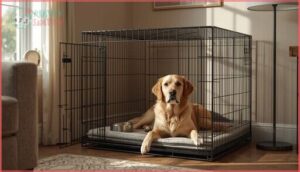
Once your dog feels at ease going in voluntarily, the next step is making sure the crate itself provides their comfort and safety.
- Crate size should allow your dog to stand, turn, and stretch — use an adjustable divider for puppies to prevent accidents in oversized spaces.
- Bedding material choice matters: a flat, washable mat beats a thick bed that reduces headroom.
- Ventilation and temperature need attention — place the crate away from windows and radiators using smart crate placement tips.
- Safety latch design should be smooth and secure, with no sharp edges that could catch paws or noses.
Providing Mental Stimulation and Exercise

A well-fitted crate keeps your dog physically comfortable, but mental engagement keeps them truly settled.
Puzzle feeders and lick mats turn crate time into a calm 10–20 minute brain workout.
Snuffle mats tap into natural foraging instincts. Rotating toys prevent boredom between sessions.
Pre-crate play using positive reinforcement training — short fetch games or nose work — helps your dog wind down naturally once the door closes.
Monitoring and Adjusting Crate Time

simple behavior log — note start times, end times, and any stress signals like pacing, whining, or accidents. If your dog shows new anxiety at a longer duration, pull back to the last calm interval and rebuild.
Camera alerts help you spot trouble remotely. For persistent issues, a vet check rules out pain or bladder problems driving the behavior.
Alternatives and Tips for Reducing Crate Time

A crate doesn’t have to be your dog’s only option when you need to keep them safe and contained.
There are several practical alternatives that can give your dog more room to move while still keeping things manageable for you. Here are a few worth considering.
Using Playpens and Gated Rooms
A playpen or gated room gives your dog room to breathe without full, free roam — a smart middle ground for space planning and crate alternatives.
Here’s how to set one up correctly:
- Safety Barriers: Match wall height to your dog’s size — 60–80 cm for small dogs, 100+ cm for large breeds.
- Potty Management: Add a designated pad in one corner so your dog keeps sleeping and toilet areas separate.
- Mental Enrichment: Include puzzle toys and chew items to reduce boredom during longer stretches alone.
- Adjustment Strategies: Start with short supervised sessions, reward calm behavior, and gradually expand your dog’s freedom as trust builds.
Hiring Pet Sitters or Using Doggy Daycare
When crating stretches too long, hiring a pet sitter or enrolling in doggy daycare can genuinely help.
Screen vetting matters — confirm background checks and insurance before booking.
For cost comparison, in-home sitters run roughly $10–$35 per visit, while daycare averages $35–$50 daily.
Consider dog’s personality fit, too: dog socialization in group daycare suits friendly dogs, while anxious ones do better with one-on-one care.
Incorporating Technology for Remote Monitoring
Technology has made remote monitoring surprisingly practical. A pet camera with two-way audio lets you check in and speak calmly to your dog mid‑session.
Smart Crate Sensors track temperature and restlessness, while AI Bark Alerts flag distress early.
Remote Treat Dispensing rewards quiet behavior instantly.
Wearable Activity Trackers log rest patterns, and Integrated Home Automation ties everything together for smarter, safer Dog Crate management.
Frequently Asked Questions (FAQs)
Can a dog stay in a crate overnight?
Yes, dog can safely sleep in a crate overnight.
Most healthy adults manage six to eight hours comfortably with proper crate training, a late potty trip, and mindful nighttime water intake before bed.
How long can a dog stay crated during the day?
Most healthy adult dogs can stay crated for about 4 to 5 hours during the day. Beyond that, they need a break, some movement, and a chance to relieve themselves.
How often should you let a dog out of a crate?
Let your dog out every 4 to 6 hours, adjusting break frequency based on dog age, potty training stage, and stress signals. Puppies and seniors need activity intervals as short as 2 hours.
How long can a puppy stay in a crate without a break?
Puppy crate time depends on age-based limits and bladder capacity. A 2-month-old holds roughly 2 hours; a 4-month-old, about 4 hours. Gradual increments work best.
What is the 7 7 7 rule for dogs?
The 7 7 7 rule uses Three Phase Timing — seven minutes with you nearby, seven alone, seven with you back, but ignoring the pup —
building a Positive Association through Incremental Extension and careful Stress Monitoring.
What happens if a dog is caged too long?
Excessive crate time causes muscle atrophy, joint stiffness, anxiety escalation, digestive issues, and social isolation.
Ignoring crate age limits puts dog safety and dog health at serious risk, and it can undo all your dog crate training progress.
Can two dogs share the same crate together?
Generally, no — most adult dogs do well with their own space.
Shared crate safety depends on size compatibility and temperament matching, and separate crates remain the standard recommendation for healthy dog behavior and dog safety.
Should you cover a crate with a blanket at night?
Covering a dog crate at night can help with crate comfort and nighttime routines, but always leave one side open for crate ventilation and watch for signs of dog anxiety.
Is crating a dog cruel if done regularly?
Crating a dog isn’t cruel when done correctly. It becomes a welfare concern only when it replaces exercise, social time, or exceeds safe limits.
Done right, crate training actually promotes canine stress relief and security.
What should you put inside a dogs crate?
Keep it simple: soft crate bedding, a safe chew toy or Kong, and a spill-proof water bowl. Comfort items like a worn shirt can help too.
Conclusion
A crate done right feels like a den—safe, calm, and familiar. Done wrong, it becomes a source of stress for both of you.
Understanding how long a dog can stay in a crate isn’t just about following a chart; it’s about reading your dog and adjusting as life changes. Puppies need more breaks, seniors need more comfort, and every dog needs time outside those walls.
Get the balance right, and the crate works for both of you.
- https://www.impactdogcrates.com/blogs/puppy-news/how-long-can-a-dog-stay-in-a-crate
- https://smalldogsheaven.com/what-happens-if-a-dog-is-crated-too-long/
- https://www.keendogtraining.com/blog/crate-anxiety
- https://www.petscare.com/news/faq/can-a-dog-stay-in-a-crate-all-day-2
- https://malegislature.gov/Laws/GeneralLaws/PartI/TitleXX/Chapter140/Section174E