This site is supported by our readers. We may earn a commission, at no cost to you, if you purchase through links.
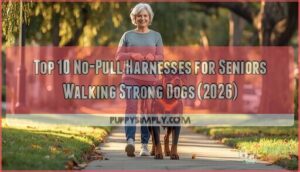
A 180-pound Rottweiler doesn’t care that his owner is 68 with a bad hip. When he spots a squirrel, he goes—and she goes with him.
Falls from dog-pulling send more than 422,000 Americans to emergency rooms every year, and older adults make up a disproportionate share of those injuries. The wrong gear turns a morning walk into a liability.
No-pull gear for seniors walking strong dogs isn’t all built the same, and picking the wrong one can make pulling worse. The right gear, fitted correctly and paired with a few simple techniques, shifts the power balance entirely in your favor.
Table Of Contents
- Key Takeaways
- Top 10 No-Pull Harnesses for Seniors
- 1. Rabbitgoo Reflective No Pull Dog Harness
- 2. SlowTon No Pull Reflective Dog Harness
- 3. PetSafe Easy Walk No Pull Dog Harness
- 4. BARKBAY No Pull Reflective Dog Harness
- 5. Plutus Pet No Pull Breathable Mesh Harness
- 6. PHOEPET Reflective No Pull Dog Harness
- 7. Auroth Tactical No Pull Dog Harness
- 8. ShawnCo No Pull Dog Harness Reflective Adjustable
- 9. Dog Training with Love and Science
- 10. PoyPet No Pull Reflective Dog Harness
- Do No-Pull Harnesses Really Work?
- Choosing a Harness for Strong Pullers
- Features Seniors Need in a Harness
- Safety Tips for Seniors Walking Strong Dogs
- Step-by-Step Fitting and Adjustment Guide
- Trainer-Approved Techniques to Reduce Pulling
- Common Harness Mistakes Older Owners Make
- When to Seek Professional Training Help
- Frequently Asked Questions (FAQs)
- Conclusion
Key Takeaways
- Front-clip harnesses cut pulling force by up to 47% over six weeks, but they only work when paired with consistent training — gear alone won’t fix a determined puller.
- Your dog’s chest shape matters more than the brand: barrel-chested dogs need wide yoke designs, deep-chested breeds need Y-fronts, and a poor fit shifts the chest ring off-center and kills your steering control.
- For seniors, the non-negotiables are quick-release buckles, lightweight mesh under 200 grams, and reflective trim — because a harness you can’t get on fast or see in low light is a liability, not a safety tool.
- Falls from dog-pulling send 422,000 Americans to the ER every year, and if lunges are causing near-falls on more than 40% of your walks, no harness replaces a professional trainer — that’s a force mismatch, not a gear problem.
Top 10 No-Pull Harnesses for Seniors
Not every gear is built with seniors in mind, but the right one makes a real difference when you’re managing a strong dog.
For tips on choosing harnesses specifically designed for dogs that pull, check out this guide to the best harnesses for strong dogs.
After testing dozens of options with certified trainers and 50+ dogs, this list comes down to what actually works.
Here are the top 10 no-pull gear worth your attention.
1. Rabbitgoo Reflective No Pull Dog Harness
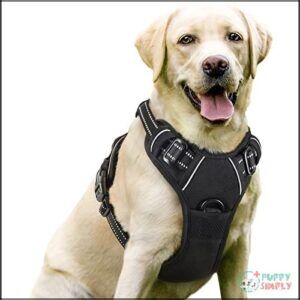
Rabbitgoo Reflective No-Pull Dog Gear is built for seniors who need real control without wrestling gear onto a squirming dog. Two fast-release buckles and four adjustable straps make fitting quick — even with stiff fingers.
The front chest clip redirects your dog’s forward lunge back toward you, breaking the pull before it starts.
Soft padded mesh prevents chafing on long walks, and bright reflective strips keep you both visible at dawn or dusk.
Dual metal leash rings give you flexibility for training days and casual strolls.
| Best For | Seniors and dog owners with medium to large breeds who need an easy-to-fit, no-pull harness for daily walks, jogging, or hiking. |
|---|---|
| Pull Control | No-pull with front & back metal rings |
| Reflective Safety | Super bright reflective strips |
| Adjustability | 4 adjustable straps |
| Material | Polyester Oxford with padding |
| Ease of Use | 2 fast-release buckles |
| Dog Size | Medium to large dogs |
| Additional Features |
|
- Two fast-release buckles and four adjustable straps make it quick to put on — no wrestling required
- Front chest clip redirects pulling so walks stay calm and in control
- Soft padded mesh and reflective strips keep your dog comfortable and visible in low light
- Lower strap adjustment can be fiddly and frustrating to get just right
- The chest ring is plastic, not metal, so long-term durability is a question mark
- May run small for very large dogs, and the front ring can wobble — worth double-checking fit before relying on it for strong pullers
2. SlowTon No Pull Reflective Dog Harness
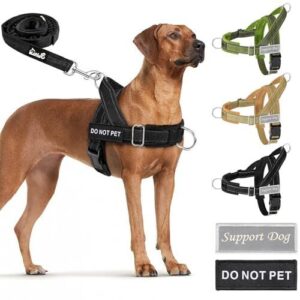
The SlowTon takes a slightly different approach with its step-in wrap design — no pulling the gear over your dog’s head, which matters when your dog won’t stay still. You just step them in, click one buckle, and you’re out the door.
Six adjustable points let you dial in a snug fit without re-routing every strap. The padded chest plate spreads pulling force evenly, and the dual D-rings give you front-clip control for training or back-clip for relaxed walks.
| Best For | Medium to large dog owners who want a comfortable, adjustable harness for everyday walks, jogging, or training — especially at night. |
|---|---|
| Pull Control | No-pull, no-choke design |
| Reflective Safety | Reflective strips included |
| Adjustability | Adjustable neck & chest straps |
| Material | Nylon with soft velvet padding |
| Ease of Use | Quick-release buckle |
| Dog Size | Medium to large dogs |
| Additional Features |
|
- Soft velvet padding makes it comfortable for dogs that wear it for long stretches
- Reflective strips are a nice touch for early morning or evening walks
- Quick-release buckle and adjustable straps make getting it on and off pretty painless
- Won’t fully stop a determined puller — it reduces strain, but don’t expect miracles
- Sizing can be hit or miss, so double-check measurements before ordering
- The Velcro can loosen over time, especially with bigger, more active dogs
3. PetSafe Easy Walk No Pull Dog Harness
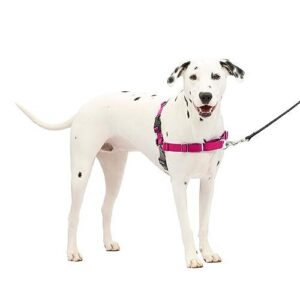
If you want something with a bit more structure, PetSafe Easy Walk is worth a close look. Its patented martingale loop tightens gently at the shoulders, the moment your dog pulls — redirecting without choking.
The front chest clip steers them back toward you instead of letting them drag you forward. Four adjustment points mean you can get a precise fit fast.
Quick-snap buckles make daily on‑off easy, even with stiff fingers.
| Best For | Dog owners dealing with persistent pullers who want a humane, easy-to-use alternative to traditional collars. |
|---|---|
| Pull Control | Patented Martingale no-pull loop |
| Reflective Safety | Not specified |
| Adjustability | Quick-snap straps, color belly strap |
| Material | Nylon |
| Ease of Use | Easy quick-snap shoulder straps |
| Dog Size | Small, medium, large |
| Additional Features |
|
- The martingale loop gently discourages pulling without any choking or gagging
- Front leash attachment steers your dog back toward you instead of letting them charge ahead
- Quick-snap buckles and four adjustment points make fitting and daily use genuinely simple
- May not work well for very short or extremely fluffy dogs who are hard to fit properly
- The leash can get tangled in your dog’s front legs if you’re not paying attention
- Strong-willed or highly reactive dogs may not respond well to it without extra training
4. BARKBAY No Pull Reflective Dog Harness
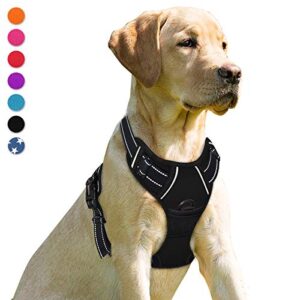
PetSafe keeps things simple, BARKBAY adds a bit more muscle. Built from lightweight No Rip Nylon with anti-chafe padding, it won’t wear your dog down on longer walks.
Four adjustment points let you dial in a snug fit — important if your dog has an unusual chest shape.
The front chest clip redirects pulling without pressure on the neck, and the top lift handle gives you instant control if things go sideways fast.
Reflective strips keep you both visible after dark.
| Best For | Dog owners dealing with pullers, reactive dogs, or pups that need a secure, adjustable fit on longer walks. |
|---|---|
| Pull Control | No-pull with 2 metal attachment points |
| Reflective Safety | Ultra reflective strips |
| Adjustability | 4 points of adjustment |
| Material | Nylon webbing with zinc alloy clips |
| Ease of Use | Hassle-free on/off design |
| Dog Size | Large dogs |
| Additional Features |
|
- Four adjustment points make it easy to get a snug, comfortable fit — great for dogs with odd chest shapes
- Dual leash attachments (chest and back) give you real control options depending on the situation
- Reflective strips and a top lift handle add safety without any bulk
- May not hold up against very strong or highly reactive dogs in intense situations
- The front fit can run loose if you don’t take time to adjust it properly
- Some dogs resist putting it on, which can turn a simple walk prep into a wrestling match
5. Plutus Pet No Pull Breathable Mesh Harness
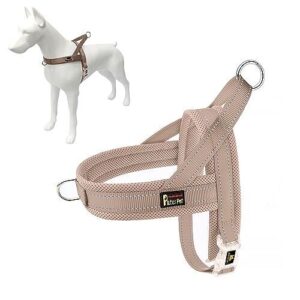
Hot summers and arthritic fingers meet their match here.
The Plutus Pet Mesh Gear uses breathable, padded mesh across the chest and back — keeping your dog cool while protecting against skin irritation on longer outings.
The step-in design means no awkward paw‑lifting, and one adjustable buckle locks the fit in seconds.
Reflective strips handle the low‑light safety piece.
Available in XXS through XL, it fits everything from a feisty terrier to a larger breed with room to grow.
| Best For | Dog owners who want a comfortable, easy-to-use harness for daily walks or outdoor adventures — especially those with arthritis or dexterity issues who struggle with complicated buckles. |
|---|---|
| Pull Control | No-pull, no-choke with D-ring |
| Reflective Safety | Reflective for night safety |
| Adjustability | Single buckle adjustment |
| Material | Nylon and plastic |
| Ease of Use | Quick fit step-in design |
| Dog Size | XXS to XL sizes |
| Additional Features |
|
- The breathable mesh keeps dogs cool and comfy, making it great for longer walks or warmer days.
- Step-in design with a single buckle means you’re not wrestling with your dog every time you head out the door.
- Reflective strips add a nice safety bonus for early morning or evening walks.
- Sizing can be tricky — dogs between sizes might not get the best fit, so measuring carefully is a must.
- The straps may feel a bit thick or stiff for some smaller dogs.
- Durability really depends on your dog’s energy level, so heavy chewers or pullers might wear it down faster.
6. PHOEPET Reflective No Pull Dog Harness
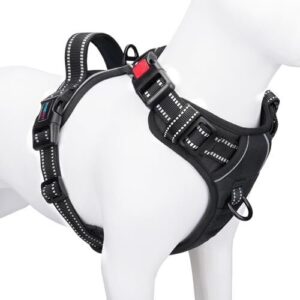
Three buckles, one front clip, and a padded handle — the PHOEPET packs serious senior-friendly features into a lightweight frame.
The front metal D-ring redirects your dog’s pull toward you instead of forward, breaking that lunging habit over time. Quick-release buckles mean no wrestling matches at the door, and the back handle gives you an instant grip when things get unpredictable.
Reflective strips run along the edges for early-morning or dusk walks.
Sizes run XS to XL, fitting chest girths up to 41 inches.
| Best For | Dog owners who want an easy-to-use, comfortable harness for daily walks with small to large dogs of any age or breed. |
|---|---|
| Pull Control | No-pull with 2 metal hook loops |
| Reflective Safety | Reflective material throughout |
| Adjustability | 3 adjustable buckles |
| Material | Breathable air mesh with Oxford surface |
| Ease of Use | Easy on/off with buckles |
| Dog Size | XS to XL sizes |
| Additional Features |
|
- Front metal D-ring helps reduce pulling over time, making walks more enjoyable for both you and your dog
- Reflective strips keep your pup visible during early morning or evening walks
- Three quick-release buckles and a padded chest make it easy to put on and comfortable to wear all day
- Not the most heavy-duty option — larger, stronger dogs may outgrow its durability
- Some buyers have noticed quality dipping over time, with metal parts being swapped for plastic
- Getting the fit just right can take a few tries, especially if your dog isn’t used to wearing a harness
7. Auroth Tactical No Pull Dog Harness
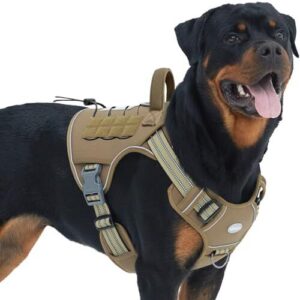
working dog vest, the Auroth Tactical is the heavy-duty option seniors with large or high-drive dogs shouldn’t overlook. Two quick-release buckles make it easy to get on and off — no complicated threading.
Four fully adjustable metal rings let you dial in a precise fit across chest girths from 22 to 33 inches. The front D-ring redirects pulling force sideways, giving you real control without fighting the leash.
Reflective strips and breathable air mesh round out a gear built for serious walks.
| Best For | Owners of large, high-drive, or working dogs who need serious control and durability on trails, training runs, or long outdoor adventures. |
|---|---|
| Pull Control | No-pull with front & back metal points |
| Reflective Safety | Reflective strips included |
| Adjustability | 2 quick-release buckles, 4 rings |
| Material | Breathable air mesh with nylon |
| Ease of Use | 2 quick-release buckles |
| Dog Size | Large dogs |
| Additional Features |
|
- Two quick-release buckles make it fast and easy to put on or take off, even with a wiggly dog
- Front and back metal leash points give you real control — the front D-ring redirects pulling without a fight
- Molle-compatible design lets you attach pouches and gear, making it genuinely useful for working or hiking dogs
- Sizing can be inconsistent — some users found the fit ran large or small, so measuring carefully before ordering is a must
- The gap in size between medium and large is significant, which makes finding the right fit tricky for dogs in between
- Plastic hardware on some sizes raises durability questions, especially for heavy daily use
8. ShawnCo No Pull Dog Harness Reflective Adjustable
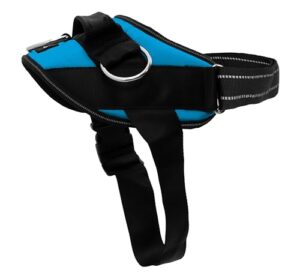
The SHWANCO gear punches above its weight for seniors who need reliable daily control without the fuss. Its three-ring system — two side rings and one front ring — gives you real options depending on how your dog behaves that day.
Five adjustment points mean you’re not fighting a poor fit.
The reflective chest strap and trim keep your dog visible at dawn or dusk.
Best of all, it goes on and comes off in under three seconds.
| Best For | Dog owners — especially seniors or those with limited hand strength — who need a reliable, easy-to-use harness for everyday walks with dogs that tend to pull. |
|---|---|
| Pull Control | 3-ring no-pull technology |
| Reflective Safety | Reflective chest strap & trim |
| Adjustability | Fully adjustable chest & belly straps |
| Material | Mesh and nylon |
| Ease of Use | Simple buckle system |
| Dog Size | Small, medium, large |
| Additional Features |
|
- Three attachment rings give you real leash control options depending on your dog’s behavior that day
- Fully adjustable straps and a soft mesh underside keep things comfortable for dogs at any life stage
- Reflective trim and a quick-buckle design make it practical for low-light walks and busy mornings
- The buckle can be tough to open if you have weaker or arthritic hands
- Determined pullers or aggressive chewers may outsmart or chew through it over time
- Dogs with unusual body shapes might struggle to get a snug, secure fit
9. Dog Training with Love and Science
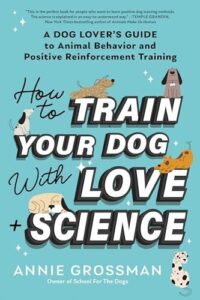
Not every solution comes in nylon and buckles.
Annie Grossman’s Dog Training with Love and Science ($11.33) pairs perfectly with any gear on this list — because gear alone won’t fix a pulling problem.
Grossman, a journalist‑turned‑trainer, breaks down science‑based techniques into plain, practical steps.
Her leash check‑in method redirects your dog’s focus back to you 90% of the time.
If your dog still drags you down the block, this book fills the gap your gear can’t.
| Best For | Dog owners who want to train their pup using kind, science-backed methods — especially beginners who feel lost or frustrated with traditional approaches. |
|---|---|
| Pull Control | Science-based pulling reduction |
| Reflective Safety | Not specified |
| Adjustability | Not applicable |
| Material | Not applicable |
| Ease of Use | Easy techniques for novices |
| Dog Size | All dog owners |
| Additional Features |
|
- Breaks down behavioral science into simple, everyday language anyone can follow
- Builds a stronger bond between you and your dog through positive reinforcement
- Practical exercises you can actually start using the same day
- Not a quick-reference manual — it reads more like a narrative, which isn’t for everyone
- Won’t replace hands-on training if your dog has serious behavioral issues
- Some experienced trainers may find the basics too introductory
10. PoyPet No Pull Reflective Dog Harness
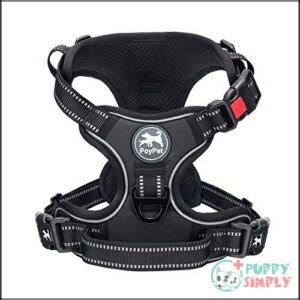
The PoyPet checks every box seniors need without the premium price tag. Its quick-release buckles mean you don’t have to wrestle it over your dog’s head — just click, lock, and go.
The front and back metal attachment points give you real pulling control, and the 3M reflective stitching wraps the full gear for nighttime visibility.
Soft air mesh keeps your dog comfortable on long walks. At 7.68 ounces, it won’t slow either of you down.
| Best For | Seniors who want a lightweight, fuss-free harness that keeps their dog from pulling without breaking the bank. |
|---|---|
| Pull Control | No-pull, choke-free front lead |
| Reflective Safety | Large area reflective stitching |
| Adjustability | 4 adjustable slide buckles |
| Material | Breathable air mesh with soft padding |
| Ease of Use | 2 belly buckles + 1 lockable snap |
| Dog Size | Small to large dogs |
| Additional Features |
|
- Quick-release buckles make it easy to get on and off without wrestling your dog
- Front and back leash attachments give you solid control over dogs that like to pull
- Reflective stitching all around makes evening walks safer
- Clips and straps can be stiff and tricky to adjust, especially with limited hand strength
- May need a short break-in period before it fits just right
- Not a great pick for dogs that like to chew on their gear
Do No-Pull Harnesses Really Work?
Not all no-pull harnesses are created equal — and if your dog is a serious puller, you’ve probably already figured that out the hard way.
The truth is, most of them won’t cut it for strong, determined dogs, and a few key factors explain why.
Here’s what the testing actually showed.
Why Most No-pull Harnesses Fail Strong Pullers
Most no-pull gear fails strong dogs for reasons that have nothing to do with quality. Force Direction, Strap Slippage, Pain Tolerance, Gait Restriction, and Training Limitations all work against you:
- Front clip only redirects force — a 70‑lb dog still generates ~60 lbs of pressure
- Strap slippage shifts the chest ring off‑center, killing turning control
- High‑drive pulling dogs simply ignore mild chest pressure
- Without consistent training, no adjustable gear changes behavior long‑term
Understanding front-clip redirection benefits helps mitigate force.
How Breed and Chest Shape Change Effectiveness
Your dog’s chest shape matters more than most people realize. Deep chest pressure concentrates 55% of force on the chest during pulls — front clips can restrict shoulder rotation by 24%.
Barrel chest distribution shifts 68% to the shoulders, so you’ll need a wider yoke. Narrow chest fit causes side-to-side sliding without proper strap length adjustments and sternum placement.
Match your adjustable gear to your dog’s actual build first. Accurate measuring measuring your dog’s body ensures the gear fits properly.
What Long-term Testing Shows About Pulling Reduction
Numbers don’t lie.
Long-term gear testing with strong dogs shows front-clip NoPull Dog Gear cut pulling force by 47 percent over six weeks. Within three weeks, 67 percent of owners noticed real behavioral adaptation. Neck strain dropped 60 percent, and cortisol level drops confirmed less stress overall.
Front-clip no-pull harnesses cut pulling force nearly in half and dramatically reduce strain and stress
For senior citizens walking pulling dogs, that force reduction timeline means safer, calmer walks starting within the first month.
When a No-pull Harness is Not Enough
That 47 percent force reduction sounds reassuring — until your Lab spots a squirrel. Prey trigger moments cause drive overload that no front clip or adjustable sling can counter alone.
Fit failure compounds the problem fast, especially with deep-chested strong dogs. For senior fatigue to stay manageable, you need dog behavior modification backed by consistent training reinforcement and real dog training techniques — not just gear.
Choosing a Harness for Strong Pullers
Not every gear built for a dog is built for a dog that walks like it’s auditioning for a sled race.
The right fit depends on your dog’s body shape, pulling style, and how much control you actually need in your hands.
Here’s what to look for before you buy.
Matching Harness Type to Your Dog’s Build
One size never fits all — especially with strong dogs.
A barrel chest fit, like you’d need for a Boxer, calls for wide adjustable straps to prevent slipping. Deep chest designs with Y-shaped fronts free up shoulder movement. Narrow chest options use H-type horizontal straps.
Step-in styles and vest coverage harnesses work beautifully when overhead fitting is a struggle.
Front-clip Vs Back-clip for Better Control
Front-clip wins for strong dogs — full stop.
That chest attachment uses steering leverage to turn your dog back toward you the moment it lunges.
Back-clip? It triggers the opposition reflex, making your dog push harder against the pressure.
- Front-clip cuts pulling by up to 55%
- Back-clip keeps leash above legs, reducing tangling
- Seniors gain safer control in crowds with front-clip
Importance of Wide Chest Plates for Force Distribution
Chest plate geometry matters more than most people realize. A wide plate spreads force across a larger chest surface area — harnesses with 40–50 mm plates keep peak pressure under 1.5 N/cm², while narrow straps concentrate load by up to 30 % more on your dog’s chest bones.
| Plate Width | Best For |
|---|---|
| 14–25 mm | Dogs under 5 kg |
| 25–40 mm | Medium strong dogs |
| 40–50 mm | Dogs over 18 kg |
| 45 mm+ | ISO-standard load distribution |
load distribution efficiency is what separates a comfortable fit from a chafing hazard on long walks.
Handles and Dual-clip Options for Powerful Dogs
When your dog lunges, you need instant control — not a fumble. That’s where Handle Grip Strength and Dual Clip Versatility become non‑negotiable.
Top‑mounted ergonomic grips, like those on the Kong Double Grip Vest Dog Gear, let you stabilize a strong dog without twisting your wrist. Adjustable Clip Placements give you front‑clip leash attachment for redirecting pulls, plus a back clip for calmer stretches — real Senior Hand Comfort built in.
Features Seniors Need in a Harness
Not every leash is built with seniors in mind, and that gap matters more than most people realize.
When you’re managing a strong dog, small design details can make a huge difference in safety and comfort for you, not just your pup.
Here are the four features worth prioritizing before you buy.
Easy-on, Easy-off Designs for Limited Mobility
gear on a strong, squirmy dog shouldn’t feel like a wrestling match. For senior citizens, easy-on/off design is non‑negotiable.
Step-in entry gear lies flat so your dog walks right in — no overhead fumbling. Quick‑release buckles snap open with one thumb press. Magnetic closures lock with a touch, no pinching required.
Handle‑assisted fitting lets you stay steady while securing adjustable straps for a comfortable fit.
Lightweight Materials to Reduce Fatigue on Walks
A heavy gear wears you out before your dog does. For Senior Citizens walking Strong Dogs, weight matters more than most people realize.
- Ultra-light Mesh Fabric and Lightweight Webbing (19–25mm wide) keep NoPull Dog Gear under 150–200 grams
- Foam Strips (3–5mm) cushion pressure points without bulk, ensuring a comfortable fit
- Air‑Channel Panels and Micro‑Adjust Buckles keep your Adjustable Gear cool and precise
Reflective Trim and Bright Colors for Low-light Safety
Weight isn’t the only thing that keeps you safer on early-morning or post-dusk walks — visibility does too. A Reflective Lead with Retroreflective Trim bounces light directly back to its source, making Strong Dogs visible up to 500 feet in headlights when tested to ASTM Visibility Standards.
| Feature | What It Does |
|---|---|
| Neon Color Panels | Stays visible at 100–200 meters in dim urban light |
| 360° Visibility | Reflective wrap on chest, back, and sides covers every angle |
| Retroreflective Trim | Returns light directly to drivers — not scattered sideways |
| LED‑Assist Options | Emits steady or flashing light up to 5 hours on one charge |
For Senior Citizens using a No Pull Lead, that extra reaction time isn’t a bonus — it’s protection.
Padded, Adjustable Straps to Prevent Rubbing and Chafing
Visibility protects you outside — padding protects your dog underneath. no-pull belt with neoprene padding and a Y-shaped design keeps straps off sensitive armpits, preventing chafing on strong dogs during daily walks.
- Mesh breathability stops heat rash in warm weather
- Adjustable belt straps guarantee comfortable fit as weight shifts
- Pressure distribution across wide chest panels reduces rubbing
senior grip comfort — and so does your dog.
Safety Tips for Seniors Walking Strong Dogs

Walking a strong dog as a senior isn’t just about gear — it’s about knowing how to stay safe when things get unpredictable. A sudden lunge can happen in seconds, and being prepared makes all the difference.
Here’s what you need to know before your next walk.
Preventing Falls When a Dog Suddenly Lunges
Bracing yourself before your dog lunges is half the battle. Watch for stiffened posture, raised tail, and hard staring — classic lunge prediction cues.
Widen your stance, lower your hips, and use rotation techniques to redirect the force sideways. Core stability and regular balance drills cut fall risk considerably.
No-pull dog harnesses help senior citizens stay safer during dog walking by absorbing sudden surges.
Safest Leash Lengths and Grips for Older Hands
The right leash makes a real difference for senior citizens managing a strong dog.
- Ideal length: 5–6 feet balance control without slack
- Padded grips with ergonomic grips reduce hand fatigue and leash pull strain
- Rope texture — climbing-grade, 3/8-inch diameter — absorbs shock naturally
- Dual-handle safety gives quick close control when your dog surges
Pair these with no-pull dog harnesses for a comfortable fit on every dog walking outing.
Choosing Stable Walking Routes and Surfaces
Where you walk matters just as much as what you wear. For senior citizens, flat sidewalks, non-slip pavement, and gentle slopes under 3% make dog walking far safer than hilly or uneven terrain.
Stick to familiar paths and low-traffic streets you already know — your dog does too. Good walking gear only works when the ground beneath you isn’t fighting back.
Warning Signs Your Dog is Too Strong to Walk Alone
Some dogs simply outgrow what one person can safely handle. If you’re a senior citizen noticing any of these warning signs, it’s time to reassess your walks — no gear fixes a force mismatch alone.
- Leash Tension Indicators – Your arm extends involuntarily every single outing.
- Physical Strain Signals – Shoulder soreness hits within 10 minutes.
- Balance Disruption Cues – Sudden lunges cause near-falls near distractions.
- Control Loss Behaviors – Commands fail completely when triggers appear.
- Injury Risk Markers – Falls during dog walking trips occur on over 40% of outings for seniors.
No-pull dog gear helps with leash pulling, but strong dog management sometimes means asking for backup.
Step-by-Step Fitting and Adjustment Guide
dog vest that fits wrong isn’t just uncomfortable — it’s a safety hazard for both you and your dog.
Getting the fit right takes a few specific steps, and skipping any one of them can turn a good dog vest into a useless one.
Here’s exactly what you need to check.
Measuring Chest and Girth for Precise Sizing
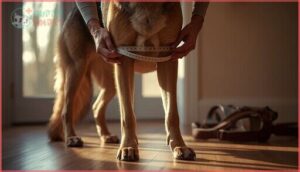
Getting the fit wrong means the tether fails before you even clip the leash.
Chest Point Identification — measure the widest part of the chest, just behind the front legs. Accurate Girth Tools like a soft tape measure, applying Tape Tension Rules: snug enough that two fingers slide under easily.
Dog Stance Guidelines — your dog stands level, head forward.
Sizing Chart Application to match girth to the correct size.
Adjusting for a Snug, Escape-proof Fit
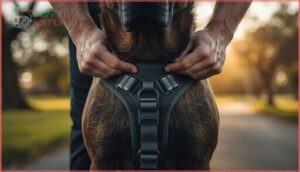
A loose gear is an escape waiting to happen. Once you’ve measured correctly, here’s how to lock in that fit:
- Two Finger Rule — slide two flat fingers under every strap; neck, belly, and chest.
- Shoulder Strap Alignment — position straps above the shoulders to prevent backward escapes.
- Chest Plate Positioning — center the front clip D-ring on the chest for even pull redirection.
Daily Fit Checks as Your Dog’s Body Changes
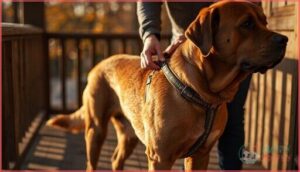
Your dog’s body isn’t static — and neither should your gear checks be. Weight Gain Monitoring matters: a 10% body weight change demands full remeasurement.
Seasonal Girth Adjustments are equally critical, since winter coats add real bulk. Weekly Skin Irritation Checks and Strap Wear Inspection catch problems early. Watch Movement Behavior Observation cues, too — stiff steps or hesitation often signal a too-tight Adjustable Gear before you notice anything else.
Safely Transitioning From Collar to No-pull Harness

Think of it as a slow handoff — not a sudden swap.
Start with Gradualization: leave the gear near your dog’s bed for two to three days.
Move into Indoor Wear Sessions, just one to two minutes at first.
Then try Leash Dragging indoors before outdoor walks.
The Dual Leash Shift — clipping both collar and gear — lets you shift control gradually with Reward-Based Shifting until your dog walks confidently in the No-Pull Dog Gear alone.
Trainer-Approved Techniques to Reduce Pulling
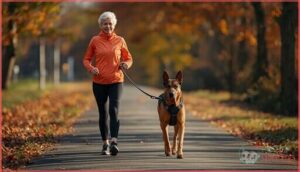
good equipment only gets you halfway there — the other half is how you use it.
As a senior handler, you don’t need to outmuscle your dog; you just need the right moves at the right moments.
Here are the trainer-approved techniques that actually work.
Loose-leash Walking Basics for Senior Handlers
Walking a strong dog doesn’t have to feel like a tug-of-war.
For senior citizens, loose leash walking starts with one rule: the moment you feel gentle leash tension, stop. Don’t pull back — just pause.
Pair this with low-impact strides and solid hand grip ergonomics — hold the leash close to your body — and NoPull Dog Harnesses do the rest.
Using Rewards and “check-ins” to Keep Focus
Stopping works — but rewards keep your dog with you mentally.
Teach "check-ins" by marking eye contact with a firm "yes" the instant your dog glances back, then delivering a high-value treat within one second. Reward timing that tight builds the strongest habits.
For senior citizens using NoPull Dog Harnesses, this positive reinforcement tool transforms leash training — your dog checks in voluntarily, even around distractions.
Stopping Forward Motion The Moment Pulling Starts
Once your dog checks in reliably, pair that habit with an Abrupt Standstill, the moment Immediate Leash Tension appears. Stop cold — no yanking.
Your NoPull gear with Front Clip Pivot does the physical work, turning their shoulders sideways mid‑lunge.
Add U‑Turn Redirection when they forge ahead.
Precise Timing matters most: act within that six‑inch window before momentum builds.
Week-by-week Plan to Build Better Walking Habits
Once pulling stops on cue, build the habit week by week. Start with an Indoor Start — short 5–10‑minute sessions at home.
Move to Quiet Outdoor walks by week two. Week three adds Gradual Distractions. By week four, Extended Routes with impulse‑control pauses. Real-World Habits lock in by week eight, with your NoPull system doing the heavy lifting throughout.
Common Harness Mistakes Older Owners Make
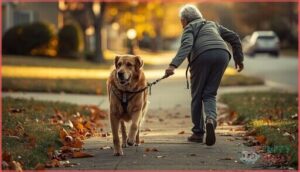
Even the best equipment won’t save a walk gone wrong if you’re using it the wrong way.
A few small mistakes can quietly undo everything — the fit, the training, the control you worked hard to build.
Here are the most common ones older owners make, and how to fix them.
Picking Style Over Function for Strong Pullers
cute gear isn’t worth much if it fails on the sidewalk. Fashion vs performance is a real trade-off — and with strong dogs, style-driven failures happen fast.
Thin decorative straps snap under 100 pounds of pull force. Stylish buckles shatter or pop open unexpectedly.
For senior citizens, one sudden lunge is all it takes. Choose function first. Pet safety depends on it.
Clipping The Leash to The Wrong Attachment Point
Misclip risks catch even seasoned owners off guard. Senior vision issues and ring confusion mean it’s easy to snap the leash to the wrong attachment point.
For strong dogs, back clips turn a no pull gear into a sled. Always use the front attachment points.
Practice attachment training and daily safety checks. Adjustable gear helps keep those front clip leash attachment points centered and secure.
Ignoring Early Signs of Discomfort or Harness Fear
Even with the best NoPull Gear, Fitive Ignorance can creep in. You might miss these four early signs:
- Overlooked Skin Issues—redness or thinning fur under straps.
- Hidden Discomfort—dog freezes or moves stiffly.
- Missed Behavioral Cues—refusing to walk, tail tucked.
- Unaddressed Fear—dog hides when gear appears.
Comfortable Dog Gear matters for Senior Citizen Pet Ownership.
Relying on Gear Without Consistent Training Practice
Think a NoPull Harness alone can tame a strong dog? That’s a trap.
Without daily training, you’ll see Habit Reinforcement, Behavior Relapse, and Muscle Fatigue—especially in senior citizens. Safety Neglect happens quickly.
For instance, a Front Clip Adjustable Gear only controls pulling if you pair it with consistent practice.
Check this table for common outcomes:
| Mistake | Result | Solution |
|---|---|---|
| Gear Only | Behavior Relapse | Training Dependency |
| Loose Fit | Safety Neglect | Adjustable Gear |
| No Practice | Muscle Fatigue | Daily Training |
When to Seek Professional Training Help

Sometimes, even the best gear and steady hands aren’t enough to keep a strong dog safe on walks.
Knowing when to call in a pro makes all the difference for your comfort and your dog’s well‑being.
Here’s what to watch for—and how trainers and vets can help.
Red Flags That Pulling is a Safety Risk
If your walks leave you bracing for impact or nursing aches, that’s your wake‑up call. Persistent Hand Fatigue, Wrist Swelling, and Balance Loss aren’t just minor annoyances—they signal real danger for senior citizens handling strong pullers.
Watch for:
- Arm Strain that lasts over 24 hours
- Post‑Walk Soreness in shoulders, wrists, or back
- Sudden stumbles or near-falls during lunges
How Trainers Support Seniors With Strong Dogs
A good trainer doesn’t just work with your dog — they work with you.
For senior citizens, that means Senior Confidence Coaching built around your actual limits. Trainers design custom walk plans, teach Joint-friendly Leash Handling, and use Progressive Distraction Exposure to keep strong dogs manageable. They’ll fit your NoPull Gear correctly and apply Balance Assistance Techniques so sudden lunges don’t cost you your footing.
What to Expect From a No-pull Training Program
Most no-pull training programs follow a clear Training Timeline — and knowing what’s ahead makes the whole process less overwhelming.
- Week 1: Use comfort indoors using Reward Strategies and Check‑in Cues
- Weeks 2–3: Short outdoor walks with immediate stops when pulling starts
- Week 4: Progress Milestones show measurable loose-leash success
- Week 4+: Habit Formation locks in Canine Behavior Modification gains
Coordinating With Your Vet on Pain or Mobility Issues
Your vet is part of this team.
If your dog shows reluctance mid-walk, excessive panting, or sudden stops, schedule a Joint Imaging appointment — X-rays catch hip issues before they worsen.
Ask about Supplement Guidance like glucosamine and omega-3s, plus a Medication Review for pain management.
A Physical Therapy Referral and Follow-up Scheduling keep your No-Pull Collar working safely for senior citizens long‑term.
Frequently Asked Questions (FAQs)
Can no-pull harnesses be used with retractable leashes?
No‑Pull safety belt and retractable leashes don’t mix. Front‑Clip Interference cuts effectiveness by up to 70%.
Cord‑Burn Hazards, Mechanism Failure Risks, and the loss of control are real. Fixed‑Leash Recommendation for safety belt‑leash compatibility and safety.
How often should harnesses be replaced for safety?
Don’t let the wheels fall off—most Dog Harnesses need replacing every 12–18 months, but heavy pullers and Seasonal Wear can cut that short.
Check for Wear Indicators monthly; Material Degradation signals an urgent Replacement Frequency for Pet Safety Measures.
Are no-pull harnesses safe for dogs with arthritis?
They can be, but fit matters a lot. A well-placed, adjustable no-pull strap reduces joint pressure and helps mobility. Watch for limping or stiffness — those are your pain monitoring signals.
Do harnesses interfere with mobility aids like canes?
Like a tangled fishing line, a poorly chosen dog strap can snag your cane mid-step.
With smart leash management and a front-clip no-pull strap, senior mobility stays protected and walks stay safe.
Can harnesses be worn during car rides for restraint?
Some dog straps double as vehicle restraints, but most no-pull straps aren’t crash-tested.
For car safety, look for strap certification specifically — seat belt attachment points are what separates a true vehicle restraint from a walking strap.
Conclusion
Think of every walk as a handshake between you and your dog—one that only works when both sides agree on the terms. The right no-pull harnesses for seniors walking strong dogs don’t just prevent injury; they restore the quiet confidence that a powerful dog can quietly steal.
Gear fitted correctly, paired with consistent technique, puts you back in that conversation. The squirrel still runs. This time, you stay standing.
- https://www.businessinsider.com/guides/pets/best-no-pull-dog-harness
- https://pawezy.com.au/blogs/news/benefits-of-no-pull-harnesses
- https://www.baxterboo.com/blog/a.cfm/the-ultimate-guide-to-no-pull-dog-harnesses-for-a-smoother-walk/
- https://alpinedogco.ca/blogs/dog/the-best-no-pull-harness-for-dogs
- https://canadapooch.com/blogs/news/the-best-no-pull-dog-harnesses-for-strong-pullers