This site is supported by our readers. We may earn a commission, at no cost to you, if you purchase through links.
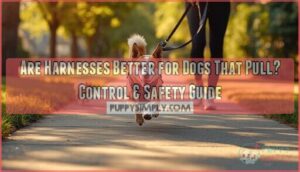
The moment your dog spots a squirrel, the leash turns into a tug-of-war rope—your shoulder pays the price, and your dog barely notices.
For many owners, collars seem to intensify the struggle, leaving both sides frustrated and risking injury.
Chest straps promise a different story, shifting control from the neck to the chest, where force disperses and pulling loses its power.
Understanding whether chest straps are better for dogs that pull means weighing safety against control, and behavior against biology.
If you’re tired of wrestling for balance, the right chest strap can transform walks from chaos to calm, unlocking new ways to manage pulling without compromising comfort.
Table Of Contents
- Key Takeaways
- Why Dogs Pull on Leash Walks
- Harnesses Vs Collars for Pulling Dogs
- Types of Dog Harnesses Explained
- Are Harnesses Better for Dogs That Pull?
- How No-Pull Harnesses Work
- Potential Risks of Collars for Pulling Dogs
- Choosing The Best Harness for Pulling Dogs
- Training Techniques With Harnesses
- Top 3 Harnesses for Dogs That Pull
- Signs Your Harness is Not Working
- Frequently Asked Questions (FAQs)
- Should you use a harness for a dog that pulls?
- Do dog trainers recommend harnesses?
- Do vets recommend dog harnesses?
- Can puppies wear no-pull harnesses safely?
- How often should a dog harness be replaced?
- Are harnesses suitable for off-leash training?
- Can harnesses worsen pulling if used incorrectly?
- Do harnesses affect a dogs natural gait?
- Conclusion
Key Takeaways
- Front-clip harnesses physically redirect your dog’s pulling momentum sideways, making them far more effective than collars for strong pullers without risking neck or tracheal injury.
- Collar pressure during hard pulls can spike high enough to cause real tracheal damage over time, making harnesses a protective necessity rather than just a comfort upgrade.
- No harness works alone—pairing it with consistent positive reinforcement training, like marking a loose leash within one to two seconds, is what actually changes your dog’s pulling behavior long‑term.
- Signs like chafing, escape attempts, or persistent pulling despite wearing a harness signal either a poor fit or the need for a certified trainer, not just better gear.
Why Dogs Pull on Leash Walks
Before you can fix the pulling, you need to understand why it’s happening in the first place.
Dogs pull for a handful of reasons, and the cause shapes everything — from your training approach to the gear you choose. Here’s what’s actually driving that forward surge on every walk.
If you’re unsure whether a harness or collar suits your pup, this guide to choosing between dog harnesses and collars breaks down what works best for different breeds and behaviors.
Natural Instincts and Exploration
Every pull on the leash tells a story rooted in biology, not defiance. Your dog’s brain is wired for three core drives that make walking calmly feel unnatural:
- Scent Driven Walks — 300 million receptors demand investigation
- Pack Foraging Behavior — ancestral roaming instincts push them forward
- Territorial Patrol Urges — boundary-marking feels urgent, not optional
Opposition Reflex Mechanics make it worse — leash tension literally triggers forward surge.
Understanding positive reinforcement basics can help reduce pulling.
Excitement, Anxiety, and Behavioral Triggers
Biology explains the instinct, but the moment your dog spots a squirrel darting across the path, prey drive takes over completely. Visual stimuli like cyclists, other dogs, or fast movement trigger intense forward lunging that feels impossible to interrupt.
| Trigger | Pulling Response |
|---|---|
| Scent Overload | Persistent forward pressure |
| Leash Frustration | Vocal barking, reactive lunging |
| Owner Energy | Mirrored arousal, early excitement |
Anxiety pulls just as hard — ears pinned, tail tucked, body stiff.
Using front-clip harnesses(https://pupspetclub.com/dog-leash-pulling/) can reduce pulling by redirecting the dog’s momentum.
Impact of Breed and Size on Pulling
Breed shapes pulling behavior just as much as instinct does. Consider these four realities:
- Large Breed Power — Mastiffs exceeding 200 pounds generate leash force that few collars can safely manage.
- Sled Dog Instincts — Huskies and Malamutes are literally built to pull forward.
- Small Dog Frequency — Toy breeds pull constantly, rarely corrected.
- Hunting Drive and Herding Control — Beagles chase scent; Shepherds chase movement.
A well-fitted no-pull gear accounts for these breed-specific differences.
Harnesses Vs Collars for Pulling Dogs
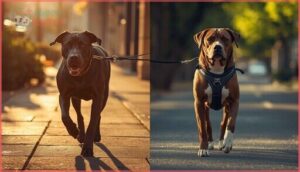
Choosing between a head halter and a collar isn’t just a matter of preference — it’s a decision that directly affects your dog’s safety and your ability to maintain control.
The differences come down to three key areas worth understanding before you make a choice. Here’s what to think about.
Key Differences in Control and Safety
The tool you choose changes everything about how your walk goes.
A frontclip lead redirects force sideways when your dog pulls, giving you real Steering Precision without jerking. A backclip lead lets them lean in and gain momentum.
Here’s how the main options compare:
| Feature | Frontclip Lead | Backclip Lead |
|---|---|---|
| Force Distribution | Across chest/shoulders | Concentrated forward |
| Escape Prevention | High | Moderate |
| Handler Strain | Low | Higher with strong pullers |
Pressure Distribution and Injury Risks
Where pressure lands matters more than most owners realize. Collars concentrate force directly on the neck — studies show peaks reaching 730 kPa during pulls, far exceeding the tissue damage threshold.
| Risk Factor | Collar | Harness |
|---|---|---|
| Neck Strain | High | Minimal |
| Respiratory Issues | Likely | Rare |
Utilize for dogs that pull to distribute load across Chest Pressure Zones and shoulders, reducing Spine Compression Risks and Vascular Restriction Effects substantially.
Situational Advantages and Disadvantages
Neither harnesses nor collars win every situation — context decides.
A front‑clip attachment steers reactive dogs away from triggers in busy streets, while a back‑clip vest suits calm urban crowd control.
For more tips on choosing the right harness and building better leash habits, check out this guide to effective dog harnesses for pullers and training.
For car travel safety, crash‑tested vests protect better than any collar.
| Situation | Harness Advantage | Collar Advantage |
|---|---|---|
| Reactive dog scenarios | Redirects lunges safely | None recommended |
| Training session impacts | Provides body guidance | Immediate leash feedback |
| Weather condition effects | Breathable mesh prevents overheating | Lightweight in mild weather |
A no‑pull vest genuinely changes the equation for strong pullers.
Types of Dog Harnesses Explained
Not all harnesses are built the same, and the difference between them matters more than most people realize.
The right choice depends on how your dog walks, pulls, and reacts to pressure.
Here are the three main types you’ll want to know before making a decision.
Standard Back-clip Harnesses

A back-clip gear is the simplest design in the dog gear lineup — the leash attaches to a D-ring centered between your dog’s shoulder blades, allowing natural movement without leg interference.
Its strength lies in material durability, using nylon webbing and reinforced stress points. Fit adjustment across neck and girth ensures proper pressure distribution, though it offers minimal pulling behavior correction.
Front-clip (no-pull) Harnesses
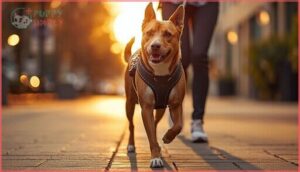
Front-clip gear flip the script on pulling behavior by placing the Attachment Ring Placement at your dog’s sternum, not the spine. When your dog surges forward, leash tension swings them sideways — their own momentum works against them.
- Material Durability: Wide nylon webbing distributes chest pressure evenly
- Adjustable Strap System: Customizable fit prevents shoulder chafing
- Reflective Safety Features: Low-light visibility built in
Pair this no-pull gear with positive reinforcement training for real results.
Dual-clip Harnesses
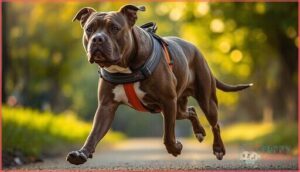
Think of dual-clip gear as the Swiss Army knife of dog walking equipment.
The dual-clip design gives you a front-clip gear option for active training sessions and a back-clip gear attachment for relaxed outings — one no-pull gear that fits your dog.
Pressure Balancing across chest and shoulders, Adjustable Fit, Material Durability in reinforced nylon webbing, and Safety Reflectors make this dog gear a smart Training Integration tool.
Are Harnesses Better for Dogs That Pull?
So, are gear actually better for dogs that pull?
The short answer is yes — and for more reasons than most owners realize.
Here’s what a gear does for you, your dog, and your daily walks.
Improved Control for Owners
Harnesses give you a real edge in leash tension management.
A front-clip dog harness redirects your dog’s pulling momentum sideways, making it far easier to maintain walking pace sync and respond to environmental distraction handling without a wrestling match. Research shows front-connect designs reduce pulling impulse substantially — giving you genuine control and safety through smart equipment, not sheer force.
Reduced Risk of Neck and Throat Injuries
Control matters, but so does your dog’s physical health.
Collar pressure during hard pulls can spike to over 44 N/cm² at the neck — enough to cause real tracheal damage over time.
front-clip attachment and proper chest pressure distribution keep those forces well under 1.32 N/cm², dramatically lowering neck strain reduction concerns.
brachycephalic safety especially, this dog walking equipment isn’t optional — it’s protective.
Behavioral Management Benefits
Physical safety and behavioral management go hand in hand. A no-pull headgear reduces arousal by keeping pressure off the throat, so your dog stays calmer around triggers.
That calmer state opens the door to enhanced focus, safer reactivity management, and consistent cueing with positive reinforcement.
Fewer stress responses mean more teachable moments — the foundation of real canine behavior modification and lasting dog training and behavior change.
How No-Pull Harnesses Work
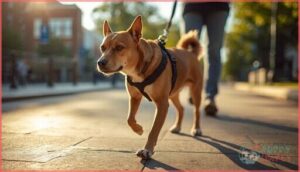
No-pull harnesses aren’t magic, but they’re built on a pretty clever principle.
The design works with your dog’s natural movement to reduce pulling instead of just punishing it.
Here’s a closer look at the mechanics behind how they actually get the job done.
Front-attachment Mechanics
The secret behind a no-pull gear is pure physics. When your dog lunges forward, the front-clip attachment converts that raw energy into a sideways pivot instead of a straight-ahead surge. Here’s what’s actually happening:
- Leash leverage shifts at the chest, not the neck
- Chest pressure spread distributes force across the breastbone
- Pivot point dynamics rotate shoulders toward you naturally
- Y-strap balance keeps the front-clip gear centered during pulls
That attachment angle is everything.
Redirection and Focus Techniques
That sideways pivot is only half the equation — what you do next determines whether your dog actually learns anything.
Pair your no-pull gear with verbal cue training: say “Easy” the moment tension builds, then mark any slack leash with a sharp “yes” and reward beside your foot. Direction change tactics and pressure release methods reinforce loose‑leash walking faster than equipment alone ever could.
Effectiveness for Strong Pullers
The numbers don’t lie — no-pull harnesses show up to an 87 percent reduction in pulling force on strong breeds like Pit Bulls and Staffies, with most owners seeing a 70 percent decrease within three weeks.
Material strength and durability testing matter here: military-grade nylon endures sustained tension without failing. Pair breed-specific fit with consistent positive reinforcement, and your leash training compounds fast.
Potential Risks of Collars for Pulling Dogs

Collars might seem like the simplest option, but for dogs that pull hard, they carry real risks that many owners don’t consider until something goes wrong.
The pressure a collar puts on your dog’s neck isn’t just uncomfortable — it can cause lasting physical and emotional damage. Here’s what you need to know before clipping that leash to a collar.
Collar pressure on your dog’s neck can cause lasting physical and emotional harm, making leash choice critical for their well-being
Neck, Trachea, and Spine Injuries
Every collar pull carries a hidden cost. Tracheal collapse, cervical spine stress, larynx compression, hyoid bone strain, and thyroid trauma are real risks when collar pressure spikes during walks.
Forces exceeding 40 Newtons can deform a small dog’s trachea, while repeated jerks weaken vertebral discs over time.
For canine health and safety, harnesses for dogs that pull distribute that force across the chest instead.
Behavioral and Emotional Impacts
Collar corrections don’t just hurt physically — they chip away at dog’s emotional wellbeing too. Chronic throat pressure raises anxiety, cuts confidence, and can spark leash reactivity over time.
Switching to a no-pull device aids stress reduction and emotional resilience by removing that cycle of discomfort. Pair it with positive reinforcement, and you’ll see real improvements in canine behavior and owner bonding fast.
Special Considerations for Small or Brachycephalic Breeds
Small and flat-faced breeds like Pugs, Frenchies, and Bulldogs face compounding risks from collar pressure. Airway safety becomes critical because brachycephalic dogs already struggle with restricted airflow — any neck tension worsens that. Collar pressure also raises eye pressure, increasing corneal ulcer risk. Their heat tolerance is limited, too.
A front-clip gear with adjustable fit, padded comfort, and proper chest fit offers meaningful tracheal protection.
Choosing The Best Harness for Pulling Dogs

Not every gear is built the same, and the right one can make a real difference for a dog that pulls.
There are a few key things worth looking at before you buy: fit and adjustability, padding and comfort, and reflective safety materials.
Here’s what to keep in mind for each.
Fit and Adjustability
Fit makes or breaks a gear. Start with a chest girth measurement — wrap a flexible tape around the widest part of the ribcage — then confirm the two-finger rule at every strap point.
Multi-point adjustments let you dial in the fit precisely, and body length sizing helps position escape-proof straps correctly so a determined puller can’t back out.
Padding and Comfort Features
Padding isn’t just comfort — it’s injury prevention in disguise. The right materials stop chafing before it starts and keep your dog focused on the walk, not the gear.
- Neoprene Cushioning flexes with lunges and dries fast
- Mesh Breathability vents heat during high-effort pulling
- Fleece Liners target underarm friction on sensitive skin
- Wide Strap Padding spreads chest pressure evenly
- Edge Roll Finish eliminates sharp webbing contact points
Reflective and Safety Materials
Visibility matters as much as fit.
Retroreflective Strips bounce headlight beams back over 500 feet, while High‑Visibility Colors like fluorescent lime yellow meet EN ISO 20471 standards for road‑adjacent walks.
Durability Standards guarantee reflective materials survive 50+ washes without fading.
Smart Placement Strategies and LED Integration close the remaining blind spots.
| Safety Feature | Practical Benefit |
|---|---|
| Retroreflective Strips | Visible up to 500 meters in headlights |
| High‑Visibility Colors | Daytime contrast on trails and roads |
| LED Integration | 360° light for night walks |
| Placement Strategies | Eliminates blind spots from all angles |
| Durability Standards | Brightness retained after repeated washing |
Training Techniques With Harnesses
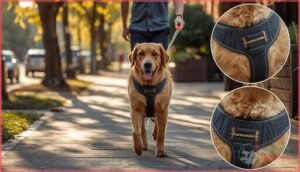
A lead alone won’t stop your dog from pulling — the real work happens in how you use it. The good news is that the right techniques, paired with the right gear, can turn chaotic walks into something you actually look forward to.
Here are the core training methods that work best when you’re walking a dog that pulls.
Loose-leash Walking Basics
Mastering loose-leash walking starts with understanding one simple rule: a tight leash means you stop, a slack leash means you go. Your handler stance, leash length, and body language all send signals your dog reads constantly.
- Keep leash length to 4–6 feet
- Start in low-distraction areas, then increase gradually
- Reward timing matters—mark the moment the leash slackens
- Attach to a no-pull collar for clearer feedback
Positive Reinforcement Strategies
Once your dog understands that a slack leash means forward motion, positive reinforcement training locks that habit in place. Marker timing is everything — reward within one to two seconds of a loose leash, using a clicker cue or a firm “yes.”
Start with high treat frequency, rewarding every few steps, then scale back. Environmental rewards like a favorite sniffing spot and calm breaks replace food over time.
Combining Training With Equipment
Pairing positive reinforcement training with a nopull gear lets you sync leash cues and reward timing for real progress. For instance, rotating equipment and gradually introducing distractions builds lasting behavior change. You’ll notice your dog anticipating slack, not just reacting. Try these:
- Rotate gears for varied environments
- Track leash cue sync during walks
- Increase load progressively as distractions rise
Top 3 Harnesses for Dogs That Pull
Choosing the right gear can make all the difference when you’re working with a dog that pulls.
With so many options on the market, it helps to know which ones truly stand out for control and comfort. Here are three gear that consistently earn high marks from trainers and owners alike.
1. 2 Hounds Freedom No Pull Dog Harness
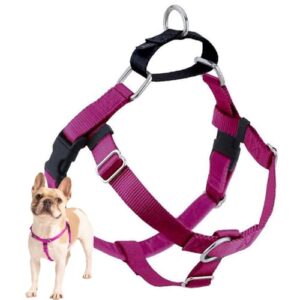
Ever wondered how you could steer a strong puller without resorting to harsh corrections?
The 2 Hounds Freedom No Pull Dog Gear uses both a front and back attachment, giving you real leverage and control. Its Swiss velvet lining cushions sensitive skin, while four adjustment points help you fine‑tune the fit.
When clipped to both points, you’ll notice less strain on your arm and more responsive walking. Built with stainless steel hardware and durable nylon, it’s designed to withstand daily use—even with high‑energy dogs.
| Best For | Dog owners looking for a gentle, effective way to manage strong pullers or energetic dogs during walks and training. |
|---|---|
| Connection Points | 2 connection points |
| Adjustment Points | 4 adjustment points |
| Anti-Pull Design | Front clip redirects pulling |
| Material | Nylon webbing |
| Size Options | XS, S, M, L |
| Use Case | Training and walking |
| Additional Features |
|
- Reduces pulling and strain, making walks easier and more enjoyable.
- Adjustable fit and soft velvet lining keep dogs comfortable.
- Durable materials and chew warranty offer peace of mind.
- May not fit dogs with very small necks and large chests without careful sizing.
- Clips on the smaller harness can be tricky for people with big hands.
- Some customers report quality issues, like tearing after regular use.
2. Blue-9 Adjustable Balance Dog Harness
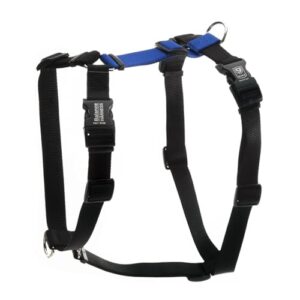
Blue-9 Adjustable Balance Dog Gear go hand in hand with balance and adjustability. You get six points of adjustment, so your dog moves freely without restriction, and the buckle neck design makes life easier for head‑shy dogs.
The dual D-rings—front and back—offer real options for redirecting pulling, while reflective threading boosts low‑light safety.
If your dog’s neck is sensitive or you’ve struggled with gear fit before, this model’s snug, customizable straps help prevent chafing and keep walks comfortable.
| Best For | Owners looking for a comfortable, customizable harness for training, daily walks, or dogs with sensitive necks. |
|---|---|
| Connection Points | 2 D-ring points |
| Adjustment Points | 6 adjustment points |
| Anti-Pull Design | Front clip manages pulling |
| Material | Nylon |
| Size Options | Multiple sizes |
| Use Case | Training and sports |
| Additional Features |
|
- Six adjustment points let you dial in the perfect fit for almost any dog.
- No-pull design with two leash attachment points helps manage mild to moderate pulling.
- Easy on/off buckle neck design is great for dogs who dislike things going over their head.
- Buckles and straps can be tricky to adjust, especially at first.
- The top (dorsal) strap may shift or slide during active play.
- Not ideal for dogs who lunge hard or pull heavily on walks.
3. RC Pets Tempo No Pull Harness
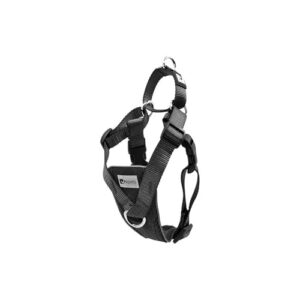
Control is the cornerstone of the RC Pets Tempo No Pull Gear. Its dual connection points—front and back—let you redirect your dog’s focus and apply gentle pressure across the shoulders, which discourages pulling without choking.
Four adjustment points guarantee a secure fit, even on active dogs, while side‑positioned buckles prevent irritation.
The ripstop material breathes well, and reflective labeling keeps nighttime walks safer.
If your dog’s pulling is moderate and you want comfort plus control, this gear strikes a practical balance.
| Best For | Owners of small to medium dogs who want better control and comfort during walks, especially if their pup pulls but isn’t overly strong. |
|---|---|
| Connection Points | 2 dual connection points |
| Adjustment Points | 4 adjustment points |
| Anti-Pull Design | Front clip redirects attention |
| Material | Ripstop fabric |
| Size Options | X-Small to Medium |
| Use Case | Training and walking |
| Additional Features |
|
- Dual connection points help redirect pulling without choking.
- Four adjustment spots and side buckles keep the harness comfy and secure.
- Reflective label adds safety for nighttime walks.
- May not fit all dogs perfectly, even with correct sizing.
- Can feel bulky or heavy for smaller dogs.
- Plastic buckles might not hold up as well as metal ones.
Signs Your Harness is Not Working
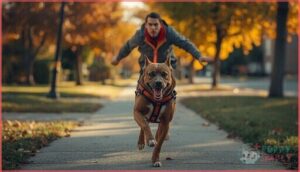
Even the best gear won’t always solve every pulling problem on its own.
Sometimes, your dog’s behavior or comfort can tell you when it’s time to reassess.
Here are a few signs your current setup isn’t working as well as it should.
Chafing, Discomfort, or Escape Attempts
Is your dog’s sling leaving red marks or prompting escape attempts? Armpit Friction and Strap Slip can cause Skin Irritation Signs—think hair loss, licking, or chafing. Girth Strap Loosening triggers Escape Maneuver Triggers, especially in anxious or high‑energy dogs. Prioritize padded comfort, adjustable fit, and dualclip design in nopull slings for dogs that pull.
| Problem | Solution |
|---|---|
| Armpit Friction | Padded Comfort |
| Strap Slip | Adjustable Fit |
| Skin Irritation Signs | Regular Inspection |
| Escape Triggers | Secure Girth Strap |
| Girth Loosening | Dualclip Design |
Persistent Pulling Despite Equipment
If your dog keeps pulling despite wearing no-pull equipment, the equipment isn’t the problem — the interaction between you, your dog, and the environment is.
Equipment fit slippage, inconsistent leash tension signals, poor handler timing, and a deep reinforcement history of pulling all undermine even the best dog equipment.
Environmental triggers intensify the issue further, making training techniques for dogs essential alongside any equipment choice.
When to Consult a Professional Trainer
When frustration outweighs progress, it’s time for professional guidance.
Certified trainers assess canine behavior, tailoring pet training methods to your leash manners goals.
Look for these signs:
- Aggression or biting on walks
- Persistent leash reactivity
- Fear responses, like shaking or cowering
- Escalating owner frustration
- Multiple failed training techniques for dogs
Trainer selection ensures animal behavior management fits your needs.
Frequently Asked Questions (FAQs)
Should you use a harness for a dog that pulls?
Yes — a no-pull gear improves safety and pressure distribution while supporting training integration. For dogs with persistent pulling behavior, it’s the smarter starting point, regardless of breed suitability or size.
Do dog trainers recommend harnesses?
Most certified trainers today recommend harnesses, especially no-pull designs, as a core dog training tool. Evidence-based recommendations consistently favor harnesses over collars for dogs that pull, prioritizing safety and control.
Do vets recommend dog harnesses?
Most vets do recommend harnesses, especially for pullers.
Veterinary safety guidelines consistently favor harnesses over collars to protect canine health and safety, with 68% of surveyed vets endorsing them for heavy pullers.
Can puppies wear no-pull harnesses safely?
Most puppies can safely wear a no-pull safety vest from around 8 to 10 weeks, provided the fit is snug but not restrictive, with at least two fingers sliding under every strap.
How often should a dog harness be replaced?
Replace your dog sling every 6–12 months for active dogs, or up to 2 years for light use.
Inspect monthly for fraying, rust, or poor fit — material lifespan drops fast with daily pulling.
Are harnesses suitable for off-leash training?
Harnesses aren’t ideal for off-leash training. Collars offer better recall reliability and quick corrections. Trainer preference leans toward shifting away from no-pull or front-clip harnesses once loose-leash walking is solid.
Can harnesses worsen pulling if used incorrectly?
Yes, they can.
Improper clip placement, a loose fit, or inconsistent training can reinforce leveraged pull mechanics, turning your no-pull gear into dog walking equipment that actually encourages the behavior you’re trying to stop.
Do harnesses affect a dogs natural gait?
They can. A poorly fitted front-clip strap can reduce shoulder extension by up to 10 degrees, shortening stride length and disrupting gait symmetry — but proper adjustable fit largely eliminates these concerns.
Conclusion
It’s almost ironic—the tool designed to give you more control hands the real power back to your dog’s comfort.
That’s exactly why are harnesses better for dogs that pull; it’s not just a fair question; it’s the right one to ask before another walk turns into a wrestling match.
The chest takes the force, the neck stays safe, and your dog learns that pulling simply doesn’t work anymore.
consistent gear, consistent training—that’s the walk you both deserve.
- https://k9connoisseur.com/blogs/news/dog-collar-vs-harness
- https://dogrelationsnewyorkcity.com/blog/2021/10/04/collar-vs-harness-my-view-as-a-professional-dog-trainer/
- https://www.businessinsider.com/guides/pets/best-no-pull-dog-harness
- https://2houndsdesign.com/blogs/blog/no-pull-harness-analysis
- https://petcareshed.com.au/blogs/pet-supplies/how-to-stop-your-dog-from-pulling-harness-training-tips