This site is supported by our readers. We may earn a commission, at no cost to you, if you purchase through links.

Bathing a primary allergen—Can f 1 in a hypoallergenic dog twice weekly cuts the primary allergen—Can f 1—by up to 84%. That’s not a minor improvement; it’s the difference between a household that works for allergy sufferers and one that doesn’t.
frequency alone doesn’t tell the whole story.
Bathe too often, and you strip the skin barrier, triggering the very inflammation you’re trying to prevent. Bathe too rarely, and allergens accumulate faster than air filtration can clear them.
Getting hypoallergenic breed bathing frequency right depends on coat texture, activity level, climate, and skin condition—and each factor shifts the target.
Table Of Contents
Key Takeaways
- Bathing your hypoallergenic dog twice a week cuts the primary allergen, Can f 1, by up to 84%, but pairing that with HEPA filtration and regular brushing is what actually clears the air in your home.
- There’s no single right bathing schedule—coat texture, activity level, skin conditions, and season all shift the target, so treat frequency as a dial, not a fixed setting.
- Over-bathing strips your dog’s natural skin oils and disrupts pH balance just as much as under-bathing lets allergens pile up, so getting the interval right protects the skin barrier as much as it controls dander.
- The shampoo formula matters as much as the timing—sulfates, synthetic fragrances, and human-formula pH levels can quietly damage your dog’s skin, making fragrance‑free, pH‑balanced products a non‑negotiable baseline.
What Makes a Dog Hypoallergenic?
Not all dogs are created equal regarding allergies — and the difference usually comes down to coat type, dander production, and how much a dog sheds.
Breeds that tend to shed less and produce lower dander are often a better fit for allergy sufferers — explore low-allergen dog breeds ranked by coat and dander type to find your match.
Hypoallergenic breeds aren’t completely allergen‑free, but they’re built in ways that make life easier for sensitive owners. Here’s what sets them apart.
Common Hypoallergenic Dog Breeds
Several hypoallergenic dog breeds stand out as top choices for allergy-sensitive households. Poodles come in three breed size variations — standard, miniature, and toy — making them adaptable to nearly any living situation. Bichon Frises, Maltese, Schnauzers, and Portuguese Water Dogs round out the list.
Each has distinct exercise requirements and socialization needs, so allergy testing before adoption helps confirm compatibility before you commit.
Minimal shedding reduces allergens.
How Hypoallergenic Coats Differ
What sets a hypoallergenic dog apart starts at the coat level. Unlike double‑coated breeds, these dogs have a single‑layer structure, fine hair measuring 20–50 microns, and a longer growth cycle that limits shedding. Their curly texture traps loose strands close to the skin, and reduced oil production keeps allergens from spreading freely.
- Single Layer — no dense undercoat to shed
- Fine Hair — lightweight strands cling rather than drift
- Curly Texture — spirals contain loose hair until brushing
- Reduced Oil — sebaceous glands produce 30–50% less sebum
Understanding your dog’s coat type directly shapes bathing frequency and dog grooming decisions, especially if skin conditions are a concern.
Allergens such as Can f 1 protein are the primary trigger for dog allergies.
Allergens and Dander Reduction
Reduced shedding helps, but it doesn’t eliminate allergens entirely. The real culprit is Can f 1 protein, found in dander, saliva, and urine.
Bathing twice weekly cuts Can f 1 in fur by 84%. Pair that with Regular Brushing Routines, Dander-Removing Wipes, and HEPA Air Filtration, and you’re working a complete system.
Bathing twice weekly cuts dog allergens by 84%, but true relief comes from combining brushing, wipes, and HEPA filtration
Bathing frequency, the right dog shampoo, and Climate-Based Bathing Adjustments all shape how well you control your hypoallergenic dog’s allergen output.
Key Factors Affecting Bathing Frequency

hypoallergenic dog needs a bath isn’t a one-size-fits-all answer — it depends on a few key variables specific to your dog.
Getting this right matters more than most owners realize, since both under-bathing and over-bathing can cause real skin problems. Here are the main factors you’ll want to think about.
Coat Type and Texture
Your dog’s coat type is the single biggest driver of how often bath time needs to happen. A hypoallergenic dog with a curly coat — like a Poodle — traps dander close to the skin, demanding different care than silky or wire‑textured breeds.
Short-coated breeds have their own grooming rhythm—find out what works best with this guide to short coat grooming frequency.
- Curly coat maintenance requires bathing every 3–4 weeks to prevent matting and buildup.
- Wavy coat grooming for breeds like Portuguese Water Dogs suits a 4–6‑week schedule.
- Silky coat care, wire coat stripping, and hairless skin moisturizing each follow distinct timelines — silky every 3–4 weeks, wire coats every 6–10 weeks, and hairless breeds every 2–4 weeks.
Unlike double‑coated breeds, most hypoallergenic dogs — whether long‑haired breeds like the Maltese or short‑haired breeds like the Chinese Crested — shed minimally, so bathing focuses more on skin health than hair removal.
Activity Level and Lifestyle
How active your dog is shapes washing frequency just as much as coat type.
Outdoor Play in parks or trails can push baths to every 2–4 weeks, while an Indoor Sedentary lifestyle comfortably stretches intervals to 6–8 weeks.
A Swimming Routine adds chlorine or saltwater concerns.
Exercise Intensity, Family Allergy sensitivities, and overall lifestyle all work together to determine your dog’s ideal bathing schedule.
Skin Health and Medical Needs
Your hypoallergenic dog’s skin health often drives bathing decisions more than anything else.
Atopic Dermatitis Management generally calls for weekly medicated baths, while Yeast Infection Control requires twice‑weekly ketoconazole shampoos. Bacterial Infection Treatment uses chlorhexidine formulas to cut recurrence by 50 percent.
Dry Skin Prevention means spacing baths at least every four weeks.
Food Allergy Impact can trigger flare‑ups too — always follow veterinary advice rooted in canine dermatology.
Environmental and Seasonal Considerations
hypoallergenic dog spends time shapes washing frequency just as much as breed or coat type.
spring pollen clings to fur and can trigger skin reactions, so weekly rinses help. summer humidity makes coats oily faster, while winter dryness calls for baths every four to six weeks.
urban pollution and coastal salt each demand their own bathing tips to protect your dog’s skin health year-round.
Recommended Bathing Frequency by Breed

Not every hypoallergenic breed needs the same bath schedule — and getting it wrong can do more harm than good.
Coat texture, skin sensitivity, and how each breed carries dirt all shape how often you should reach for the shampoo.
Here’s what the science and clinical experience suggest for the most common hypoallergenic breeds.
Poodles and Poodle Mixes
Poodles — whether Toy, Miniature, or Standard — generally do best with a bath every 2 to 4 weeks. Their dense, curly coat care demands consistency: that tight curl traps dirt, dander, and allergens quickly.
For poodle mix breed shedding, like Goldendoodles or Labradoodles, a 3 to 4 week bathing schedule works well. Active dogs need the shorter end.
Always flag skin sensitivity or conditions to your groomer — groomer communication keeps your bathing tips targeted and effective.
Bichon Frises and Maltese
Both the Bichon Frise and Maltese have soft, low-shedding coats that need a bath every 2 to 3 weeks — more often if you’re pursuing show-style grooming.
For an allergy-friendly home with better indoor air quality, tightening your bathing schedule during seasonal dander peaks helps considerably.
Shorter puppy cuts can stretch the bathing frequency slightly, but don’t skip regular dog grooming; their coat type traps oils fast.
Schnauzers and Portuguese Water Dogs
Schnauzers have a wiry, weather-resistant coat that actually depends on coat oil balance to stay functional.
Bathe them every 4 to 6 weeks — over-bathing strips those oils and softens the texture.
Portuguese Water Dogs, built for water-resistant grooming, need a bath every 3 to 4 weeks, especially with an active indoor/outdoor lifestyle.
Both breeds benefit from seasonal bath adjustments and shampoos designed for skin sensitivity management.
Step-by-Step Bathing Guide for Hypoallergenic Dogs
Bathing a hypoallergenic dog isn’t complicated, but the order of steps matters more than most people realize. Done right, it protects the skin barrier and keeps the coat in good shape between grooming sessions.
Here’s exactly what to do, from start to finish.
Pre-Bath Brushing and Preparation

Brushing before the bath isn’t just prep work — it’s where good coat maintenance actually begins. For your hypoallergenic dog, this step takes care of loose fur removal, tangle prevention, and skin inspection all at once. Follow this grooming routine every time:
- Tool Selection – Use a slicker brush for curly coats; a steel comb for finer textures
- Loose Fur Removal – Brush thoroughly to reduce shedding volume before wetting
- Tangle Prevention – Work in the hair growth direction to stop mats from tightening under water
- Skin Inspection – Check armpits and belly for redness, lumps, or hot spots
- Area Protection – Insert cotton balls in ears; place a non-slip mat in the tub
Choosing Hypoallergenic Dog Shampoos
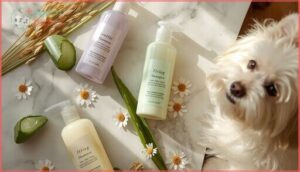
Once your hypoallergenic dog is brushed and ready, the shampoo you reach for matters more than most owners realize.
Choose a dog-specific shampoo with ingredient safety in mind — look for oatmeal, aloe vera, or chamomile, and confirm it’s fragrance-free and pH-balanced between 6.5 and 7.5.
A tearless formula protects sensitive eyes.
Avoid sulfates; they strip natural oils and invite dryness faster than overbathing ever could.
Proper Bathing Techniques
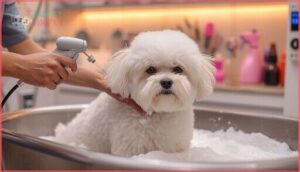
With the right shampoo selected, your bathing techniques for dogs come down to four things. Keep water temperature control steady — lukewarm, around 99–102°F — since hot water aggravates sensitive skin.
Position your spray nozzle close to the body so water reaches the roots. Use gentle massage with your fingertips, not nails. Tuck cotton balls loosely in the ears for cotton ball protection, then rinse until the water runs completely clear.
Drying and Aftercare

Once rinsing is done, drying matters just as much as the bath itself. Start with towel drying techniques — microfiber absorbs far more moisture than cotton. Then apply blow dryer safety principles: low heat, the nozzle 6 inches from skin.
- Blot belly, paws, and chest first
- Switch to a dry towel when saturated
- Use a high-velocity dryer for curly coats
- Practice post-dry brushing to distribute skin oils
- Check armpits and groin — they stay damp longest
These drying tools and skin protection strategies complete any solid bathing routine.
Tips to Maintain Skin and Coat Health

Bathing your hypoallergenic dog is only part of the equation. What happens between baths matters just as much for keeping their skin balanced and their coat in good shape.
Here are a few straightforward habits that make a real difference.
Avoiding Over-Bathing and Dry Skin
Over-bathing is one of the most common mistakes with hypoallergenic dog care. Washing too often disrupts your dog’s skin pH balance, stripping protective oils and triggering dry skin conditions.
Watch for oil stripping signs like flakiness, redness, or brittle fur.
Stick to breed-appropriate washing frequency — every 4–6 weeks for most.
Use moisturizing shampoos with oatmeal or aloe, and rely on dry shampoo alternatives between baths for post-bath hydration support.
Brushing Between Baths
Between baths, consistent brushing does more than keep your hypoallergenic dog looking neat. A Daily Brush Routine reduces allergens by capturing loose dander before it drifts into your home — Allergen Capture Efficiency improves up to 30% per week with regular sessions.
Use a Sectioned Brushing Method, working in small lines from skin outward.
Proper Brush Type Selection matters too: slicker brushes suit curly coats, while pin brushes handle longer fur.
Oil Distribution Benefits follow naturally, keeping your dog’s coat balanced and healthy.
Diet’s Role in Skin and Coat Condition
hypoallergenic dog eats directly shapes their skin and coat from the inside out.
Protein Balance matters most — hair is 95% protein, and deficiencies cause brittle, patchy coats fast.
Omega‑3 Sources like salmon oil reduce inflammation and support the skin barrier.
Zinc Supplementation prevents flaky buildup, while Biotin Benefits include thicker, stronger hair growth.
Essential Fatty Acids round out solid Dog Nutrition for lasting coat care and fewer skin conditions.
Common Bathing Mistakes to Avoid

Even with the best intentions, a few common mistakes can undo all your careful grooming work. Small missteps — like the wrong shampoo or skipping a thorough rinse — can irritate your dog’s skin faster than you’d think.
Here’s what to watch out for.
Using Harsh or Scented Products
The wrong shampoo can quietly wreak havoc on your hypoallergenic dog’s skin.
Sulfate risks are real — sodium lauryl sulfate strips natural oils, triggering dryness and irritation.
Fragrance allergies from synthetic scents release hormone-disrupting phthalates, while paraben hormone-disruption compounds cause long-term damage.
Human shampoo hazards stem largely from pH mismatch damage: human formulas run acidic at 5.5, far outside your dog’s healthy 6.5–7.5 range.
Always choose pH-balanced, fragrance-free shampoos designed for sensitive skin conditions and proper allergy management.
Inadequate Rinsing or Drying
Rushing through the rinse is one of the most overlooked mistakes in dog coat maintenance. Shampoo residue left on your hypoallergenic dog alters skin pH, triggers skin irritation, and blocks follicles — setting the stage for infection risk within days.
Moisture trapping in dense coats breeds bacteria fast.
Rinse thoroughly for at least five extra minutes, then dry completely.
Damp fur means coat dulling, matting, and real skin conditions ahead.
Ignoring Ears and Sensitive Areas
Sensitive areas get ignored more often than you’d think — and your dog pays for it. Ear water trapped in the L-shaped canal invites bacterial and yeast infections quickly. Three areas deserve focused attention during every bath:
- Ear and Nose Protection – block the canal, tilt the nose up
- Eye Shielding – use a damp cloth barrier
- Vulva Hygiene and Anal Gland Care – wipe gently, skip direct water exposure
Frequently Asked Questions (FAQs)
Can hypoallergenic dogs still trigger severe allergies?
Yes, they can. Even a so-called hypoallergenic dog still produces Can f 1, and individual sensitivity variability means your reaction depends entirely on your immune system, not the breed’s reputation.
How do groomers handle hypoallergenic breed coats?
Groomers use a slicker brush technique on curly coats three to four times weekly, follow a hand‑stripping schedule for schnauzers, apply conditioner post‑bath, and use the diffuser drying method to protect skin health.
Are waterless shampoos safe for hypoallergenic dogs?
Waterless shampoos can work for your hypoallergenic dog — but only when used carefully.
Choose alcohol-free, sulfate-free formulas, apply the patch-test procedure first, and rely on spot-cleaning technique rather than full-coat application.
Should puppies follow adult bathing frequency guidelines?
No, puppies don’t follow adult dog bathing guidelines.
Puppy oil development is incomplete before six months, so bathing every three to four weeks protects their fragile skin health better than adult schedules.
Do hypoallergenic dogs need conditioner after every bath?
hypoallergenic dog breeds benefit from conditioner after every bath.
restores coat moisture, reduces skin sensitivity, and helps allergen reduction — especially for curly coat types like poodles that dry out quickly.
Conclusion
Skin that’s well-maintained doesn’t announce itself—it simply performs.
Getting hypoallergenic breed bathing frequency right means reading your dog’s coat, skin, and lifestyle as one integrated system rather than separate checkboxes. Bathe on schedule, choose gentle formulas, and brush consistently between sessions.
When you calibrate each variable correctly, allergen levels drop, skin stays intact, and your home genuinely becomes more livable. That’s not a small adjustment—it’s a measurable shift in daily quality of life.
- https://poodleprime.com/hypoallergenic-poodle-grooming/
- https://www.marriedwithbichons.com/2022/11/30/how-often-should-a-bichon-frise-be-bathed/
- https://www.dogster.com/dog-health-care/how-often-to-bathe-a-goldendoodle
- https://www.dialavet.com/vet-answers/shih-tzu-bath-frequency-once-week-386437
- https://dosty.co/en/blog/article/how-to-groom-a-red-wheaten-soft-coated-terrier-2025