This site is supported by our readers. We may earn a commission, at no cost to you, if you purchase through links.
Your dog’s coat tells you a lot before you even touch the clippers. Thick pants under the belly, tight mats behind the ears, that damp, slightly sour smell under long hair — all of these are early warnings that comfort and skin health are slipping.
Done well, clipping clears out trapped moisture, hidden knots, and loose undercoat so the skin can breathe and stay clean.
The best way to clip dog fur isn’t about getting a short cut, it’s about choosing the right tools, working with the coat’s natural growth, and moving in a steady, safe pattern from nose to tail.
Table Of Contents
- Key Takeaways
- Benefits of Clipping Your Dog’s Fur
- Choosing The Right Dog Clippers
- Essential Grooming Tools for Clipping
- Preparing Your Dog for Clipping
- Understanding Dog Hair Growth Patterns
- Safe Clipping Techniques Step-by-Step
- Breed-Specific Clipping Considerations
- Avoiding Common Clipping Mistakes
- Maintaining and Cleaning Your Clippers
- Tips for a Stress-Free Grooming Experience
- Frequently Asked Questions (FAQs)
- Conclusion
Key Takeaways
- Clipping starts with coat health: read the coat for mats, odor, and thickness, then keep it clean, dry, and brushed to prevent skin problems and infections.
- Use dog-specific tools and blades—powerful clippers with A5 blades, brushes, combs, and detangling sprays—and match blade length and direction of cut to coat type and body area.
- Always prep first with detangling, bathing, full drying, and calm handling, then clip with the grain in slow, overlapping strokes, using extra care and cooler blades on sensitive zones.
- Adjust how much you clip based on breed and coat (curly, double, wire), avoid over-clipping working coats, maintain and store clippers well, and seek a pro for severe matting or tricky dogs.
Benefits of Clipping Your Dog’s Fur
Keeping your dog’s coat trimmed isn’t just about looks—it’s an important part of their overall care. Regular clipping can make a big difference in their comfort and health.
If you’re unsure how often to clip or brush, this guide on best dogs for asthma sufferers also explains coat types and grooming needs in detail.
Here are a few key ways it helps keep your dog in top shape.
Health and Hygiene Advantages
Cleanliness matters more than appearance in good grooming. Clipping keeps your dog’s skin easier to wash and dry, helps air circulate, and reduces dampness that can cause infections.
A shorter coat lets shampoos reach the skin, prevents odor buildup, and exposes early signs of irritation before they worsen—keeping your dog healthy from coat to core. Regular grooming routines help prevent skin irritation, reduce the risk of health issues, and improve quality of life, as outlined in this comprehensive dog grooming guide.
Preventing Matting and Shedding
A well-timed clip complements your brushing frequency and makes coat care easier, especially through shedding seasons when hair loosens faster. Regular trimming with sharp dog clippers keeps coats from matting and distributes oils evenly. Staying on top of also protects your dog from skin infections and other health issues.
Combine three habits for best results:
- Maintain a steady bathing rhythm.
- Feed for balanced coat nutrition.
- Use gentle grooming techniques matched to coat types.
Early Detection of Skin Issues
On top of Preventing Dog Skin Issues like matting and heavy shedding, clipping gives you a clear window into coat health and what’s happening on the skin. A shorter coat makes Spotting Parasites, early Allergy Signs, Skin Infections, and even tiny Lumps or Growths much easier, so you can act fast if you see redness, skin irritation, or fleas.
| What you notice | Why it matters for your dog |
|---|---|
| Fleas or black flea dirt | Signals parasites before a full-blown infestation |
| Red, moist hot spots | Early Skin Infections that need drying and vet advice |
| Rashy belly or paws | Possible Allergy Signs from food or environment |
| Small Lumps or Growths | Track changes and report new or growing spots |
| Scaly, crusty patches | Points to chronic irritation or deeper Skin Infections |
Choosing The Right Dog Clippers
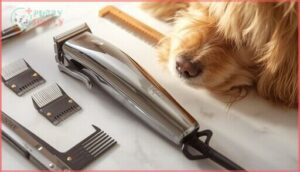
Picking the right clippers makes a huge difference in how your dog’s coat looks and how comfortable they feel during grooming. Not all clippers or blades work the same, and the wrong setup can cause tugging or uneven cuts.
Here’s what to know before choosing the tools you’ll use most often.
Types of Clippers and Blades
Think of your clippers and blades as the engine and wheels of your grooming setup — both have to match the job and your dog’s coat. Corded/Cordless Clippers each have a place: corded models give steady power for dense or matted coats, while cordless units offer freedom of movement and are often lighter and quieter, which helps nervous dogs relax. Clipper Motor Types matter too; rotary motors bring strong torque for full-body work, while magnetic and pivot motors tend to be softer and better for lighter clipping or touch‑ups.
When you look at blades, you’ll see Steel/Ceramic options and different tooth patterns, plus clipper attachments that change how the coat finishes. Standard hardened steel blades are tough and can be sharpened many times, while ceramic cutters stay sharp longer and run cooler, which is a quiet safety precaution against blade heat. Many A5 snap‑on blades combine a steel comb with a ceramic cutter, and you can choose skip‑tooth styles to power through thicker coats on the first pass, then swap to fine‑tooth blades for a smooth, polished finish.
- Use a powerful, corded rotary clipper for thick or matted coats, and keep a quieter cordless clipper for faces, feet, and quick in‑between grooms.
- Choose A5 snap‑on blades so one set of blades and clipper attachments can move between several clippers in your grooming tools kit.
- For safety precautions and comfort, pair cooler‑running ceramic or hybrid blades with proper oiling so they stay sharp, glide well, and don’t overheat on your dog’s skin.
Selecting Blade Lengths
Blade length is where control really kicks in, because the number on the blade tells you how much coat you’re actually leaving behind. Lower numbers and longer cuts, like around 1/2 inch, keep the body plush and are safer for double coats that need insulation.
Mid‑range options, roughly 1/8–1/4 inch, work well for neat pet clips, light mat removal, and low‑maintenance coats.
Higher‑number, very short blades are best saved for faces, paws, and sanitary or medical areas where you need a close, tidy finish without stripping the whole body.
Recommended Brands and Models
For most pet owners, cordless home kits like the Wahl Lithium Ion Pro Series give you solid clippers, basic clipper attachments, and blades in one simple bundle, so your grooming tools stay organized as part of your core grooming equipment.
For tips on keeping your dog clean and comfortable year-round, check out this guide on bathing your dog during the summer months.
For heavier work, Pro corded models such as the Andis UltraEdge shine, while Premium cordless units like the Andis Pulse ZR II cover salon‑level jobs.
If you’re watching your Budget or have a noise‑sensitive dog, look at Quiet options and mid‑range kits from known brands rather than no‑name sets.
Essential Grooming Tools for Clipping

Before you start clipping, you’ll need the right tools to get the job done safely and neatly. Each one plays a specific role in keeping your dog comfortable and your results smooth.
Here’s what to have on hand before you begin.
Brushes and Combs
Brushes and combs do the quiet heavy lifting before you ever pick up clippers, so don’t rush this step. Use a slicker brush for most Slicker Brush Uses: it pulls out loose undercoat, breaks up surface tangles, and helps prevent a solid mat from forming as you brush.
Then follow with the right Comb Types for Matching Coat, using a wider-tooth comb to detangle and a finer side to check for hidden knots as you comb through high-friction spots.
Scissors Vs. Clippers
When you’re choosing between scissors and clippers, think Speed vs. Precision. Clippers win for fast bulk removal on most coat textures, but they add more Noise and Vibration, which some dogs hate.
Scissors are slower but give precise shaping, better for avoiding nicks on faces, feet, and tails.
Match each tool to your Skill Level and coat, and build your tool selection around safe grooming practices.
Detangling Sprays and Accessories
Tangled fur snags clippers and stresses your dog. Detangling sprays make brushing smooth and safe before clipping. They cut friction, add shine with oils like jojoba, and suit dog skin pH.
Key uses:
- Mist coat lightly before brushing.
- Work spray into tangles with fingers.
- Use on damp or dry fur.
- Pair with dematting rakes for mats.
- Patch test new sprays first.
Preparing Your Dog for Clipping
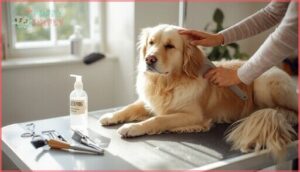
Before you start clipping, taking a few minutes to get your dog ready makes the whole process go more smoothly. Preparation helps both of you stay calm and comfortable.
Here’s what to do before you turn on the clippers.
Brushing Out Mats and Tangles
Ever notice how mats seem to hide until you’re already holding the clippers? Before you start cutting, divide the coat into small, palm-sized sections and part each one down to the skin so you can see where every knot begins and ends.
Support the hair between your fingers right above the mat, then use short, gentle strokes from the tips toward the skin. A slicker brush or dematting comb works well here, and using your fingers first to tease strands apart keeps the process calmer and less painful.
Work in a set pattern — neck, shoulders, back, then sides and legs — so you don’t miss tucked‑away tangles behind ears, in armpits, or around the groin. If a mat is extremely tight or the dog is clearly uncomfortable, don’t fight it; plan to clip that spot out later instead of risking a skin injury.
Bathing and Drying The Coat
Once you’ve brushed out the worst mats, move into a simple Bathing Sequence so the coat is truly ready for clipping. Use a dog shampoo, not human products, and make Shampoo Choice match the coat type, then rinse until the water runs clear. Squeeze out excess water with a microfiber towel rather than rubbing, since rough towel work can tighten tangles and slow you down.
From there, pick Drying Methods that fit your dog: a hair dryer on low heat for many pets, or High Velocity Drying for thick or double coats so you can blast out water and loose undercoat and get a straighter, easier-to-clip finish. However you handle dog bathing and drying, always check several spots to be sure the coat is bone dry at the skin before you ever pick up your clippers.
Calming and Acclimating Your Dog
After drying, start pregrooming preparation by focusing on calming the dog. Set up a Calm Setup—quiet space, soft lighting, non‑slip mat. Use Gradual Exposure through Clipper Desensitization and gentle rewards, watching Stress Signals like tense posture or heavy panting.
Understanding canine behavior reduces dog anxiety during grooming and builds lasting dog comfort for smoother clipping.
Understanding Dog Hair Growth Patterns
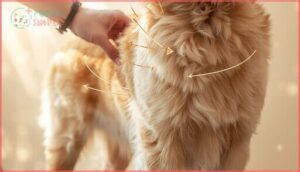
Before you start clipping, it’s important to understand how your dog’s fur grows. Each breed has its own pattern, and even different parts of the body can grow in unique directions.
Knowing these details helps you choose the right technique for a clean, even cut.
Identifying The Direction of Growth
Understanding hair growth patterns starts with simple Visual Cues, like watching which way the coat naturally lies from head to tail and where it forms clear ridges or part lines.
Use Tactile Checks with your fingers, gliding one way to feel smooth and the other to feel rougher, then add quick Clipper Tests to see which clipping direction leaves a softer, more natural finish.
Swirl Recognition also matters, so note cowlicks and crowns where hair grows in several directions at once, and adjust how you’re Using dog clippers effectively in those spots.
Breed-Specific Coat Types
Different breeds grow hair in distinct ways, so matching your clipping to the coat type matters. Double-coated dogs like Huskies keep a dense undercoat for insulation, while single-coated breeds such as Poodles grow hair continuously.
Wire-haired coats should stay textured through hand stripping, and silky or curly coats need regular trimming to prevent tangles.
Areas With Unique Hair Growth
Tricky zones, like little crossroads on your dog’s body, need you to really understand hair growth patterns before you clip. Facial Fur Patterns around the muzzle, eyes, and paws change direction quickly, so treat them as sensitive areas when you’re grooming specific dog body parts such as:
- Facial edges, whisker pads, and the muzzle
- Neck Growth Shifts, shoulders, and Belly Hair Directions
- Groin, inner thighs, and the Sanitary Area
Work slowly, follow Belly Hair Directions instead of forcing the coat flat, and always let the hair tell you which way your clippers should travel.
Safe Clipping Techniques Step-by-Step
Clipping your dog’s coat the right way takes patience and good technique. Proper handling keeps the coat even and prevents irritation.
Here’s how to move through each step safely and smoothly.
Clipping With The Grain
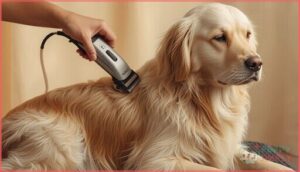
Think of clipping with the grain as “smoothing” the coat rather than shaving it down. You’ll follow the hair growth from head to tail using Gentle Strokes, keeping the blade flat so each pass stays even and controlled.
This clipping direction gives most Pet Trims a softer Natural Finish, better Skin Protection, and a slightly longer Coat Length, which is exactly what you want when you’re Using dog clippers effectively and practicing safe dog grooming techniques with calm, overlapping strokes.
Clipping Sensitive Areas Safely
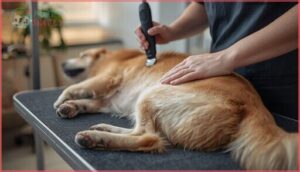
Sensitive Zone Identification is where your safe grooming practices really show, because areas like the groin, armpits, anus, belly, and inner thighs have thin, mobile skin that nicks easily with clippers when you rush or push too hard. Dog Positioning matters just as much, so support a hind leg at the knee when you lift for groin work, hold the tail gently in your palm for sanitary clips, and keep nervous or older dogs low and steady rather than stretching them into awkward poses.
Use Gentle Pressure only, letting the blade glide over the skin instead of pressing in, especially over loose flank or scrotal skin, and always move around the anus from the outside toward the center without letting the blade touch the opening, which helps with avoiding nicks in these sensitive areas. Blade Heat Management is non‑negotiable for using dog clippers effectively in sensitive areas, so touch the blade to your wrist or forearm often, oil and clean it to reduce friction, and switch or cool blades the moment they feel hot to your skin.
For truly safe grooming practices in sensitive zones, choose close but appropriate blades like a 10 or 15 used lightly, or a slightly longer option on easily irritated dogs, keep passes to a minimum, and have a pet‑safe soothing spray ready in case you see redness or licking after the trim.
- Keep clippers flat with Gentle Pressure over groin, armpits, belly, flank, and around the anus, always working away from openings and loose folds to avoid nicks on thin skin.
- Focus on Dog Positioning, supporting legs at the joint, stabilizing the tail in your hand, and lowering your body instead of yanking limbs up so sensitive areas stay still and safe.
- Practice Blade Heat Management by oiling often, checking temperature on your own skin, rotating blades, and stopping if you notice any redness or licking, which can signal clipper irritation that needs a break and soothing care.
Overlapping Strokes for Evenness
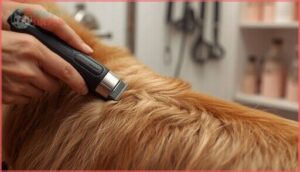
Smooth results come from steady, overlapping strokes—about one‑third of the blade’s width on most coats, half on thicker ones. Work slowly, keeping a consistent pace and light pressure so the clipper feeds evenly through the fur.
For a polished finish, make three passes: remove bulk, even high spots, then smooth out overlaps for a uniform look.
Breed-Specific Clipping Considerations
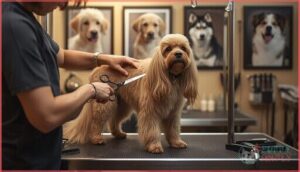
Different dogs have different coat types, and that changes how you should approach clipping. What works for one breed might be too harsh or uneven for another.
Here’s how to adjust your technique based on your dog’s coat and grooming standards.
Poodles and Curly-Coated Breeds
Poodles and other curly coat breeds need a different dog hair clipping guide than straight-coated dogs because Curly Coat Growth never really stops, so mats form fast if you fall behind. Use Matting Solutions first, then focus on careful Blade Selection, like body lengths with combs and shorter blades for sanitary work.
For Curly Coated Retrievers, think neat outline, light Retriever Trimming, and clear curls, not a shaved finish.
When you’re clipping different dog coat types like these, dog grooming with clippers must stay low, slow, and skin-aware so you keep curls functional while still following safe grooming practices for sensitive areas and joints.
Double-Coated and Wire-Haired Dogs
Double-coated and wire-haired dogs sit in a special lane in your Dog Hair Clipping Guide, because their coat texture does real work for them. To manage Double Coat Risks, focus on Undercoat Management with rakes and slickers, and limit clipping to feet, pads, and sanitary areas when you’re clipping different dog coat types.
For wire coats, lean on Wire Coat Stripping and light tidying instead of full-body clipping so you protect function, match breed-specific grooming needs, and stay within Safe Dog Grooming Practices.
Consulting Breed Grooming Standards
You just looked at how double coats and wire coats need special care, and this is where Official Standards come in for real breed-specific grooming considerations. Use them to guide Breed-specific cuts so your Pet still fits Show Ring Rules, Alteration Limits, and coat types and grooming needs when you’re Clipping Different Dog Coat Types or just want smart Finding Guidance on understanding hair growth patterns.
- Check kennel club breed pages for grooming sections.
- Read parent club grooming guides and diagrams.
- Look at show photos that match the written standard.
- Ask breeders how they balance pet trims with show outlines.
- Keep signature features, like beards or topknots, even on short pet clips.
Avoiding Common Clipping Mistakes
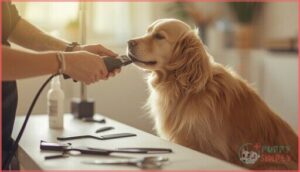
Even seasoned groomers can slip up if they rush or use the wrong method. Paying attention to your tools and how you handle them makes all the difference in the finish and your dog’s comfort.
Here are a few common mistakes to watch out for before you start clipping.
Cutting Against The Grain
Control is tempting when you flip the clippers into Reverse, but cutting against the natural hair growth is one of the easiest ways to create harsh Close Cut Effects and Skin Irritation.
Use this dog grooming technique only when you understand Breed Suitability, test a small patch first, and keep your clipping direction mostly with the grain when you cut a dog’s hair with clippers.
Using Incorrect Tools
Cutting against the grain might rough up the coat, but using the wrong tools can do worse. Human clippers tug dense fur, get hot fast, and leave uneven lines. Cheap grooming kits often stall mid-cut or pull hair.
Always choose strong, pet-safe clippers and sharp, well-fitted blades to keep each pass smooth and painless.
Recognizing Signs of Skin Irritation
Using the wrong tools is one of those common mistakes that often leads straight into skin irritation and Post-Clipping Redness on sensitive areas, so you need to watch your dog closely afterward.
Pay attention to:
- New Skin Bumps, hives, or rash-like patches after clipping.
- Licking Behaviors, chewing, or rubbing at recently shaved zones.
- Hot, bright red patches or moist spots that don’t settle, which signal trouble for grooming safety and avoiding nicks.
Maintaining and Cleaning Your Clippers

Your clippers need regular care to keep cutting smoothly and safely. A little upkeep after each grooming session saves you time and extends their life.
Here’s what you should always do to keep them in top condition.
Oiling and Cooling Blades
Healthy blades don’t happen by accident; make oiling and cooling part of your regular dog clipper maintenance and safety routine. Aim for an oiling frequency of about every 5–10 minutes of clipping, touching the key blade oiling points along the rails, groove, and teeth to prevent overheating.
Use clipper-safe coolant sprays alongside blade oil, not instead of it, for reliable clippers and overall grooming tools and maintenance confidence.
Cleaning After Each Use
After every grooming session, unplug your clippers before starting Blade Cleaning or Hair Removal. Brush away trapped hair from the blades, vents, and seams, then use approved Disinfecting Methods to sanitize your grooming tools.
This quick routine keeps your clipper maintenance reliable, ensures safe equipment maintenance, and prevents bacterial buildup that could irritate sensitive skin.
Proper Storage Practices
When you’re done clipping, how you store your gear matters as much as cleaning it. Keep everything organized and protected to extend its life. Try these steps:
- Store clippers in a cool, dry room.
- Use a hard or padded case.
- Lightly oil blades before storing.
- Coil cords loosely.
- Keep tools out of pets’ reach.
Tips for a Stress-Free Grooming Experience
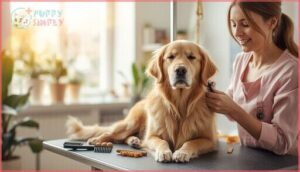
Keeping grooming calm and positive makes a big difference for both you and your dog. A relaxed dog moves less, making clipping safer and easier.
Here are a few simple ways to create a stress-free grooming routine.
Handling Nervous or Fidgety Dogs
A calm dog makes for a clean clip. Create a Calming Setup—quiet room, soft music, steady footing. Read your dog’s Body Language and move in a slow and steady motion, especially over sensitive areas.
Use Tool Acclimation beforehand and light Calming Aids when needed. The key safety precautions protect both pet comfort and prevent common mistakes.
Using Treats and Positive Reinforcement
Think of treats as your payment system for DIY dog grooming and cutting a dog’s hair at home. Use smart Treat Timing: mark calm moments with Clicker Training or a clear “yes,” then deliver High-Value Rewards so your dog links stillness with good things.
In Cooperative Care, you reward tiny wins near clippers, building safe, repeatable pet owner grooming practices and safety precautions into every home pet grooming session.
Scheduling Regular Grooming Sessions
A set schedule turns DIY dog grooming from a battle into a simple habit. Build your calendar around realistic Grooming Intervals and Routine Benefits:
- Book full Visit Inclusions every 4–8 weeks for bath, trim, nails, and ears.
- Set weekly home pet grooming for brushing and basic canine coat care.
- Use reminders so grooming frequency stays steady, not “when you remember.”
- Plan Schedule Adjustments for puppies, seniors, or skin issues as needs change.
- Re-book before you leave the salon to lock in consistent pet owner grooming practices.
Frequently Asked Questions (FAQs)
How to clip dog fur?
You clip dog fur by starting on a clean, dry, brushed coat, then running dog clippers with the direction of hair growth in slow, overlapping strokes, using lighter pressure and shorter blades on sensitive areas like belly, paws, and sanitary zones.
Does clipping ruin a dog’s coat?
No, clipping doesn’t always ruin a dog’s coat, but it can, depending on coat structure impact, regrowth patterns, texture changes, and breed risks.
Learn when to use clippers, focus on breed-specific grooming, and protect dog coat types and care.
How often should I clip my dog’s fur?
Side by side, coat type and lifestyle set your grooming frequency. Long or curly coats with faster hair growth and thicker Dog Coat Types and Care usually need clipping every 4–8 weeks, with Seasonal Adjustments and Brushing Impact stretching intervals as Regrowth allows, guided by breed-specific grooming needs and overall coat type Frequency.
Can weather or season affect how I clip?
Yes, weather and season affect how you clip your dog’s fur. Adjust Seasonal Coat Lengths for winter insulation needs, avoiding short clips on double-coated breeds.
Skip summer shaving risks—your dog’s coat type provides protection; opt for a summer cut with moderate coat length using clippers for safe hair clipping.
What should I do if the clippers snag fur?
When the clippers snag, pause immediately—don’t tug. Begin with Immediate Inspection, followed by Coat Assessment to detangle mats.
Perform Clipper Troubleshooting, clean and oil blades, make Technique Adjustments, and know When To restart or seek help addressing common grooming concerns.
How can I make clipping safer around the face?
For safer clipping around the head and face, think Gentle Handling first: support the chin, work from the side, and keep sessions short.
Use Facial Tool Choices that favor Eye Protection—cool mini clippers, blunt scissors, and careful, step-by-step ear trimming near sensitive areas around your dog’s eyes.
When should I seek a professional groomer instead?
You should seek a professional groomer when dealing with Severe Matting, tricky Health Conditions, or high Clipping Risks around sensitive areas.
Additionally, consider professional help for pets with a Difficult Temperament, breed-specific grooming needs, or when you notice repeated common mistakes despite careful home grooming.
Conclusion
Think of each grooming session as resetting your dog’s coat, like clearing a path after fresh snowfall. You’ve learned how tools, prep, and steady strokes work together to protect skin and comfort.
Follow the coat’s growth, respect sensitive areas, and stop if something looks or feels wrong. When you apply the best way to clip dog fur with calm, repeatable steps, you’re not just cutting hair; you’re building trust your dog can feel every time.
- https://masterclip.co.uk/blogs/news/your-first-home-clip-for-your-dog
- https://wahlusa.com/how-to/pet-grooming-guides/dog-care/hair-clipping
- https://elitetrimgrooming.com/blogs/dog-grooming-guide/pet-grooming-clipper-blade-chart-size-and-use
- https://oneisall.com/blogs/all/dog-clipper-blade-sizes-chart-ultimate-guide
- https://transgroom.com/en/groom-professional-blade-length-chart