This site is supported by our readers. We may earn a commission, at no cost to you, if you purchase through links.

Your dog chewed through the couch cushions—again. Before you chalk it up to bad behavior, consider that the real problem might be happening inside your dog’s head, not just around your living room.
Dogs are wired for mental work, and without enough of it, their brains go looking for a job—usually one you won’t appreciate. Research shows that mental stimulation can tire a dog out as effectively as physical exercise, yet most owners focus almost entirely on walks and playtime.
Recognizing the signs your dog needs more mental enrichment early can spare you both a lot of frustration—and point you toward simple, effective solutions.
Table Of Contents
- Key Takeaways
- Common Signs Your Dog Needs Mental Enrichment
- Behavioral Changes Linked to Under-Stimulation
- Why Mental Enrichment is Essential for Dogs
- Effective Ways to Provide Mental Stimulation
- Top Products for Mental Enrichment Support
- Frequently Asked Questions (FAQs)
- How do I know if my dog is getting enough mental stimulation?
- What is the 777 rule for dogs?
- At what age should enrichment activities begin?
- How long should daily mental stimulation sessions last?
- Can mental enrichment help with aggression in dogs?
- Are certain dog breeds more prone to boredom?
- How do I know if my dog is overstimulated?
- Conclusion
Key Takeaways
- Destructive chewing, excessive barking, and restless pacing are often your dog’s way of saying their brain isn’t getting enough to work with each day.
- Mental stimulation can tire your dog out just as effectively as physical exercise, yet most owners rely almost entirely on walks and playtime.
- Simple daily habits—like puzzle feeders, short training sessions, and scent games—can calm problem behaviors faster than correction or punishment ever will.
- Catching the early signs of under-stimulation, like clinginess, repetitive behaviors, or loss of interest in play, lets you address the root cause before it escalates.
Common Signs Your Dog Needs Mental Enrichment
Most dogs are pretty good at letting you know when something’s off — you just have to know what to look for. A bored dog doesn’t always act sad; often, the signs show up as problem behaviors that seem unrelated to mental health.
If you’re seeing chewed furniture or endless zoomies, it might be worth understanding why dogs need mental stimulation every day — because a tired brain usually means a calmer dog.
Here are the most common signals that your dog is craving more mental engagement.
Destructive Behaviors (chewing, Digging, Etc.)
When your dog turns the couch cushions into confetti or digs up your backyard like they’re searching for buried treasure, they’re not being bad — they’re telling you something important. Destructive chewing and digging are classic signs of boredom prevention gone wrong. Their brain needs a job. Here are five destruction causes to watch for:
- Chewing habits that target furniture or shoes
- Digging along fences or garden beds
- Shredding blankets or paper repeatedly
- Scratching at doors or floors obsessively
- Destroying toys within minutes
Mental stimulation is the real solution — not behavioral modification through punishment.
Excessive Barking or Whining
Beyond chewing up your favorite pair of shoes, your dog might also be turning up the volume to get your attention. Excessive barking and whining are classic vocalization patterns linked to unmet mental needs.
When barking triggers are minor — like a leaf blowing past the window — that’s a red flag. These whining causes often signal boredom, not danger. Mental stimulation quiets that noise better than any correction ever will.
Restlessness or Hyperactivity
Some dogs don’t just bark out their boredom — they pace it, spin it, and bounce off the walls with it. Restless behavior and hyperactivity are often rooted in unmet mental stimulation, not excess energy.
Think of it like a browser with too many tabs open. Without mental fatigue to balance things out, anxiety triggers build, and your dog’s stress management system simply can’t keep up.
A dog’s unstimulated mind is like a browser with too many tabs open — eventually, the whole system crashes
Difficulty Following Commands
A dog that can’t settle its mind often can’t focus on yours, either. When mental stimulation is missing, canine cognition takes a hit — and obedience issues follow. It’s not defiance. It’s an overloaded, under-challenged brain.
Try these focus exercises during training sessions:
- Five-minute brain games before obedience drills
- Name-recognition practice in new environments
- “Watch me” command training with treat rewards
- Short, varied dog training repetitions to hold attention
- Pause-and-reward breaks to support dog mental health
Obsessive or Repetitive Behaviors
Boredom has a way of turning into ritual — and when your dog starts chasing their tail or pacing the same path over and over, that’s your clearest signal yet that their mind is starving for something more. These compulsive behaviors and fixation patterns are stress responses, not quirks.
| Behavior | Anxiety Trigger | What Helps |
|---|---|---|
| Tail chasing | Under-stimulation | Scent games |
| Repetitive pacing | Confinement stress | Puzzle feeders |
| Shadow fixation | Low mental input | Daily training |
Address these canine behavioral issues early with consistent mental stimulation.
Pairing daily puzzle toys with a structured routine can make a real difference—especially if you’re raising one of the best dog breeds for apartment living, where space limits physical outlets.
Behavioral Changes Linked to Under-Stimulation

Under-stimulation doesn’t always look like chaos — sometimes it shows up quietly, in ways that are easy to miss or misread.
Your dog’s behavior is always trying to tell you something, and these changes are worth paying attention to. Here are five behavioral shifts that often point to unmet mental needs.
Separation Anxiety and Clinginess
When your dog treats every goodbye like you’re leaving forever, that clinginess might be more than just love — it could be a sign their mind isn’t getting enough to work with during the day. Dogs with unmet mental stimulation needs often develop separation anxiety, using clingy behavior as emotional support.
A bored dog is an anxious dog. Regular mental stimulation can ease anxiety triggers before destructive behavior becomes your daily reality.
Overeating or Pica
Some dogs eat their feelings — and if your pup raids the bowl between meals or chews things that aren’t food, boredom may be the culprit.
Boredom eating and pica are classic coping mechanisms for emotional hunger. Without enough cognitive stimulation, food obsession and stress eating fill the gap.
Addressing your dog’s mental health directly reduces these behavioral issues far better than managing the symptoms alone.
Chronic Sleeping in Young Dogs
If your young, healthy dog spends most of the day snoozing, that’s not just laziness — it’s often a quiet signal that their brain isn’t getting enough to work with. Chronic sleeping in young dogs is a real boredom sign tied to poor mental wellness. When sleep patterns shift and energy flatlines, canine depression and behavioral issues aren’t far behind. Watch for:
- Sleeping through periods they’d normally want to play
- Low energy that doesn’t improve after physical exercise
- Dull, disengaged responses to people or toys
Mental stimulation is the fix, not more rest.
Loss of Interest in Play
A dog that turns its nose up at its favorite toy is telling you something important — and it’s not that the toy is the problem. Play apathy is one of the clearest boredom signs tied to poor dog mental health. When mental fatigue sets in, even interactive toys lose their appeal. Lack of engagement and playfulness decline often mean your dog needs a fresh mental challenge, not just a new ball.
| Behavior | What It Signals | What Helps |
|---|---|---|
| Ignoring favorite toys | Mental fatigue, boredom | Rotate toys weekly |
| Refusing play invitations | Lack engagement, low drive | Try puzzle feeders |
| Flat reaction to games | Playfulness decline | Add mental stimulation |
Escaping or Wandering
Your dog isn’t trying to escape you — they’re trying to escape boredom. Wandering causes are often rooted in unmet exploration needs and poor dog mental health.
When mental stimulation activities are missing, fence security becomes a daily battle. Problem solving, sniff walks, and boundary setting give your dog a healthy outlet — so they stop looking for adventure on the other side of the yard.
Why Mental Enrichment is Essential for Dogs

A tired dog isn’t always a happy dog—physical exercise only covers part of what your dog actually needs. Mental enrichment fills the gap, and the benefits go deeper than most people expect.
Here’s why it matters so much for your dog’s health and behavior.
Preventing Behavioral Problems
Prevention is the real win for dog mental health. Most destructive behaviors—chewing, digging, raiding trash—aren’t personality flaws. They’re stress responses. Canine enrichment and consistent mental stimulation activities give your dog an appropriate outlet before frustration builds.
- Daily problem solving reduces destructive behaviors markedly.
- Behavioral therapy works better alongside dog wellness routines.
- Stress management through enrichment prevents behavioral issues in dogs long-term. Pets of all ages benefit markedly from.
Enhancing Focus and Trainability
Dogs that get regular mental challenges tend to absorb new commands faster, stay focused longer, and actually enjoy training sessions. Brain games and interactive toys sharpen canine cognition by giving your dog something real to think through.
Attention building happens naturally when mental stimulation for dogs is consistent. Short, rewarding dog training and enrichment sessions build mental agility without burnout, making focus training feel less like work and more like play.
Improving Emotional Well-Being
That sharper focus you build through mental fitness also strengthens emotional balance. Mentally stimulated dogs show more emotional security—they trust you, recover from stress faster, and display real canine happiness through relaxed posture and playful curiosity.
Consistent enrichment bolsters dog mental health, nurturing emotional wellbeing and emotional intelligence, so your dog feels safe, connected, and enthusiastic to engage with you each day. Integrating into your dog’s routine can help reduce anxiety and foster confidence.
Reducing Stress and Anxiety
Emotional balance and stress relief go hand in hand, and a mentally engaged dog is simply a calmer, more settled one. When you address anxiety triggers early through consistent mental stimulation, stress signals fade.
Dogs in calm environments show better emotional wellbeing overall. Regular enrichment acts as one of the most practical relaxation techniques you have, easing separation anxiety and supporting long-term dog mental health.
Effective Ways to Provide Mental Stimulation
The good news is that keeping your dog’s mind active doesn’t have to be complicated or expensive. Small changes to your daily routine can make a real difference in how your dog feels and behaves.
Here are some of the most effective ways to give your dog the mental engagement they need.
Interactive Toys and Puzzle Games

Think of interactive puzzle toys as a gym for your dog’s brain. Treat-dispensing toys turn an ordinary meal into a 15 to 20 minute mental challenge, keeping boredom from fueling destructive habits.
Start with Level 1 puzzle toy designs, then gradually increase difficulty. Rotating scent games, nosework games, and interactive games weekly prevents the novelty from wearing off.
Regular Training Sessions

A few minutes of training each day does more for your dog’s mind than most people realize. Short, focused sessions tap directly into canine cognition, turning simple commands into real mental challenges.
Teaching one new skill per week through positive reinforcement keeps your dog engaged and enthusiastic. These brain games build focus, strengthen your bond, and make behavioral modification feel easy over time.
Scent Work and Nosework Activities

Your dog’s nose is working overtime every single day, so why not put that superpower to good use? Nosework Training and Scent Work Games tap into your dog’s natural instincts, turning sniffing into serious mental stimulation.
Try Snuffle Mats or backyard scent trails for easy Olfactory Exercises. These canine enrichment activities tire your dog out mentally in ways a regular walk simply can’t.
Rotating Toys and Games

Even the best toy in the world gets boring when it’s always sitting in the same spot. Toy rotation keeps things fresh without spending more money. Box up half your dog’s toys and swap them out weekly. Suddenly, an old puzzle toy feels brand new.
Mix in sensory play, scent work games, and interactive puzzle toys to add game variety that keeps your dog’s brain fully engaged.
Outdoor Adventures and New Experiences

The world outside your front door is basically a giant sensory buffet for your dog. Hiking trails, new parks, and nature walks offer sensory exploration that no puzzle toy can replicate. Every unfamiliar smell, sound, and texture counts as mental work.
Mix in outdoor games, interactive play, and dog socialization opportunities to round things out. A little adventure planning goes a long way.
Top Products for Mental Enrichment Support
The right tools can make mental enrichment a lot easier to build into your dog’s daily routine.
Some products are designed specifically to challenge your dog’s mind, reduce boredom, and support calmer behavior over time.
Here are a few worth knowing about.
1. Amazon Basics Flea And Tick Treatment

Keeping your dog protected from fleas and ticks is part of responsible pet care, and Amazon Basics Flea and Tick Treatment makes that easy without breaking the bank.
It uses Fipronil and (s)-methoprene — the same active ingredients found in premium brands — to kill adult fleas and disrupt the flea life cycle.
One tube covers 30 days of protection for large dogs weighing 45–88 pounds, and it’s waterproof after 24 hours. Simple, effective, and unscented.
| Best For | Dog owners with large breeds (45–88 lbs) who want reliable flea and tick protection at a lower price than name-brand options. |
|---|---|
| Target Pest | Fleas, ticks, lice, flies |
| Application Form | Topical spot-on |
| Indoor Use | Yes |
| Outdoor Use | Yes |
| Age Minimum | 8 weeks |
| Protection Duration | 30 days |
| Additional Features |
|
- Same active ingredients (Fipronil (s)-methoprene) as premium brands, at a fraction of the cost
- Waterproof after 24 hours and lasts up to 30 days per dose
- Unscented formula, making it a good fit for dogs with sensitive skin
- May not be enough on its own for active infestations — you might need oral meds and home treatment too
- Some dogs may keep scratching for days or weeks after application due to existing bites
- Rare but serious side effects (including seizures) have been reported, so watch your dog closely after first use
2. Adams Flea And Tick Shampoo

While topical treatments handle long-term prevention, bath time offers a chance to tackle active infestations fast.
Adams Flea and Tick Shampoo kills fleas, ticks, and lice on contact, and the formula includes an insect growth regulator that stops flea eggs from hatching for up to 28 days. It leaves your dog’s coat soft and fresh-smelling, too.
Safe for dogs 12 weeks and older, it works best alongside other treatments that target fleas living in your home.
| Best For | Dog and cat owners dealing with active flea or tick infestations who want a shampoo that cleans, conditions, and keeps eggs from hatching for up to 28 days. |
|---|---|
| Target Pest | Fleas, ticks, lice |
| Application Form | Shampoo |
| Indoor Use | Yes |
| Outdoor Use | Yes |
| Age Minimum | 12 weeks |
| Protection Duration | 28 days |
| Additional Features |
|
- Kills fleas, ticks, and lice on contact while leaving the coat soft and fresh
- The built-in growth regulator stops flea eggs from hatching for up to 28 days
- Safe for dogs and cats 12 weeks and older, so it works for most households
- May not eliminate every flea on its own—works best paired with other treatments
- Protection can wear off between baths, so fleas in the environment can reinfest your pet
- Can dry out your pet’s skin if used too frequently or not rinsed out thoroughly
3. Capstar Fast Acting Flea Treatment
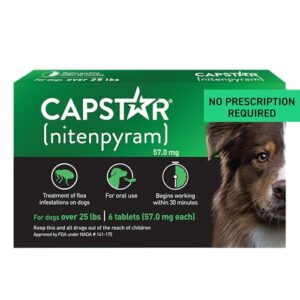
Sometimes you need something that works right now. Capstar Fast-Acting Flea Treatment does exactly that — one oral tablet starts killing adult fleas within 30 minutes, wiping out over 90% within four hours. No prescription needed, and you can give it as often as daily if fleas keep coming back.
It’s safe for dogs and puppies 4 weeks and older, weighing over 25 pounds. Pair it with a longer-term preventive for full coverage, since Capstar targets adult fleas only.
| Best For | Dog owners dealing with an active flea infestation who need fast, same-day relief without a vet visit. |
|---|---|
| Target Pest | Fleas (adult) |
| Application Form | Oral tablet |
| Indoor Use | Yes |
| Outdoor Use | Yes |
| Age Minimum | 4 weeks |
| Protection Duration | Single dose |
| Additional Features |
|
- Starts killing adult fleas in just 30 minutes — one of the fastest options out there
- No prescription needed, so you can grab it and use it right away
- Safe to give daily if fleas keep coming back
- Only kills adult fleas — won’t touch eggs or larvae, so you’ll need a second product for full control
- Not suitable for smaller dogs under 25 pounds or puppies under 4 weeks old
- Some dogs may experience side effects like diarrhea
4. Yeowww Anti Barking Device
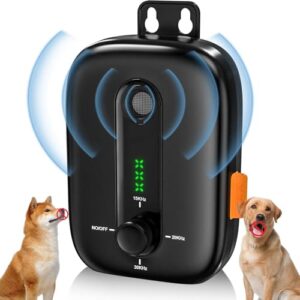
When barking gets out of hand, the Yeowww Anti Barking Device gives you a humane way to interrupt the habit. It emits ultrasonic sound waves your dog can hear but you can’t, with three adjustable modes to match your dog’s sensitivity.
It works up to 33 feet away, indoors or out, and the rechargeable battery keeps it ready without constant upkeep.
Pair it with enrichment and training, since a mentally engaged dog is far less likely to bark in the first place.
| Best For | Dog owners dealing with excessive barking who want a humane, non-shock solution they can use both inside and outside the home. |
|---|---|
| Target Pest | Excessive barking |
| Application Form | Electronic device |
| Indoor Use | Yes |
| Outdoor Use | Yes |
| Age Minimum | Not specified |
| Protection Duration | Continuous while active |
| Additional Features |
|
- Three adjustable modes let you dial in the right level for your dog’s sensitivity
- Works up to 33 feet away, so you don’t have to be right next to your dog for it to kick in
- Rechargeable and weather-resistant, so it holds up whether you’re using it in the backyard or the living room
- Some dogs tune it out over time and go right back to barking like nothing happened
- Effectiveness really depends on how sensitive your individual dog is to ultrasonic sound
- Range drops off at longer distances, so it may not cut it in bigger open spaces
Frequently Asked Questions (FAQs)
How do I know if my dog is getting enough mental stimulation?
If your dog lounges peacefully after play, settles for an hour without trouble, and isn’t shredding your furniture, congratulations — mental stimulation is likely on track.
What is the 777 rule for dogs?
The 777 rule gives your dog 7 minutes of training, 7 minutes of play, and 7 minutes of enrichment every day. Short, focused sessions that fit any schedule and keep boredom at bay.
At what age should enrichment activities begin?
Enrichment can start from day two or three of life, with brief, gentle handling and simple scent exposure.
By eight weeks, when puppies join their new home, structured mental activities and basic training can begin.
How long should daily mental stimulation sessions last?
Less is often more. Most dogs do best with 5 to 15 minutes per session, totaling 15 to 50 minutes daily. Short, focused bursts beat one long marathon every time.
Can mental enrichment help with aggression in dogs?
Yes, mental enrichment can help reduce aggression by lowering stress, improving impulse control, and giving dogs healthy outlets for frustration.
It won’t replace professional help for serious cases, but it’s a meaningful part of the plan.
Are certain dog breeds more prone to boredom?
Absolutely. High-drive breeds like Border Collies, German Shepherds, and Vizslas need far more daily brain work than most owners expect. Without it, frustration shows up fast — through chewing, pacing, or relentless barking.
How do I know if my dog is overstimulated?
Your dog is overstimulated when it can’t settle down, pants without reason, zooms frantically, or reacts to small triggers it normally ignores.
Pacing, nipping, and ignoring commands are also clear signs.
Conclusion
Think of your dog’s brain like a muscle—ignore it, and it weakens; work it, and everything improves. Once you learn to recognize the signs your dog needs more mental enrichment, you stop guessing and start solving.
A few puzzle toys, short training sessions, and new smells on a walk can shift your dog’s entire mood. Small changes add up fast. A calmer, happier dog isn’t out of reach—it’s one good habit away.