
This site is supported by our readers. We may earn a commission, at no cost to you, if you purchase through links.
About 40% of dogs show signs of anxiety significant enough to affect their daily lives—yet most owners don’t recognize it until their dog bolts through a fence or shreds a couch cushion mid-thunderstorm.
Anxiety in dogs isn’t just behavioral quirks; it’s a real physiological stress response that wears on their health over time. The right dog restraint for anxious dogs won’t cure that stress, but it can interrupt the spiral—offering gentle pressure that signals safety to an overwhelmed nervous system.
Knowing which restraints actually work, and how to use them, makes the difference between a dog that dreads every walk and one that starts to trust the world again.
Table Of Contents
- Key Takeaways
- Signs Your Dog Needs a Calming Harness
- Key Features of Calming Dog Harnesses
- Benefits of Harnesses for Anxious Dogs
- Top Dog Harnesses for Anxiety Relief
- Choosing The Right Harness for Your Dog
- Tips for Introducing a Calming Harness
- Real Owner Experiences and Recommendations
- Frequently Asked Questions (FAQs)
- Conclusion
Key Takeaways
- About 40% of dogs experience anxiety serious enough to disrupt daily life, yet most owners don’t recognize it until destructive or escape behavior appears.
- Calming harnesses work by applying gentle, even pressure across your dog’s chest and torso, which can trigger calming hormones and help break the anxiety spiral during triggers like storms or separation.
- Features like martingale cinching systems and dual D-rings aren’t just for control—they prevent escape attempts from frightened dogs without putting pressure on the throat.
- A harness works best when paired with consistent positive reinforcement training, and long-term anxiety relief usually requires combining tools, routine, and sometimes veterinary-guided support.
Signs Your Dog Needs a Calming Harness
Dogs can’t tell you when they’re struggling, but their behavior usually says it all. Knowing what to look for makes it much easier to figure out when a calming vest might actually help.
Once you understand how German Shepherds form deep bonds with their people, their stress signals start to make a lot more sense.
Here are the key signs to watch for.
Behavioral Indicators of Anxiety
Anxiety doesn’t always bark loudly — sometimes it shows up as a tucked tail, a trembling body, or a dog that just won’t stop hiding. These stress behaviors are your dog’s way of communicating fear.
A dog’s anxiety speaks through tucked tails and trembling bodies, not words
Watch for:
- Excessive panting or yawning without exertion
- Destructive scratching as a panic sign
- Constant pacing or clingy behavior
Recognizing these fear responses early opens the door to real anxiety relief.
Common Triggers for Anxious Dogs
Once you spot those behavioral signs, the next step is figuring out what’s setting your dog off.
Loud noise — especially fireworks — triggers fear in nearly half of all dogs. Separation anxiety kicks in the moment you grab your keys. Environmental changes, social fears around strangers, and travel stress all count too.
Knowing your dog’s specific triggers is the first step toward real anxiety solutions. Identifying noise anxiety triggers and fixes can make a significant difference in your approach to calming your anxious pup.
Impact of Anxiety on Daily Life
When anxiety goes unaddressed, it doesn’t just show up in stressful moments — it quietly chips away at your dog’s everyday life. Sleep quality issues, household property damage, and dog behavioral issues can all follow.
An anxious dog may resist dog walking and exercise, miss out on limited socialization opportunities, and grow more reactive over time. That’s why consistent dog anxiety management matters.
Key Features of Calming Dog Harnesses
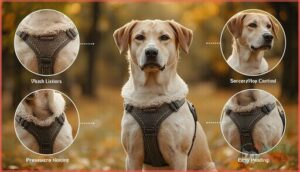
Not all harnesses are built the same, especially when your dog’s anxiety is part of the equation. The right one does more than just clip on — it actively helps your dog feel safer. Here’s what to look for.
Gentle Pressure and Hug-like Design
Think of it as a hand on your dog’s shoulder. Calming designs like ThunderShirt and anxiety vests use wraparound panels to apply gentle, even pressure across the chest and torso — triggering oxytocin release science shows can counteract cortisol. This proprioceptive body awareness and sensory processing aid helps your anxious dog harness a calmer state:
- Pressure mimics being held
- Reduces trembling and pacing
- Aids reactive dogs outdoors
- Works during storms or fireworks
- Compatible with martingale calming strap setups
For best safety and comfort during walks, be sure to review for your dog’s unique needs.
Martingale Cinching Systems
The Martingale Calming Strap works like a seatbelt — it stays relaxed until needed. The martingale cinching mechanism tightens only when tension is applied, closing gaps that escape-prone anxious dogs use to slip free. Strap materials stay breathable while control features keep pressure on the torso, never the throat.
| Feature | How It Works | Benefit |
|---|---|---|
| Martingale Design | Secondary loop tightens under tension | Escape prevention |
| Dual D-rings | Front and back attachment points | Flexible control features |
| Cinching Mechanism | Releases when dog relaxes | Calm, consistent dog anxiety relief |
Adjustable Quick-release Buckles
The quick-release buckle design offers Head-Shy Dog Comfort and a Quiet Buckle Closure. You don’t need to pull the dog strap over your dog’s head—just clip it at the neck or chest.
This makes it especially easy to use during high-stress moments, since you can read about when Jack Russells naturally start to calm down to better time when a calming vest might help most.
Hardware Strength Testing ensures a secure closure for Anxious Dog Strap models. Adjustable quick-release buckles let you fine-tune the fit, helping Anxious Dog Solutions work smoothly for dogs sensitive to noise and touch.
Breathable Mesh and Soft Materials
Fabric matters more than you might think. A soft dog strap made with breathable mesh keeps your pup cool and comfortable, even during stressful outings.
- Breathable mesh straps allow airflow to prevent overheating
- Soft padding and fleece material reduce chafing on sensitive skin
- Calming textures and gentle fabrics help your dog feel settled
- Padded Y strap designs spread pressure evenly across the chest
Benefits of Harnesses for Anxious Dogs

A good collar does more than just keep your dog from pulling away — it can actually help them feel safer on every walk. For anxious dogs, the right fit and design can make a real difference in how they handle stress.
Here are the key benefits worth knowing about.
Reducing Stress During Walks
A good walking strap doesn’t just hold your dog — it helps them feel safe enough to actually enjoy the walk. Calm environments and smart walking techniques matter, but strap comfort is the foundation.
| Stress Signal | What Helps |
|---|---|
| Panting, freezing | Shorter routes, breathable mesh straps |
| Lunging, barking | Better Leash Control, distance from triggers |
Calming aids like these are simple anxiety solutions for dogs that really work.
Preventing Escape and Injuries
An anxious dog that bolts isn’t being bad — they’re scared, and fear is faster than instinct. That’s why a secure restraint design matters more than most owners realize. A well-fitted restraint with martingale cinching systems keeps your dog protected without panic. Here’s what good escape proofing actually looks like:
- Martingale cinching gently tightens if your dog backs out
- Quick-release buckles stay locked under pressure
- Dual D-rings distribute pull evenly
- Breathable materials prevent overheating during stress responses
- Snug fit eliminates dangerous gaps
Improving Leash Control and Safety
When your dog lunges at a passing stranger or freezes mid-sidewalk, the difference between a calm redirect and a full-blown panic spiral often comes down to one thing — how much control you actually have on that leash. A no-pull chest strap distributes pressure across the chest, giving you better leverage without choking.
| Chest Strap Feature | Safety Benefit |
|---|---|
| Front D-ring | Redirects lunging naturally |
| Martingale cinching | Aids escape prevention |
| Breathable chest strap materials | Reduces stress overheating |
| Dual leash points | Balances dog walking control |
| Quick-release buckles | Allows fast, safe removal |
Encouraging Positive Associations
Getting the right strap is only half the battle — what your dog learns to feel when wearing it matters just as much. Pair your calming strap with treats and praise every time you put it on. Over time, your anxious dog connects it with good things.
That’s comfort training in action — and one of the most effective anxiety solutions for building real, lasting confidence.
Top Dog Harnesses for Anxiety Relief
Not every strap works the same way, and finding the right one can make a real difference for your dog. A few standout options combine calming pressure with practical features that make walks less stressful for both of you.
Here’s a closer look at four straps worth considering.
Winbate Dog Anxiety Calming Vest Review

Relief comes in unexpected forms — and for many anxious dogs, the Winbate Dog Anxiety Calming Vest turns out to be one of them. Its vest materials and snug design deliver real calming effects across common anxiety triggers:
- Gentle body pressure eases dog anxiety during storms
- Breathable fabric keeps dog comfort high on warm days
- Consistent stress relief without restricting movement
- Doubles as a practical anxiety solution for vet visits
Winbate Dog Anxiety Vest Review

The vest version takes everything you just read and strips it down to the basics — same calming pressure, lighter profile. For dogs with mild anxiety triggers like car rides or visitors, this calming wrap gets the job done.
The vest materials are soft and breathable, keeping dog comfort intact through longer wear. It’s a simple, reliable anxiety solution for everyday anxious dog moments.
Martingale Calming Harness Review

Step things up a notch, and the Martingale Calming Strap brings both anxiety relief and real leash control into one thoughtful design. It’s built for dogs whose anxiety triggers turn walks into a struggle.
Three things make this anxious dog strap stand out:
- Gentle cinching calms without restricting
- Breathable strap materials keep dog comfort intact
- Front and back D-rings give you leash flexibility
It’s a smart, practical anxiety solution.
ThunderShirt Calming Wrap Comparison

ThunderShirt takes a different approach to dog anxiety — no leash required. It wraps snugly around your dog’s torso, delivering constant pressure therapy that mimics a steady, reassuring hug.
This anxiety vest isn’t built for walks specifically, but its calming effects work anywhere: car rides, storms, vet visits.
About 80% of users report real anxiety relief, making it one of the most trusted calming solutions available.
Choosing The Right Harness for Your Dog

Finding the right collar isn’t just about size — it’s about matching your dog’s needs with the right features. A few key factors will help you narrow things down quickly.
Here’s what to look at before you buy.
Sizing and Measurement Tips
A strap that’s even slightly too loose can turn into an escape hatch for a panicked dog—so getting the size right isn’t just about comfort, it’s about safety.
Start with girth measurement: wrap a soft tape around the widest part of your dog’s chest. Then check the size charts provided by the brand.
Adjustment tips matter too—always recheck the fit after a few wears.
Fit and Comfort Considerations
Even the best calming strap won’t do its job if your dog is squirming, chafing, or just plain miserable wearing it. Use the Two-Finger Rule — you should slide two fingers under any strap easily.
A well-fitted strap allows full Movement Range without bunching or rubbing. Look for padded Y strap styles with ergonomic design and smart Pressure Distribution to prevent chafing where it matters most.
Material Durability and Weather Resistance
Your dog’s collar takes a beating — rain, mud, sweat, and the occasional puddle dive — so what it’s made of matters more than most people realize. Here’s what to check for:
- Water Resistance — Neoprene and coated fabrics shed moisture fast.
- Mesh Materials — Breathable mesh collars prevent overheating.
- Durability Factors — Triple-laminated fabric holds up longer.
- Weather Testing — A comfortable, secure collar performs in all conditions.
D-ring Placement and Leash Attachment Options
Where you clip the leash changes everything about how your walk actually goes. A front clip restraint redirects pulling dogs toward you — great for leash training and anxious dogs that lunge at triggers. Back D-ring connections work better for calmer walkers. The martingale cinching system adds gentle control without choking. Having both D-ring connection options gives you flexibility for any situation.
Tips for Introducing a Calming Harness
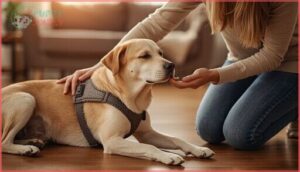
Getting your dog used to a new strap takes a little patience, but the right approach makes all the difference. A few simple steps can help your pup feel safe and comfortable from the very first wear. Here’s what works.
Positive Reinforcement Techniques
Teaching your dog to love their new vest starts with one simple truth: treats talk louder than words. With reward training, pair each vest interaction with something your anxious dog genuinely loves — a treat, calm praise, or a click. Clicker methods work especially well here.
Keep sessions short. Use calm commands like “good” or “yes” to mark relaxed behavior. Consistent praise techniques build real trust, making Anxiety Relief for Dogs feel natural, not forced.
Gradual Acclimation Steps
Once your dog starts taking treats near the gear without hesitation, you’re ready to move through the steps that actually make the vest feel familiar and safe. These desensitization techniques and acclimation methods work best when kept gradual:
- Let your dog sniff the gear freely
- Drape it over their back briefly
- Fasten one buckle, then reward
- Extend wear time slowly each day
Consistent gradual exposure is one of the most effective anxiety prevention and calming strategies for canine anxiety.
Monitoring Your Dog’s Response
Now that the strap is on, watch your dog closely — their body language will tell you everything you need to know. Response tracking doesn’t need to be complicated. Look for small behavior changes that signal whether your pet calming products are working or adding stress levels.
| Signal | Positive Response | Anxiety Signs |
|---|---|---|
| Posture | Relaxed, loose body | Stiff, hunched |
| Breathing | Slow, steady | Rapid, shallow |
| Movement | Walks calmly | Freezes or pulls |
| Eyes | Soft, blinking | Wide, darting |
| Tail | Neutral or wagging | Tucked low |
Trust what you see. Calming effects from anxious dog training and equipment rarely happen overnight — but consistent observation helps you catch what’s working and what isn’t.
Combining Harness Use With Training
Watching your dog settle into the vest is just the beginning — pairing it with consistent training is where real, lasting calm starts to take shape.
Use dog training techniques like reward-based behavioral therapy to reinforce leash manners near anxiety triggers. Your anxious dog vest becomes a cue for safety when paired with calming signals and animal behavior modification.
That’s how anxious dog training and equipment truly work together.
Real Owner Experiences and Recommendations

Sometimes the best proof is hearing from people who’ve actually been there. Real owners have tested these harnesses through thunderstorms, vet visits, and everything in between—and their experiences say a lot.
Here’s what they found, the bumps they hit, and what the experts recommend for keeping anxiety in check long-term.
Success Stories and Testimonials
Nothing convinces a skeptical dog owner faster than hearing another pet parent say, ‘this actually worked. Owner testimonials around anxious dog harnesses tell a consistent story — calming effects during thunderstorms, fireworks, and vet visits. Many report real anxiety relief within the first few uses.
These success stories around dog behavioral health aren’t flukes. They reflect what the science already suggests: gentle pressure genuinely aids pet calming.
Common Challenges and Solutions
Patience is the secret ingredient most owners forget when first introducing a calming strap — and it makes all the difference. Some dogs resist the anxious dog strap at first. That’s normal.
Start with short wear sessions and pair it with treats. Gradually build up time. Most canine anxiety solutions work best when introduced slowly, giving your dog space to trust the process.
Expert Advice on Long-term Anxiety Management
Long-term relief from canine anxiety rarely comes from one tool alone. Experts recommend pairing calming techniques like restraint use with behavior modification — gradually exposing your dog to anxiety triggers at low intensity while rewarding calm responses.
These anxiety reduction techniques, combined with consistent routines and sometimes veterinary-guided medication, form the most effective dog anxiety solutions for lasting stress reduction and real, sustainable pet anxiety relief.
Frequently Asked Questions (FAQs)
Can calming harnesses work alongside anxiety medication?
As they say, two is better than one. Yes, a calming vest pairs well with medication, anxiety supplements, and other calming aids.
Always follow veterinary guidance to build treatment plans that truly support your anxious dog’s needs.
How often should a calming harness be washed?
Wash your calming strap every one to two weeks. If your dog sweats or gets muddy, clean it sooner.
Regular strap hygiene keeps the fabric fresh and maintains its calming, skin-friendly feel.
Are calming harnesses safe for puppies to wear?
Yes, calming straps can be safe for puppies, but strap size and fit matter most.
Always check age restrictions and breed considerations, and monitor for calming effects without over-relying on the strap for puppy anxiety relief.
Can my dog sleep comfortably in a harness?
Think of sleep as a dog’s safe harbor — collars aren’t built for it. Remove your dog’s collar at night for sleep comfort and safety.
Nighttime wear risks chafing and restricted breathing, undoing any anxiety relief gained during the day.
Do calming harnesses help with aggression toward other dogs?
Calming harnesses can reduce anxiety-induced aggression by easing your dog’s stress response. They won’t fix deep interdog conflict, but a calmer, less reactive dog is simply easier to manage around other dogs.
Conclusion
A rescue terrier named Biscuit used to flatten himself at the sight of his leash—until his owner tried a snug, wrap-style restraint on their evening walks. Within two weeks, he was stepping outside without trembling.
The right dog restraints for anxious dogs won’t rewrite your pup’s nervous system overnight, but they give fear somewhere smaller to live. Pair that with patience, and your dog might just surprise you.
- https://thundershirt.com/products/thundershirt-for-dogs
- https://canadapooch.com/blogs/news/the-ultimate-guide-to-calming-dog-vests
- https://www.businessinsider.com/guides/pets/best-no-pull-dog-harness
- https://harlso.com/2023/11/28/dog-harness-material-guide-ideal-fabric/
- https://susanlancidesigns.com/blogs/dog-park/7-essential-tips-for-measuring-your-dog-for-a-perfect-harness-fit