This site is supported by our readers. We may earn a commission, at no cost to you, if you purchase through links.
Most home-cooked dog meals look healthy—browned chicken, steamed vegetables, a handful of rice. But a bowl that appears balanced can quietly strip your dog of the calcium, zinc, or essential fatty acids their body depends on.
Studies show that over 95% of homemade dog food recipes circulating online fail to meet minimum nutritional standards, and the consequences show up slowly: brittle bones, a dull coat, a heart working harder than it should. Nutritional imbalance in homemade dog food rarely announces itself early, which is exactly what makes it dangerous.
The good news is that with the right framework, you can feed your dog real food safely.
Table Of Contents
- Key Takeaways
- What Causes Nutritional Imbalance in Homemade Dog Food?
- Essential Nutrients Every Homemade Diet Needs
- Health Risks Linked to Nutritional Imbalance
- How to Prevent Nutritional Imbalance at Home
- Monitoring and Adjusting Your Dog’s Homemade Diet
- Frequently Asked Questions (FAQs)
- What are the nutritional deficiencies in homemade dog food?
- Is my dog getting enough nutrients from homemade food?
- Can homemade dog food affect dental health?
- How does breed size influence homemade diet needs?
- Are raw homemade diets safer than cooked ones?
- How does neutering change a dogs dietary requirements?
- Can homemade food help manage food allergies?
- Conclusion
Key Takeaways
- Over 95% of homemade dog food recipes circulating online fail to meet minimum nutritional standards, with deficiencies in calcium, zinc, and essential fatty acids quietly causing brittle bones, dull coats, and heart problems before you ever notice something’s wrong.
- Feeding mostly meat without a proper calcium source flips the calcium-to-phosphorus ratio from the ideal 1:1–2:1 range to a dangerous 1:10, making skeletal damage, joint issues, and even cardiac complications a real risk over time.
- Working with a board-certified veterinary nutritionist to build tested, AAFCO-validated recipes—and adding a complete nutrient mix to cover micronutrient gaps—is the most reliable way to keep your dog’s homemade diet truly balanced.
- Your dog’s coat, energy levels, and stool quality are the earliest warning signs of nutritional imbalance, so monthly weigh-ins and annual blood panels are essential checkpoints—not optional extras—for any dog eating homemade food.
What Causes Nutritional Imbalance in Homemade Dog Food?
You might start your homemade dog food journey with the best intentions, but good intentions don’t always translate to balanced nutrition. The truth is, most nutritional imbalances aren’t caused by poor-quality ingredients—they’re caused by gaps in knowledge and recipe planning.
That’s why understanding complete and balanced dog nutrition is the real first step—before you ever start cooking.
Let’s look at the three main culprits that can turn a well-meaning home-cooked meal into a nutritional minefield.
Common Mistakes in Home-cooked Diets
Many home cooks make ingredient errors that create nutritional imbalance in homemade dog food, like feeding mostly meat without added calcium, which flips the calcium-to-phosphorus ratio to 1:10 instead of the ideal 1:1 to 2:1 range.
You might also skip essential supplements, use unsafe ingredients like onions or grapes, or rely on generic online recipes that don’t meet your dog’s dietary needs.
It’s vital to understand the importance of a proper calcium to phosphorus ratio when preparing homemade meals for dogs.
Misunderstanding Canine Nutritional Needs
Beyond recipe errors, you may be applying human food logic to your dog’s bowl. Dogs can digest carbohydrates and use them safely for energy, yet some owners copy low-carb trends without realizing that canine nutrition science requires different nutritional ratios than human diet planning.
Around 94 percent of assessed homemade diets fall short on nutrient balance, even when ingredients look fresh and varied to your eye. Research highlights the widespread issue of nutritional completeness in homemade diets.
Incomplete or Inaccurate Recipes
Even recipes that look solid can hide serious nutrient gaps. More than 90 percent of popular homemade dog food recipes don’t meet complete nutritional requirements when checked against established profiles. That’s why meal planning demands precision, not guesswork.
Over 90 percent of homemade dog food recipes fall short nutritionally, proving meal planning demands precision, not guesswork
- Vague measurements like “a handful” destroy recipe balance and nutritional ratios
- Swapping ingredients disrupts dietary errors you can’t see
- Missing calcium sources create dangerous imbalances
- Skipping supplements leaves nutritional deficiencies unchecked
Balanced diet planning requires tested formulas, not internet experiments.
Essential Nutrients Every Homemade Diet Needs
You can’t just toss chicken and rice in a bowl and call it balanced—your dog needs specific nutrients in specific amounts to thrive.
Protein gaps are especially risky—dogs rely on diet for essential amino acids their bodies can’t produce, and homemade meals often fall short without careful planning.
Think of it like building a house: proteins, fats, and carbs are the foundation, while vitamins, minerals, and fiber are the essential framework that keeps everything standing strong. Let’s break down exactly what your homemade recipe needs to include, and why each component matters for your dog’s health.
Protein, Fat, and Carbohydrate Requirements
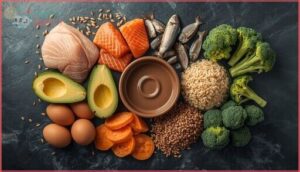
Your dog’s macronutrient balance forms the foundation of canine nutrition. Adult dogs need at least 18 percent protein and 5.5 percent fat on a dry matter basis, while puppies require 22.5 percent protein and 8.5 percent fat to support growth.
Though carbohydrates aren’t strictly essential, they’re useful energy sources. Balanced dietary needs vary by age, activity level, and health status.
Key Vitamins and Minerals for Dogs

Vitamins and minerals are the quiet powerhouses behind canine nutrition — easy to overlook, costly to get wrong. Your dog’s dietary supplements must cover a precise spectrum, because both Mineral Deficiency and excess can cause serious harm.
Key nutrient ratios to get right:
- Calcium to Phosphorus: Aim for a 1.2–1.4:1 ratio for strong bones
- Vitamin A: Promotes vision, immunity, and healthy skin
- Vitamin D: Regulates calcium and phosphorus balance — but excess causes toxicity
- Vitamin E: Protects cells, especially in fat-rich diets
- Zinc & Copper: Critical for coat health and red blood cell production
The Importance of Fiber and Supplements

Fiber and supplements are the unsung heroes of a truly balanced homemade diet. Without them, even a carefully portioned meal leaves gaps.
Fiber aids gut health by feeding beneficial bacteria and regulating digestion, while targeted supplements address nutritional deficiencies your recipe can’t cover alone.
| Fiber Benefits | Supplement Needs |
|---|---|
| Improves stool consistency | Fills calcium/phosphorus gaps |
| Boosts gut microbiome | Delivers omega-3 fatty acids |
| Promotes canine wellness | Corrects nutritional ratios |
| Aids nutrition balance | Prevents long-term deficiencies |
Health Risks Linked to Nutritional Imbalance

Getting the nutrition wrong doesn’t just slow your dog down — it can lead to serious, lasting health problems.
When key nutrients are missing or out of balance, the effects show up in ways you mightn’t expect.
Here are the main health risks you need to know about.
Skeletal and Growth Issues
Bones are living tissue — and they’re unforgiving when calcium and phosphorus fall out of balance. For puppies especially, nutritional deficiencies during skeletal development can cause growth plate damage, joint issues like hip dysplasia, and even “rubber jaw.”
Your dog’s balanced diet needs a calcium-to-phosphorus ratio close to 1:1–2:1. Getting those nutritional ratios right isn’t optional — it’s foundational to bone health.
Heart and Organ Complications
Your dog’s heart is a muscle — and it depends on the right nutrients to keep beating strong. Taurine deficiency from unbalanced homemade diets is directly linked to dilated cardiomyopathy, a serious cardiac disease.
Poor electrolyte balance can disrupt heart rhythm, while high-fat meals raise pancreatitis risk and organ failure. Nutritional deficiencies affect far more than just weight — they threaten essential systems. Veterinary nutrition advice isn’t optional here.
Skin, Coat, and Immune System Problems
Your dog’s coat is basically a report card for their diet. When homemade dog food falls short on omega-3s, zinc, or vitamins A and B, skin issues and poor coat health follow fast.
Nutrient deficiencies weaken immune function, leaving dogs vulnerable to chronic allergies and recurring infections. A truly balanced diet isn’t just about calories — it’s the foundation of lasting pet health.
How to Prevent Nutritional Imbalance at Home

Preventing nutritional imbalance isn’t as complicated as it sounds — it just takes the right approach from the start.
There are a few key steps that make a real difference when you’re building a safe diet for your dog at home. Here’s what actually works.
Working With a Veterinary Nutritionist
Think of a board-certified veterinary nutritionist as your dog’s personal nutrition architect. These specialists complete a DVM plus specialized residency training, so their veterinary guidance goes far beyond general advice.
Through pet consultations, they assess your dog’s age, breed, and health history to create custom recipes and a truly balanced diet — eliminating nutritional deficiencies before they start.
Using Tested, Science-based Recipes
Your nutritionist has the blueprint — now you need the right building materials. That means leaning on homemade dog food recipes that have gone through real recipe validation and nutrient profiling against AAFCO guidelines.
Solid diet formulation isn’t guesswork; it’s measured ingredient sourcing and careful meal planning. Look for recipes a veterinary nutritionist reviewed and labeled “complete and balanced” — your dog’s balanced diet depends on that stamp.
Incorporating Complete Nutrient Mixes
Even the best balanced recipes can fall short on micronutrients — that’s where a complete nutrient mix earns its place. These blends cover common nutritional deficiencies like low calcium, zinc, and B vitamins that homemade dog food recipes often miss.
Here’s what a quality nutrient mix brings to your dog’s bowl:
- Nutrient Mix Benefits — Bundles vitamins and minerals in one dose, simplifying your routine
- AAFCO Guidelines alignment — Helps your homemade diet meet recognized “complete and balanced” standards
- Supplement Safety — Prevents dangerous stacking of individual supplements that can spike vitamin D or selenium
- Personalized Diets support — Dosing by body weight means nutrient ratios fit your dog specifically
- Consistent balanced diet — Every batch delivers steady nutrition your veterinary nutritionist can trust
Monitoring and Adjusting Your Dog’s Homemade Diet

Even the best recipe needs real-world feedback to work properly.
Your dog’s body will tell you things a measuring cup can’t, and knowing what to watch for makes all the difference.
Here’s what to keep an eye on as you go.
Signs of Nutritional Deficiency or Excess
Your dog’s body tells the truth about its diet quality. Canine malnutrition rarely announces itself loudly — instead, watch for a dull coat, muscle wasting, loose stools, or unusual fatigue.
These signs point to real nutrient deficits and dietary errors that quietly compound over time. Nutritional toxicity risks work the same way: too much calcium or vitamin D can cause tremors or kidney stress.
Regular Health Checks and Weight Monitoring
Catching those silent warning signs early means building regular check-ins into your nutrition planning routine. Weigh your dog monthly and track weight trends alongside body condition scoring — a 1-to-9 scale that accounts for frame size better than numbers alone.
Annual vet consults with blood panels screen for nutritional deficiencies in dogs before symptoms appear, keeping your canine health and nutrition goals on track.
When to Re-evaluate Your Recipe
Your homemade dog food recipe isn’t meant to stay frozen in time. Certain moments demand fresh eyes on your feeding strategies and nutrient balance:
- Life stage shifts (puppy to adult, adult to senior)
- New diagnoses like kidney or heart disease
- Ingredient swaps that alter nutritional needs
- Persistent health indicators like dull coat or loose stool
Recipe adjustments keep dietary changes aligned with your dog’s evolving nutritional deficiencies and dog nutrition goals.
Frequently Asked Questions (FAQs)
What are the nutritional deficiencies in homemade dog food?
Cooking for your pup feels like love in a bowl — but without careful planning, common nutrient deficiencies in dogs emerge fast: calcium deficits, vitamin imbalances, mineral shortages, fatty acid issues, and protein inadequacies can quietly undermine even the most well-intentioned balanced diet.
Is my dog getting enough nutrients from homemade food?
Spotting a nutrient deficiency early protects your dog’s canine health.
Watch for dull coat, low energy, or weight shifts — these signal your homemade recipes may not be meeting your dog’s nutritional needs.
Can homemade dog food affect dental health?
Yes, homemade dog food can directly affect your dog’s oral health. What your dog eats shapes dental plaque levels, gum disease risk, and overall canine dentistry outcomes from the very first bowl.
How does breed size influence homemade diet needs?
Just like a hummingbird and a horse don’t eat the same way, breed size matters when tailoring homemade dog food — calorie density, nutrient ratios, and size-specific needs all shape a truly balanced diet.
Are raw homemade diets safer than cooked ones?
Raw diets carry real food safety risks. Cooked homemade dog food kills pathogens through heat, making it the safer choice for your dog’s nutrition and your household’s wellbeing.
How does neutering change a dogs dietary requirements?
Neutering effects on dog nutrition are enormous. Energy needs drop by nearly 30%, so calorie reduction becomes essential.
Adjusting protein, fat management, and balanced diet planning all shift to match your dog’s new dietary needs.
Can homemade food help manage food allergies?
Homemade dog food can genuinely help manage dog allergies through careful diet customization and ingredient safety. By controlling every component, you eliminate hidden triggers and support allergy prevention with targeted, balanced nutrition planning.
Conclusion
Every bowl you prepare today quietly shapes the dog’s health beside you tomorrow—stronger bones, a shinier coat, a heart that keeps steady rhythm for years to come.
Nutritional imbalance in homemade dog food doesn’t have to be your dog’s story. With a veterinary nutritionist, tested recipes, and honest monitoring, you hold the blueprint for a long, healthy life.
Real food prepared right is one of the most powerful things you can give them.
- https://www.rover.com/blog/homemade-dog-food-supplements/
- https://blog.justfoodfordogs.com/dog-supplements-for-homemade-food.html
- https://www.vetmed.ucdavis.edu/news/update-nutrition-services-concern-between-diets-and-dcm-dogs
- https://www.bluespringsanimalhospital.com/resources/pet-nutrition
- https://www.fda.gov/animal-veterinary/outbreaks-and-advisories/fda-investigation-potential-link-between-certain-diets-and-canine-dilated-cardiomyopathy