This site is supported by our readers. We may earn a commission, at no cost to you, if you purchase through links.

Your new puppy scarfs down meals in seconds flat, barely pausing to breathe between gulps. It’s not just messy—it’s dangerous, with fast eating linked to choking incidents and a condition called gastric dilatation-volvulus that can be life-threatening in dogs.
Slow feeder bowls for puppies address this head-on by transforming mealtime into a safer, more measured experience through strategic design elements like raised ridges and maze patterns. These bowls extend eating sessions from 30 seconds to 3-5 minutes, giving your pup’s digestive system time to process food properly while reducing the risk of bloat by up to 80% according to veterinary research.
The right bowl does more than protect your puppy’s health—it turns every meal into mental enrichment that satisfies their natural foraging instincts.
Table Of Contents
- Key Takeaways
- Benefits of Slow Feeder Bowls for Puppies
- How Slow Feeder Bowls Work
- Choosing The Best Slow Feeder Bowl for Puppies
- Top 5 Slow Feeder Bowls for Puppies
- Frequently Asked Questions (FAQs)
- Are slow feeding bowls good for puppies?
- What bowls are good for puppies that eat too fast?
- What kind of bowl is best for puppies?
- When should I introduce a slow feeder bowl?
- Can slow feeders cause puppy frustration or anxiety?
- Are slow feeder bowls safe for teething puppies?
- How do I transition from regular bowls?
- What if my puppy refuses the slow feeder?
- Conclusion
Key Takeaways
- Slow feeder bowls extend puppy mealtimes from 30 seconds to 3-5 minutes using raised ridges and maze patterns, reducing bloat risk by up to 80% while preventing choking and digestive issues caused by rapid eating.
- The right bowl choice depends on your puppy’s breed size, muzzle width, and eating style—small breeds need shallow 4-6 inch bowls while larger breeds require 8-10 inch designs, with complexity starting simple and increasing as your pup adapts.
- Materials matter for safety and durability, with stainless steel and BPA-free plastic offering the best combination of non-toxic construction, dishwasher-safe cleaning, and chew-resistant longevity that survives daily use.
- Introduction timing works best around 8-10 weeks when puppies eat solid kibble confidently, though you’ll need to watch for frustration signs like pawing or walking away that signal the design needs adjustment.
Benefits of Slow Feeder Bowls for Puppies
Puppies who wolf down their kibble in seconds aren’t just messy eaters, they’re setting themselves up for real health problems down the road.
A solid puppy nutritional needs guide helps you figure out what and how much to feed based on their age and size.
Puppies who inhale their food in seconds aren’t just messy—they’re courting serious health problems
A slow feeder bowl changes mealtime from a frantic gulp-fest into something closer to what nature intended, and the benefits go way beyond just cleaning up less vomit. Let’s look at four specific ways these bowls protect your puppy’s health while making meals more enjoyable.
Reducing Choking and Digestive Issues
You’ve probably seen your puppy gulping food like there’s no tomorrow, and that’s where slow feeder bowls make a real difference.
The maze patterns and ridges break up food into smaller pieces, reducing choking hazards while promoting proper chewing. This feeding technique boosts saliva production, which kickstarts digestion before food even reaches the stomach, supporting better digestive health overall.
Choking is a major concern for young animals and children, and understanding the leading risk factors for choking can help guide safer feeding practices.
Preventing Bloating and Gastric Torsion
Beyond choking hazards, slow feeders tackle an even more serious threat: bloat and gastric torsion. When your puppy gulps air with kibble, the stomach distends rapidly, raising bloat risk—especially dangerous in deep-chested breeds like Great Danes.
Maze patterns force smaller bites, cutting aerophagia while supporting gastric health. For high-risk puppies, pairing slow feeding techniques with measured portions and post-meal rest offers solid protection against this life-threatening digestive issue.
Many veterinarians also recommend slow feeders for their benefits in improving dog health and comfort.
Supporting Healthy Weight and Portion Control
Slow feeder bowls naturally support weight management by turning every meal into portion control practice. When your puppy works through ridges and obstacles, the extended eating time gives satiety signals about 20 minutes to kick in, preventing overeating before fullness registers.
This builds healthy eating habits early, helping you monitor calorie intake while maintaining nutrient balance—vital weight management strategies during rapid growth phases.
Providing Mental Stimulation During Meals
Mealtime engagement goes beyond nutrition—it shapes cognitive development and promotes canine mental health.
Interactive feeders transform boring gulping into feeding challenges that demand problem-solving, offering sensory stimulation through varied textures and visual patterns. This interactive eating approach satisfies your puppy’s natural foraging instincts, reducing boredom-driven behaviors while building focus.
That mental stimulation during meals? It’s exercise for growing brains, making slow feeder bowls valuable tools for overall dog behavior management.
How Slow Feeder Bowls Work
Slow feeder bowls aren’t magic, they’re just smart design working in your puppy’s favor. The ridges, mazes, and raised sections force your pup to eat around obstacles instead of inhaling their meal in seconds.
If you want to keep mealtime engaging beyond the bowl, check out these interactive dog toys for home alone dogs that challenge your pup’s brain while you’re away.
Let’s break down exactly how these bowls function, what materials keep your puppy safe, and why they work so much better than a regular dish.
Design Features That Slow Eating
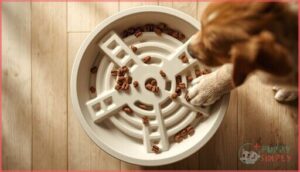
The secret behind effective anti gulp designs starts with raised ridges and grooved plate designs that force your puppy to weave around barriers, slowing down eating speed by up to 80 percent.
Maze feeders use compartment spacing and raised island obstacles to interrupt scooping patterns, while interactive feeders with textured surfaces encourage deliberate, controlled bites rather than frantic gulping.
Materials and Safety Considerations for Puppies
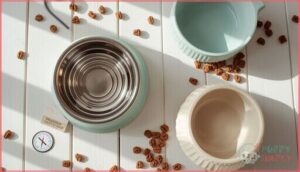
In terms of puppy bowl safety, you want nontoxic rubber or stainless steel construction that resists curious chomping. Avoid toxic material risks like cadmium or flaky paint finishes.
Choose BPA-free plastics or durable construction in ceramic slow feeder bowls with thick glazing. For sanitation methods, look for chew resistant materials that are easy to clean in hot water or dishwashers to prevent bacteria buildup.
Differences Between Slow Feeders and Regular Bowls
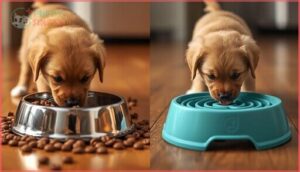
Regular dog bowls let your puppy gulp everything in seconds, while slow feeders use ridges and barriers to turn meals into a 15-25 minute activity.
That eating speed control comes from puzzle feeders forcing smaller bites through maze patterns, compared to the wide-open bowl material comparison of standard dishes.
Slow feed benefits include less air swallowed and better chewing, reducing choking risk that dog feeding solutions address through deliberate feeder bowl design with feeding mechanisms built right in.
Choosing The Best Slow Feeder Bowl for Puppies
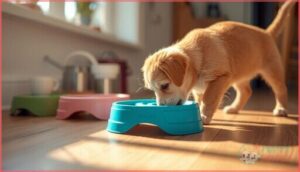
Not all slow feeder bowls are created equal, especially when you’re shopping for a growing puppy. You’ll want to take into account size, design complexity, material safety, and how easy it’s to keep clean—factors that directly impact whether your pup will actually use it without getting frustrated.
Let’s walk through the key features that’ll help you pick the right bowl for your furry friend.
Selecting The Right Size and Complexity
You’ll want a bowl size guide that matches your puppy’s breed and muzzle width, with small puppies thriving in 4 to 6 inch bowls and larger breeds needing 8 to 10 inch diameters for comfortable access.
Feeder complexity matters too—start with simpler maze patterns featuring 12 to 16 obstacles, then adjust as your puppy masters mealtime strategies that deliver slow feed benefits without frustration.
Matching Bowl Types to Puppy Breed and Eating Style
Your puppy’s breed and eating style should guide your slow feeder bowl choice, ensuring breed matching that promotes canine nutrition from day one. Small breeds need shallow bowls to prevent neck strain, while working breed puppies thrive with medium depth designs that balance portion size and nose clearance.
- Fast eaters benefit from intricate maze bowls that substantially slow pace and promote mindful chewing
- Anxiety prone puppies do better with rounded bowl designs that reduce cornering and limit food barricades
- Toy breeds thrive on 1 to 2 cup capacity feeders sized for compact feeding portions
- Herding breeds often prefer taller slow feeder dog bowls that align with their alert posture during mealtime
Cleaning, Durability, and Ease of Use
Your choice between stainless steel and silicone for slow feeder bowls affects daily cleaning methods and long-term durability tests.
Bowl design with removable inserts delivers greater ease of use, while durable construction in reinforced plastics withstands over 1000 meals without wear.
Dishwasher-safe dog bowls with adjustable features simplify user experience, cutting cleaning time in half compared to fixed-piece designs.
Top 5 Slow Feeder Bowls for Puppies
Now that you know what to look for, here are five slow feeder bowls that work well for puppies based on safety, design, and real-world performance. Each one balances challenge with ease of use, so your puppy won’t get frustrated while learning healthier eating habits.
These options cover different materials, price points, and bowl styles to match your puppy’s specific needs.
1. Mateeylife Slow Feeder Dog Bowl
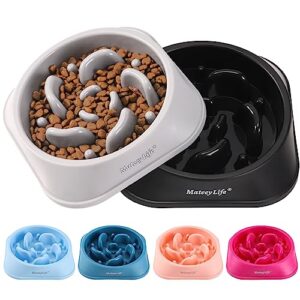
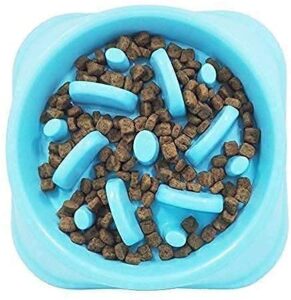
This maze-style feeder bowl works wonders for slowing down enthusiastic eaters, thanks to its raised ridges and patterns that guide kibble through a winding path instead of straight to your pup’s mouth. You’ll get two bowls that each hold about 2 cups of food, which is perfect for smaller meals or households with multiple puppies.
The non-slip base keeps it anchored on tile or hardwood while your puppy nudges around for every bite, and the non-toxic plastic material means you won’t worry about harmful chemicals during those early months.
| Best For | Pet owners with puppies or dogs that eat too fast and need help slowing down to prevent choking, bloating, or digestive issues. |
|---|---|
| Material | Polypropylene |
| Dishwasher Safe | Yes |
| Food Type | Dry, Wet, Raw |
| Slow Feeding | Yes |
| Non-Slip | Yes |
| Weight | 380 Grams |
| Additional Features |
|
- Maze design actually works to slow eating and adds mental stimulation during mealtime
- Non-slip base keeps the bowl steady even when your dog is pushing it around for food
- Easy cleanup since it’s dishwasher safe and made from non-toxic materials
- Dogs that like to chew might damage the ridges or tear up the plastic material
- Some determined fast eaters may still figure out ways to gulp their food quickly
- You’ll need to watch your dog at first to make sure they’re using it right and not getting frustrated
2. Ceramic Cat Slow Feeder Bowl
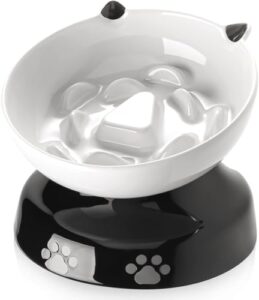
If you’d prefer something sturdier than plastic, this ceramic option brings weight and stability to the table, literally staying put even when your puppy gets rowdy around mealtime.
The raised flower column design slows eating by about 12 times compared to a regular bowl, which helps prevent vomiting and regurgitation in young pups who tend to scarf down their kibble. You can toss it in the dishwasher for easy cleanup, and the elevated design promotes better neck posture while your puppy eats.
| Best For | Cat owners whose pets eat too fast and experience vomiting, regurgitation, or need a more comfortable elevated feeding position. |
|---|---|
| Material | Ceramic |
| Dishwasher Safe | Yes |
| Food Type | Dry, Wet |
| Slow Feeding | Yes |
| Non-Slip | Yes |
| Weight | N/A |
| Additional Features |
|
- Slows down eating by 12 times to prevent digestive issues and promote healthier habits
- Ceramic construction stays in place during meals and cleans easily in the dishwasher
- Elevated design reduces neck strain and whisker fatigue for more comfortable eating
- Holds less food than regular bowls, so not ideal for larger portions or multiple feedings
- Rubber bottom pieces can fall out over time
- Raised bumps may not challenge all cats equally—some figure out how to eat around them quickly
3. Dogit Go Slow Dog Bowl
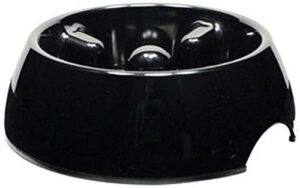
Another dependable pick is the Dogit Go Slow Dog Bowl, which comes in sizes from extra small to large, holding anywhere from 300 milliliters for tiny pups up to 1.2 liters for bigger breeds.
The anti-gulp design forces smaller bites through raised segments, reducing air intake and promoting better digestion for both wet and dry foods. It’s dishwasher safe, made from BPA-free plastic, and features non-slip feet that keep it firmly planted on your kitchen floor.
| Best For | Dogs that gulp their food too quickly and need help slowing down to prevent bloat and digestive issues. |
|---|---|
| Material | Plastic Resin |
| Dishwasher Safe | Yes |
| Food Type | Dry, Wet |
| Slow Feeding | Yes |
| Non-Slip | Yes |
| Weight | 0.5 kg |
| Additional Features |
|
- Durable heavy-duty plastic construction with non-slip rubber bottom keeps the bowl stable during mealtime
- Dishwasher safe and easy to clean, making maintenance simple for busy pet owners
- Available in multiple sizes to accommodate dogs of all breeds and eating habits
- May not work well for dogs with very small snouts or extremely food-motivated eaters who can work around the design
- Some dogs need time to adjust to the new eating pattern and might get frustrated initially
- The design prioritizes function over looks, so it won’t win any style awards
4. Outward Hound Slow Feeder Dog Bowl
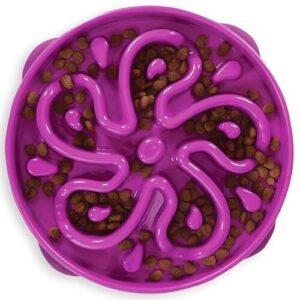
The Outward Hound Fun Feeder Slo Bowl is a veterinarian-recommended pick that can slow your puppy’s eating speed up to ten times, which helps prevent bloating, vomiting, and regurgitation.
Its large size holds four cups of dry or wet food, and the raised ridges create a challenging maze that keeps energetic pups focused while they eat.
Made from BPA-free plastic, it’s top-rack dishwasher safe and comes with a non-slip base that stays put during mealtime.
| Best For | Medium to large breed dogs who eat too quickly and need help slowing down to prevent bloating and digestive issues. |
|---|---|
| Material | Plastic |
| Dishwasher Safe | Yes |
| Food Type | Dry, Wet |
| Slow Feeding | Yes |
| Non-Slip | Yes |
| Weight | N/A |
| Additional Features |
|
- Slows eating up to 10X to reduce bloat, vomiting, and improve digestion
- Holds 4 cups of food with raised ridges that keep dogs engaged during meals
- Dishwasher safe, non-slip base, and made without harmful chemicals like BPA
- May not work well for dogs with narrow or small snouts, especially with wet food
- Some dogs might get frustrated and try to flip the bowl, needing supervision at first
- Can slide around on certain surfaces like silicone mats despite the non-slip base
5. Smarter Paws Pet Grooming Tool
This isn’t a slow feeder bowl, it’s a deshedding comb that removes loose undercoat fur from your puppy’s coat. The stainless steel teeth work through the top layer to pull out dead hair without cutting healthy guard hairs, which helps keep shedding under control around your home.
You’ll find it works best on medium to long-haired breeds with double coats, and regular brushing in the direction of hair growth prevents mats while supporting healthier skin.
| Best For | Dog owners with medium to long-haired breeds that have double coats and shed frequently around the home. |
|---|---|
| Material | Unknown |
| Dishwasher Safe | Unknown |
| Food Type | Unknown |
| Slow Feeding | Unknown |
| Non-Slip | Unknown |
| Weight | 200 Grams |
| Additional Features |
|
- Stainless steel teeth effectively remove loose undercoat without damaging healthy guard hairs
- Helps reduce shedding around your home with regular use
- Supports healthier skin by preventing mats when used in the direction of hair growth
- Not suitable for short-haired or single-coat breeds
- Requires regular brushing sessions to see results
- No batteries included, though none are needed for this manual tool
Frequently Asked Questions (FAQs)
Are slow feeding bowls good for puppies?
Like a gentle hand guiding an enthusiastic learner, these specialized bowls teach young dogs to pace themselves.
Yes, they’re excellent for puppies—reducing choking risks, preventing digestive upset, and turning meals into brain-boosting activities.
What bowls are good for puppies that eat too fast?
Puppies that gulp their kibble need maze-pattern bowls with raised ridges, non-slip bases, and BPA-free materials.
Options like Outward Hound or Dogit designs work well for preventing choking and promoting safer eating.
What kind of bowl is best for puppies?
In the heart of the matter, you’ll want stainless steel or BPA-free plastic bowls with non-slip bases that accommodate your pup’s size, keeping their neck naturally aligned during meals.
When should I introduce a slow feeder bowl?
Most puppies are ready around eight to ten weeks old, once they’re eating solid kibble confidently.
If yours finishes meals in under two minutes or frequently gags, that’s your cue to switch.
Can slow feeders cause puppy frustration or anxiety?
Yes, but only if the bowl’s design is too complex for your puppy’s size or snout shape.
Watch for signs like pawing, whining, or walking away—these signal the feeder needs adjusting.
Are slow feeder bowls safe for teething puppies?
You’d think harder bowls would hurt sore gums, but soft silicone slow feeders actually cushion teething puppies’ mouths while slowing intake, provided you choose non-toxic, low-ridge designs that won’t frustrate small jaws.
How do I transition from regular bowls?
Start by feeding two small meals per day using a shallow slow feeder, gradually increasing difficulty over seven to fourteen days while rewarding calm eating with praise.
What if my puppy refuses the slow feeder?
Resistance doesn’t mean disaster. Try pairing the bowl with treats initially, shorten feeding sessions to thirty seconds, and use a simpler design.
If anxiety persists, temporarily return to a regular bowl and reintroduce gradually.
Conclusion
Your puppy’s safety depends on slowing them down, your peace of mind depends on the right tools, and your choice of slow feeder bowls for puppies depends on matching design to your dog’s specific needs.
Whether you select raised ridges for gentle pacing or intricate mazes for determined gulpers, you’re investing in years of healthier digestion and calmer mealtimes. Pick the bowl that fits your pup’s eating style, then watch rushed panic transform into purposeful engagement.
- https://www.linkedin.com/in/denise-lott-a829001b0/
- http://mailto:team
- https://messymutts.ca/blogs/news/dog-slow-feeder-bowls-benefits-and-risks
- https://www.purinainstitute.com/centresquare/therapeutic-nutrition/canine-gastric-dilatation-volvulus
- https://focusedpetcare.com/emergency-vet-care-in-jacksonville-fl/torsion-of-the-stomach-in-dogs-the-urgency-of-veterinary-emergency-surgery/