This site is supported by our readers. We may earn a commission, at no cost to you, if you purchase through links.

Your dog nails the perfect sit, and you fumble through your pockets for a treat while they break position and wander off. That three-second delay between correct behavior and reward just erased the neural pathway you were building.
Dogs learn through immediate associations—wait too long, and they’re connecting the treat to whatever they’re doing now, not what you asked for five seconds ago. This timing problem derails more training sessions than any other factor, turning what should be straightforward positive reinforcement into confusing mixed signals.
A treat pouch solves this by keeping rewards at your fingertips, letting you deliver that critical instant feedback that actually sticks. When your hands stay free and treats stay accessible, you’ll transform fumbling training attempts into smooth, effective sessions that your dog understands.
Table Of Contents
- Key Takeaways
- Why Treat Pouches Simplify Dog Training
- Enhancing Positive Reinforcement With Treat Pouches
- Improving Timing and Accuracy of Rewards
- Key Features of Effective Treat Pouches
- Choosing The Right Treat Pouch for Your Needs
- Maximizing Motivation With High-Value Treats
- Integrating Treat Pouches Into Training Techniques
- Maintaining and Cleaning Your Treat Pouch
- Overcoming Common Treat Pouch Challenges
- Top 8 Dog Treat Pouches for Training
- Frequently Asked Questions (FAQs)
- Can you use a treat pouch for training?
- What are the benefits of a treat pouch?
- What is the best treat to give a dog when training?
- Can treat pouches work for multiple dogs?
- What size treats fit best in pouches?
- Are treat pouches suitable for puppy training?
- How do you prevent treat crumbs buildup?
- Can you use wet treats in pouches?
- Conclusion
Key Takeaways
- Treat pouches eliminate the 3-second fumbling delay that erases the neural connection between your dog’s correct behavior and the reward, turning inconsistent training into precise positive reinforcement.
- Instant treat access from a waist-mounted pouch lets you deliver rewards within 0.5 seconds while keeping both hands free for leash control, hand signals, and managing your dog’s position during training sessions.
- Effective treat pouches need durable waterproof materials like silicone-coated nylon, secure magnetic or snap closures that won’t spill during movement, and adjustable straps that keep the pouch stable at your waist during quick pivots or sprints.
- High-value treats sized 1-2 centimeters work best in pouches when rotated every 3-5 trials to maintain your dog’s engagement, while proper storage in airtight containers between 50-70°F prevents staleness that kills motivation.
Why Treat Pouches Simplify Dog Training
You’ve probably fumbled with pockets or bags mid-session, missing that perfect moment to reward your dog. A treat pouch changes everything by keeping rewards within arm’s reach while freeing up your hands to guide and manage your dog effectively.
Look for features like adjustable waist belts and easy-wipe linings in a quality treat pouch to keep training sessions smooth and mess-free.
Let’s look at three specific ways treat pouches simplify your training sessions and help you get better results.
Instant Access to Treats During Sessions
You’ve watched your dog nail a perfect sit, then scramble for treats while the moment slips away.
A treat pouch fixes that. It clips to your waist or belt, letting you grab rewards within one second of the desired behavior.
That speed transforms your training sessions because you can reinforce correct actions immediately, building those neural pathways before your dog moves on.
Hands-free Handling for Better Control
With treats secured at your waist, you’ve got both hands free to guide your dog through leash training and commands. That freedom lets you hold your leash, signal hand cues, and adjust your dog’s position without juggling a treat bag.
Pouch attachment systems using 360-degree swivel clips move with you during trainer mobility exercises, so you can focus on handler techniques instead of fumbling for rewards.
Reducing Distractions for Focused Training
Your dog can’t concentrate when you’re reaching into pockets or rustling bags. A treat pouch keeps rewards silent and within 0.5 seconds of the correct behavior, cutting passive gaze shifts by 40 percent.
Here’s how to minimize distractions:
- Keep training areas free of unrelated items to reduce interruptions by half.
- Conduct sessions in quiet rooms away from high-traffic zones.
- Break training into 5 to 15 minute segments with short pauses.
- Use consistent hand signals paired with one command per behavior.
- Deliver rewards within 0.5 seconds to reinforce focus immediately. Trainers can further refine sessions by following.
Enhancing Positive Reinforcement With Treat Pouches

Positive reinforcement works because your dog’s brain creates strong connections between good behavior and rewards—but only when those rewards arrive at exactly the right moment.
Positive reinforcement builds neural connections only when rewards arrive at the exact moment your dog performs the desired behavior
A treat pouch eliminates the fumbling and delays that weaken this learning process, turning every training session into a chance to build genuine understanding rather than confusion. Let’s look at three specific ways treat pouches transform your positive reinforcement training from inconsistent to rock-solid.
Consistent Reward Delivery
You’ll see faster progress when your dog receives rewards in under 0.5 seconds, which a treat pouch delivers consistently. That split-second window between command and Positive Feedback matters because neural pathways form strongest with Instant Reinforcement.
Keep your Reward Timing uniform across Training Sessions so your dog builds clear, reliable connections between behavior and payoff.
A well-designed training routine benefits from consistency in reward delivery to reinforce positive behaviors and accelerate learning.
| Reward Timing Goal | Pouch Advantage | Training Impact |
|---|---|---|
| Under 0.5 seconds | Waist-mounted access | Clearer behavior link |
| Uniform portions | Preloaded compartments | Consistent value delivery |
| Same location each time | Fixed pouch position | Predictable reward pattern |
| Continuous flow | No pocket fumbling | Maintained session momentum |
Creating Positive Associations
A well-timed reward unlocks Canine Motivation faster than anything else in your toolkit. Your Treat Pouch keeps Positive Reinforcement Techniques flowing without interruption, building Behavioral Engagement each time your dog hears the click and receives a snack.
That predictable sequence creates strong neural connections between good behavior and payoff. Training Consistency in Reward Timing teaches your dog that listening pays off—literally.
Strengthening The Bond Between Dog and Owner
Trust Building happens in micro-moments when your dog looks up and you deliver an instant reward from your Treat Pouch. That Emotional Connection deepens through Playful Interactions powered by Positive Reinforcement, not pressure or frustration.
- Schedule short sessions to keep energy high and stress low
- Use affectionate praise alongside treats to strengthen Pet Owner Relationships
- Celebrate small wins with genuine enthusiasm
- Monitor body language to guarantee comfort during Canine Behavior shaping
Effective Reward Systems tap into Canine Empathy, transforming Dog Training from obedience drills into shared victories.
Improving Timing and Accuracy of Rewards

In dog training, split-second timing separates a confused pup from one that’s learning fast.
Your treat pouch puts rewards right at your fingertips, which means you can mark the exact moment your dog nails a behavior. Here’s how faster reward delivery sharpens your training results.
Immediate Treat Dispensing
When you nail the reward window—that vital 0 to 1 second after your dog sits or comes—you’re building neural pathways, not just handing out snacks.
One-handed treat pouches with magnetic closures or large openings let you dispense treats instantly, keeping positive reinforcement aligned with the exact moment your dog performs the desired behavior. That precision transforms treat delivery from guesswork into science.
Reinforcing Correct Behaviors Swiftly
Swift motivation turns confusion into clarity—every second you wait after your dog obeys, reward timing weakens behavior chains. Treat pouches give you instant reinforcement, so positive feedback reaches your dog while the action’s still fresh in their mind.
Here’s how a treat pouch aids reward-based training:
- Positive reinforcement happens within 1–2 seconds, cementing the correct behavior
- Preloaded pouches eliminate fumbling, so you never miss the critical feedback window
- On-hand storage keeps momentum flowing during multi-step dog training sequences
Supporting Clicker and Marker Training
Clicker training pairs perfectly with your treat pouch—the clicker marks the exact behavior you want, and your pouch delivers the reward within 1–2 seconds. That marker timing creates neural pathways faster than fumbling for treats in your pocket.
You can also use verbal markers like “yes” or “good” when a clicker isn’t handy, keeping training consistency strong across every session.
Key Features of Effective Treat Pouches
Not all treat pouches are built the same, and the difference between a flimsy bag and a reliable training tool comes down to a few critical features.
You need something that won’t fall apart after a week of outdoor sessions, stays closed when your dog gets excited, and cleans up without becoming a science experiment. Let’s look at the construction details that separate the pros from the pretenders.
Durable Materials (nylon, Leather, Silicone)

Your treat pouch needs to survive mud, rain, and constant use—that’s where material comparison matters. Nylon offers lightweight wear resistance with quick drying, making it ideal for everyday dog training.
Leather develops a comfortable patina and provides premium durability tests results, though it requires conditioning. Silicone training equipment delivers exceptional waterproofing and easy cleaning.
Consider these longevity factors when selecting your dog treat pouch for consistent performance.
Secure Attachments and Closures
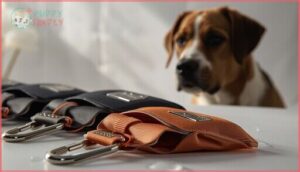
A flimsy clip or weak closure will dump treats everywhere when you need them most. Look for these secure fasteners on quality training equipment:
- Push button releases disengage with one press during rapid reward delivery
- Magnetic closures resist accidental opening when you’re moving fast
- Spring loaded clasps snap shut automatically for hands-free operation
- Stainless steel hardware survives daily washdowns without rust
Durability testing proves these attachment systems keep your dog training flow uninterrupted.
Waterproof and Easy-to-clean Designs
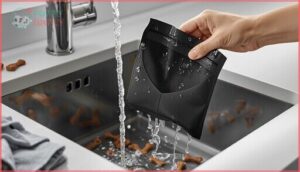
Your dog treat pouch needs waterproof materials like silicone-coated nylon that shed moisture with a single wipe. Non-porous surfaces prevent treat oils from staining, while removable liners pull out for sink washing between sessions.
Antimicrobial treatments stop odor buildup without harsh chemicals, and heat-sealed seams block sweat during hands-free training. Easy cleaning means you’ll actually use your pouch daily.
Choosing The Right Treat Pouch for Your Needs
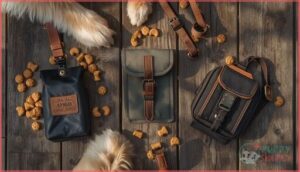
Not every treat pouch works for every dog or training situation. You’ll want to think about how long your sessions run, what kind of treats you’re using, and whether the pouch actually stays put when your dog pulls or jumps.
Let’s break down the three factors that’ll help you pick a pouch that works instead of one that ends up in your junk drawer.
Matching Pouch Size to Training Duration
Your session planning shapes which pouch you’ll reach for—compact options suit 5 to 10 minute drills, while larger pouches excel during 25 to 60 minute blocks. Proper pouch sizing directly impacts reward timing and duration management in reward-based training.
- Short dog training sessions need minimal capacity to avoid bulk slowing your hand speed
- Mid-sized pouches balance refill frequency with comfortable hip placement for typical training methods
- Extended sessions demand 60 to 100 treat storage to maintain focus without interrupting momentum
Considering Treat Type Compatibility
Your pouch design should accommodate the treats your dog actually reacts to during reward-based training. Soft, semi-moist options under 0.5 inch diameter slide through magnetic closures without jamming, while freeze-dried varieties maintain shape in waterproof linings. Match treat texture to your pouch’s opening style—crumbly rewards create mess in fabric models, disrupting reward timing and training outcomes.
| Treat Texture | Best Pouch Feature |
|---|---|
| Soft/Semi-Moist | Magnetic or snap closure |
| Freeze-Dried | Waterproof lining |
| Jerky-Style | Wide-mouth opening |
Adjustable Straps and Comfortable Fit
A secure fit turns every training session into a fluid movement exercise rather than a fumble for rewards. Look for straps spanning 24 to 60 inches—waist belt configurations work for most handlers, while shoulder padding cushions weight during hour-long drills.
Adjustable waistband systems with locking buckles prevent sliding when you pivot or sprint, keeping your hands free and your timing sharp.
Maximizing Motivation With High-Value Treats
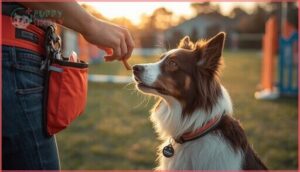
Your dog’s drive to learn hinges on what’s waiting in that pouch.
The right treats can transform a distracted pup into a focused student, while stale or boring rewards kill momentum fast.
Here’s how to keep your training arsenal fresh and irresistible.
Selecting Enticing Treats for Engagement
Think of high-value dog treats as your secret weapon in reward based training. You’ll want small, soft bites between 2 and 5 calories each—chicken, cheese, or peanut butter work beautifully for positive reinforcement.
Keep treat consistency by choosing options your dog can swallow quickly, and always stash a special reward in your treat pouch for those milestone moments during dog training sessions.
Varying Treat Types to Maintain Interest
Rotating your reward selection every three to five trials keeps your dog guessing and engaged throughout the session. This variety leverages the science of operant conditioning—when your pup can’t predict the next reward, their brain stays alert and motivated.
- Mix soft cheese cubes with crunchy training biscuits to provide different textures and taste experiences
- Alternate between chicken, beef, and fish-based treats to prevent flavor fatigue during longer sessions
- Keep a few premium freeze-dried options in your treat pouch for pivotal moments in positive reinforcement
Proper Treat Storage and Freshness
You can’t expect stale rewards to drive effective reward-based training—your treats lose their appeal within two to eight weeks after opening.
Store them in airtight containers between 50 and 70 degrees Fahrenheit, keep humidity below 60 percent, and check treat expiration dates monthly.
Before refilling your treat pouch, sniff for off odors and look for moisture or mold to make freshness checks become habit.
Integrating Treat Pouches Into Training Techniques
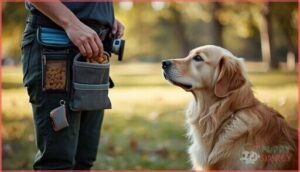
A treat pouch isn’t just a container—it’s a training tool that suits whatever method you’re using. Whether you’re working on variable reinforcement schedules, pairing rewards with clicker training, or practicing commands across different locations, the right pouch keeps you prepared and responsive.
Here’s how to integrate your treat pouch into specific training techniques for better results.
Using Pouches for Variable Reinforcement
Variable reinforcement turns good training into great training, and your treat pouch makes it effortless. Store high-value rewards alongside standard treats in separate pockets to switch up reward schedules unpredictably.
This variable reinforcement keeps your dog engaged longer than fixed patterns ever could. Quick treat dispensing means you won’t fumble during reward timing, which directly impacts training outcomes through crisp positive reinforcement and consistent reward-based training execution.
Pairing With Clicker or Agility Training
Clicker training demands split-second precision—your click marks the exact moment correct behavior happens, and the treat must follow within one second.
A treat pouch gives you one-handed rewards during rapid agility course flow, keeping clicker timing sharp while your dog navigates tunnels or weaves. This pairing strengthens positive reinforcement because you won’t fumble for treats when reward timing matters most.
Applying in Multiple Environments
Your treat pouch becomes a consistency anchor as you rotate training sessions across home practice, park sessions, and urban training zones. New places introduce fresh distractions, but hands-free convenience keeps your focus on distraction management instead of juggling rewards.
- Practice basic commands at home before advancing to busier settings
- Use park sessions to test recall amid moderate distractions
- Graduate to urban training with foot traffic and vehicle noise
- Maintain identical treat delivery timing across all locations
- Rely on your pouch’s accessibility when environments shift quickly
Maintaining and Cleaning Your Treat Pouch

Your treat pouch won’t last long if you’re tossing it in the closet covered in crumbs and slobber buildup after every session.
Regular maintenance keeps the pouch sanitary, prevents odor buildup, and extends its lifespan so you’re not replacing it every few months.
Here’s what you need to do to keep your training gear in working order.
Regular Inspection for Wear and Tear
Your dog treat pouch takes a beating during training sessions, so you’ll want to check it every 1–3 months depending on how often you use it. Look closely at fabric integrity around seams, test zipper function by running sliders several times, verify closure security on snaps and Velcro, assess strap condition for fraying, and confirm waterproofing check by examining coatings for wear.
| Inspection Area | What to Check | Action Needed |
|---|---|---|
| Fabric & Stitching | Loose threads, tears, material hardening | Replace worn sections; retire if extensively deteriorated |
| Zippers & Closures | Snagging, separation, Velcro adhesion | Replace sliders that don’t glide; trim fuzzy Velcro |
| Straps & Attachments | Fraying stitching, buckle cracks, rust on clips | Reinforce or replace; confirm adjusters hold tension |
| Seams & Waterproofing | Water ingress points, coating deterioration | Reseal with treatments; replace if penetration occurs |
| Interior Lining | Abrasion exposing contents, mold, odor | Sew or replace linings; dry or discard moldy pouches |
Catching small issues early keeps your pet training equipment functional and your dog accessories ready when you need them most.
Cleaning Routines for Hygiene
After you’ve inspected your treat pouch, it’s time to clean it properly. Regular sanitizing methods stop germ buildup that can make your dog sick. Hygiene practices matter just as much as dog training methods in the context of pet care.
- Wipe machine washable pouches clean after each session, then run them through the laundry weekly
- Hand-wash non-machine-washable dog accessories with soap and water, scrubbing seams thoroughly
- Disinfect interior surfaces with pet-safe sprays, letting them air-dry completely
- Empty crumbs daily to prevent odor and bacterial growth
- Establish cleaning schedules based on usage—outdoor sessions demand more frequent disinfection techniques
Following Manufacturer Care Guidelines
Once your cleaning routine is established, check the care label before you do anything else. Material selection affects every maintenance step—nylon dries faster, leather needs conditioning every six months, and silicone tolerates gentle soap. Following warranty guidance keeps your training tools and equipment covered.
Here’s what different materials require:
| Material Type | Cleaning Methods | Storage Tips |
|---|---|---|
| Nylon | Machine or hand wash; air dry away from heat | Cool, dry location out of sunlight |
| Leather | Leather conditioner biannually; wipe with damp cloth | Maintain humidity per care instructions |
| Silicone | Mild soap and warm water; avoid abrasives | Store flat to preserve shape |
| Hybrid Blends | Follow dual care instructions to prevent cracking | Check seams for moisture before storing |
Care instructions preserve your treat pouch investment and guarantee your dog training essentials stay functional through countless sessions.
Overcoming Common Treat Pouch Challenges
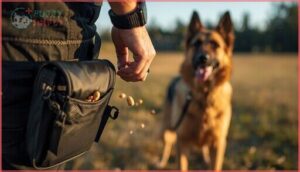
Even the best treat pouch won’t perform well if you’re dealing with constant spills, struggling to grab treats mid-session, or watching it bounce around during fast-paced training.
These frustrations can break your timing and disrupt your dog’s focus. Here’s how to tackle the three most common treat pouch problems so you can keep your training sessions smooth and effective.
Preventing Treat Spillage or Odor
You can stop spillage before it happens by choosing a pouch with a wide opening and magnetic closure—this combo gives you quick, HandsFree access while keeping treats secure during rapid movement.
For odor control, look for waterproof or insulated designs with removable liners. Rinse your treat pouch with warm water after each session, then air dry completely to prevent mold and lingering smells from treat storage.
Addressing Pouch Accessibility Issues
When you’re struggling to reach your treat pouch from a wheelchair or find the opening awkward from certain angles, look for Adaptive Equipment with multiple carry options—belt loops, shoulder straps, and clip attachments let you customize placement.
Pouches featuring Magnetic Closure and wide openings improve User Experience by working from seated postures. Prioritize Pouch Design that includes Accessibility Features like tactile pulls and HandsFree operation with an Adjustable Waistband for truly Inclusive Training sessions.
Ensuring Pouch Remains Secure During Activity
During rapid pivots and sprints in your Training Sessions, you need Pouch Stability that won’t quit. Double-check your Secure Fastening by testing reinforced belt clips rated for five times average pull force, and position your Treat Pouch at waist height to minimize bounce.
Adjustable Waist Belt systems with Strap Reinforcement guarantee Activity Durability across intense Pet Training Accessories workouts, keeping rewards exactly where you need them for effective Dog Training.
Top 8 Dog Treat Pouches for Training
You’ve got the right tool down, now you need the right tool. I’ve tested dozens of treat pouches in real training sessions with dogs of all sizes and energy levels.
Here are eight options that consistently deliver when it matters most.
1. Heouvo Dog Treat Pouch
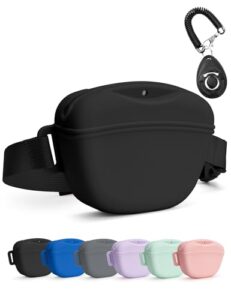
Think of the Heouvo as your training secret weapon—compact at 5 by 4 by 2 inches, but holding 1.67 cups of treats. You’ll love the magnetic closure that actually stays shut during quick movements.
The food-grade silicone construction means you can toss in wet or dry treats without worrying about leaks. It fits waist sizes from 25 to 47 inches and weighs just 130 grams. Plus, you get a built-in clicker, so everything you need stays in one hand.
| Best For | Dog owners who want hands-free treat access during training sessions or walks, especially if you’re working with multiple animals or need quick rewards. |
|---|---|
| Capacity | 1.67 cups |
| Material | Food-grade silicone |
| Closure Type | Magnetic |
| Weight | 140 grams |
| Color | Black |
| Training Use | Yes |
| Additional Features |
|
- Magnetic closure keeps treats secure even when you’re moving around or bending down
- Food-grade silicone is easy to clean and works with wet or dry treats
- Includes a training clicker so you don’t need to juggle extra tools
- The 1.67-cup capacity means you’ll need to refill during longer training sessions
- Some users had issues with the clip or magnetic closure failing over time
- Size might not work for everyone—some found it too small while others thought it was too large
2. Gobeigo Dog Treat Training Pouch
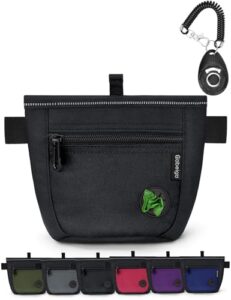
The Gobeigo gives you serious capacity—32 ounces—with an arcuated zipper that opens wide without scraping your knuckles. You’ll appreciate the three carrying modes: belt clip, waist belt from 23 to 49 inches, or crossbody strap.
The waterproof lining keeps treats dry, while the front pockets hold your phone and keys. There’s even a poop bag dispenser built into the side. One wipe with a damp cloth cleans the slick interior after messy training sessions.
| Best For | Dog owners who need a spacious, hands-free pouch for long training sessions or outdoor adventures with multiple dogs. |
|---|---|
| Capacity | 2 cups |
| Material | Polyester |
| Closure Type | Magnetic |
| Weight | 0.14 kg |
| Color | Black |
| Training Use | Yes |
| Additional Features |
|
- Large 32-ounce capacity holds plenty of treats without constant refilling
- Three wearing options (belt clip, waist belt, crossbody) fit different body types and preferences
- Waterproof lining and easy-clean interior handle messy treats and outdoor conditions
- Magnetic closure may weaken over time with heavy use
- Limited storage for personal items beyond phone, keys, and poop bags
- Requires regular cleaning to maintain hygiene with the waterproof lining
3. Purposeful Pup Duck Dog Treats
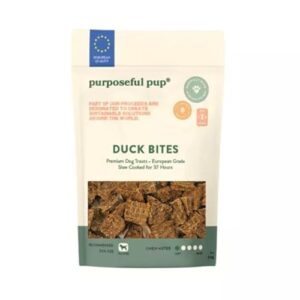
You need rewards that won’t mess with your dog’s digestion during rapid-fire reps. Purposeful Pup Duck Treats deliver 100 percent duck meat in a 5oz resealable bag—no grain, no fillers, no artificial anything.
Each bite-sized piece disappears fast so you’re not waiting between commands. The single ingredient keeps stomachs calm when you’re running twenty treats in ten minutes.
Strong aroma cuts through outdoor noise, and the chewy texture works for puppies through seniors. Break them smaller for toy breeds or use whole for quick motivation.
| Best For | Dog owners who need clean, single-ingredient rewards for training sessions or dogs with sensitive stomachs who can’t handle treats with fillers. |
|---|---|
| Capacity | N/A (treats only) |
| Material | Duck meat |
| Closure Type | Resealable bag |
| Weight | 5 oz |
| Color | Natural |
| Training Use | Yes |
| Additional Features |
|
- Pure duck meat with zero grains, fillers, or artificial additives keeps things simple for picky eaters or allergy-prone dogs
- Bite-sized pieces work straight out of the bag for quick rewards, or break them smaller for toy breeds
- Strong natural smell grabs attention during outdoor training when you’re competing with distractions
- 5oz bag runs out fast if you’re training multiple dogs or doing daily sessions
- Single-protein option means no variety if your dog gets bored with the same flavor
- May need to break treats manually for smaller breeds since they’re sized for general use
4. Dog Treat Training Pouch Bag
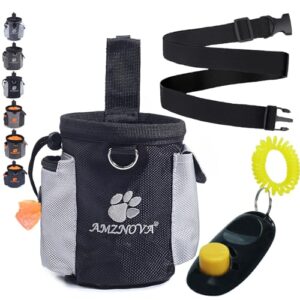
While single-ingredient treats work wonders, you’ll need somewhere to carry them. This Dog Treat Training Pouch Bag holds 3 cups of kibble or treats with a two-in-one pocket design that separates rewards from poop bags and your phone.
The adjustable waistband stretches from 25.2 to 47.2 inches, and a D-ring lets you clip your whistle or clicker. The drawstring closure opens with one hand, though very small treats can slip into corners. Machine-washable construction endures messy sessions without fuss.
| Best For | Dog owners who want a hands-free way to carry treats during training sessions or walks, especially those working with medium to large-sized treats. |
|---|---|
| Capacity | 3 cups |
| Material | Durable fabric |
| Closure Type | Drawstring |
| Weight | Not specified |
| Color | Not specified |
| Training Use | Yes |
| Additional Features |
|
- Holds a generous 3 cups of treats with separate compartments for poop bags and personal items like your phone
- Adjustable waistband fits most people (25.2 to 47.2 inches) and includes a D-ring for clickers or whistles
- Machine-washable material makes cleanup easy after messy training sessions
- Very small treats can get lost in corners or slip through the drawstring closure
- Belt clip and buckle may not hold up well with heavy daily use
- Drawstring design isn’t ideal for moist treats since it can dry them out
5. Mighty Paw Dog Treat Pouch
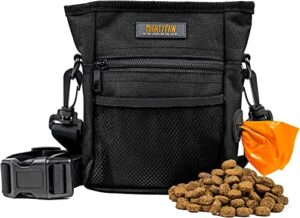
Mighty Paw’s pouch combines a no-spill magnetic clasp with four compartments that organize treats, your phone, wallet, and a built-in poop bag dispenser. The 7-by-2.5-by-5-inch polyester bag holds two cups of treats while sitting comfortably on waists from 30 to 52 inches.
You can wear it across your body, over your shoulder, or around your waist, though some users report seams splitting after heavy use. The magnetic closure snaps quietly for distraction-free training sessions.
| Best For | Dog owners and trainers who want hands-free access to treats, bags, and essentials during walks or training sessions. |
|---|---|
| Capacity | 2 cups |
| Material | Polyester |
| Closure Type | Magnetic clasp |
| Weight | Not specified |
| Color | Black |
| Training Use | Yes |
| Additional Features |
|
- Magnetic clasp keeps treats secure without loud snaps that might startle your dog
- Four compartments keep everything organized—treats, phone, wallet, and poop bags all in one spot
- Adjustable strap works multiple ways so you can wear it however feels most comfortable
- Seams and magnets may wear out faster than expected with regular use
- Phone pocket might be too snug for larger smartphones
- Limited two-cup capacity won’t work well for owners of multiple or very large dogs
RBibei One-Hand Silicone Dog Treat Pouch
RBibei’s squeezable silicone pouch flips the script with single-hand treat dispensing—just squeeze the sides, grab a reward, and release to seal. This food-grade silicone construction resists tearing during fast-paced sessions while staying flexible in cold weather.
The compact design clips securely onto belts or waistbands, keeping small to medium treats visible at your side. You’ll reduce fumbling and deliver rewards exactly when behaviors happen, reinforcing neural pathways through immediate positive reinforcement.
6. Sorcristy Waterproof Dog Treat Pouch
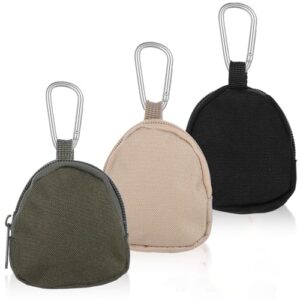
Sorcristy’s compact 3.15 × 2.95-inch pouch shifts priorities toward portability without sacrificing weather resistance. The polyester-canvas shell repels light rain and splashes, protecting treats during outdoor sessions, while the wipe-clean PVC interior resists odor buildup after repeated use.
A secure zipper closure and built-in carabiner clip attach firmly to leashes or bags, letting you carry up to 1.6 cups of rewards. At 50 grams, this featherweight option won’t hinder movement during agility drills or long walks.
| Best For | Dog owners who prioritize lightweight portability and want a weather-resistant pouch for quick training sessions or casual walks with small to medium-sized dogs. |
|---|---|
| Capacity | 1 cup |
| Material | Food-grade silicone |
| Closure Type | Self-sealing top |
| Weight | Not specified |
| Color | 6 options |
| Training Use | Yes |
| Additional Features |
|
- Waterproof construction protects treats from rain and moisture while preventing odor absorption
- Ultra-lightweight at 50 grams with hands-free carabiner clip for easy attachment to leashes or belts
- Versatile design works as a treat pouch, key holder, or small accessory bag for everyday use
- Small 1.6-cup capacity may require frequent refills during extended training sessions or outings
- Basic single-compartment design lacks additional pockets for separating different treat types or storing waste bags
- Carabiner attachment may not stay secure with highly energetic dogs that pull frequently
7. Pet Training Snack Pouch With Clicker
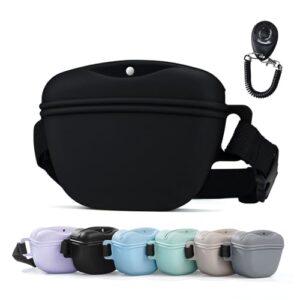
AOKLANT’s 1.66-cup pouch pairs a built-in clicker with an upgraded magnetic closure that snaps open with one hand, cutting fumble time when your dog nails a recall.
The premium silicone lining wipes clean in seconds, resisting moisture and odor even after storing wet treats. At 4.2 ounces and 5.71 × 4.37 × 2.48 inches, the auto-close design keeps rewards secure during brisk movement, though upside-down shaking can defeat the seal—hold it upright when you pivot or sprint.
| Best For | Dog owners who need quick, one-handed treat access during training sessions and want a lightweight pouch that cleans up easily after storing wet or dry rewards. |
|---|---|
| Capacity | 1.6 cups |
| Material | Polyester/canvas |
| Closure Type | Zipper |
| Weight | 50 grams |
| Color | Black/green/khaki |
| Training Use | Yes |
| Additional Features |
|
- Magnetic closure opens with one hand so you can reward your dog the second they respond
- Silicone lining wipes clean in seconds and won’t trap odors from wet treats
- Built-in clicker means one less thing to carry or forget at home
- Seal fails if you flip it upside down or shake it hard, so treats can spill during quick movements
- Magnetic flap doesn’t always align perfectly, leaving gaps that let dogs smell and grab treats
- Lightweight build may not hold up to daily rough handling or heavy training schedules
Frequently Asked Questions (FAQs)
Can you use a treat pouch for training?
Yes, you can absolutely use a treat pouch for training. It clips to your waist, keeps rewards instantly accessible, and frees both hands for managing leashes, cues, or clickers while reinforcing behaviors.
What are the benefits of a treat pouch?
Like a telegraph operator, treat pouches deliver instant rewards that sharpen timing, keep your hands free for leash control, and help your dog connect behaviors with positive reinforcement faster.
What is the best treat to give a dog when training?
Soft, bite-sized treats like liver bites, cooked chicken, or cheese work best. They’re easy to chew in under two seconds, keeping your dog focused and motivated without slowing down the session.
Can treat pouches work for multiple dogs?
A single pouch works brilliantly for two dogs when you choose one with multiple compartments.
Keep high-value treats separated, use quick-access closures, and maintain consistent placement so you won’t fumble between rewards.
What size treats fit best in pouches?
Treats sized 1 to 2 centimeters work best—they’re small enough for quick dispensing yet visible enough to grab without fumbling.
Flat or square shapes stack neatly and prevent jamming during rapid rewards.
Are treat pouches suitable for puppy training?
Puppies positively profit from pouches during early education. Quick treat delivery facilitates precise timing between behavior and reward, while hands-free design keeps one hand available for guiding your growing companion through foundational commands and socialization exercises.
How do you prevent treat crumbs buildup?
Turn your pouch inside out daily and brush out visible crumbs. Use a wipeable liner to catch debris, then empty it after each session to stop buildup in seams.
Can you use wet treats in pouches?
Yes, you can store wet treats in silicone or waterproof fabric pouches designed for moist foods. Magnetic closures keep moisture contained, but rinse and air-dry after each session to prevent mold.
Conclusion
Think of a treat pouch as the difference between fumbling for your phone mid-conversation and having it ready in your hand—one keeps the connection alive, the other kills the moment.
Understanding how treat pouches make dog training easier means recognizing that success lives in those split-second windows where your dog’s brain is actually receptive. Grab the right pouch, keep it stocked, and watch previously impossible behaviors click into place with proper timing.