
This site is supported by our readers. We may earn a commission, at no cost to you, if you purchase through links.

Your dog demolished another pair of shoes, shredded the couch cushions, and somehow excavated a crater in your backyard—all before noon. That restless energy isn’t rebellion; it’s a bored brain searching for stimulation.
While daily walks exercise your dog’s body, puzzle toys target something equally important: mental enrichment that tires them out from the inside. Dog puzzle toys for beginners transform frustrated pups into focused problem-solvers, channeling destructive impulses into productive challenges.
The right starter puzzle won’t just keep your furniture intact—it’ll build your dog’s confidence, slow down gulping eaters, and provide the cognitive workout that leaves even high-energy breeds contentedly exhausted.
Table Of Contents
- Key Takeaways
- Top 10 Dog Puzzle Toys for Beginners
- Barkwhiz 3-Level Dog Puzzle Toy
- 1. Outward Hound Dog Treat Puzzle Tower
- 2. Trixie Flip Board Dog Toy
- 3. Trixe Interactive Dog Puzzle Toy
- 4. Snuffle Mat for Dogs
- 5. PetSafe Busy Buddy Treat Dispenser Toy
- 6. Outward Hound Dog Brick Puzzle Toy
- 7. Pineapple Dog Chew Toy
- 8. Outward Hound Slow Feeder Dog Bowl
- 9. West Paw Interactive Dog Puzzle Toy
- Benefits of Puzzle Toys for Dogs
- Choosing The Right Beginner Puzzle Toy
- How to Introduce Puzzle Toys Successfully
- Maintaining and Cleaning Dog Puzzle Toys
- Frequently Asked Questions (FAQs)
- Conclusion
Key Takeaways
- Puzzle toys channel destructive energy into productive mental stimulation that exhausts dogs from the inside out, often more effectively than physical exercise alone—making them essential for reducing anxiety, preventing furniture demolition, and building genuine problem-solving confidence.
- Start with beginner-friendly options featuring 2-3 compartments and adjustable difficulty levels (like the Barkwhiz 3-Level or Outward Hound puzzles), then gradually rotate toys weekly to maintain novelty while your dog masters each challenge without frustration.
- High-value treats in tiny portions (6-12 pieces of chicken, cheese, or freeze-dried meat per 10-15 minute session) delivered within one second of success create irresistible motivation that transforms puzzle time into your dog’s favorite cognitive workout.
- Regular cleaning with warm soapy water, complete air-drying for 6+ hours, and weekly inspections for cracks or loose parts keep puzzle toys safe and effective while preventing bacterial buildup that compromises both toy longevity and your dog’s health.
Top 10 Dog Puzzle Toys for Beginners
You’re ready to give your dog a mental workout, but choosing the right puzzle toy can feel overwhelming.
Start by learning how to introduce puzzle toys to your dog so you can match the difficulty level to their experience and keep them engaged.
The good news is that beginner-friendly options are designed to build confidence without frustration, offering just enough challenge to keep tails wagging. Let’s look at ten tried-and-tested puzzle toys that’ll turn your dog into a problem-solving pro.
Barkwhiz 3-Level Dog Puzzle Toy
The Barkwhiz 3-Level Dog Puzzle Toy stands out with its progressive puzzle toy design that grows alongside your dog’s cognitive development. This interactive dog toy delivers genuine interactive play benefits through fourteen treat-hiding compartments and three escalating challenges that sharpen canine problem solving skills.
- Level 1: Simple flip lid for confidence-building first wins
- Level 2: Sliding round track that demands nose-work precision
- Level 3: Strategic scoot blocks requiring sophisticated problem-solving
Dishwasher-safe construction proves its commitment to toy durability testing, while food-safe materials guarantee worry-free dog mental stimulation during every play session. The inclusion of also helps reduce digestion problems and promotes healthier eating habits.
1. Outward Hound Dog Treat Puzzle Tower
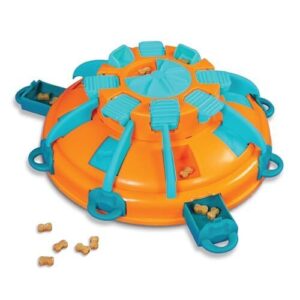
Another standout beginner option, the Outward Hound Dog Treat Puzzle Tower combines lifting and sliding actions across multiple stacked tiers. At 12.5 x 12.5 x 4.2 inches, this Level 4 puzzle features compartments that release treats when your dog nudges flaps aside through paw-slide motions.
You’ll appreciate the adjustable difficulty—lock or release layers to match your dog’s growing skills. The BPA-free plastic construction withstands enthusiastic problem-solvers, and the removable base makes treat loading and cleanup refreshingly straightforward between sessions.
| Best For | Dog owners with smart, experienced puzzle-solvers who need a mentally challenging activity to reduce anxiety and redirect unwanted behaviors. |
|---|---|
| Material | Plastic |
| Difficulty Level | Level 1-3 |
| Weight | 1.3 pounds |
| Safety Features | Food-safe materials |
| Cleaning | Easy to clean |
| Age Suitability | All breeds/sizes |
| Additional Features |
|
- Adjustable difficulty lets you customize the challenge by locking or unlocking layers as your dog improves
- Made from safe, BPA-free materials with no removable parts that could become choking hazards
- Works for all dog sizes and can slow down fast eaters while making mealtime more engaging
- Build quality feels less sturdy than expected for the price point
- Design flaws like jamming sliders and easily-locked mechanisms can frustrate both dogs and owners
- May be too easy for extremely smart dogs who solve it quickly, limiting long-term value
2. Trixie Flip Board Dog Toy
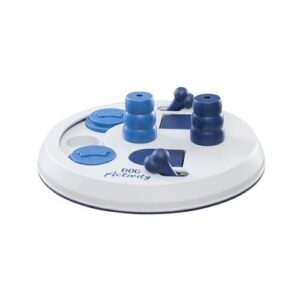
If your dog’s ready to graduate from basic sliding actions, the Trixie Flip Board introduces a satisfying twist—literally. This 9-inch round platform combines three liftable cones with pull-up lids and sliding flaps, creating layered challenges that hold your pup’s attention without overwhelming them.
The non-slip rubber feet anchor it firmly on hardwood or tile, preventing frustrating mid-puzzle slips. At just 1 pound and dishwasher-safe, it’s practical for daily rotation. Plus, the BPA-free construction and included instruction guide make setup straightforward for you and rewarding for your problem-solving partner.
| Best For | Dog owners with intermediate puzzle-solvers who’ve mastered basic sliding toys and are ready for multi-step challenges like flipping, lifting, and pulling compartments. |
|---|---|
| Material | Plastic |
| Difficulty Level | Level 4 |
| Weight | 2.8 pounds |
| Safety Features | BPA/PVC/Lead free |
| Cleaning | Easy to clean |
| Age Suitability | All life stages |
| Additional Features |
|
- Combines three different challenge types (cones, lids, flaps) to keep smart dogs engaged longer than single-action puzzles
- Non-slip rubber base stays put on smooth floors, so dogs can focus on solving instead of chasing a sliding toy
- Dishwasher-safe and lightweight design makes daily cleaning and storage actually realistic for busy owners
- Not built for heavy chewers—some owners reported cracked pieces or broken flaps after aggressive play
- Requires hands-on supervision since frustrated dogs may tip it over or get stuck on certain compartments
- Small crevices around moving parts can trap kibble bits, making thorough cleaning more tedious than expected
3. Trixe Interactive Dog Puzzle Toy
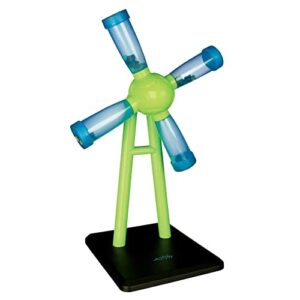
While flipping lids builds momentum, some dogs crave a windmill of possibilities. The Trixie Interactive Dog Puzzle Toy offers adjustable difficulty through interchangeable barrier settings, letting you customize the challenge as your pup’s skills sharpen.
At 10 x 8.5 inches, it accommodates small kibble and treats across multiple compartments that require deliberate paw or nose work. The non-slip feet prevent sliding during enthusiastic sessions, and the BPA-free plastic cleans easily with warm soapy water—just air-dry completely before your next training round.
| Best For | Dog owners looking for an entry-level puzzle that grows with their pet’s problem-solving abilities through adjustable difficulty settings. |
|---|---|
| Material | Plastic |
| Difficulty Level | Level 2 |
| Weight | 1 pound |
| Safety Features | BPA/Phthalate/Lead free |
| Cleaning | Dishwasher safe |
| Age Suitability | All ages/sizes |
| Additional Features |
|
- Interchangeable lids let you dial up the challenge as your dog gets smarter, so the toy stays engaging long-term
- Non-slip base keeps it steady during enthusiastic play sessions, preventing frustrating mid-puzzle slides
- BPA-free plastic cleans quickly with soap and water, making post-treat cleanup a breeze
- Not built for aggressive chewers or rough players who might crack the plastic components
- Larger or powerful dogs may find the 10-inch puzzle too flimsy for their strength level
- Requires supervision and regular damage checks to keep playtime safe
4. Snuffle Mat for Dogs
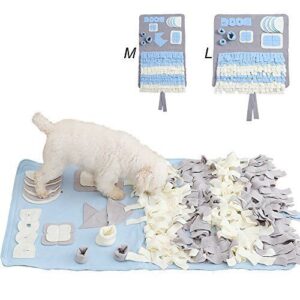
When your pup needs to slow down at mealtime or channel restless energy, a snuffle mat leverages natural foraging instincts.
If your dog still gets the hiccups after eating, you might need to address the gulping habit that causes them.
The Routesun mat spreads 23.6 by 39.4 inches of non-toxic polar fleece across a non-slip base, creating dozens of soft pockets where you’ll hide kibble or treats. Your dog sniffs, paws, and explores each fold, transforming dinner into a scent-driven treasure hunt.
It’s machine washable, folds into a storage bag for travel, and works beautifully for dogs with disabilities or those prone to gulping.
| Best For | Dogs who eat too fast, need mental stimulation, or have mobility issues that make traditional exercise difficult. |
|---|---|
| Material | Plastic |
| Difficulty Level | Level 1 |
| Weight | 1.98 pounds |
| Safety Features | BPA/Phthalate/Lead free |
| Cleaning | Warm water and soap |
| Age Suitability | All life stages |
| Additional Features |
|
- Turns mealtime into a fun scent game that taps into your dog’s natural hunting instincts
- Machine washable and folds up small, so it’s easy to clean and take anywhere
- Non-slip base keeps it in place while your dog explores every pocket
- Not built for aggressive chewers who might tear through the fleece
- Needs supervision since some dogs might try to eat pieces of the mat itself
- Dogs with sharp nails can snag or damage the fabric over time
5. PetSafe Busy Buddy Treat Dispenser Toy

If your dog’s a tug-and-chase enthusiast, the PetSafe Busy Buddy Twist N Treat channels that energy into rewarding problem-solving. You’ll twist the two BPA-free rubber halves together, loading kibble or spreadable treats inside, then adjust the opening to control release speed.
The patented Treat Meter randomizes dispensing, so your pup stays curious instead of giving up. It’s dishwasher-safe, durable enough for moderate chewers, and works beautifully for slowing down speed-eaters or keeping restless dogs mentally engaged during downtime.
| Best For | Dogs over 40 lbs who gobble their food too fast or need mental stimulation between walks. |
|---|---|
| Material | Polar fleece |
| Difficulty Level | Beginner |
| Weight | Not specified |
| Safety Features | Non-toxic |
| Cleaning | Machine washable |
| Age Suitability | All pets |
| Additional Features |
|
- Adjustable difficulty lets you control how quickly treats come out, so it grows with your dog’s skill level
- Dishwasher-safe design makes cleanup quick and easy after messy peanut butter sessions
- Random treat dispensing keeps dogs engaged longer than predictable puzzle toys
- Some frustrated dogs give up if they can’t figure out how to get treats out right away
- The braided rope attachment can fray or break with heavy chewers
- Makes a loud clatter when dropped on tile or hardwood floors
6. Outward Hound Dog Brick Puzzle Toy
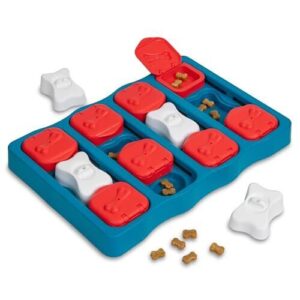
Three-in-one compartments transform this intermediate-level puzzle into a proper mental workout for your growing learner. You’ll flip lids, slide panels, and pop out hollow brick bones to reveal hidden treats, layering challenge without overwhelming beginners.
The 12.75 x 9.25-inch layout holds 3/4 cup of kibble, doubling as a slow feeder for speed-eaters, and it’s dishwasher-safe for quick cleanup. Just supervise early sessions—those white bone pieces can tempt persistent chewers, and the flaps pull off easier than you’d expect.
| Best For | Dogs who’ve mastered basic puzzles and need a step up in challenge, plus fast eaters who could benefit from a slow-feeder that makes mealtime more engaging. |
|---|---|
| Material | Plastic |
| Difficulty Level | Medium/Large |
| Weight | 1 pound |
| Safety Features | BPA-free |
| Cleaning | Easy to clean |
| Age Suitability | Dogs over 40 lb |
| Additional Features |
|
- Three different puzzle mechanisms (flip, slide, pop-out) keep things interesting and build problem-solving skills
- Holds a decent amount of food (3/4 cup) and dishwasher-safe design makes daily use actually practical
- Works for multiple dog sizes and doubles as both enrichment toy and slow feeder
- Durability is questionable—white bone pieces and flaps can detach pretty easily with determined chewing
- Needs constant supervision since loose parts become choking hazards
- May bore puzzle-savvy dogs who crack it in one session
7. Pineapple Dog Chew Toy
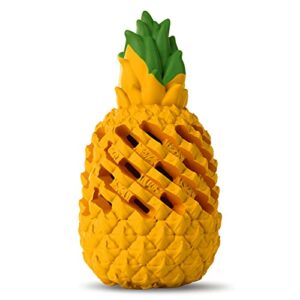
Textured like a tropical fruit stand pick, this 6.4-inch rubber chewer doubles as a treat stuffer and dental scrubber for dogs who need something to sink their teeth into. You’ll pack kibble or peanut butter into the hollow pineapple core, keeping restless pups occupied while the ridged surface scrapes plaque off molars.
It’s built for adult dogs with moderate chewing habits—heavy-duty gnawers may crack it faster than you’d hope—and that bright orange design makes it easy to spot in grass or under furniture.
| Best For | Dog owners looking for a mid-sized treat-dispensing toy that keeps moderately destructive chewers entertained while helping clean their teeth. |
|---|---|
| Material | Plastic |
| Difficulty Level | 3-in-1 |
| Weight | 1.2 pounds |
| Safety Features | BPA/PVC/Lead free |
| Cleaning | Easy to clean |
| Age Suitability | All life stages |
| Additional Features |
|
- Hollow center lets you stuff treats or peanut butter inside to keep dogs busy for longer stretches
- Textured ridges scrub teeth and massage gums while your dog chews
- Bright orange color makes it easy to find when it rolls under the couch or into the yard
- Heavy chewers can crack or damage it faster than advertised
- Some dogs struggle to actually get the treats out, which can be frustrating
- Makes a fair amount of noise when dogs gnaw on it—not ideal if you need quiet time
8. Outward Hound Slow Feeder Dog Bowl
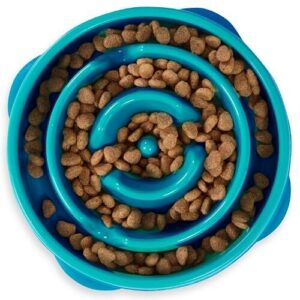
Your dog inhales kibble like it’s a race? This turquoise maze bowl slows the feast down to 10X the normal pace, turning dinner into a foraging game that reduces bloat and improves digestion.
You’ll fill the 2-cup capacity with dry or wet food, watching your pup navigate raised ridges instead of gulping everything in seconds. The non-slip base stays put on tile or hardwood, and the BPA-free plastic insert pops into your top-rack dishwasher.
| Best For | Small to medium dogs who eat too fast and need help slowing down to prevent bloat and improve digestion. |
|---|---|
| Material | Rubber |
| Difficulty Level | Intermediate |
| Weight | 0.5 pounds |
| Safety Features | Non-toxic natural rubber |
| Cleaning | Challenging to clean |
| Age Suitability | Adult |
| Additional Features |
|
- Slows eating up to 10X, which reduces the risk of bloat and helps with better digestion
- Non-slip base keeps the bowl stable during meals, even on smooth floors
- Dishwasher-safe and made without harmful chemicals like BPA or phthalates
- Not ideal for very large dogs due to the 2-cup capacity and medium size
- May slide on certain floor types despite the non-slip base
- Some dogs need supervision at first to get used to the maze design
9. West Paw Interactive Dog Puzzle Toy
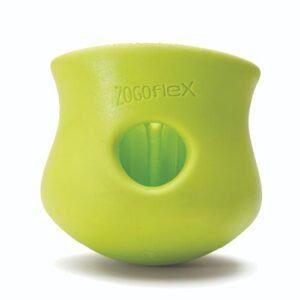
You need a puzzle toy that grows with your dog’s skills, and the West Paw Toppl delivers exactly that. This bright lime-green toy holds treats in chambers that challenge nudging and pawing instincts, then interlocks with a second Toppl to double the difficulty when your pup cracks the first level.
The BPA-free TPR withstands moderate chewers without splintering, floats during pool sessions, and survives your dishwasher’s top rack. At 8.27 inches tall, it’s built for medium to large dogs who need enrichment that evolves.
| Best For | Dogs who need mental stimulation and owners looking for a durable puzzle toy that can scale up in difficulty as their pup gets smarter. |
|---|---|
| Material | Plastic |
| Difficulty Level | Beginner |
| Weight | 8.8 ounces |
| Safety Features | No BPA/PVC/Lead |
| Cleaning | Dishwasher safe |
| Age Suitability | Small to medium |
| Additional Features |
|
- Adjustable difficulty by stacking two Toppls together, so it stays challenging as your dog learns
- Dishwasher-safe and freezable for easy cleanup and extended play sessions
- Durable enough for moderate chewers and doubles as a fetch toy that floats in water
- Not tough enough for aggressive chewers who destroy heavy-duty toys
- Smart or food-obsessed dogs might solve it too quickly without the second Toppl
- Higher price point compared to simpler treat-dispensing toys
Benefits of Puzzle Toys for Dogs

You’ve probably noticed how quickly your dog figures out where you hide the treats—that’s their exceptional mind at work, and puzzle toys tap into exactly that natural intelligence.
These toys aren’t just entertaining distractions; they deliver real, measurable benefits that improve your dog’s mental health, behavior, and overall quality of life.
Let’s break down the four key ways puzzle toys make a genuine difference in your dog’s day-to-day wellbeing.
Mental Stimulation and Cognitive Development
Your dog’s brain thrives on challenge, not routine. When you introduce dog puzzle toys, you’re building neural pathways that strengthen problem solving and mental agility. Regular cognitive training through interactive dog toys promotes neuroplasticity, the brain’s ability to adapt and grow.
Dog puzzle toys build neural pathways that strengthen problem-solving and keep your pup’s mind sharp through purposeful challenge
This mental stimulation fosters brain development across all life stages, sharpening cognitive development and keeping your pup’s mind engaged, flexible, and ready for whatever comes next.
| Cognitive Benefit | How Puzzle Toys Help |
|---|---|
| Memory Enhancement | Dogs recall treat locations and puzzle patterns across sessions |
| Attention Span | Extended focus periods compared to simple chew toys |
| Strategic Thinking | Learning to switch methods when one approach stops working |
| Sensory Processing | Engaging nose, eyes, and paws to solve multi-step challenges |
| Cognitive Reserve | Building mental resilience that slows age-related decline |
Reducing Anxiety and Destructive Behavior
When your pup’s mind stays active with interactive dog toys, you’ll notice fewer stress triggers and destructive behavior.
Puzzle toys channel restless energy into productive problem solving, reducing anxiety through focused mental stimulation. This calming technique transforms nervous chewing and barking into purposeful play, giving anxious dogs healthy stress management and proven anxiety reduction without medication or complex relaxation methods.
Slowing Down Eating Habits
Beyond reducing stress, puzzle toys tackle another common problem: your dog inhaling meals in seconds flat.
Slow feeder benefits extend from better digestion to healthier meal pacing, transforming frantic gulping into mindful eating habits. Food puzzle toys and treat dispensing toys naturally slow feeding by making your pup work for each bite, promoting:
- 25% reduction in eating speed through deliberate effort
- Increased chewing time that aids digestive comfort
- Regulated portion awareness during interactive play
- Extended mealtime satisfaction preventing overeating patterns
- Calmer post-meal behavior through proper digestion tips
These dog puzzle toys turn every meal into purposeful slow feeder sessions.
Building Confidence and Problem-Solving Skills
Watching your dog master each new challenge builds something deeper than entertainment—it creates real confidence.
Each solved puzzle strengthens problem-solving skills through positive reinforcement, teaching persistence that carries into daily life. Mental stimulation through these cognitive development tools transforms hesitant pups into bold thinkers, one treat at a time.
| Skill Built | How Puzzle Toys Help | Behavioral Impact |
|---|---|---|
| Persistence | Repeated successful attempts create positive feedback loops | More confident exploration daily |
| Focus | Short sessions with clear rewards strengthen attention | Calmer, more engaged behavior |
| Strategy | Trial and error without punishment encourages new approaches | Better adaptability to challenges |
| Self-trust | Incremental challenges prevent frustration while building skills | Reduced anxiety during novel tasks |
| Independence | Safe exploration teaches self-reliance through problem-solving toys | Less separation-related stress |
Confidence building happens naturally when you celebrate small wins.
Choosing The Right Beginner Puzzle Toy
Not all puzzle toys work for every dog, and picking the wrong one can leave both you and your pup frustrated. The key is matching the toy to your dog’s unique needs—size, skill level, and chewing habits all play a role.
Here’s what you need to think about to find the perfect starting point for your beginner puzzle solver.
Matching Toy to Dog’s Size and Breed
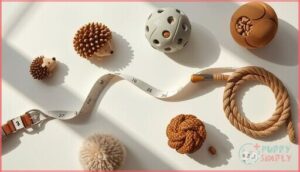
Start by measuring your dog’s muzzle width—toys should be wider to guarantee mouth safety and prevent choking.
Large breeds need high-density rubber for chewing habits, while toy breeds handle lightweight plush better. Herding dogs love breed-specific toys with pattern challenges, retrievers prefer treat dispensers, and terriers need durable options.
Matching size guidelines and toy durability to your dog’s build protects their dog mental health. Before choosing a new toy, review breed-specific toy needs to guarantee safety and engagement.
Assessing Your Dog’s Skill Level
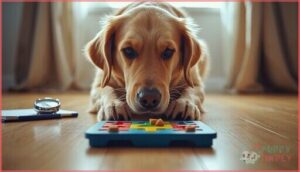
Observe how quickly your dog completes a simple puzzle—under 60 seconds signals solid canine intelligence and readiness for cognitive stimulation. Track whether they use paws, snout, or nose during interactive play, and note unsuccessful attempts before success to gauge problem solving ability.
Watch for lip licking or tense body language, which reveals comfort with skill evaluation. These learning patterns guide you toward dog puzzle toys that support cognitive development without frustrating your pup’s dog mental health.
Durability and Safety Considerations

You need interactive dog toys built from food-grade silicone or BPA-free plastics that prevent chemical transfer during licking, plus double-stitched seams that resist moderate chewing.
Check for PetSafe-level safety features like wide openings to prevent choking and smooth edges that protect gums. Material testing confirms chew resistance, while reinforced construction ensures toy longevity—hazard prevention becomes straightforward when durability and safety considerations guide your selection.
Adjustable Difficulty Features
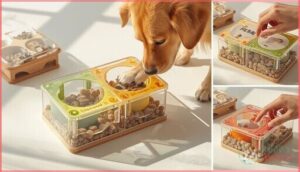
Look for puzzle toys with modular components that adapt as your dog masters each challenge mode—they’re your secret weapon for sustained mental stimulation and cognitive development.
- Level indicators showing beginner, intermediate, and expert puzzle complexity through color-coded markers
- Interchangeable inserts that adjust treat-dispensing ports from wide to narrow openings
- Removable panels offering toy customization through sliding or rotating sections
- Adaptive learning features that track progress and recommend when to escalate interactive dog toys difficulty levels
How to Introduce Puzzle Toys Successfully
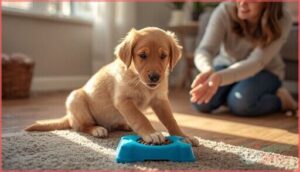
The way you introduce a puzzle toy can make the difference between a dog who loves the challenge and one who walks away confused.
You’ll want to set your pup up for success from the very first interaction, building confidence gradually while keeping frustration at bay.
Here’s how to turn puzzle time into your dog’s favorite part of the day.
Starting With Easy Difficulty Levels
Think of puzzle toy basics like teaching a child to ride a bike—you don’t hand them a mountain bike on day one. Choose interactive dog toys with just 2 to 3 compartments, keep sessions under 10 minutes, and let your dog figure out easy mode tips at their own pace.
These beginner challenges build dog cognitive stimulation without triggering frustration, laying the foundation for more complex mental stimulation later.
Using High-Value Treats for Motivation
High-value treats turn puzzle toys from a challenge into an irresistible adventure. Use tiny pieces of cooked chicken, cheese, or freeze-dried meat—about 6 to 12 per session—to fuel motivation without overfeeding.
Reward timing matters: give treats within 1 second of success to reinforce problem-solving. Rotate flavors based on canine preferences, and you’ll keep mental stimulation fresh while your dog masters treat-dispensing interactive dog toys.
Supervising Initial Play Sessions
Watch your dog closely during those first puzzle sessions—you’re building confidence, not frustration. Set clear session boundaries by choosing a quiet, slip-proof space and limiting play to 10 to 15 minutes.
Pay attention to stress signals like yawning, pacing, or jaw tension, which tell you when to pause. Play supervision keeps dog safety front and center, ensures positive initial engagement with interactive dog toys, and transforms canine enrichment into joyful mental stimulation through dog training.
Rotating Toys to Maintain Interest
Once your pup shows confidence, rotating toys keeps dog engagement high and prevents that “seen it, solved it” slump.
Limit options to two to four puzzle toys at a time, swap them weekly or biweekly, and mix puzzle levels from easy to intermediate. Toy rotation reintroduces novelty, broadens dog cognitive stimulation, and ensures interactive dog toys deliver fresh challenges without overwhelming your beginner problem-solver.
Maintaining and Cleaning Dog Puzzle Toys

Your dog’s puzzle toys work hard to keep them entertained, which means they need regular care to stay safe and effective. A quick cleaning routine prevents bacteria buildup, while regular inspections catch wear before it becomes dangerous.
Here’s how to maintain these toys so they last longer and keep working their mental magic.
Regular Cleaning Best Practices
After each play session, you’ll want to grab warm water and mild dish soap to wipe down your dog puzzle toys, removing saliva and food residue that can harbor bacteria. Rinse thoroughly, then air dry completely before storage—moisture breeds mold.
For daily-use interactive toys, deep cleaning once weekly with pet-safe sanitizing methods keeps hygiene sharp and your pup’s puzzle toy reviews consistently positive.
Inspecting for Wear and Damage
Once your puzzle toys are clean and dry, conduct a quick visual inspection to catch potential hazards before your next play session.
Look for these red flags:
- Cracks or deep scratches around treat compartments that compromise structural integrity
- Loose hinges or warped plastic from repeated chewing pressure
- Frayed fabric or peeling coatings that could become choking risks
Damage assessment protects your dog’s safety.
Proper Drying and Storage Methods
After cleaning your Dog Puzzle Toys, proper drying prevents mold and extends their lifespan. Air-dry Interactive Dog Toys on clean surfaces for at least six hours, using gentle air flow in well-ventilated spaces. Wipe excess water first to speed drying, then store completely dry Puzzle Toys in breathable cotton bags or baskets, keeping them in cool, low-humidity areas below 60 percent.
| Drying Method | Time Required | Best For |
|---|---|---|
| Air drying (natural) | 6+ hours | All materials, safest option |
| Fan-assisted drying | 2-4 hours | Hard plastic, rubber components |
| Cloth-wiped first | Reduces by 30% | Speeding any drying method |
| Direct sunlight | Not recommended | Can degrade plastics, fade colors |
| High heat sources | Never use | Warps materials, unsafe |
Frequently Asked Questions (FAQs)
Can puzzle toys help with separation anxiety?
Yes, they can reduce Separation Anxiety when paired with gradual training.
Interactive Play provides Mental Stimulation and acts as a Dog Distraction, releasing endorphins that promote Mental Comfort and Anxiety Relief during alone time.
How often should dogs use puzzle toys?
Ironically, most owners worry they’re using puzzle toys too little, when the real risk is overuse that turns mental enrichment into drudgery.
Aim for one 10-15 minute session daily, adjusting for your dog’s engagement levels and cognitive development needs.
Are puzzle toys safe for aggressive chewers?
They can be, but you’ll need durable materials like hard rubber or nylon that resist tearing.
Supervise initial sessions, choose toys larger than your dog’s mouth, and replace any showing deep gouges immediately.
What treats work best in puzzle toys?
Pick peanut butter, kibble pieces, freeze-dried liver treats, or carrot chunks—food rewards that fit puzzle fillers perfectly.
These canine snacks provide treat selection variety for reward options while enhancing mental stimulation through interactive dog toys.
Can multiple dogs share puzzle toys safely?
Shared play safety depends on individual canine socialization and multi-dog dynamics. Supervise carefully, choose puzzle toy design with multiple compartments, and watch for resource guarding—interactive dog toys work best when temperaments align and competition stays low.
Conclusion
Your dog’s brain craves the same workout intensity as their body—yet most owners focus solely on physical exercise.
Dog puzzle toys for beginners bridge that gap, transforming chaotic energy into focused problem-solving sessions that leave your pup genuinely satisfied. Start simple, celebrate small wins, and watch destructive habits fade as your dog discovers the joy of earning rewards through effort.
Mental exhaustion beats physical fatigue every time when building a calmer, more confident companion.