This site is supported by our readers. We may earn a commission, at no cost to you, if you purchase through links.
Your dog’s skin is roughly five times thinner than yours, with far fewer protective layers standing between their body and whatever’s in that shampoo bottle. That structural difference isn’t just trivia—it’s the reason a product labeled “gentle” for humans can still trigger serious reactions in dogs, from raw patches to full-body allergic responses.
Most pet parents don’t realize they’re playing chemical roulette every bath time, trusting labels that use terms like “natural” or “pH-balanced” without any standardized meaning. The gap between marketing claims and actual safety runs deep, especially when formaldehyde-releasing preservatives and hormone disruptors hide behind scientific names most of us can’t pronounce.
Learning how to tell if dog shampoo is safe means looking past the friendly packaging and decoding what’s actually touching your dog’s vulnerable skin.
Table Of Contents
Key Takeaways
- Dog skin is five times thinner than human skin, with a neutral pH of 6.5-7.5, making human shampoos dangerously unsuitable despite “gentle” marketing claims.
- Avoid sulfates that strip natural oils, parabens that disrupt hormones, artificial fragrances hiding phthalates, and formaldehyde-releasing preservatives like DMDM hydantoin—all linked to irritation, allergic reactions, and long-term health risks.
- Safe shampoos feature short ingredient lists with recognizable plant-based components, pH-balanced formulas specific to dogs, third-party certifications, and absence of harsh chemicals rather than vague “natural” claims.
- Proper safety evaluation requires checking for legitimate certifications, researching brand track records and verified customer reviews, consulting veterinarians familiar with your dog’s skin history, and performing patch tests before full application.
Why Dog Shampoo Safety Matters
You might think any shampoo will work for your dog, but that’s not how their skin structure operates. Dogs have a completely different skin structure than we do, and using the wrong product can trigger reactions that range from mild irritation to serious health problems.
That’s why choosing a shampoo formulated specifically for dogs makes such a difference in protecting their skin’s natural pH balance and oils.
Let’s break down why choosing a safe, species-specific shampoo isn’t just a preference—it’s essential for your dog’s wellbeing.
Differences Between Dog and Human Skin
Your dog’s skin isn’t just thinner than yours—it’s fundamentally different. Here’s what sets canine skin apart:
- Skin thickness: Dogs have just 3-5 cell layers while humans have 10-15
- Hair follicles: Compound structures produce multiple hairs per pore
- pH levels: Canine skin runs 6.2-7.5 versus human’s acidic 5.5
- Lipid barriers: Ceramide-rich oils replace sweat glands for protection
The are another key difference affecting skin health and product selection.
These differences demand pH-balanced formulas with natural ingredients suited for sensitive skin.
Risks of Unsafe Shampoo for Dogs
Choosing the wrong product puts your pet at risk. Toxic ingredients in dog shampoo dangers can trigger skin irritation, allergic reactions, or even chemical burns on that delicate skin we just discussed.
Some harmful ingredients build up over time, creating long-term health risks through toxic exposure. Sulfates might strip natural oils, parabens could disrupt hormones, and artificial fragrances often cause immediate redness or itching in sensitive breeds.
For more details on recognizing harmful pet shampoo ingredients, be sure to check recommended resources.
Importance of Species-Specific Formulas
You can’t just grab any bottle off the shelf and hope for the best. Species-specific pet care makes all the difference because dog shampoo ingredients are designed around canine health needs, not yours.
Here’s why pet skin demands gentle formulas formulated for dogs:
- pH-balanced formulas match your dog’s neutral skin (6.2–7.4), preventing irritation
- Natural ingredients work with sebaceous glands without triggering allergic reactions
- Species safety standards exclude human-approved preservatives that harm pets
- Natural pet care options support healthier skin and coat without stripping essential oils
Pet grooming safety starts with understanding this basic principle.
Harmful Ingredients to Avoid in Dog Shampoo
Not all ingredients in dog shampoo are created equal. Some chemicals can irritate your dog’s skin, disrupt their natural balance, or cause reactions that develop over time.
Here’s what you need to watch out for when reading those labels.
Sulfates and Skin Dryness

You’ve probably noticed your dog scratching more after bath time—sulfates might be the culprit. Sodium lauryl sulfate and sodium laureth sulfate strip natural oils from your dog’s skin, leaving it dry, itchy, and vulnerable. These foaming agents disrupt the skin barrier, leading to flaking and constant scratching.
Check the ingredient list on safe dog foods to spot sulfates and swap them for gentler, natural options.
| Sulfate Effects | Irritation Signs | Natural Alternatives |
|---|---|---|
| Strips natural oils | Excessive scratching | Coconut-derived surfactants |
| Disrupts skin barrier | Flaking and dryness | Sugar-based cleansers |
| Causes facial redness | Eye irritation | Gentle, sulfate-free formulas |
| May contain contaminants | Itching after bathing | Plant-based ingredients |
Repeated use doesn’t just cause dryness—it can lead to persistent skin irritations and discomfort. Look for sulfate-free formulations with coconut or sugar-derived surfactants instead. These natural alternatives clean effectively without compromising your dog’s sensitive skin.
Parabens and Hormonal Effects

Preservatives hiding in shampoo bottles can quietly interfere with your dog’s hormone disruption. Parabens—like methylparaben and propylparaben—are absorbed through the skin, potentially causing hormone disruption and endocrine effects.
Research links these chemicals to reproductive issues and even cancer risks. Chemical toxicity from repeated exposure threatens pet health and wellness, sometimes triggering allergic reactions.
Choose paraben-free formulas to protect your dog from toxic pet products.
Artificial Fragrances and Allergens
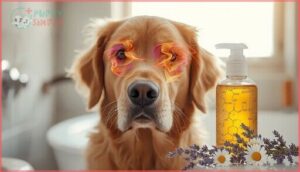
That mysterious “fragrance” on the label often hides phthalates and dozens of unlisted chemicals. These artificial fragrances trigger allergic reactions—itching, redness, even respiratory distress in scent-sensitive dogs.
Phthalate risks extend beyond skin irritation to potential fertility concerns. Look for fragrance-free options or natural alternatives like chamomile and lavender. Allergen testing by reputable brands shows their commitment to your dog’s safety.
Formaldehyde-Releasing Preservatives
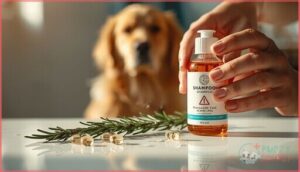
Certain preservatives release formaldehyde over time, exposing your dog to a known toxic substance linked to cancer risks and chronic skin irritation. DMDM hydantoin, quaternium-15, and diazolidinyl urea trigger chemical reactions on contact—redness, itching, even long-term pet skin health damage.
Safer preservative alternatives like vitamin E and rosemary extract protect without harmful ingredients, reducing toxic exposure while maintaining product stability.
Phthalates and Other Toxic Additives
Phthalates hide behind vague “fragrance” labels, acting as endocrine disruptors that interfere with your dog’s hormones and reproductive health—cancer risks and neurotoxins don’t belong in your pet’s bath.
Watch for these harmful ingredients:
- DEP, DBP, DEHP – Common phthalates linked to fertility issues
- “Fragrance” or “Parfum” – Code words masking toxic chemicals
- PEG compounds – Often contaminated during production
Toxic substance avoidance starts with reading labels carefully.
Key Signs a Dog Shampoo is Safe
Now that you know what to avoid, let’s flip the script.
Safe dog shampoos have clear markers that set them apart from the risky ones.
Here’s what to look for when you’re scanning that label.
Short, Recognizable Ingredient Lists
A truly safe dog shampoo starts with ingredient clarity. You should see plant-based focus—aloe vera, coconut oil, chamomile—listed by recognizable names, not chemical jargon.
Natural ingredients and organic products tend to keep lists short and honest. Look for minimal preservatives, like potassium sorbate, rather than a parade of unpronounceable additives. Non-toxic ingredients mean you’ll actually understand what’s touching your dog’s skin.
PH-Balanced for Dogs
Your dog’s skin sits at a neutral pH of 6.5 to 7.5, while yours clocks in around 5.5. That gap matters more than you’d think.
A pH-balanced formula protects the skin barrier, preventing dryness and bacterial invasion. Look for labels stating “pH balanced for dogs“—it signals canine dermatology was part of the design, not an afterthought.
Gentle formulas preserve natural oils while cleansing thoroughly.
Absence of Harsh Chemicals
Beyond pH balance, you’ll want a clean ingredients list—one that shows what’s not inside the bottle.
Safe formulas skip sulfates like SLS and SLES, which strip protective oils. No parabens disrupting hormones. No artificial fragrances or phthalates triggering reactions. And definitely no formaldehyde-releasing preservatives lurking under names like DMDM hydantoin.
Chemical-free doesn’t mean powerless—gentle formulas with safe preservatives and non-toxic additives clean effectively without compromise.
Presence of Natural or Organic Ingredients
Look for plant-based cleansers like coco glucoside or decyl glucoside—gentle formulas that won’t strip your dog’s coat. Natural ingredients such as oatmeal, aloe vera, and coconut derivatives soothe skin while eco-friendly natural preservatives like grapefruit seed extract keep products shelf-stable.
Organic certification from USDA or ECOCERT confirms non-toxic ingredients grown without synthetic pesticides, making organic grooming products a safer choice for natural pet care.
Hypoallergenic and Non-Toxic Labels
When you’re scanning labels for hypoallergenic options and nontoxic ingredients, remember that label regulation isn’t always strict—brands use these terms loosely.
Here’s what actually matters for pet grooming safety:
- Third-party certifications like EPA Safer Choice confirm ingredient transparency
- “Fragrance-free” beats vague “natural scent” claims for fragrance avoidance
- Complete ingredient lists reveal hidden artificial fragrances
- Veterinary endorsements strengthen certification credibility for natural pet care
How to Evaluate Dog Shampoo Before Buying
You’ve learned what to look for on a label, but knowing how to vet a product before you buy takes a bit more effort.
The good news is that a few smart strategies can help you separate the safe choices from the risky ones. Here’s how to do your homework and make confident decisions for your dog’s skin health.
Checking for Safety Certifications
When you’re scanning bottles at the pet store, certification marks are your roadmap to safety. Third-party seals prove a shampoo survived toxicology tests and meets regulatory compliance standards for ingredient transparency. Look for recognizable symbols that signal dog grooming safety—these certifiers audit formulas, verify pH balance, and demand allergen testing specific to canine skin. Not all “natural” claims hold up without verification.
| What to Check | What It Means | Why It Matters |
|---|---|---|
| Certification mark on label | Third-party testing completed | Proves product met safety standards for dogs |
| Ingredient list transparency | All components disclosed by weight | Lets you spot harmful additives quickly |
| Species-specific approval | Tested on canine skin models | Ensures formula won’t disrupt your dog’s pH |
| Batch codes and contact info | Traceability for quality control | Allows recalls and adverse event reporting |
Researching Brands and Reviews
A brand’s track record reveals more than slick marketing ever will. Check twelve-month average star ratings across retailers, not just one site. Verified purchase badges separate real experiences from promotional noise.
- Brand reputation built on consistent safety ratings and responsive customer service
- Review analysis highlighting scent, lather quality, and skin reactions over time
- Ingredient transparency with full INCI names and clear fragrance sourcing
- Consumer feedback patterns around packaging leaks or formula separation
- Third-party certifications proving cruelty-free or vegan claims through independent audits
Photos and videos from actual users show you what to expect. Forums and social media broaden your perspective beyond polished product pages, giving you the real story on dog grooming safety and pet product safety.
Consulting Veterinarians or Groomers
Your veterinarian knows your dog’s skin history and can steer you toward shampoo recommendations that won’t trigger flare-ups.
Groomer training includes recognizing irritants, so tap into their real-world experience with dog shampoo ingredients. Together, they offer veterinary guidance and consultation services that cut through marketing hype, giving you pet care tips rooted in pet safety, not sales pitches.
Best Practices for Safe Dog Bathing
Picking the right shampoo is just the first step.
How you bathe your dog matters just as much as what you use.
Here’s what you need to know to keep bath time safe and effective.
Choosing The Right Shampoo for Your Dog’s Needs
Your dog’s unique coat type and skin conditions determine which shampoo works best. Check ingredient labels carefully, considering breed specificity and your grooming techniques.
- Short coats need mild formulas that balance oils without stripping moisture
- Long or curly hair requires conditioning agents to prevent tangles
- Sensitive skin demands fragrance-free, hypoallergenic options
- Puppies and seniors benefit from extra-gentle, hydrating formulas
- pH-balanced formulas around 6.5-7.5 protect canine skin integrity
Natural ingredients beat harsh chemicals every time.
Monitoring for Allergic Reactions
Watch your dog closely after each bath—allergy warning signs often appear fast. Skin irritation like redness, hives, or itching may show up within minutes to 48 hours. Reaction timing matters; note when symptoms start.
If you see excessive scratching, swelling, or respiratory changes, rinse immediately and call your vet. Sensitivity tests help catch harmful ingredients before full bathing precautions become necessary.
Proper Rinsing Techniques
Rinsing might seem simple, but it’s where many dog shampoo problems actually begin. Leftover residue disrupts skin pH balance and triggers irritations, no matter how safe the shampoo ingredients are.
Follow these steps for gentle rinsing and complete soap removal:
- Use lukewarm water—test on your wrist first
- Rinse each section twice until water runs clear
- Target folds and creases where suds hide
- Squeeze fur gently to check for lingering film
- Towel dry carefully before coat drying begins
Adjusting Products for Puppies or Sensitive Dogs
Think of a puppy’s skin like tissue paper—it can’t handle the same rough treatment. You’ll need hypoallergenic options specifically labeled for puppies or sensitive skin.
Puppies need hypoallergenic, gentle formulas because their skin is as delicate as tissue paper
Look for gentle formulas with natural ingredients like oatmeal or aloe, minimal additives, and proper pH balance. Start with a patch test on one small area, then watch for redness or itching before bathing fully.
Frequently Asked Questions (FAQs)
How to know if a dog shampoo is safe?
Start by scanning the ingredient list for harsh chemicals like sulfates, parabens, and artificial fragrances. Look for pH-balanced formulas with natural ingredients, hypoallergenic claims, and certifications from reputable organizations.
How to check if shampoo is toxic?
Check shampoo labels for harmful ingredients like sulfates, parabens, and formaldehyde-releasing preservatives. Avoid chemical-based shampoos with artificial fragrances. Safe formulas protect pet skin from toxic chemicals and dog shampoo dangers.
Can I use baby shampoo on my dog?
Baby shampoo disrupts your dog’s pH balance, stripping natural oils and causing dryness.
While it works in emergencies, opt for pH-balanced formulas designed for sensitive skin to avoid harmful ingredients and dog shampoo dangers.
How often should I bathe my dog safely?
Most healthy dogs need bathing schedules every 4 to 6 weeks.
Adjust your grooming schedules based on coat types, activity level, and skin health. Overbathing strips natural oils, so watch for dryness between washes.
What should I do if shampoo irritates skin?
Ironically, the fastest way to stop skin irritation is to slow down.
Rinse thoroughly with lukewarm water, apply a cool compress, and discontinue the product immediately to prevent allergic reactions and restore skin health.
Are expensive shampoos always safer than cheap ones?
Price doesn’t guarantee safety in dog shampoo. Expensive options may contain higher-quality natural ingredients and better brand reputation, but cheap shampoos can be safe too.
Always check ingredient quality over cost.
Can dogs share shampoo with cats safely?
No, dogs and cats can’t safely share shampoo. Feline skin care demands cat-specific formulas—dog shampoos contain irritants that trigger interspecies allergies, shared bathing dangers, and canine skin conditions incompatible with species-specific pet care needs.
Conclusion
Trust, but verify—especially when it involves your dog’s skin care. Learning how to tell if dog shampoo is safe isn’t about paranoia; it’s about recognizing that your dog depends entirely on your choices.
Read those ingredient lists like they matter, because they do. Question vague claims. Prioritize transparency over marketing. Your dog can’t tell you when something burns or itches, so become the advocate they need. Their skin will thank you for it.