
This site is supported by our readers. We may earn a commission, at no cost to you, if you purchase through links.
Your puppy’s skin has a pH level closer to neutral, sitting around 6.5 to 7.5, while adult dog skin shifts to a more alkaline range between 9 and 10. This fundamental biological difference isn’t just a minor detail—it’s why grabbing whatever shampoo is within reach can compromise your dog’s skin barrier and trigger irritation, dryness, or worse.
Puppy shampoos are formulated with gentle surfactants like cocamidopropyl betaine and tear-free ingredients that respect delicate, developing skin. Adult formulas, by contrast, contain stronger detergents designed to tackle heavier odors and oils that mature dogs produce.
Understanding when to make the switch, what ingredients to look for at each life stage, and how your dog’s coat changes over time ensures you’re supporting healthy skin function rather than working against it.
Table Of Contents
- Key Takeaways
- Key Differences Between Puppy and Adult Dog Shampoo
- Why Puppies Need Special Shampoo
- Ingredients Commonly Found in Puppy Shampoos
- Ingredients Typically Used in Adult Dog Shampoos
- How to Choose The Right Shampoo for Your Dog’s Age
- Transitioning From Puppy Shampoo to Adult Dog Shampoo
- Common Myths About Puppy and Adult Dog Shampoos
- Natural and Organic Shampoo Options
- Tips for Bathing Puppies and Adult Dogs Safely
- Frequently Asked Questions (FAQs)
- Can you use regular dog shampoo on a puppy?
- Can I use adult shampoo on my puppy?
- Is there a difference between dog and puppy shampoo?
- When to switch from puppy shampoo to dog shampoo?
- Can I use puppy shampoo on adult dogs?
- What happens if shampoo gets in a dogs ears?
- Are waterless shampoos safe for puppies?
- How do I store dog shampoo properly?
- Can shampoo expire or lose effectiveness over time?
- Conclusion
Key Takeaways
- Puppy skin sits at a nearly neutral pH (6.5-7.5), while adult dog skin shifts to an alkaline range (9-10), which means using the wrong shampoo can strip your puppy’s delicate protective barrier and trigger irritation or dryness.
- Puppy shampoos rely on gentle surfactants like cocamidopropyl betaine and tear-free ingredients to respect developing skin, whereas adult formulas contain stronger detergents designed to tackle the heavier oils and odors mature dogs produce.
- Most veterinarians recommend transitioning from puppy to adult shampoo around 12-18 months, though small breeds mature faster and may switch closer to 12 months while large breeds might need puppy formulas until 18 months.
- Using adult shampoo on puppies risks pH imbalance, eye damage, and coat damage through over-conditioning, while using human shampoo on any dog disrupts their skin’s protective acid mantle due to incompatible pH levels.
Key Differences Between Puppy and Adult Dog Shampoo
Choosing the right shampoo for your dog isn’t as simple as grabbing the first bottle you see on the shelf.
Dogs with longer coats need formulas designed to detangle and moisturize, so look for shampoos specifically made for long-haired breeds.
Puppy shampoos and adult dog shampoos are formulated differently because young and mature dogs have distinct needs in terms of skin care and coat health. Here are the key differences you should understand before bath time.
Formulation and Ingredients
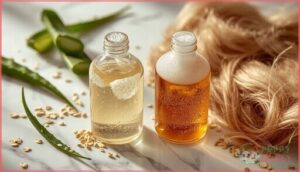
When you compare puppy shampoo to dog shampoo, the formulation differences are striking.
Puppy shampoo uses gentle cleansers like cocamidopropyl betaine, a mild surfactant that won’t strip delicate skin.
You’ll find natural ingredients such as oatmeal extract and aloe vera as moisturizing agents, plus a carefully balanced pH near 6.5 to 7.5.
Adult dog shampoo contains stronger detergents and heavier conditioning agents designed for mature coats.
Skin Sensitivity Considerations
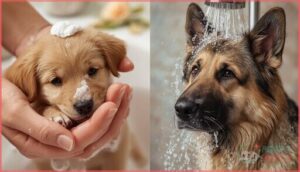
Your puppy’s skin pH hovers near neutral pH, making it more vulnerable to irritation from harsh detergents and fragrances. Sensitive skin triggers like synthetic dyes or strong perfumes can provoke redness and itching, especially in young dogs.
That’s why puppy shampoos emphasize gentle cleansing with fragrance-free formulas and moisture support to prevent skin irritation while protecting the delicate pH balance.
Coat and Age-Specific Needs
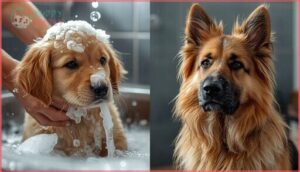
Beyond skin balance and pH, your puppy’s coat texture and age factors shape which shampoo works best. Puppies grow fine, fast-developing fur that benefits from mild formulas, while adult dogs show varied coat types—short-haired, double-coated, or curly—requiring different conditioning agents.
- Fine puppy fur needs tearless cleansers to avoid eye irritation
- Double coats in puppies benefit from light detangling ingredients
- Short-haired puppies require gentle cleansing to prevent dryness
- Adult dogs with thick coats need deshedding formulas during seasonal molts
- Breed considerations influence coat-specific shampoo selection
Why Puppies Need Special Shampoo

Your puppy’s skin isn’t just smaller than an adult dog’s—it’s fundamentally different in structure, resilience, and skin needs. Using the wrong shampoo can disrupt their delicate skin barrier, leading to irritation, dryness, or even infections that wouldn’t affect a full-grown dog.
Puppy skin is structurally different from adult skin, making it vulnerable to irritation and infection from improper shampoo
Here’s what makes puppy-specific formulas essential during those early months.
Delicate Puppy Skin and PH Balance
Your puppy’s skin isn’t just smaller—it’s fundamentally different. With a higher pH balance ranging from 6.0 to 7.5 and a thinner skin barrier, puppies need gentle cleansing that won’t strip away their limited natural oils.
A gentle formula puppy shampoo designed for sensitive skin helps maintain moisture and aids their developing protective layer, preventing the dryness and irritation that harsher products cause.
It’s vital to understand the impact of dog skin pH balance when caring for your puppy’s delicate skin.
Tearless and Mild Formulas
Tearless formulas use milder surfactants like cocamidopropyl betaine and decylglucoside to protect your puppy’s eyes during bath time. These gentle cleansers work with fragrance-free options to prevent eye irritation while maintaining proper pH balance around 5.5 to 7 for sensitive skin.
Why tearless matters for your puppy:
- Reduces stinging and tearing sensations during rinsing
- Avoids harsh detergents like sodium lauryl sulfate
- Minimizes allergen exposure around delicate eye zones
- Helps natural tear film without disruption
- Prevents residue buildup that causes post-bath irritation
Thorough rinsing ensures your puppy’s comfort and safety.
Risks of Using Adult Shampoo on Puppies
Using adult shampoo on your puppy can trigger skin irritation, pH imbalance, and allergic reactions due to harsh detergents that strip their delicate protective barrier. These stronger formulas may cause eye damage without tearfree ingredients, disrupt pH balance, and lead to coat damage through over-conditioning.
Puppy shampoo protects sensitive skin and promotes puppy skin health by maintaining proper moisture levels and barrier function. It’s especially important to choose formulas free from harmful artificial ingredients to guarantee your puppy’s safety.
Ingredients Commonly Found in Puppy Shampoos

When you’re picking out a puppy shampoo, you’ll notice the ingredient list looks pretty different from what’s in adult formulas. Manufacturers carefully select milder components that won’t strip away your puppy’s delicate skin barrier or cause irritation.
Here are the three main ingredient categories you should look for when shopping for your young dog’s first shampoo.
Gentle Surfactants and Cleansers
When you scan a puppy shampoo label, gentle surfactants like decyl glucoside and cocamidopropyl betaine are what make the formula safe for sensitive skin. These mild cleansers create a tearfree experience while respecting pH balance near 5.5, the sweet spot for your puppy’s delicate barrier.
- Non-ionic surfactants from plant sugars provide effective foaming without stripping natural oils
- Amphoteric cleansers reduce irritation and maintain moisture retention during washing
- Gentle shampoos avoid harsh SLS, prioritizing skin-friendly alternatives for young dogs
Natural and Hypoallergenic Additives
Your puppy’s skin deserves the protection of hypoallergenic ingredients like colloidal oatmeal and chamomile extract, which soothe irritation while maintaining barrier function. Fragrance-free formulas with natural preservatives such as potassium sorbate minimize allergic reactions, and plant-based ceramides reinforce moisture retention.
Some gentle formulas now include probiotic-derived extracts to support healthy skin pH, making all-natural shampoos a smart choice for sensitive skin.
Avoidance of Dyes, Fragrances, and Harsh Chemicals
Fragrance-free and dye-free formulations protect your puppy from unnecessary skin reactions and eye irritation. These hypoallergenic formulas rely on gentle cleansers like cocamidopropyl betaine, natural ingredients, and pH-balanced chemistry to maintain chemical safety without compromising cleanliness.
- Tearless shampoo formulas avoid irritants that cause eye watering during rinsing
- Low-irritation preservatives like phenoxyethanol replace harsher alternatives
- Fragrance-free options prevent scent-induced coughing or allergic responses
- Dye-free bases eliminate staining and skin sensitivity risks
Ingredients Typically Used in Adult Dog Shampoos
Adult dog shampoos are built to handle the tougher job of cleaning mature coats, which means they often contain ingredients you won’t find in puppy formulas. These products usually use stronger cleansing agents, heavier conditioners, and added fragrances to tackle dirt, oils, and odors that accumulate on adult dogs.
Understanding what goes into these shampoos can help you see why they’re not always suitable for younger pups.
Stronger Detergents and Conditioning Agents
Adult dog shampoos work like heavy-duty cleaners for mature coats, using anionic surfactants that tackle stubborn dirt at higher pH levels, usually between 9 and 10. You’ll find stronger detergent types paired with cationic polymers and silicone-based conditioning agents that smooth thicker fur and reduce static.
These formulas balance surfactant power with quaternary ammonium compounds for effective detangling, unlike the gentle shampoos or tearless shampoo designed for puppies.
| Component | Purpose in Adult Formulas |
|---|---|
| Anionic Surfactants | Remove oily soils effectively |
| Cationic Polymers | Reduce static, improve texture |
| Silicone Conditioners | Add shine and slip to coats |
Use of Fragrances and Colorants
Beyond cleaning power, many adult formulas include fragrances and colorants that appeal to you but can trigger scent sensitivity or dye allergens in dogs with sensitive skin. Although fragrance safety standards exist, artificial fragrance ingredients aren’t always disclosed individually on labels.
If your dog shows reactions, consider these alternatives:
- FragranceFree or natural fragrances from plant-based sources
- Dyefree formulas to reduce allergen exposure
- Tearless shampoo options that skip harsh additives
Specialized Formulas for Coat Types and Odors
Many adult shampoos target specific coat types with specialized cleansers, detangling agents for thick or curly coats, and enzyme odor control blends that break down smells without heavy perfumes.
You’ll find fragrance-free options for sensitive skin and formulas balanced to your dog’s pH level—features once reserved for puppy shampoo ingredients but now adapted for mature coats facing real-world dirt and odor challenges.
How to Choose The Right Shampoo for Your Dog’s Age

Picking the right shampoo for your dog isn’t just about grabbing the first bottle off the shelf. Your dog’s age plays a major role in determining which formula will protect their skin and coat without causing irritation or damage.
Here are two essential steps to help you make the best choice for your puppy or adult dog.
Assessing Skin and Coat Health
Before you reach for any puppy shampoo or dog shampoo, take a good look at your dog’s coat condition and skin barrier. Healthy coat health shows up as a lustrous shine, even hair growth, and consistent shedding patterns, while sensitive skin should feel soft with normal moisture levels.
If you notice dryness, redness, or unusual odors, your dog’s skin pH level might need special attention.
Consulting With Your Veterinarian
When you notice persistent skin issues or unusual coat changes, your vet consultation becomes the smartest next step. During pet health checks, veterinarians assess skin pH levels, examine coat texture, and may order diagnostic tests to identify allergies or sensitivities. This veterinary advice helps you select the right puppy shampoo or dog shampoo based on treatment plans suited to your pet’s actual needs, not guesswork.
Your veterinary guidance and advice should cover:
- Specific shampoo recommendations matching your dog’s skin condition and age
- Diagnostic tests needed if you see chronic itching or flaking
- Puppy care advice on bathing frequency and water temperature
- Warning signs that indicate a shampoo formula isn’t working
- Pet health checks scheduled to monitor coat improvements over time
Transitioning From Puppy Shampoo to Adult Dog Shampoo
Knowing when to switch from puppy shampoo to adult formulas can feel tricky, but your dog’s skin and coat will give you clear signals when the time is right.
Most veterinarians recommend making the switch around 12 months of age, though some breeds mature faster or slower than others. Switching too early or waiting too long can both create problems, so understanding the signs and timing helps you keep your dog’s skin healthy.
Ideal Age to Switch Shampoos
Most veterinarians recommend switching from puppy shampoo to dog shampoo around 12 to 18 months, though breed considerations can shift this timeline.
Small breeds often mature faster and may switch closer to 12 months, while large breeds might stay on puppy formulas until 18 months.
Your puppy’s development, coat texture changes, and skin monitoring will guide the ideal switch timing for proper puppy care and grooming.
Signs Your Dog is Ready for Adult Shampoo
You’ll know your dog is ready when you spot coat maturity—the fur feels denser and less downy, shedding patterns shift to adult cycles, and skin readiness shows no irritation after routine brushing.
Adult odor control becomes necessary, and pH balance stays stable between baths. These signs mean switching from puppy shampoo to dog shampoo helps healthy puppy development without compromising puppy skin or puppy care and grooming routines.
Potential Issues With Early or Late Transition
Switching too soon can trigger skin irritation because puppy skin is thinner and more prone to pH imbalance from adult formulas. Conversely, late changeover may cause coat damage as developing fur misses age-appropriate conditioning, leading to sensitivity issues.
Poor changeover timing disrupts puppy development, potentially worsening sensitive skin and allergies—especially in breeds already predisposed to dermatological challenges.
Common Myths About Puppy and Adult Dog Shampoos
You’ve probably heard plenty of advice about dog shampoos, but not all of it holds up under scrutiny. Some common beliefs about what’s safe or effective can actually lead you astray when choosing products for your puppy or adult dog.
Let’s clear up a few widespread misconceptions that might be influencing your grooming decisions.
Safety of Human Shampoos for Dogs
Using human shampoo on your dog isn’t a safe shortcut. The pH balance in human products ranges from 5.5 to 5.6, while your dog’s skin sits between 6.2 and 7.4. This mismatch disrupts the protective acid mantle, leading to issues you’ll want to avoid.
- Skin irritation and increased dryness or flaking
- Eye safety concerns since formulas aren’t tearless
- Residue effects from detergents that don’t rinse completely
- Allergen reactions from synthetic fragrances and toxic shampoo ingredients
Dog shampoo protects sensitive skin and allergies better than any human alternative.
Effectiveness of “All-Ages” Shampoos
All-ages shampoos promise convenience, but you’ll get better results matching your dog’s life stage. While gentle formulas with pH balance near 6.5 and mild cleansers work across ages, puppies need extra skin compatibility that adult dog shampoo doesn’t always provide.
Natural dog shampoo with fragrance control bridges the gap, though puppy shampoo remains ideal for sensitive young skin.
Misconceptions About Tearless Formulas
Tearless myths can mislead you when choosing puppy shampoo. While tearfree shampoo uses gentle cleansers that avoid potent surfactants found in some dog shampoo, it doesn’t guarantee zero eye irritation for every sensitive skin type.
Tearless formulas simply reflect milder shampoo ingredients and fragrance concerns, not stronger cleaning power or universal hypoallergenic properties across all breeds and ages.
Natural and Organic Shampoo Options
More pet owners are turning to natural shampoos for their dogs, driven by concerns about synthetic chemicals and environmental impact. These products use plant-based cleansers and avoid artificial additives, but understanding the real differences between natural and synthetic options helps you make informed choices.
Let’s look at what sets these eco-friendly formulas apart and whether they’re right for your puppy or adult dog.
Benefits of Plant-Based Cleansers
Plant-based cleansers offer powerful advantages for your dog’s skin preservation and overall health. Gentle cleansing with natural ingredients like cocamidopropyl betaine lifts dirt without stripping essential oils, maintaining skin barrier integrity.
These biodegradable formulas reduce environmental impact while supporting moisture balance. Organic pet products and all-natural shampoos provide eco-friendly care, using renewable sources that lessen waterway pollution, making natural pet care both effective and responsible.
All-Natural Vs. Synthetic Ingredients
You’ll encounter both natural oils and synthetic alternatives when shopping for your dog’s shampoo, each with distinct advantages. All-natural shampoos and organic formulas rely on chemical-free, eco-friendly ingredients that minimize exposure to toxic ingredients and artificial fragrance.
Consider these factors:
- Natural and gentle pet products may vary in consistency between batches
- Synthetic alternatives offer predictable performance and purity
- Organic shampoos support sustainable sourcing practices
Trends in Eco-Friendly Dog Grooming Products
You’re seeing more eco packaging like refillable bottles and biodegradable labels that cut plastic waste in dog grooming.
Sustainable ingredients such as plant-based surfactants and cruelty-free formulas backed by green certifications like Leaping Bunny are gaining traction.
Water conservation practices, including rinse-free cleansers and low-flow systems, appeal to eco-conscious owners choosing all-natural shampoos and organic shampoos for natural pet products that protect your dog and the environment.
Tips for Bathing Puppies and Adult Dogs Safely

Using the right shampoo is just one piece of the puzzle in maintaining your dog’s skin and coat healthy. How you bathe your puppy or adult dog, how often you do it, and what you do afterward all play important roles in protecting their skin barrier and preventing irritation.
Let’s look at some practical guidelines to make bath time safer and more effective for dogs at any age.
Bath Frequency Recommendations
How often should you bathe your dog? Bath schedules depend on age, coat maintenance needs, and skin conditions. Puppies usually need bathing every 3 to 6 weeks with gentle puppy shampoo, while most adult dogs benefit from baths every 4 to 8 weeks.
Adjust bathing frequency based on:
- Your puppy’s age and sensitivity to products
- Seasonal changes affecting coat health
- Activity level and odor buildup requiring dog hygiene attention
Monitor skin reactions after each puppy bath time to adjust your routine.
Preparing Your Dog for Bath Time
Your bath preparation sets the tone for safe dog grooming and effective pet hygiene. Before introducing puppy shampoo or dog shampoo, brush your dog’s coat to remove mats and gather all canine care supplies within arm’s reach.
Place a non-slip mat in the tub for bath safety, then offer treats and calm praise—these grooming tips create positive puppy bath time associations.
Post-Bath Coat and Skin Care
Proper coat conditioning after washing promotes skin health and fur detangling while preserving pH balanced canine skin care. Within three minutes of gentle drying, apply fragrance-free lotion to damp belly and paw areas, then work a leave-in conditioner through mid-lengths with a wide-tooth comb.
Your post bath routines should match coat type—avoid heavy oils on short fur to prevent irritation.
Frequently Asked Questions (FAQs)
Can you use regular dog shampoo on a puppy?
You shouldn’t reach for what works on grown dogs.
Adult dog shampoo can irritate your puppy’s delicate skin with stronger detergents, harsh fragrances, and unbalanced pH that disrupt their protective barrier.
Can I use adult shampoo on my puppy?
You shouldn’t use adult shampoo on your puppy. Adult formulas contain stronger detergents and higher pH levels that can strip natural oils, irritate delicate puppy skin, and disrupt the protective barrier function.
Is there a difference between dog and puppy shampoo?
Yes, puppy shampoo and dog shampoo differ substantially.
Puppy shampoo uses milder surfactants and tearless formulas designed for sensitive skin, while adult dog shampoo contains stronger detergents suited for mature coats and resilient skin.
When to switch from puppy shampoo to dog shampoo?
Most dogs are ready to switch from puppy shampoo to adult formulas between six and twelve months, depending on breed size, coat maturity, and skin condition—consult your veterinarian for individual timing.
Can I use puppy shampoo on adult dogs?
Turning back the clock on your grown dog won’t hurt—puppy shampoo offers gentle cleansing for adult skin, especially sensitive coats prone to dog allergies, though it may not tackle heavy oils or odors as effectively as adult formulas.
What happens if shampoo gets in a dogs ears?
When shampoo enters your dog’s ears, it can irritate the delicate ear canal lining, causing redness and itching.
Excess moisture may promote bacterial growth, potentially leading to ear infections if not dried promptly.
Are waterless shampoos safe for puppies?
When chosen carefully, waterless shampoos formulated for puppies can be safe for quick clean-ups between baths, using gentle cleansers and tearless formulas that protect sensitive coats without stripping natural oils from delicate puppy skin.
How do I store dog shampoo properly?
Store your Puppy Shampoo and Dog Shampoo upright in a cool, dry spot away from heat and sunlight to preserve Shampoo Ingredients, maintain Shelf Life, and guarantee ideal Temperature Control and Humidity Levels for Pet Care Grooming Products.
Can shampoo expire or lose effectiveness over time?
Like vintage wine, your dog’s shampoo won’t last forever.
Most bottles retain effectiveness for 12 to 24 months after opening, though preservative effects, pH balanced formulas, and storage tips all influence shelf life and degradation signs.
Conclusion
Your dog’s skin doesn’t read marketing labels—it reacts to chemistry. The difference between puppy and adult dog shampoo lies in formulation precision: gentle surfactants versus stronger detergents, neutral pH versus alkaline balance, tear-free simplicity versus specialized targeting.
Just as you wouldn’t use industrial-strength cleaner on a newborn’s skin, your puppy’s developing barrier deserves ingredients matched to its biology. Choose with intention, switch at the right stage, and you’ll maintain the skin health both formulas are designed to protect.