This site is supported by our readers. We may earn a commission, at no cost to you, if you purchase through links.
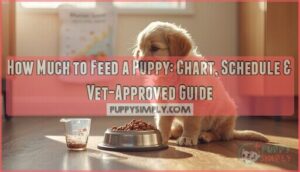
Your new puppy doubles their birth weight in the first week of life, then keeps growing at a pace that would make human parents dizzy. That breakneck growth means their nutritional needs shift constantly—what fills their belly at eight weeks leaves them hungry at twelve.
Getting portion sizes right isn’t about following a one-size-fits-all rule; it’s about understanding your specific puppy’s breed size, activity level, and developmental stage. A Chihuahua puppy and a Great Dane puppy might be the same age, but their caloric requirements per pound differ dramatically, and miscalculating can lead to joint problems in large breeds or blood sugar crashes in tiny ones.
The feeding charts on most dog food bags offer starting points, but they don’t account for your puppy’s unique metabolism or growth trajectory.
Table Of Contents
- Key Takeaways
- How Much Should I Feed My Puppy?
- How Often Should I Feed My Puppy?
- Factors That Affect Puppy Feeding Amounts
- Choosing The Right Puppy Food
- How to Adjust Puppy Food Portions
- Common Puppy Feeding Mistakes to Avoid
- When to Consult a Veterinarian About Feeding
- Frequently Asked Questions (FAQs)
- Conclusion
Key Takeaways
- Puppies need 2–4% of their body weight in food daily during their first four months, split into three to four meals, with portions adjusted based on breed size—small breeds require 60–90 calories per pound while large breeds need controlled portions to prevent joint stress from rapid growth.
- Feeding frequency shifts as puppies mature: feed 3–4 meals daily from 8 weeks to 4 months, transition to 3 meals between 4–6 months, then move to 2 meals daily after 6 months, with large breeds often staying on three meals until 12–16 months.
- Monitor your puppy’s body condition weekly by weighing them and checking for visible ribs and waist definition rather than blindly following bag guidelines, since activity level, growth spurts, and individual metabolism can require 20–30% calorie adjustments.
- Scheduled meals with measured portions prevent obesity and digestive issues better than free-feeding, and you should avoid human foods like chocolate, grapes, onions, and xylitol while skipping unnecessary supplements if you’re feeding quality puppy food that meets AAFCO standards.
How Much Should I Feed My Puppy?
Getting the portions right for your puppy isn’t guesswork—it’s about matching their food to their age, weight, and breed size. Puppies grow at wildly different rates depending on whether they’ll mature into a Chihuahua or a Great Dane, and their calorie needs shift every few weeks.
That’s why choosing puppy food that matches their breed size and life stage makes such a big difference in how well they grow.
Feeding your puppy right means matching portions to their age, weight, and breed—because a Chihuahua and a Great Dane grow at completely different rates
Here’s what you need to know to feed your puppy the right amount at every stage.
Puppy Feeding Chart by Age and Weight

A puppy feeding chart links age and weight to daily food amounts, usually expressed as a percentage of body weight. Young puppies under four months need 2–4% of their weight daily, split into three to four meals. As your pup grows, portions adjust—larger breeds may settle around 2–2.5%, while small breeds often require 3–4% to fuel rapid growth and meet nutrient requirements.
To avoid common errors, pet owners should review developed by veterinary experts.
Breed Size Differences in Feeding Amounts

Beyond age and weight, breed size dramatically shifts feeding schedules and caloric needs. Large-breed puppies require 15–25% more calories per pound to support joint development, yet you’ll slow their growth rate to prevent skeletal stress.
Small breeds often eat 60–90 calories per pound daily, delivered in smaller, more frequent portions. Medium breeds land in between, averaging 2–3 cups per 20 pounds of expected adult weight.
- Adjust portions as your puppy nears adult size—taper feeding gradually to match slower growth.
- Factor in activity level—high-energy pups need extra fuel regardless of breed.
- Consult puppy feeding charts designed for your breed’s size category to fine-tune daily amounts. Recent studies show that portion size can influence food intake in dogs, making careful measurement important for healthy growth.
Caloric Needs for Growing Puppies

Once you’ve factored in breed and weight, calorie needs drive your feeding strategy. During the first four months, puppies burn energy supporting rapid tissue formation and organ development—often requiring 50–90 calories per pound daily.
As growth slows near six months, taper intake gradually, adjusting portions based on body condition and activity level to prevent excess fat gain.
How Often Should I Feed My Puppy?

Getting the timing right matters just as much as portion sizes regarding feeding your puppy. Young dogs need frequent, smaller meals to fuel their rapid growth and maintain stable blood sugar levels throughout the day.
Here’s how to structure your puppy’s feeding schedule based on age and developmental stage.
Feeding Frequency by Age
Your puppy’s meal frequency shifts as months pass, mirroring their changing nutrient needs and digestive capacity. Start with the right feeding schedule to support steady puppy growth and energy:
For large-breed pups, understanding how much protein puppies need helps you balance growth without overfeeding, protecting those developing joints from unnecessary strain.
- 8 weeks to 4 months: Feed 3 to 4 meals daily, distributing calories evenly to fuel rapid development without overwhelming tiny stomachs.
- 4 to 6 months: Shift to 3 meals per day as growth stabilizes.
- 6 to 12 months: Most puppies thrive on 2 meals daily by this age.
Transitioning Meal Schedules as Puppies Grow
Gradually reducing meal frequency helps your puppy adapt without digestive upset. When moving from three to two daily feedings—usually around six months—shrink the mid-day meal by roughly 25 percent every few days while slightly increasing breakfast and dinner portions.
Large-breed puppies often stay on three meals until 12 to 16 months to support controlled growth and protect developing joints.
Monitor stools, energy, and weight weekly during feeding transitions.
Tips for Setting a Consistent Feeding Routine
Set meal times 3 to 4 hours apart each day to match your puppy’s natural hunger cycles and prevent grazing. Reserve a dedicated feeding area with non-slip bowls, and involve every caregiver in maintaining consistent portions and times.
Record each feeding in a simple log to spot patterns quickly, then adjust gradually as growth monitoring reveals changing needs.
Factors That Affect Puppy Feeding Amounts

Not all puppies are created equal in terms of their food needs. A bouncy Border Collie puppy burning calories all day will need a different feeding plan than a laid-back Basset Hound who prefers napping to playing.
Here are the key factors you need to keep in mind when determining how much to feed your growing pup.
Breed and Size Considerations
Your puppy’s breed determines how fast he’ll grow and how much fuel he needs. Small breeds under 25 pounds reach adult weight around 9 to 12 months, while giant breeds exceeding 100 pounds can take 2 to 3 years.
Large breed puppies need slightly fewer calories per pound to prevent overly rapid growth that stresses developing joints, so always reference your puppy feeding chart and adjust portions as your puppy’s weight changes.
Activity Level and Lifestyle
Your puppy’s energy level directly shapes his feeding schedule and portions. Active puppies who enjoy frequent playtime, management, and socialization needs burn 10 to 30 percent more calories, requiring adjusted puppy nutrition.
Daily routines, environmental factors like indoor versus outdoor space, and energy expenditure from training sessions all influence puppy feeding amounts. Monitor your puppy’s activity to maintain ideal puppy health and energy level.
Health Issues and Special Dietary Needs
Certain health conditions demand precise puppy feeding guidelines and veterinary advice and guidance. Food allergies to beef, dairy, or chicken may require hydrolyzed protein diets for puppy health. Kidney health concerns call for low-protein, low-phosphorus nutrition, while liver disease needs highly digestible meals.
Digestive issues, metabolic care needs, and endocrine disorders all influence canine nutrition, making tailored puppy nutrition plans essential under professional supervision.
Choosing The Right Puppy Food

The food you choose for your puppy directly impacts their growth, energy levels, and long-term health. Not all puppy foods are created equal, and understanding what to look for can feel overwhelming when you’re standing in the pet store aisle.
Here’s what you need to know about selecting a quality puppy food that fosters healthy development.
Key Nutrients for Puppy Growth
Your puppy’s diet needs to deliver specific nutrients in precise amounts to support healthy growth and development. Protein sources should provide 22 to 32 percent of calories, supporting muscle development and immune function. Fat requirements range from 8 to 20 percent, fueling energy and brain development.
Calcium intake must balance with phosphorus for proper bone formation, while vitamin supplements and mineral balance support overall canine nutrition and puppy growth and development.
Wet Vs. Dry Kibble for Puppies
When choosing puppy food, you’ll face the wet versus dry kibble question. Wet food hydration benefits support fluid intake, while kibble dental health advantages help scrub teeth during chewing.
Mixing considerations include ensuring combined portions meet caloric needs without overfeeding. Monitor stool quality closely when introducing any new puppy nutrition approach, and consult your vet for customized feeding chart recommendations.
Ingredients to Avoid in Puppy Diets
Beyond selecting wet or dry food, you must scrutinize ingredient lists to protect puppy health. Watch for these red flags in puppy nutrition:
- Artificial preservatives like BHA, BHT, or ethoxyquin can trigger digestive upset or allergic reactions in sensitive puppies.
- Meat byproducts and rendered meats offer fewer digestible amino acids than named animal proteins.
- Cheap fillers such as corn, wheat, and soy may cause allergies while diluting nutrient density.
Avoid added sugars and unnecessary processed additives that compromise canine nutrition.
How to Adjust Puppy Food Portions

Feeding your puppy isn’t a set-it-and-forget-it task—their needs shift as they grow, sometimes faster than you’d expect. You’ll need to watch their body condition closely and adjust portions based on what you’re seeing, not just what the bag says.
Let’s walk through how to monitor your puppy’s weight, spot the warning signs of feeding problems, and handle those sudden growth spurts.
Monitoring Weight and Body Condition
Consistent tracking is your best diagnostic tool for evaluating whether your puppy nutrition and health plan is working. Weigh your puppy weekly on the same scale, then assign a body condition score from 1 to 9—aim for mid-range—by palpating ribs and determining waist definition.
Record each measurement on growth charts to spot trends, and use those patterns to guide feeding adjustments before problems develop.
Signs of Overfeeding or Underfeeding
Tracking numbers tells you when something’s off, but your puppy’s daily behavior reveals whether you’re hitting the mark. Digestive issues like loose stools or smelly gas, belly distention after meals, lagging energy levels, dull coat condition, and joint discomfort during play all point to portions that need correction—overfeeding and underfeeding each leave distinct clues in your puppy’s body and behavior.
Adjusting Portions for Growth Spurts
Growth spurts demand quick shifts in your puppy feeding strategy. When your pup hits a rapid phase, you’ll need to bump caloric intake by 20 to 30 percent while keeping your feeding schedule intact.
Track weekly puppy weight changes, reassess portions every two to three weeks, and maintain nutrient balance—22 to 32 percent protein builds muscle, while 8 to 12 percent healthy fats fuel energy.
Portion control prevents overeating, so use a feeding chart as your baseline and adjust gradually.
Common Puppy Feeding Mistakes to Avoid

Even well-meaning puppy owners can fall into feeding traps that hinder growth or create lifelong bad habits. Some mistakes seem harmless at first but gradually lead to weight issues, digestive problems, or behavioral challenges. Understanding these common pitfalls helps you build a healthier foundation for your puppy’s long-term wellbeing.
Free-Feeding Vs. Scheduled Meals
Many owners wonder whether free-feeding or scheduled meals better support puppy routine and healthy development. While free-feeding offers owner convenience and feeding flexibility, it compromises portion control and makes weight monitoring difficult.
Scheduled meals provide clear advantages:
- Precise calorie tracking using a feeding chart
- Consistent puppy feeding schedules that support training
- Better food sanitation and appetite monitoring
Meal automation through timers helps maintain structure even when you’re busy.
Human Foods and Unsafe Treats
You may be tempted to share your meals with those pleading puppy eyes, but toxic food lists are critical for puppy health. Chocolate, grapes, onions, and xylitol cause severe reactions, from kidney failure to seizures.
Safe snacks like plain chicken, carrots, or apple slices (no seeds) support puppy nutrition without hazardous treats. Food allergies also warrant caution with dairy and spicy foods.
Ignoring Portion Recommendations
Portion control ranks as one of the most overlooked feeding mistakes, yet overfeeding risks can derail your puppy’s healthy development. When you ignore the feeding chart, excess calories accelerate fat deposition rather than lean muscle growth, setting the stage for puppy obesity and joint stress.
- Rapid weight gain strains developing bones, shortening growth periods
- Nutrient imbalance occurs when portion sizes don’t match caloric density
- Digestive issues like gas and loose stools worsen with inconsistent feeding schedule
When to Consult a Veterinarian About Feeding

While feeding charts and guidelines provide a solid foundation, there are times when your puppy’s unique needs require professional input. Your veterinarian can help you navigate growth concerns, food sensitivities, and individual nutritional requirements that general recommendations can’t address.
Let’s look at the key situations when scheduling a vet consultation becomes essential.
Assessing Growth and Development
Regular veterinary visits allow you to track puppy weight, body condition, and developmental stages against breed-specific benchmarks. Your vet will assess whether nutrient balance promotes healthy puppy growth and development, referencing a puppy feeding chart to verify portions align with your puppy’s actual progress.
Health checks catch growth delays early, ensuring puppy nutrition fuels proper benchmark tracking throughout critical growth monitoring periods.
Addressing Allergies or Digestive Issues
If persistent vomiting, diarrhea, skin itching, or coat changes appear after meals, your puppy may have food sensitivities or gut issues affecting digestive health.
Your vet can perform allergy testing, recommend elimination diets, and identify nutrient deficiencies that compromise puppy health.
Addressing these concerns early ensures your puppy’s diet fosters proper puppy nutrition, safeguarding dog nutrition and health throughout development.
Creating a Personalized Feeding Plan
After diagnosing allergies or digestive issues, your vet can create a specific feeding plan that accounts for your puppy’s unique needs. This plan includes adjusted calorie calculation, a bespoke feeding schedule, and growth tracking milestones.
Using feeding charts as a baseline, your vet modifies puppy nutrition and diet planning to support healthy development while managing sensitivities.
Frequently Asked Questions (FAQs)
Should I let my puppy eat as much as he wants?
No—letting your puppy eat freely leads to overeating risks, rapid weight gain, and joint problems. Set fixed meal times with healthy portions based on age and weight to support proper growth monitoring and puppy nutrition.
Can I mix different puppy food brands together?
You can mix different puppy food brands if both meet AAFCO growth standards, but switch gradually over seven to fourteen days to prevent digestive upset and monitor nutrient balance carefully.
Should puppies drink milk after being weaned?
Here’s the bottom line: skip cow’s milk after weaning—most puppies lack the enzyme to digest lactose, triggering diarrhea.
Lactose-free alternatives or veterinary-approved milk replacers work better if supplementation is needed.
How does teething affect puppy appetite and eating?
Teething pain and gum sensitivity can temporarily shift your puppy’s eating habits, causing appetite changes as dental development progresses. Softer puppy food textures often help maintain proper puppy nutrition during this uncomfortable phase.
What water amount should puppies drink daily?
Proper puppy hydration helps prevent problems—your pup needs about 5 to 1 ounce of water per pound of body weight daily, though fluid balance shifts with activity, temperature, and dehydration signs like dry gums.
Do puppies need vitamin or mineral supplements?
Most puppies don’t need vitamin or mineral supplements if you’re feeding a balanced, high-quality puppy food. Extra supplementation without veterinary guidance can actually harm bone development and cause nutrient imbalances.
Conclusion
Last month, a Border Collie puppy arrived at my clinic underweight despite his owner following bag guidelines—the issue? She hadn’t adjusted portions during his eight-week growth spurt.
Your puppy’s feeding needs aren’t static; they evolve weekly during those critical first months. Knowing how much to feed puppy means staying observant, responsive, and willing to adapt.
When you pair feeding charts with your puppy’s individual signals, you’re not just filling a bowl—you’re building a foundation for lifelong health.
- https://www.purina.com/pet-food-feeding-guide-calculator
- https://www.rover.com/blog/puppy-feeding-schedule-everything-need-know/
- https://www.cainhoyvet.com/puppy-feeding-guide-portion-schedule/
- https://pupford.com/blogs/all/free-feeding-vs-scheduled-meals
- https://www.akc.org/expert-advice/nutrition/puppy-feeding-fundamentals/