
This site is supported by our readers. We may earn a commission, at no cost to you, if you purchase through links.

Your dog stares at their puzzle toy for three solid minutes, then walks away to nap on the couch—and you’re left wondering if you’ve wasted twenty dollars on another unused accessory. But here’s the thing: puzzle toys aren’t meant to be all-day entertainment, and that brief interaction might actually be exactly what your pup needs.
Most dogs thrive with short, focused sessions that range from 10 to 20 minutes, usually once or twice daily, depending on their age, breed, and energy levels. The real challenge isn’t getting your dog interested; it’s finding the sweet spot between too little mental stimulation and overwhelming them with constant brain work.
Understanding how often dogs should play with puzzle toys transforms these tools from dust collectors into powerful enrichment assets that reduce destructive behavior, sharpen obedience, and strengthen your bond—all without demanding hours from your already packed schedule.
Table Of Contents
Key Takeaways
- Most dogs thrive on 10-20 minute puzzle toy sessions once or twice daily, with frequency adjusted based on age, breed energy levels, and individual tolerance rather than rigid schedules.
- Puzzle toys deliver mental stimulation that reduces destructive behavior, supports obedience training, and strengthens your bond with your dog—but they complement rather than replace physical exercise like walks.
- Watch for stress signals like excessive panting, lip licking, or quick abandonment to know when you’re overdoing it, and rotate toys every one to two weeks to maintain engagement without causing frustration.
- Start with easy puzzles during supervised 5-10 minute sessions and gradually increase difficulty only when your dog solves challenges in under two minutes, ensuring they end each session with a win.
How Puzzle Toys Benefit Dogs
Puzzle toys aren’t just fun distractions for your dog—they’re powerful tools that support your pet’s overall well-being in ways you mightn’t expect. From keeping sharp minds engaged to curbing unwanted behaviors, these interactive toys play a surprisingly essential role in your dog’s daily life.
If you’re curious about the science behind these benefits, explore why puzzle toys are essential for canine enrichment and how they transform your dog’s daily routine.
Let’s look at the key ways puzzle toys benefit your four-legged friend.
Mental Stimulation and Enrichment
Puzzle toys engage your dog’s natural problem-solving instincts, offering mental stimulation that appeals to curiosity through varied scents, textures, and configurations. These interactive puzzle toys support canine cognitive stimulation and brain games that improve focus with stepwise tasks rewarding deliberate actions.
- Cognitive development improves as dogs work through challenges to access treats or rewards
- Problem solving builds patience and reduces impulsive reactions in new situations
- Sensory play incorporates different textures and scents during canine enrichment activities
- Short, frequent sessions fit into daily routines to sustain interest and engagement
- Dog mental stimulation and enrichment balance energy levels, especially in active breeds
Reducing Boredom and Destructive Behavior
Beyond keeping your dog’s mind sharp, puzzle toys tackle boredom at its root by channeling idle energy into problem-solving tasks that wear out restless minds. When your dog spends 15 to 20 minutes working for treats, destructive chewing and pacing drop because mental fatigue replaces frustration, supporting calmer behavior between sessions and healthier dog mental health overall.
Puzzle toys channel idle energy into mental work that exhausts restless minds, reducing destructive behavior through satisfying fatigue instead of frustration
| Behavioral Sign | What It Means | Puzzle Toy Response |
|---|---|---|
| Sustained sniffing and pawing | Strong dog engagement and focus | Continue current difficulty |
| Quick abandonment of toy | Frustration or boredom with level | Switch to easier puzzle or shorter sessions |
| Calm post-play demeanor | Successful stress reduction | Maintain playtime routines and frequency |
| Chewing household items | Insufficient mental stimulation | Increase interactive games and canine enrichment |
Supporting Training and Obedience
While puzzle toys reduce destructive habits, they also sharpen obedience by reinforcing impulse control and patience during problem-solving tasks.
Training strategies that incorporate positive reinforcement through interactive games teach your dog to focus on cues, strengthening canine communication as reward systems link mental stimulation with compliance.
These canine cognitive stimulation sessions support dog training fundamentals, making formal obedience techniques easier to introduce and maintain over time.
Enhancing The Human-dog Bond
Beyond training benefits, interactive puzzle toys strengthen your dog’s emotional connection to you through shared problem-solving moments that release oxytocin in both of you during playful interactions.
These bonding sessions build mutual trust as your dog associates you with rewarding mental stimulation, improving canine communication and creating positive memories that boost dog training and engagement across all daily routines:
- Supervise puzzle sessions to provide gentle guidance and calm praise during challenges
- Celebrate successes together with touch and verbal encouragement to reinforce bond strengthening
- Use consistent play schedules so your dog views you as a reliable, safe partner
- Rotate interactive puzzle toys during joint sessions to maintain curiosity and cooperative exploration
Recommended Frequency of Puzzle Toy Play
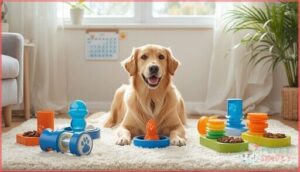
So how often should you actually be using these puzzle toys with your dog? The answer depends on several factors, including your dog’s age, energy level, and unique needs.
Let’s break down the recommended frequency guidelines to help you find the right balance for your furry friend.
Daily Playtime Guidelines for Most Dogs
Most dogs thrive on 30 to 60 minutes of puzzle toy activity per day, split into two or three sessions to match their natural attention span. Short bursts of 10 to 15 minutes work best, keeping your dog engaged without tipping into frustration. You’ll want to mix easy and challenging puzzles to sustain mental stimulation and energy levels throughout the week.
| Play Frequency | Play Duration | Dog Engagement Tips |
|---|---|---|
| 2-3 sessions daily | 10-15 minutes each | Mix easy and hard puzzles |
| Morning session | 10-15 minutes | Start day with mental stimulation |
| Afternoon session | 10-15 minutes | Break up long rest periods |
| Evening session | 10-15 minutes | Wind down with calm activity |
| Weekly total | 30-60 minutes daily | Complement walks and exercise |
Remember, puzzle toys complement daily exercise like walks and interactive games—they don’t replace physical activity. Always end each session on a successful note with an easy puzzle or a treat, reinforcing positive dog engagement and building confidence for tomorrow’s mental challenge. Individual needs may vary based on important factors such as your dog’s personality and health.
Adjusting Frequency for Puppies and Seniors
Age dramatically shifts how you’ll approach puzzle toys, so tailoring play frequency to your puppy or senior dog’s energy levels matters for safe mental stimulation.
Choosing the right difficulty level and interactive features ensures your dog stays engaged without becoming frustrated, regardless of their age.
Puppies thrive on 2 to 3 brief sessions of 5 to 10 minutes daily, keeping puppy playtime short to match developing attention spans.
Senior engagement calls for gentler sessions totaling 15 to 30 minutes, split into smaller bouts that respect slower processing and joint comfort.
High-energy Breeds and Special Circumstances
Working breeds like Border Collies, Belgian Malinois, and Australian Shepherds often need 20 to 30 minutes of supervised puzzle toys daily because their drive for high-energy play and dog mental stimulation runs deeper than most. Breed-specific toys with adjustable challenges support energy breed training.
Canine rehabilitation dogs benefit from shorter, low-difficulty sessions that promote canine cognitive development without taxing recovering joints, giving special needs dogs appropriate interactive games customized to their unique circumstances.
Signs of Overuse or Underuse
You’ll know puzzle fatigue sets in when your dog shows reluctance to engage, turns away within two sessions, or displays stress cues like lip licking and yawning during play. Underuse signs include minimal pawing, ignoring interactive puzzle toys for several days, or low vocal excitement before sessions.
Balancing playtime limits protects dog mental health while maintaining engagement levels with treat-dispensing toys that support ongoing dog mental stimulation.
Factors Influencing Puzzle Toy Frequency
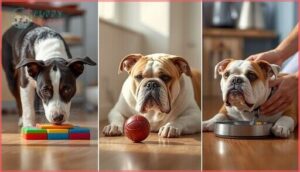
There’s no one-size-fits-all answer regarding how often your dog should tackle puzzle toys, because every dog is different. What works for a young Border Collie won’t necessarily suit a senior Bulldog or a dog recovering from surgery.
Let’s look at the key factors that should shape your puzzle toy routine.
Age and Energy Levels
Your dog’s age shapes how much puzzle play they can handle, and energy shifts reveal the sweet spot. Puppies thrive on brief 5 to 10 minute bursts, 2 to 3 times daily, while seniors benefit from gentler sessions at a slower pace. Watch for fatigue signs—panting, disinterest, or irritability—to tailor play duration and support dog mental health across life stages.
- Early adulthood brings peak energy for longer interactive games and dog mental stimulation
- Middle-aged dogs often show steadier fatigue, requiring moderate puzzle toys sessions
- Senior needs include shorter, low-difficulty puzzles to prevent stress without sacrificing enrichment
- Age factors like sleep quality and mobility directly influence how frequently your dog engages with dog play and exercise
Breed Characteristics and Mental Needs
Breed intelligence and genetic traits shape your dog’s puzzle toy appetite more than you might expect. Working breeds crave tasks that mirror real-world jobs, while independent types prefer solo challenges they can revisit for praise. Herding and guardian dogs benefit from puzzles that reinforce impulse control, supporting canine cognitive development through mental stimulation and enrichment.
| Breed Type | Puzzle Preference | Recommended Frequency |
|---|---|---|
| Working/Herding | Interactive puzzle toys with handler participation | 20–30 min daily, supervised |
| Scent-Driven | Hidden treat puzzles utilizing natural drives | 15–20 min, 2x daily |
| Independent | Solo-solve designs paired with social learning moments | 10–15 min, multiple short sessions |
| Prey-Driven | Search-based puzzles triggering canine emotions positively | 15–25 min daily with rotation |
Individual variation exists, so observe your dog’s enthusiasm and adjust accordingly.
Health Status and Recovery Periods
Your dog’s health status directly impacts how you should structure puzzle play, because recovery phases demand modified enrichment strategies.
During acute healing (first 72 hours post-injury), stick to 5-minute calm puzzles that support dog mental stimulation and enrichment without physical strain.
As rehabilitation plans progress, gradually increase sessions to 10–15 minutes, monitoring pain management cues—whining, limping, or disengagement signal you need to dial back intensity and prioritize animal welfare.
Individual Dog Preferences and Tolerance
Just as recovery shapes puzzle routines, your dog’s personality determines how often interactive puzzle toys remain engaging rather than stressful. Some dogs thrive on daily 15-minute sessions, while others prefer shorter bursts twice weekly—sensory tolerance and frustration levels vary widely, affecting canine cognitive development and overall success.
- Dog personality influences whether your pet approaches puzzles with calm persistence or quits within 60 seconds of difficulty
- Play style determines if food-motivated dogs solve faster than those driven by scent or visual cues
- Canine emotions show through tail wags or lip licks, signaling comfort or stress during dog mental stimulation and enrichment
- Frustration levels require gentle resets with simpler puzzles when whining or pacing appears within a minute
- Dog toy selection should match individual preferences—some dogs favor rubbery textures while others need high-contrast colors for engagement
Observing these cues helps you tailor dog behavior and training sessions, maintaining motivation without overwhelming your companion.
Tips for Safe and Effective Puzzle Play

Puzzle toys are powerful enrichment tools, but they work best when you use them thoughtfully and keep safety front and center. Your dog will get the most benefit when you’re present, attentive, and responsive to their individual needs during play sessions.
Let’s walk through the essential practices that’ll help you optimize puzzle play while keeping your dog happy, engaged, and safe.
Supervising Puzzle Toy Sessions
You should always supervise your dog during puzzle toy sessions to catch frustration early and prevent accidental ingestion of loose parts. Sit nearby, offer calm guidance, and end on a successful note with praise to reinforce positive associations with canine cognitive development activities.
Start with five to ten minute sessions, then extend gradually as your dog stays engaged with the interactive puzzle toys.
Mentally engaged pets benefit from critical thinking and problem solving during puzzle toy sessions.
Monitoring for Stress or Frustration
Watch for stress signals like excessive panting, a tucked tail, or repeated lip licking—frustration signs that tell you it’s time to dial down the difficulty. If your dog circles, whines, or freezes during interactive puzzle toys, these canine anxiety markers mean you should simplify the challenge to protect emotional wellbeing.
Proper monitoring aids anxiety reduction in dogs through dog mental stimulation techniques that match their cognitive stimulation needs, ensuring playtime limits stay appropriate for lasting enrichment.
Rotating Toys to Maintain Interest
Regularly swapping puzzle toys every one to two weeks keeps toy rotation fresh and prevents dog engagement from plateauing. Cycle through three to five interactive puzzle toys at a time, mixing treat dispensers with problem-solving puzzles to maintain puzzle variety.
This toy refreshment strategy bolsters dog mental stimulation techniques by challenging different skills, while supervised play frequency ensures your dog stays curious without feeling overwhelmed by too many interactive dog toys simultaneously.
Cleaning and Maintaining Puzzle Toys
Weekly cleaning schedules combined with routine maintenance tips preserve puzzle toy durability while supporting pet toy safety. Inspect interactive puzzle toys after each session, then clean thoroughly every two to three play sessions using proper toy sanitizing methods.
- Wash hard plastic dog toys with warm water and mild soap, rinsing completely
- Wipe wooden puzzles with damp cloths and dry immediately
- Check for cracks during cleaning and retire damaged toys
- Store in dry toy storage areas away from direct sunlight
Choosing The Right Puzzle Toy
Not all puzzle toys are created equal, and the wrong choice can lead to frustration, safety hazards, or a toy that sits untouched in the corner. Your dog’s size, jaw strength, and problem-solving skills should guide your selection, ensuring the toy is challenging enough to engage but not so difficult that it causes stress.
Let’s walk through the key factors that’ll help you pick a puzzle toy your dog will actually use and benefit from.
Sizing Toys to Your Dog’s Mouth and Jaw Strength

Choosing puzzle toys starts with mouth size guidelines—your toy should sit at least 10 percent wider than your dog’s mouth opening to prevent choking.
Jaw strength testing matters too; heavy chewers need reinforced materials like dual-density rubber, while lighter chewers manage standard treat-dispensing toys.
Always check toy material safety, inspect for wear exceeding 20 percent, and rotate interactive puzzle toys regularly to maintain durability and interest.
Selecting Adjustable Difficulty Levels
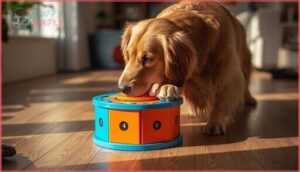
Many adjustable puzzle toys use numbered difficulty settings from 1 to 4, giving you control over puzzle complexity as your dog’s proficiency grows. Start beginners on level 1 where treats release quickly, then progress when they solve it in under two minutes.
If your dog empties interactive puzzle toys in seconds without thinking, bump up the challenge; if they chew randomly and quit, dial it back.
- Choose multi-level designs that combine sliding pieces, flip lids, and rotating compartments for canine cognitive development
- Test current difficulty by watching if your dog stays engaged or walks away frustrated
- Adjust treat-dispensing toys by reducing opening sizes to slow food release
- Match challenge modes to your dog’s problem-solving style—paw-users need sliding boards, nose-oriented dogs prefer rotating pieces
- Increase complexity gradually by adding one lock or cover at a time after several successful sessions
Safety and Durability Considerations
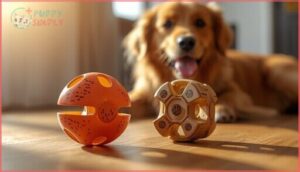
You wouldn’t hand a child a toy that splinters when bitten, and the same logic applies to puzzle toys for your dog. Look for products that meet durability standards—at least 5,000 chews before visible wear, reinforced plastics rated for jaw safety, and dishwasher-safe materials that survive 100 cleaning cycles.
Material testing and proper toy maintenance prevent failure analysis scenarios where cracked treat-dispensing toys become choking hazards.
Introducing New Puzzles Gradually
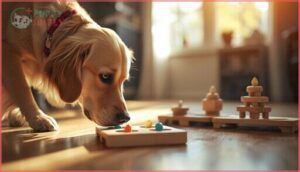
Think of puzzle introduction as teaching someone to swim—you don’t start in the deep end. Begin with a simple puzzle featuring 1 or 2 obvious mechanics, keeping sessions to 5 to 10 minutes while your dog learns the pattern.
- Start with easy treat-dispensing toys that reward immediate problem-solving efforts
- Schedule puzzle playtime routine 2 to 3 times daily during early gradual learning phases
- Add one new challenge per session, maintaining an 80 percent success rate for dog engagement
- Pair unfamiliar interactive games with familiar rewards to reduce frustration and build confidence
- Monitor body language closely and end each session with a quick win before consulting dog toy reviews for your next puzzle selection
Reward systems work best when you increase difficulty every 2 to 3 sessions, allowing your dog to master each level before moving forward.
Top Puzzle Toys for Dogs
Now that you know how to choose the right puzzle toy for your dog, let’s look at some specific options that veterinary behaviorists and trainers recommend most often.
These four toys offer different difficulty levels, durability features, and engagement styles to suit a range of dogs and their individual needs. Each one brings something unique to the table, whether your dog’s a puzzle novice or a seasoned problem-solver.
1. Kong Classic Dog Toy
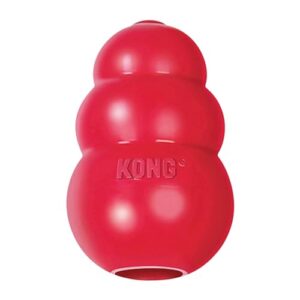
For moderate chewers, the Kong Classic offers reliable durability that vets and trainers consistently recommend for enrichment. You can stuff it with peanut butter or kibble to extend play time, which satisfies your dog’s instinctual need to lick and gnaw while keeping them mentally engaged.
The irregular bounce makes fetch unpredictable and exciting, and it’s made from non-toxic natural rubber.
Available in multiple sizes, you’ll want to match it to your dog’s mouth to prevent choking risks during supervised sessions.
| Best For | Dog owners looking for a durable, vet-recommended toy that keeps moderate chewers mentally stimulated through treat-stuffing and interactive play. |
|---|---|
| Material | Rubber |
| Treat Dispensing | Yes |
| Durability | Durable natural rubber |
| Easy to Clean | Dishwasher safe |
| Mental Stimulation | Yes |
| Age Range | All life stages |
| Additional Features |
|
- Hollow design lets you fill it with treats or peanut butter to extend play time and reduce boredom
- Erratic bounce pattern makes fetch more engaging and unpredictable for dogs
- Dishwasher safe and easy to clean after messy treat sessions
- Not tough enough for aggressive chewers who might damage or destroy it
- Requires regular deep cleaning since treats can get stuck inside the hollow center
- Sizing matters—choosing the wrong size creates choking or suction hazards
2. Outward Hound Dog Brick Puzzle Toy
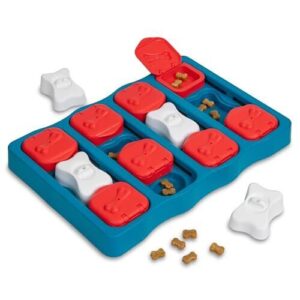
If your dog outgrows single-action toys, the Outward Hound Dog Brick challenges them with three distinct compartments—flip lids, sliding panels, and removable bone-shaped blocks—that hold up to 3/4 cup of kibble.
This level 2 intermediate puzzle demands problem-solving through sequential steps, which prevents boredom in dogs who’ve mastered simpler enrichment.
You’ll want to supervise sessions since the flaps can detach, and remember to hand wash the dishwasher-safe plastic regularly to maintain grip and prevent slobber buildup.
| Best For | Dogs who’ve mastered basic puzzles and need a step up in mental stimulation, or fast eaters who could benefit from a slow-feeder that keeps mealtime interesting. |
|---|---|
| Material | Plastic |
| Treat Dispensing | Yes |
| Durability | Durable plastic |
| Easy to Clean | Easy to clean |
| Mental Stimulation | Yes |
| Age Range | All life stages |
| Additional Features |
|
- Three different challenge types in one toy keep dogs engaged longer than single-action puzzles
- Holds a decent amount of food (3/4 cup) and works for multiple dog sizes
- Made from safe, non-toxic materials that are easy to clean
- Flaps and bone pieces can detach, creating choking hazards without supervision
- May be too easy for very smart dogs or those experienced with puzzle toys
- Requires regular cleaning and inspection since parts can wear out or get slobbery
3. Lo Ball Treat Pod Toy
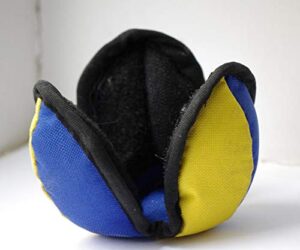
For food-motivated dogs who won’t chase standard balls, the Lo Ball Treat Pod adds hidden treats inside a fabric-covered sphere that releases rewards as your dog rolls it around. This 8.5cm toy features three Velcro-lined petals and tougher rip-resistant nylon construction, making it ideal for agility training or encouraging reluctant retrievers.
You’ll need to supervise since treats can spill out during vigorous play, and some dogs tear the seams with persistent chewing, so reserve it for supervised enrichment rather than solo tug sessions.
| Best For | Food-motivated dogs who need extra incentive to play fetch or participate in agility training. |
|---|---|
| Material | Nylon |
| Treat Dispensing | Yes |
| Durability | Rip-resistant fabric |
| Easy to Clean | Standard cleaning |
| Mental Stimulation | Yes |
| Age Range | All ages |
| Additional Features |
|
- Hidden treat compartments turn playtime into a rewarding mental challenge that keeps dogs engaged
- Rip-resistant nylon construction with reinforced petals holds up better than standard fabric toys
- Velcro closures and bottom loop offer versatile play options from rolling games to rope attachment
- Treats frequently spill out during active play, requiring constant supervision and refilling
- Seams and outer material can tear with aggressive chewing despite “tougher” construction claims
- Not suitable as a tug toy and may not withstand determined chewers or very strong dogs
4. PetSafe Busy Buddy Treat Dispensing Dog Toy
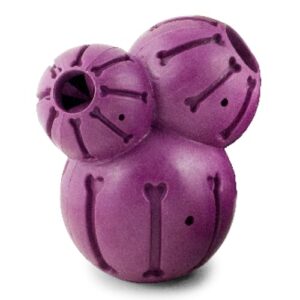
When you need a more demanding challenge for medium to large chewers, the PetSafe Busy Buddy Bristle Bone uses three treat chambers with adjustable prongs to control how quickly rewards dispense during play. This 9-inch purple rubber toy bounces unpredictably, keeping your dog engaged with both kibble and spreadable treats like peanut butter in its bone-shaped grooves.
Expect some noise during chewing sessions, and trim the prongs carefully since you can’t reverse cuts, but the dishwasher-safe construction makes cleanup straightforward between puzzle sessions.
| Best For | Dogs who need serious mental stimulation and owners who want an adjustable difficulty toy that grows with their pet’s puzzle-solving skills. |
|---|---|
| Material | Rubber |
| Treat Dispensing | Yes |
| Durability | Durable natural rubber |
| Easy to Clean | Dishwasher safe |
| Mental Stimulation | Yes |
| Age Range | All life stages |
| Additional Features |
|
- Three separate treat chambers with adjustable prongs let you customize the challenge level
- Works with both dry kibble and wet spreads like peanut butter for variety
- Dishwasher safe and built from durable rubber that holds up to heavy chewing
- Can get pretty loud when your dog really goes to town on it
- Attracts fur and dirt easily, requiring frequent cleaning
- Trimming the prongs is permanent—once you cut them, there’s no going back
Frequently Asked Questions (FAQs)
How often should I let my dog play with toys?
You should rotate general playtime toys regularly to keep your dog engaged, but puzzle toys work best when used strategically—usually 15 to 30 minutes daily, split into shorter sessions to prevent frustration.
Can puzzle toys replace daily walks or exercise?
No, puzzle toys can’t fully replace walks. They provide mental stimulation but don’t offer the cardiovascular benefits, weight management, joint health, or real-world exploration your dog gets from daily outdoor exercise.
Do puzzle toys work for aggressive chewers?
Yes, sturdy puzzles built from reinforced rubber or composite materials withstand aggressive chewers while channeling destructive energy into productive problem-solving. However, you’ll need to supervise sessions and inspect regularly for wear.
When should I stop using puzzle toys?
Stop when your dog shows persistent frustration, refuses to engage after five sessions, displays mouth discomfort, or if the toy breaks into hazardous pieces that could pose choking risks.
Can multiple dogs share one puzzle toy?
Sharing can work when dogs are evenly matched in size and patience, but you’ll need to supervise closely to prevent guarding or frustration.
Most households find individual sessions safer and less stressful for everyone.
Are homemade puzzle toys safe for dogs?
Homemade puzzles can be safe if you choose non-toxic materials and avoid small parts that could be swallowed.
Inspect them before each session for sharp edges, loose pieces, or cracking that could pose choking risks.
Conclusion
The less you force puzzle play, the more your dog will seek it out—that’s the paradox of effective enrichment. Finding how often dogs should play with puzzle toys isn’t about rigid schedules; it’s about reading your dog’s cues, respecting their limits, and letting mental challenges become something they anticipate rather than endure.
Start with ten-minute sessions, watch their response, and adjust accordingly. When puzzle time feels like a privilege instead of pressure, you’ve struck the perfect balance.
- https://kadtctoy.com/products/kadtc-chess-dog-puzzle-toy-level-3-in-1-dogs-brain-stimulating-toys-mental-stimulation-treat-food-puzzles-feeder-dispenser-interactive-puppy-smart-games
- https://loobanipet.com/make-dog-puzzles-harder/
- https://www.thehonestkitchen.com/blogs/pet-tips-training/dog-puzzle-treats
- https://www.businessinsider.com/guides/pets/best-dog-puzzle