This site is supported by our readers. We may earn a commission, at no cost to you, if you purchase through links.

Your dog solves a treat-dispensing puzzle in under two minutes, then crashes on the couch for an hour-long nap. That wasn’t just boredom lifting. Puzzle toys tire out dogs by forcing their brains to work through problems, and mental effort drains energy just like a long walk does.
A dog’s brain burns calories when it strategizes, remembers sequences, and adjusts tactics to reach hidden rewards. The cognitive load builds fatigue that shows up as droopy eyes and heavy sighs. Physical movement adds to the exhaustion when your dog paws, nudges, and repositions the toy.
Understanding how puzzle toys create tiredness helps you choose the right tools and use them effectively to keep your dog calm and satisfied.
Table Of Contents
- Key Takeaways
- How Puzzle Toys Tire Out Dogs
- Mental Stimulation and Canine Exhaustion
- Physical Activity From Puzzle Toys
- Benefits of Tiring Out Dogs With Puzzle Toys
- Choosing Puzzle Toys for Maximum Engagement
- Using Puzzle Toys Effectively for Fatigue
- Safety and Considerations When Tiring Out Dogs
- Top Puzzle Toys That Tire Out Dogs
- Frequently Asked Questions (FAQs)
- Conclusion
Key Takeaways
- Puzzle toys tire dogs through combined mental effort and physical activity, creating cognitive exhaustion that shows up as droopy eyes, yawning, and napping within 30-60 minutes after play sessions.
- Mental fatigue from problem-solving burns brain energy differently than physical exercise, requiring 15-30 minute puzzle sessions to reduce anxiety, prevent destructive behaviors, and calm hyperactive dogs effectively.
- Choose puzzle difficulty based on your dog’s skill level, size, and breed—beginners need simple one-step toys while experienced dogs require complex multi-step challenges to achieve the same tiredness.
- Rotate three to five puzzle toys every few days and supervise sessions to prevent frustration, overexertion, or safety issues while maintaining engagement and supporting your dog’s mental health.
How Puzzle Toys Tire Out Dogs
Puzzle toys tire out dogs through a combination of mental and physical effort. Your dog’s brain works hard to solve problems, which creates a different kind of exhaustion than running around the yard.
This mental workout helps reduce anxiety and build the kind of calm confidence that makes learning to make your dog fearless much easier.
Understanding how this fatigue works helps you use puzzle toys more effectively to keep your dog balanced and content.
Mental Vs. Physical Fatigue in Dogs
How do mental exhaustion and physical fatigue differ in your dog? Mental fatigue shows up as hesitation during problem solving and reduced focus after cognitive tasks. Your dog may yawn or look away when mentally tired.
Physical fatigue brings heavy panting and reluctance to move. Both drain energy levels and tire dogs out, but brain recovery needs different rest than muscle recovery.
Watch for these fatigue signs to balance mental stimulation effectively. For more on how exercise type affects your dog’s wellbeing, see the importance of a balanced exercise routine.
How Puzzle Toys Induce Tiredness
Puzzle toys trigger mental fatigue through sustained focus on problem-solving tasks that tax canine brain function for 8 to 12 minutes. Your dog’s cognitive load rises as they remember sequences and work through steps to claim rewards.
This mental exhaustion combines with small bursts of physical movement from pawing and nudging, creating fatigue mechanisms that tire dogs out through both brain work and brief physical effort.
Signs Your Dog is Tired After Puzzles
Once your dog completes the challenge, watch for clear canine exhaustion signals that show they need mental recovery. Brain rest becomes visible through specific puzzle fatigue signs that tell you when to stop.
- Droopy eyelids and a heavy-lidded gaze show mental workload has drained your tired dog
- Frequent yawning after sessions marks processing fatigue from cognitive tasks
- Lying down or napping within 15 to 30 minutes signals dogs energy depletion
- Reduced interest in treats or toys immediately following play indicates mental fatigue
For a detailed list of 10 signs and symptoms your dog is tired or exhausted, it’s helpful to review classic exhaustion cues.
Mental Stimulation and Canine Exhaustion

Mental work tires dogs differently than physical exercise does. When your dog solves puzzles, their brain uses energy in ways that can leave them genuinely exhausted.
Understanding how this cognitive fatigue works helps you use puzzle toys more effectively to calm and satisfy your dog.
Cognitive Workload and Dog Energy Levels
When your dog engages with a puzzle toy, their brain burns energy just like their muscles do during a run. Cognitive load from solving these challenges elevates mental fatigue and lowers energy levels faster than you might expect. Dogs often shift from alert problem-solving to quiet rest within 30 to 60 minutes after intense cognitive stimulation.
Puzzle toys burn mental energy like a run burns physical energy, often leaving dogs ready to rest within 30 to 60 minutes
| Activity Type | Energy Output | Fatigue Onset |
|---|---|---|
| Simple puzzle | Moderate mental demand | 45-60 minutes |
| Complex puzzle | High Cognitive Load | 30-45 minutes |
| Physical play | Primarily physical | 60-90 minutes |
Mental stimulation through puzzle toys demands focus and impulse control. This brain fatigue reduces your dog’s willingness to engage in new tasks for several hours. You’ll notice canine exhaustion through slower reactions and reduced sniffing duration after tough sessions.
Problem-Solving Activities and Brain Fatigue
Concentration is the engine that drives puzzle-solving skills, and it runs hot when your dog approaches complex challenges. Sustained cognitive load during problem solving depletes glucose in the brain, triggering mental fatigue within 30 to 45 minutes.
Brain exercise through puzzle toys builds canine cognition but requires mental recovery time. Watch for slower reactions and reduced interest as signs your dog needs rest.
Comparing Mental and Physical Tiredness
How do these two kinds of weariness differ in your dog? Mental exhaustion from puzzle toys drains cognitive resources and shows up as slower reactions and irritability, while physical strain depletes muscle energy and causes bodily heaviness. Recovery time varies too.
Dog mental stimulation needs rest and sleep to restore focus, but physical fatigue requires hydration and nutrition alongside downtime to repair tissues.
Activities like daily walks that balance mental and physical engagement help dogs recover properly by addressing both cognitive and bodily restoration needs.
Physical Activity From Puzzle Toys

Puzzle toys aren’t just brain games—they actually get your dog moving. Many interactive toys require physical effort like pawing, nosing, rolling, or carrying to access treats or solve challenges.
Understanding how puzzle play translates to physical activity helps you balance mental and physical exercise in your dog’s daily routine.
How Interactive Toys Encourage Movement
Interactive dog toys turn snack time into a mini workout. When your dog engages with motion-based play, they’re building motor skills and burning energy through physical interaction.
Here’s how interactive games encourage dog physical activity:
- Reaching and twisting movements activate core muscles and large muscle groups during physical stimulation.
- Pacing between puzzle steps to retrieve treats keeps your dog moving throughout the session.
- Rolling components in puzzle toys prompt chasing motions that sustain locomotion and help with managing dog energy levels.
Types of Physical Engagement in Puzzle Play
Puzzle play engages your dog through several types of physical exercise. Tugging compartments, pushing panels, and nudging rolling toys create movement patterns that build motor skills.
Below are common forms of physical interaction during interactive play:
| Engagement Type | Movement | Muscles Used |
|---|---|---|
| Tugging | Pull pieces across room | Neck, shoulders |
| Pushing | Nose or paw slides | Core, forelimbs |
| Rolling | Chase toy along floor | Legs, back |
| Reaching | Stretch to elevated slots | Full body |
| Tossing | Light chasing motions | Neck, torso |
This playful engagement sustains dog physical activity for 8 to 20 minutes per session.
Comparing Puzzle Play to Walks and Runs
When you weigh puzzle play benefits against traditional physical exercise, the numbers tell a clear story. A 15-minute puzzle session burns fewer calories than a brisk walk, yet it delivers mental stimulation that walks can’t match.
Runs raise heart rate into cardio zones, while mental challenge from puzzle toys produces focused energy expenditure without heavy breathing.
Combining both resolves canine exhaustion through complementary pathways.
Benefits of Tiring Out Dogs With Puzzle Toys
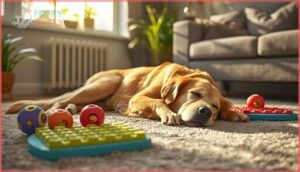
A tired dog is a well-behaved dog, and puzzle toys offer a practical way to achieve that calm state. When you tire out your dog mentally and physically, you address common behavioral challenges while supporting their overall health.
Let’s look at the key benefits puzzle play provides for dogs who need structured mental engagement.
Reducing Boredom and Destructive Behaviors
Boredom creates a vacuum your dog fills with trouble. Puzzle toys channel energy into constructive problem-solving instead of chewing furniture or digging through trash. Regular mental challenge targets the instinct to hunt and forage, which lowers restlessness at home.
Here’s how puzzle toys reduce destructive behavior:
- Redirecting focus from furniture to treat-filled compartments
- Lowering daytime agitation through predictable enrichment routines
- Preventing impulsive chewing by improving self-control through cognitive work
Calming Anxious or Hyperactive Dogs
Anxiety relief comes from the focused task puzzle toys provide. When your hyperactive dog works through a challenge, stress hormones drop and endorphins rise. The cognitive demand redirects nervous energy from pacing or barking toward controlled problem solving.
Calming techniques like scent-based puzzles lower heart rate as dogs sniff and search.
Regular sessions build canine cognitive development, strengthening dog mental health and reducing dog anxiety through productive mental work.
Enhancing Overall Wellbeing and Behavior
Beyond calming effects, consistent puzzle sessions improve dog wellbeing by creating structure your dog can count on. Mental clarity from problem-solving strengthens emotional balance and canine confidence, reducing dog anxiety long-term. You’ll notice better social skills and overall behavioral wellness as your dog learns patience and focus:
- Daily cognitive workouts support dog mental health through predictable routines.
- Canine cognitive development improves impulse control in everyday settings.
- Dog mental stimulation replaces destructive habits with productive energy use.
Choosing Puzzle Toys for Maximum Engagement
Not all puzzle toys will tire out your dog equally. The right choice depends on matching the challenge level to your dog’s abilities and physical traits.
Let’s look at the key factors that determine which puzzle toys will deliver maximum engagement and fatigue.
Matching Toy Difficulty to Your Dog’s Skill
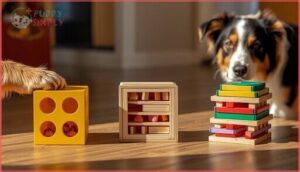
Start with beginner level puzzle toys if your dog hasn’t tried them before. Large openings and simple mechanisms help your dog discover rewards quickly and build confidence. Watch how your dog interacts with each toy. If they solve it within one to two weekly sessions, move to intermediate level options.
Complex puzzles demand multi-step sequences suited for experienced problem solvers. The following table outlines the characteristics of each skill level:
| Skill Level | Puzzle Features |
|---|---|
| Beginner | Large openings, single-step rewards |
| Intermediate | Sliding pieces, multiple compartments |
| Expert | Multi-step sequences, memory-based tasks |
Size, Age, and Breed Considerations

Breed size impacts how quickly your dog tires from puzzle play. Toy breeds often show physical fatigue faster due to smaller reserves, while giant breeds may need longer sessions before mental exhaustion sets in.
Age-related changes in canine cognitive function mean senior dogs require simpler puzzles and shorter durations. Working breeds with high energy levels need more complex challenges to achieve the same tiredness. Always match the puzzle’s physical demands to your dog’s health and genetic factors.
Materials and Durability for Safety
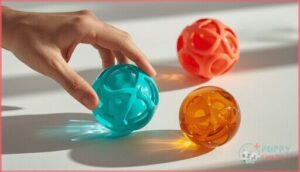
Material testing confirms that puzzle toys built from food-grade silicone and polypropylene withstand canine cognitive function challenges without cracking under pressure. Safety features like rounded edges and non-toxic finishes protect dog physical and mental health during enrichment strategies.
Quality control ensures durability standards meet toy construction requirements, so your dog gets mental stimulation and exercise without injury risks compromising their engagement.
Using Puzzle Toys Effectively for Fatigue

Getting puzzle toys is just the first step. How you use them determines whether your dog gets tired or just gets frustrated.
Let’s look at three practical strategies that help you boost mental fatigue while keeping your dog engaged and happy.
Introducing Puzzle Toys Gradually
Puzzle toy introduction works best when you ease your dog into the experience rather than overwhelming them. Begin with a simple toy that offers quick wins, then run short 5 to 10 minute sessions during calm parts of the day.
Pair each attempt with flavorful treats and gentle guidance so your dog builds confidence through gradual learning and successful canine problem solving.
Rotating Toys to Sustain Interest
Toy rotation strategies keep puzzle toys fresh and prevent boredom from settling in. Swap three to five toys every few days so each session feels like a new challenge for your dog.
Track which pieces spark the most canine enrichment and adjust your rotation schedules accordingly.
This method maintains dog engagement while supporting steady dog mental stimulation through interactive play without overwhelming your pet.
Monitoring for Overexertion or Frustration
Your dog’s body language reveals fatigue signals before exhaustion sets in. Watch for behavioral cues like excessive panting, slowed pacing, or turning away from the toy, all pointing to mental strain that affects dogs’ mood and energy levels.
- Yawning or lip licking during sessions indicates cognitive overload and rising anxiety
- Aggressive mouthing or snapping reflects frustration from sustained difficulty
- Implement three to five minute break strategies after each five to ten minute puzzle session to prevent dog exhaustion
Safety and Considerations When Tiring Out Dogs
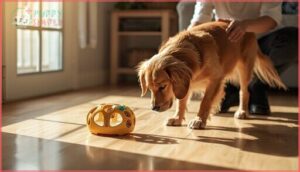
Puzzle toys offer real benefits for tiring out your dog, but they require thoughtful supervision to keep playtime safe and productive. Without proper oversight, even the best puzzle can lead to frustration, injuries, or hygiene issues that work against your goals.
Here’s what you need to watch for to make puzzle play both effective and worry-free.
Supervising Puzzle Play Sessions
You can’t assume your dog will automatically stay safe during puzzle play. Stay within arm’s reach and set clear session rules.
Choose a quiet space with non-slip flooring and good lighting for proper environment setup. Watch for fatigue cues like yawning or lip licking.
Use gentle intervention with encouraging hints rather than corrections. Keep progress tracking notes after each session to adjust future dog mental stimulation and exercise.
Recognizing Signs of Stress or Overload
Your dog’s body tells you when mental exhaustion hits before words ever could. Watch for panting that doesn’t match the room temperature or trembling in the shoulders during play.
Behavioral signals like sudden withdrawal or irritability mean you’ve crossed into overload territory.
Emotional cues such as repeated yawning or refusal to continue protect your dog’s mental health. Respect these warnings to support effective stress reduction and balanced canine mental exercise.
Cleaning and Maintaining Puzzle Toys
Beyond recognizing stress signals, regular toy sanitation protects your dog’s health and extends puzzle toy benefits. Bacteria accumulates in crevices where treats hide, reducing effectiveness of canine mental exercise over time.
Proper maintenance tips guarantee safe puzzle durability:
- Clean hard plastic or rubber dog puzzle toys with warm water, mild soap, and a soft brush
- Rinse thoroughly and air dry completely before refilling
- Inspect for cracks or worn parts during each cleaning
- Wipe wooden puzzles with damp cloth and dry immediately
Top Puzzle Toys That Tire Out Dogs
You want puzzle toys that engage your dog’s mind and body enough to produce real fatigue. The right toy depends on your dog’s size, skill level, and play style.
Here are four proven options that deliver both mental stimulation and physical activity.
1. Paw5 Snuffle Mat For Dogs

Sniffing sessions can produce real tiredness when you choose the right enrichment tool. The Paw5 Wooly Snuffle Mat measures 12 by 18 inches and uses varied cotton and synthetic fibers to hide treats at different depths.
Your dog works through multiple textured layers during nose work, which engages their brain for several minutes per session. The non-slip backing keeps the mat stable while your dog forages.
You can machine wash it on a gentle cycle and adjust difficulty by changing how deeply you hide kibble or treats.
| Best For | Dog owners looking to slow down fast eaters and provide mental stimulation through natural foraging behavior. |
|---|---|
| Material | Cotton |
| Dishwasher Safe | No (hand/machine wash) |
| Primary Purpose | Slow feeding/foraging |
| Suitable For | All dogs |
| Durability | Durable felt/cotton |
| Weight | 9.2 ounces |
| Additional Features |
|
- Machine washable organic cotton makes cleanup easy after messy sniffing sessions
- Multiple textured layers let you adjust difficulty by hiding treats at different depths
- Non-slip backing keeps the mat stable while your dog searches for hidden kibble
- Takes time to set up before each feeding and requires air drying after washing
- May not work well for dogs that already eat slowly or have specific health issues
- Higher price point compared to basic feeding mats on the market
2. Starmark Treat Dispensing Dog Toy
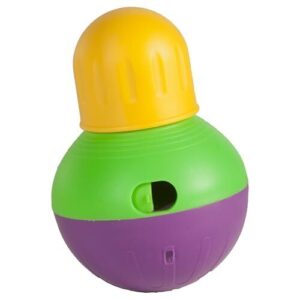
While snuffle mats work through scent, the Starmark Treat Dispensing Ball adds movement to the mix. This 4.5 by 6.5 inch wobble toy holds an entire meal in its chamber and releases kibble as your dog pushes it around.
The weighted bottom creates unpredictable rolling patterns that keep your dog engaged for extended sessions. You can adjust the bottom gate to control treat flow and match your dog’s skill level.
The dishwasher-safe plastic construction withstands persistent chewers without cracking.
| Best For | Dogs who need mental stimulation during alone time or owners looking to slow down fast eaters while keeping their pets entertained. |
|---|---|
| Material | Plastic |
| Dishwasher Safe | Not specified |
| Primary Purpose | Treat dispensing/mental stimulation |
| Suitable For | All life stages/breeds |
| Durability | Durable plastic |
| Weight | Not specified |
| Additional Features |
|
- Adjustable dispensing gate lets you control difficulty level and works with different kibble sizes
- Large chamber holds full meals so you can use it for regular feeding instead of a bowl
- Weighted wobble design creates unpredictable movement that keeps dogs interested longer than stationary puzzles
- Gets loud on hardwood or tile floors when knocked around
- Internal adjustment mechanism can slide open or closed during play, changing the difficulty unintentionally
- Not ideal for power chewers who might break into the adjustment compartment
3. Kong Classic Dog Toy
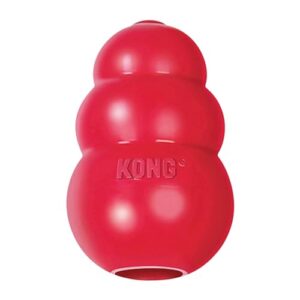
The Kong Classic shifts your dog’s focus from chasing treats to working for them. This red rubber toy features a hollow center you can stuff with peanut butter, kibble, or special Kong paste to create a mental puzzle that lasts twenty minutes or more.
Its unpredictable bounce pattern engages retrieval instincts during fetch sessions, while the durable rubber withstands moderate chewing without cracking. The toy floats for water play and is dishwasher safe for quick cleanup. Veterinarians recommend it for dogs of all ages and sizes.
| Best For | Dogs who need mental stimulation, have destructive chewing habits, or experience anxiety during alone time. |
|---|---|
| Material | Rubber |
| Dishwasher Safe | Yes |
| Primary Purpose | Chewing/treat dispensing |
| Suitable For | All life stages |
| Durability | Durable natural rubber |
| Weight | 0.06 kg (2.1 oz) |
| Additional Features |
|
- Stuffable design keeps dogs occupied for 20 minutes while satisfying natural foraging instincts
- Unpredictable bounce pattern makes fetch more engaging and mentally stimulating
- Dishwasher safe and floats in water for versatile play options
- Won’t hold up to extremely aggressive chewers who destroy most toys
- Requires regular deep cleaning since treats can get stuck in the hollow center
- Choosing the wrong size creates choking or suction hazards, so careful sizing is essential
4. Outward Hound Dog Brick Puzzle Toy
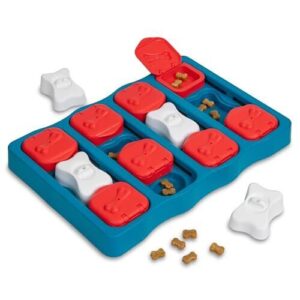
This intermediate-level toy combines three problem-solving challenges in one 12-inch platform. Your dog flips lids, slides compartments, and lifts bone-shaped blocks to uncover hidden treats in separate cavities. Each mechanism requires a different action, creating varied mental workload that sustains engagement for several minutes per session.
The smooth plastic cleans easily with warm water and soap. It works best for dogs with prior puzzle experience, as beginners may need your guidance to prevent early frustration. Supervise heavy chewers since the material resists moderate gnawing but isn’t chew-proof.
| Best For | Dogs with some puzzle experience who need mental stimulation and a slower eating pace, especially if you want a toy that grows with their skills. |
|---|---|
| Material | Plastic |
| Dishwasher Safe | Yes |
| Primary Purpose | Puzzle/slow feeding |
| Suitable For | All life stages |
| Durability | Durable plastic |
| Weight | 1.2 pounds |
| Additional Features |
|
- Three different challenge types in one toy keep things interesting and prevent boredom
- Doubles as a slow feeder to help dogs who eat too quickly
- Easy to clean and made from safe, non-toxic materials
- Requires supervision since it’s not built for aggressive chewers
- The flaps and white bone pieces can detach and become choking hazards
- May be too easy for very smart dogs who’ve mastered other puzzles
Frequently Asked Questions (FAQs)
Do puzzle toys tire dogs out?
Yes, puzzle toys tire dogs out through both mental effort and physical movement. Problem solving raises brain energy use, while treat dispensing requires pushing or flipping that adds light activity.
Can puzzle toys replace daily walks entirely?
No, puzzle toys can’t fully replace daily walks. Walks provide sustained cardio, joint health, and sensory exposure that puzzles don’t match. Use puzzles to complement, not substitute, structured outdoor exercise.
How long should puzzle play sessions last?
Most dogs thrive with 15 to 30 minute sessions. Start beginners at 5 to 10 minutes, then gradually extend by 5 minute increments as your dog stays engaged without frustration.
Do senior dogs benefit from puzzle toys?
Aging dogs maintain cognitive sharpness through regular puzzle play.
Short sessions of 5 to 15 minutes provide mental exercise without overtaxing energy reserves, especially when you match difficulty to your senior’s current abilities.
What treats work best in puzzle toys?
Kibble works well because it’s small and easy to dispense. Peanut butter provides sticky motivation, but confirm it’s xylitol-free.
Freeze-dried liver offers high-value aroma that extends engagement without overfeeding your dog.
Can puppies use advanced puzzle toys safely?
No. Puppies should stick with simple puzzles designed for their age and skill level. Complex toys can cause frustration or choking hazards. Always supervise sessions and choose age-appropriate designs.
Conclusion
Think of puzzle toys as a double-edged sword that cuts through both restlessness and excess energy. They do puzzle toys tire out dogs by engaging the mind and body simultaneously, creating the deep satisfaction that comes from earned rest.
Your dog doesn’t need a marathon when fifteen minutes of strategic problem-solving delivers the same calm. Choose wisely, rotate frequently, and watch mental exhaustion replace destructive boredom with contented sleep.