This site is supported by our readers. We may earn a commission, at no cost to you, if you purchase through links.

Your puppy just nailed “sit” for the first time, tail wagging furiously, eyes locked on your hand. What happens in the next three seconds determines whether that behavior sticks or fades into confusion. I’ve watched countless new puppy owners fumble with treats that are too big, too hard, or frankly, too boring to keep a young dog engaged.
The right training treat isn’t just a reward—it’s your most powerful communication tool, capable of turning chaotic energy into focused learning. But with shelves packed full of options claiming to be perfect for puppies, choosing treats that are genuinely safe, appropriately sized, and motivating enough to work through distractions becomes its own challenge.
From freeze-dried liver to soft salmon bites, the treats you select will directly impact how quickly your puppy learns and how much they enjoy the process.
Table Of Contents
- Key Takeaways
- Best Dog Training Treats for Puppies
- 1. Nutri Bites Freeze Dried Beef Liver Treats
- 2. Caledon Farms Chicken Dog Treats
- 3. Zukes Mini Naturals Dog Treats
- 4. Honest Kitchen Beef Salmon Dog Treats
- 5. Open Farm Soft Dog Training Treats
- 6. Cloud Star Dog Training Treats
- 7. Full Moon Natural Beef Dog Treats
- 8. Onward Hound Soft Bison Dog Treats
- 9. Polkadog Salmon Training Treats
- 10. Stella Chewy Freeze Dried Raw Dog Treats
- Key Benefits of Training Treats for Puppies
- What to Look for in Puppy Training Treats
- Choosing Safe and Healthy Ingredients
- Calorie Control and Treat Portions
- Age-Appropriate Treats for Puppies
- Training Scenarios and Treat Selection
- Rotating Flavors to Maintain Interest
- Storing and Handling Puppy Training Treats
- Frequently Asked Questions (FAQs)
- What treats can I give my puppy for training?
- Can puppies have dog training treats?
- Can homemade treats replace commercial training treats?
- How do freeze-dried and air-dried treats compare?
- When should puppies start receiving training treats?
- Are grain-free treats better for all puppies?
- What treats work best for clicker training?
- Conclusion
Key Takeaways
- The right training treat acts as your most powerful communication tool, directly impacting how quickly your puppy learns through immediate positive reinforcement delivered within seconds of desired behavior.
- Effective puppy training treats should be soft, bite-sized (2-3mm), low-calorie (2-3.5 calories each), and made with high-quality, single-ingredient proteins like freeze-dried liver, chicken, or salmon to maintain focus without digestive upset.
- Treat portions must stay under 10% of your puppy’s daily caloric intake to prevent nutritional imbalances, requiring careful tracking and adjustment as your puppy grows.
- Rotating protein flavors and textures between training sessions prevents treat boredom and maintains motivation, while matching treat value to distraction level—high-value freeze-dried options for challenging environments, simpler rewards for calm home sessions.
Best Dog Training Treats for Puppies
You need training treats that work quickly, taste great to your puppy, and won’t upset their developing digestive system.
If you’re wondering about safe frozen snacks for rewards, check out which ice cream flavors dogs can safely eat to avoid ingredients that might cause stomach issues.
I’ve tested dozens of options in real training sessions with puppies of all sizes, and these ten consistently deliver results. Here’s what actually works when you’re teaching sit, stay, and everything in between.
1. Nutri Bites Freeze Dried Beef Liver Treats
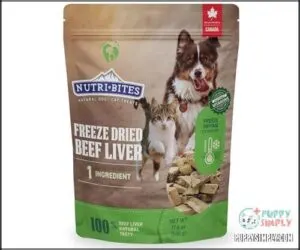
When you’re looking for a training treat that delivers serious bang for your buck, Nutri Bites Freeze Dried Beef Liver Treats are tough to beat. This 17.6-ounce pouch is packed with single-ingredient, freeze-dried beef liver that’s manufactured in Canada to SQF Level 3 standards—the highest standard for food safety.
The freeze-drying process locks in nutrients and that irresistible liver aroma dogs go wild for, while the lightweight pieces break easily into tiny rewards. You’ll get high-value motivation without the mess of crumbly treats.
| Best For | Pet parents who want a high-protein, single-ingredient training treat that’s safe for dogs and cats of all ages, especially those with food sensitivities or dietary restrictions. |
|---|---|
| Primary Flavor | Beef Liver |
| Age Range | All Life Stages |
| Product Form | Bites |
| Weight | 17.6 oz |
| Grain Content | Grain-Free |
| Calories Per Treat | Not specified |
| Additional Features |
|
- Pure freeze-dried beef liver with no additives, preservatives, or fillers—just one clean ingredient
- Easy to break into smaller pieces for training or portion control with smaller pets
- Supports overall health including digestion, immune function, and joint health
- Strong liver smell that may be off-putting to some pet owners
- Needs to be used in moderation (a few treats per week) to prevent Vitamin A toxicity
- May not appeal to picky pets who are sensitive to liver texture or flavor
2. Caledon Farms Chicken Dog Treats
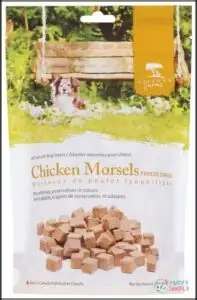
If freeze-dried beef liver feels a bit intense for your pup, Caledon Farms Chicken Dog Treats offer a milder alternative that still packs plenty of flavor. These freeze-dried chicken morsels are made from antibiotic-free chicken with no fillers or artificial additives, so you’re getting straightforward nutrition.
The limited-ingredient recipe works well for puppies with sensitive stomachs, and the chunks break down easily for quick rewards. At around 2 kilocalories per treat, they won’t derail your puppy’s daily calorie budget during those marathon training sessions.
| Best For | Puppy owners looking for a gentle, single-protein training treat that’s easy on sensitive stomachs and low in calories. |
|---|---|
| Primary Flavor | Chicken |
| Age Range | All Life Stages |
| Product Form | Chunk |
| Weight | 125 g |
| Grain Content | Grain-Free |
| Calories Per Treat | Not specified |
| Additional Features |
|
- Antibiotic-free chicken with no fillers or artificial ingredients makes it a clean, simple option
- Freeze-dried texture breaks apart easily for quick rewards during training sessions
- Low calorie count (about 2 kcal per treat) helps you avoid overfeeding during repetitive training
- Higher price compared to conventional treats
- Small 125-gram package size may feel insufficient, with some bags arriving half-empty
- Requires airtight storage to keep the freeze-dried texture fresh
3. Zukes Mini Naturals Dog Treats
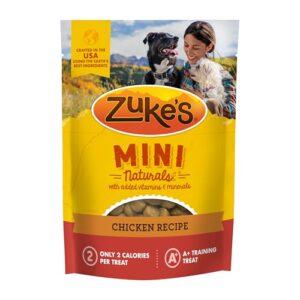
Zukes Mini Naturals deliver exactly what you need during rapid-fire training sessions: soft, bite-sized rewards your puppy can swallow in seconds without losing focus. Each tender morsel clocks in at about 2 calories, so you can hand out dozens of repetitions without blowing through your pup’s daily energy allowance.
The easy-tear texture lets you split pieces even smaller for tiny breeds or lightning-fast click-and-treat drills, and the resealable pouch keeps them fresh whether you’re working at home or on the road.
| Best For | Dog owners who want healthy, low-calorie treats for training or rewarding pups of any age, especially those with sensitive stomachs. |
|---|---|
| Primary Flavor | Chicken |
| Age Range | All Life Stages |
| Product Form | Soft Bites |
| Weight | 16 oz |
| Grain Content | No Corn/Wheat/Soy |
| Calories Per Treat | 2 calories |
| Additional Features |
|
- Made with real chicken and natural ingredients, plus added vitamins and minerals
- Soft, chewy texture and tiny size are perfect for training and quick rewards
- No corn, wheat, or soy, making them gentler on sensitive stomachs
- May not suit dogs with certain allergies or sensitivities
- Some treats may be firmer than expected
- More expensive than many other dog treat options
4. Honest Kitchen Beef Salmon Dog Treats
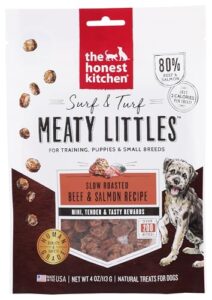
When your puppy’s attention starts to wander, Honest Kitchen Beef Salmon Dog Treats step up with a meaty aroma and soft bite that’s hard to ignore. Each “Meaty Little” packs ranch-raised beef, wild-caught salmon, and just two calories per disc—so you can reward generously without guilt.
The human-grade ingredients and grain-free recipe keep things safe for sensitive tummies. If you’ve got a small breed or a teething pup, their tender texture makes training sessions smooth and stress-free.
| Best For | Owners who want a healthy, low-calorie training treat for dogs (and even cats) with sensitive stomachs. |
|---|---|
| Primary Flavor | Beef & Salmon |
| Age Range | All Life Stages |
| Product Form | Discs |
| Weight | 0.25 lbs |
| Grain Content | Non-GMO |
| Calories Per Treat | 2 calories |
| Additional Features |
|
- Made with human-grade, high-quality ingredients and no fillers.
- Only 2 calories per treat, perfect for frequent training sessions.
- Supports brain health and strong muscles with added DHA and protein.
- Some treats may arrive crushed, leaving crumbs in the bag.
- Discs can be too large for small breed puppies unless cut in half.
- Price is higher than many standard treats.
5. Open Farm Soft Dog Training Treats
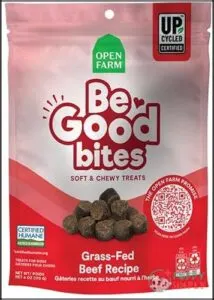
Convenience meets quality in Open Farm Soft Dog Training Treats. Each bite-sized piece packs less than 2.5 calories, so you can reward often without tipping the scales.
The soft, chewy texture is a blessing for teething pups or tiny mouths, and the ethically sourced ingredients—like grass-fed beef and non-GMO fruits—keep things safe for sensitive stomachs.
The resealable pouch means you won’t end up with stale treats halfway through a training session. If you value transparency and sustainability, these treats deliver.
| Best For | Dog owners who want healthy, low-calorie treats for training, especially for pups with sensitive stomachs or dietary restrictions. |
|---|---|
| Primary Flavor | Beef |
| Age Range | Adult |
| Product Form | Pellet |
| Weight | 0.36 lbs |
| Grain Content | Non-GMO Grains |
| Calories Per Treat | Under 2.5 calories |
| Additional Features |
|
- Low in calories, perfect for frequent rewards during training
- Made with ethically sourced, traceable ingredients
- Resealable pouch keeps treats fresh and easy to grab on the go
- Some find the smell off-putting
- Higher price for the amount you get
- Contains animal products, so not suitable for vegetarian or vegan households
6. Cloud Star Dog Training Treats
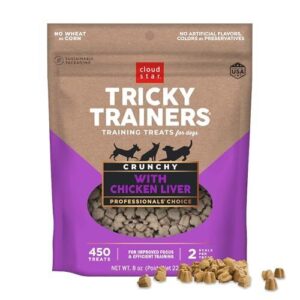
Precision matters when you’re shaping a puppy’s behavior, and Cloud Star Dog Training Treats make it easy. Each soft, chewy bite is crafted for rapid rewards—no crumbling, no fuss—so you can reinforce good habits without losing momentum.
Pair them with a feeding plan that meets your puppy’s daily nutritional requirements to keep training sessions balanced and effective.
With only three calories per treat and simple, real ingredients like chicken liver or salmon, you won’t have to worry about overfeeding or hidden fillers. I reach for these treats in AKC Canine Good Citizen prep, especially with sensitive or picky pups.
| Best For | Dog owners and trainers looking for a low-calorie, motivating treat for training sessions with dogs of any size or age. |
|---|---|
| Primary Flavor | Chicken Liver |
| Age Range | All Life Stages |
| Product Form | Chunk |
| Weight | 8 oz |
| Grain Content | No Wheat/Corn |
| Calories Per Treat | 2 calories |
| Additional Features |
|
- Only 2 calories per treat, great for frequent rewards without overfeeding
- Made with real chicken liver and no artificial additives
- Crunchy texture and highly palatable, perfect for keeping dogs engaged
- May get crushed if shipped with heavier items
- Contains canola oil, which some pet owners prefer to avoid
- Some users feel the price is a bit high for the amount
7. Full Moon Natural Beef Dog Treats
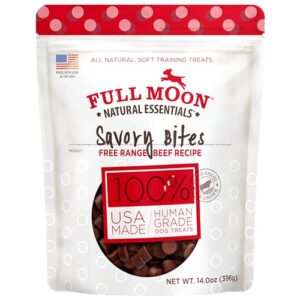
Beef lovers, take note—Full Moon Natural Beef Dog Treats bring a real punch of flavor and nutrition to your training toolkit. Made with free-range beef and all-natural ingredients, these chewy sticks are slow-cooked for maximum taste and digestibility.
You’ll appreciate the grain-free recipe and resealable bag, especially if your pup has a sensitive stomach or you’re training frequently. Just remember, these treats aren’t for dogs with beef allergies, and the aroma is strong—perfect for grabbing your puppy’s attention in busy environments.
| Best For | Owners looking for high-quality, all-natural beef treats for dogs of any age, especially those with sensitive stomachs. |
|---|---|
| Primary Flavor | Beef |
| Age Range | All Life Stages |
| Product Form | Stick |
| Weight | 14 oz |
| Grain Content | No Grains |
| Calories Per Treat | Not specified |
| Additional Features |
|
- Made from human-grade, free-range beef with no artificial additives
- Grain-free and easy on digestion
- Convenient resealable bag keeps treats fresh
- Pricier than many other dog treat options
- Only available in beef flavor
- Strong smell may be off-putting to some users
8. Onward Hound Soft Bison Dog Treats
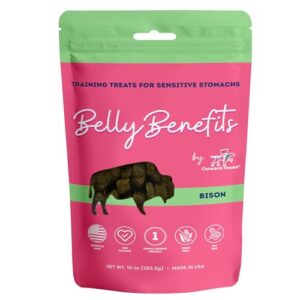
Looking for a treat that’s gentle on sensitive stomachs but still packs a punch? Onward Hound Soft Bison Dog Treats hit that sweet spot. Each bite-sized piece offers single-source bison protein, just 3.5 calories, and a soft, moist texture—perfect for teething pups or quick-fire training sessions.
The formula skips corn, wheat, and soy, so you’re less likely to run into allergy issues. I love how these treats keep their aroma and freshness, making every reward session count for your growing pup.
| Best For | Puppies, seniors, and small dogs who need a gentle, low-calorie treat for training or sensitive stomachs. |
|---|---|
| Primary Flavor | Bison |
| Age Range | All Life Stages |
| Product Form | Pellet |
| Weight | 10 oz |
| Grain Content | Contains Potatoes/Peas |
| Calories Per Treat | 3.5 calories |
| Additional Features |
|
- Soft texture is easy to chew for all ages
- Low calorie count helps with weight management
- Single-source bison protein supports food-sensitive dogs
- Contains molasses, which may upset some dogs’ digestion
- Not suitable for pups with certain allergies or sensitivities
- Some dogs may not enjoy the taste or texture
9. Polkadog Salmon Training Treats
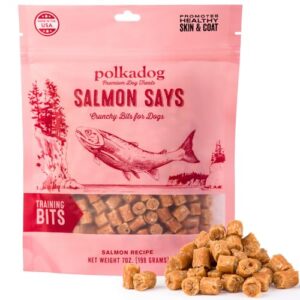
Ever wondered why some pups perk up at the mere whiff of a treat? Polkadog Salmon Training Treats are my go-to for picky eaters and sensitive stomachs. Each pellet packs real salmon, rich in Omega-3s, and just 3 calories—so you can reward often without guilt.
The crunchy bite-sized shape works for all ages, and the limited ingredient recipe helps dodge common allergens. I keep a pouch handy for walks; the resealable bag keeps every reward fresh and irresistible.
| Best For | Dog owners looking for healthy, low-calorie treats suitable for pups with allergies or sensitive stomachs. |
|---|---|
| Primary Flavor | Salmon |
| Age Range | All Life Stages |
| Product Form | Pellet |
| Weight | 7 oz |
| Grain Content | Limited Ingredient |
| Calories Per Treat | Low-calorie |
| Additional Features |
|
- Made with real salmon and packed with Omega-3 for skin, coat, and joint health
- Limited ingredients and preservative-free, great for dogs with food sensitivities
- Small, crunchy pellets perfect for training and frequent rewarding
- Costs more than many other training treats
- Some treats may arrive broken due to shipping
- Only available in salmon flavor, which may not suit every dog’s taste
10. Stella Chewy Freeze Dried Raw Dog Treats
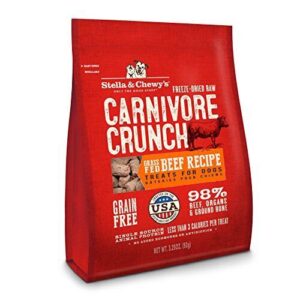
If you want a treat that grabs your puppy’s attention every time, Stella Chewy Freeze Dried Raw Dog Treats are hard to beat. Each bite packs 98% grass-fed beef, organs, and bone—no grains, fillers, or artificial junk.
The nuggets break apart easily for tiny mouths and keep their chewy texture, even for teething pups. I love using these during high-distraction training; the meaty aroma and rich flavor turn “sit” into a game they never want to lose.
| Best For | Puppies and picky dogs who need a super-motivating, easy-to-chew treat for training or meal topping. |
|---|---|
| Primary Flavor | Beef |
| Age Range | All Life Stages |
| Product Form | Pellet |
| Weight | 3.25 oz |
| Grain Content | Grain-Free |
| Calories Per Treat | Not specified |
| Additional Features |
|
- Made with 98% grass-fed beef, organs, and bone, with no grains or fillers.
- Freeze-dried to lock in nutrients and flavor while being gentle on teeth.
- Breaks apart easily—perfect for rewarding small or senior dogs and sprinkling over food.
- Can arrive partly crumbled and may not travel well in pockets.
- Higher price point compared to many other treats.
- Some buyers feel the portion size isn’t a great value for the cost.
Key Benefits of Training Treats for Puppies
Training treats aren’t just about bribing your puppy into good behavior—they’re one of the most powerful tools you’ll use to shape a well-mannered, confident dog. When you use them correctly, treats speed up learning, strengthen your bond, and make training sessions something your puppy actually looks forward to.
Training treats are powerful tools that speed up learning, strengthen your bond, and make sessions your puppy looks forward to
Here’s how the right training treats benefit your puppy’s development in three specific ways.
Enhancing Positive Reinforcement

Consistently rewarding your puppy right after a desired behavior creates a powerful link between action and consequence. That’s where high-value puppy training treats shine—they deliver immediate positive feedback that strengthens behavioral cues and builds motivation.
Reward-based training relies on this clear timing, and using dog training treats with strong palatability keeps your sessions focused, efficient, and rooted in positive reinforcement principles that shape lasting habits. This approach is closely related to the core ideas of operant conditioning, which highlight how rewards increase the likelihood of desired behaviors.
Improving Training Focus

Puppies thrive when training treats help them lock into focused learning moments. A calm training environment, paired with immediate reward timing within a half second of correct behavior, keeps your puppy engaged and mentally stimulated.
Here’s how treats improve focus:
- Shorten sessions to 5-8 minutes to match puppy attention spans
- Use high-quality ingredients for maximum palatability and interest
- Reserve special puppy treats exclusively for distraction control drills
- Pair treats with verbal cues to strengthen positive reinforcement training
- Train at consistent times to build readiness and mental sharpness
These strategies turn dog training into purposeful, productive work.
Building New Behaviors

Once your puppy holds focus, you’re ready to layer new skills using behavior chains. Start with a simple approximation, reward immediately, then raise the bar. One mastered step becomes the cue for the next.
High-value puppy training treats delivered with precise cue timing transform repetition into habit formation. That’s the heart of reward-based training—breaking complex actions into bite-sized wins your pup can celebrate.
What to Look for in Puppy Training Treats

Not all puppy treats are created equal, and knowing what to look for can make or break your training sessions.
The right treat won’t just taste good to your pup—it’ll also be safe, easy to use, and effective at keeping their attention when it matters most.
Here’s what I focus on when choosing training treats for the puppies I work with.
Treat Size and Texture
When you’re choosing training treats, size and texture matter just as much as what’s inside. Tiny bites between 2 and 3 millimeters let you reward often without overfeeding, while soft, melt-in-the-mouth textures keep chew time under two seconds—vital for quick repetitions.
Here’s what to look for:
- Small, uniform treat size for consistent cue timing
- Soft textures that compress easily for teething puppies
- Non-crumbly consistency to avoid choking hazards
- Gentle chewiness that doesn’t irritate sensitive gums
- Texture variety across sessions to maintain engagement
Rotating between soft jerky-like pieces and creamy options prevents taste fatigue, and properly stored treats hold their shape without turning into a sandy mess in your pocket.
Palatability and Novelty
Dogs live in a world of scent and sensation, and your puppy’s taste preferences can make or break every training session. Strong aroma impact pulls attention instantly—freeze-dried liver or salmon usually outperform mild biscuits when you need fast focus. Rotating flavors between sessions keeps novelty high, preventing the boredom that dulls motivation.
Here’s how palatability drives results:
| Palatability Factor | Training Benefit | Example |
|---|---|---|
| High-value flavor | Faster cue learning in distractions | Beef liver, salmon |
| Texture variety | Sustained interest across sessions | Soft chews, jerky strips |
| Aroma strength | Immediate attention capture | Freeze-dried raw treats |
| Flavor rotation | Prevents taste fatigue | Switching chicken to bison weekly |
Sensory rewards that deliver intense flavor and satisfying texture become your secret weapon—they transform routine drills into exciting wins your puppy can’t wait to earn.
Ingredient Quality
High-quality ingredients separate treats that fuel growth from those that merely fill space. You’ll want named protein sources—chicken, beef, fish—not vague “meat meal,” plus traceable supply chains that verify origin. Real meat content should lead the label, preserving natural nutrients through minimal processing like freeze-drying or air-drying.
Look for these markers of premium formulations:
- Human-grade ingredients with whole muscle proteins and no hormones or antibiotics
- Limited ingredient diets that reduce allergen exposure and simplify digestion
- Grain options free from corn, wheat, soy fillers—or organic alternatives
- Additive-free recipes using natural preservatives like vitamin E instead of synthetic chemicals
- Nutritional value preserved through gentle processing that retains amino acids
High-quality ingredients deliver more than taste—they support your puppy’s development while keeping training rewards clean and effective.
Choosing Safe and Healthy Ingredients
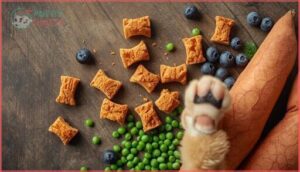
When you’re scanning treat labels, the ingredient list tells you everything you need to know about what’s actually going into your puppy’s body. I always start by checking for common allergens like corn, wheat, and soy, then look for any artificial colors, flavors, or preservatives that puppies don’t need.
Here’s what to focus on when choosing safe, healthy ingredients for your training sessions.
Avoiding Allergens and Fillers
When your puppy shows signs of food allergies and sensitivities in dogs, you’ll want to steer clear of artificial preservatives and common allergens like wheat, soy, and dairy.
Look for hypoallergenic options and grain-free options that use single protein variety sources, making allergen testing easier. Filler awareness matters too—skip treats packed with corn or unnamed meat meals, which offer little nutrition and can trigger reactions.
Opting for Limited Ingredient Treats
When you’re working with a puppy prone to sensitivities, simplified recipes with limited ingredients become your training arsenal’s secret weapon.
These limited ingredient diet options feature a single source protein—often a novel protein like bison or duck—paired with minimal extras.
Hypoallergenic options strip away unnecessary additives while maintaining high-quality ingredients that support canine nutrition, making every puppy training treat count without triggering reactions. For more details about the benefits of limited ingredient dog treats, see this informative guide.
Understanding Protein Sources
You’ll notice animal proteins—like beef, chicken, and fish—deliver complete amino acid profiles your puppy needs for growth, while plant proteins often fall short on digestibility metrics.
Novel protein sources like bison or duck offer excellent bioavailability factors for sensitive pups. High-protein treats with outstanding nutrient balance support canine nutrition, ensuring every puppy training treat contributes meaningfully to development without compromising protein quality.
Calorie Control and Treat Portions
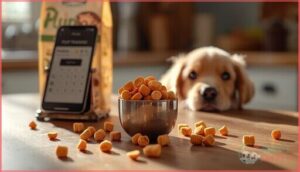
You can’t just toss your puppy treats all day and expect things to work out. Even the healthiest training treats add calories, and puppies need those calories balanced against their regular meals to avoid weight gain or nutritional imbalances.
Let’s walk through how to manage treat portions so your training stays effective without compromising your puppy’s health.
Appropriate Calorie Limits for Puppies
You don’t want to sabotage your puppy’s growth curve with too many treats, so stick to that 10 percent rule—for a 10-pound pup on 300 kcal daily, that’s about 30 kcal from treats.
- Keep puppy nutrition balanced by counting training rewards in total daily caloric intake
- Choose low-calorie options during rapid growth stages to prevent unwanted weight gain
- Use feeding guidelines and growth monitoring to recalibrate portions as your pup matures
Monitoring Daily Treat Intake
Once you’ve nailed down calorie limits, the real work is tracking every treat you hand out during sessions. Keep a daily log with date, time, and portion—measuring cups or a kitchen scale work wonders. Convert portions to calories using package labels, then compare against your pup’s total daily intake.
Here’s a simple logging framework:
| Session Type | Treat Weight (grams) | Approximate Calories |
|---|---|---|
| Morning basics | 5–10 | 15–30 |
| Midday socialization | 8–12 | 25–40 |
| Evening practice | 6–10 | 20–35 |
Review your log weekly to spot calorie creep and adjust portions before your puppy’s waistline suffers.
Preventing Overfeeding
Calorie tracking and treat sizing only work if you stay disciplined across feeding schedules. Set a 5 percent daily limit and stick to it—no sneaking extra high-value treats during puppy monitoring sessions.
Pair healthy snacking with weekly weigh-ins to catch weight management issues early. If caloric intake creeps up, cut low-calorie portions by 20 percent for two weeks and reassess your puppy’s growth curve.
Age-Appropriate Treats for Puppies

Your puppy’s age and development stage directly affect which treats work best for training. Soft, easily digestible options are essential for teething pups, while size matters just as much as texture when you’re matching treats to your puppy’s mouth and stomach capacity.
Here’s how to choose treats that fit your puppy’s specific needs.
Soft Treats for Teething Puppies
When your puppy’s teething, you’ll need treats that offer gentle textures and gum soothing relief without the crunch. Soft chews made with high-quality ingredients like shredded chicken or moisture-rich pumpkin dissolve easily, providing teething relief while supporting puppy nutrition.
Look for soft and chewy options sized at 1 to 2 centimeters—they’re perfect for puppy teething and chewing without overwhelming tiny mouths.
Digestibility and Safety
Beyond soft texture, digestibility determines how well your puppy’s stomach breaks down those puppy training treats. Safe foods for puppies with clear ingredient transparency—like single-source beef or chicken—promote nutrient absorption and better stool quality while reducing allergy-friendly concerns. Manufacturing standards matter for choking prevention, so check for uniform sizing and avoid toxic foods like chocolate, xylitol, or grapes.
- Your puppy’s tiny belly can’t handle mystery fillers that trigger midnight stomach upset
- Clear labels mean you’re never guessing what might cause tomorrow’s allergic reaction
- Gentle digestion keeps training sessions fun instead of interrupted by potty emergencies
- Safe sizing prevents that heart-stopping moment when a chunk gets lodged in their throat
- Trusted manufacturing gives you peace of mind with every reward you offer
Choosing Treats by Puppy Size
Match your reward size to your pup’s frame. Tiny breeds under 5 pounds need bite-sized rewards around 0.2 grams—frequent reinforcement without calorie overload.
Medium puppies thrive on 0.5 to 1-gram pieces for quick handling, while large-breed giants over 40 pounds benefit from 2 to 3-gram chunks that finish in two chews, keeping training efficiency high and your sessions rolling smoothly.
Training Scenarios and Treat Selection
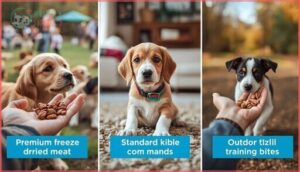
Not every training moment calls for the same type of treat, and matching the reward to the situation makes all the difference in your puppy’s progress.
High-distraction environments demand something truly irresistible, while calm home sessions work fine with simpler options. Here’s how to choose the right treat for three common training scenarios you’ll face.
High-Value Treats for Distraction
When your puppy faces real-world chaos—barking dogs at the park, kids on scooters, delivery trucks rumbling by—you’ll need ammunition that cuts through the noise.
High-value, aromatic options like freeze-dried beef liver or salmon create irresistible treat motivation during distraction training. These best puppy treats deliver intense scent and quick bites, sharpening puppy focus and boosting training efficiency through positive reinforcement when standard rewards just won’t hold attention.
Everyday Training Rewards
When you’re working on sit, stay, or recall in your living room, everyday training treats keep sessions moving without breaking the bank. You’ll want small, easily chewed rewards you can deliver within 1 second of the correct behavior—that immediate reward timing strengthens associations and maintains a brisk training pace.
Rotate flavors to boost puppy motivation, and keep treat scheduling consistent across your short 5-to-10-minute sessions.
Treats for Socialization Sessions
Social learning thrives when you pair gentle exposure with calm rewards during puppy interactions. You’ll build positive associations by offering high-value training treats after each successful introduction to new people, dogs, or environments—socialization sessions demand consistency and safety.
- Break treats into pea-sized pieces for quick consumption without distraction
- Choose single-protein options to prevent digestive upset during outings
- Keep a treat pouch handy for immediate positive reinforcement when your puppy stays relaxed
Rotating Flavors to Maintain Interest

Your puppy won’t stay excited about the same chicken treat forever, and that’s where rotating flavors becomes your secret weapon.
Switching between beef, salmon, duck, and other proteins keeps training sessions fresh and your puppy guessing what delicious reward comes next.
Here’s how introducing variety can transform your training routine and keep that tail wagging.
Benefits of Treat Variety
Rotating between different flavor profiles keeps your puppy engaged and motivated to work. A diverse reward system resonates with canine preferences, strengthening positive reinforcement and improving training outcomes. When you mix protein sources and textures, you’re not just offering variety—you’re building a toolkit that responds to different scenarios, from quiet living room sessions to bustling park distractions.
| Treat Rotation Benefit | Impact on Training |
|---|---|
| Multiple protein options | Prevents ingredient fatigue, promotes balanced nutrition |
| Varied textures (soft, crunchy) | Maintains interest across longer sessions |
| Novel flavors during challenges | Boosts motivation in high-distraction environments |
| High-quality ingredients variety | Aligns rewards with specific training goals |
| Reward-based training diversity | Strengthens behavior association and consistency |
Preventing Treat Boredom
Your puppy’s attention span isn’t infinite, and neither is their love for the same old chicken cube. Novelty rewards matter—I’ve watched countless training sessions stall because the same treat lost its magic.
You can combat this by rotating flavors every other day and mixing textures within sessions. Scent stimulation matters, too. Alternate between beef, salmon, and bison to keep high-value rewards fresh and your puppy motivated.
Introducing New Protein Options
When you rotate proteins, you’re doing more than preventing boredom—you’re mapping your puppy’s palate. Turkey and duck offer lean, high-value options, while novel ingredients like venison or salmon introduce omega-3s for digestive health.
Some sustainable options, including insect-based proteins, provide hypoallergenic alternatives. Start small with each new protein, watch for palatability factors, and you’ll discover which puppy training treats align best with your puppy’s nutritional needs.
Storing and Handling Puppy Training Treats
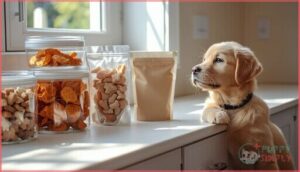
You’ve picked the perfect treats for your puppy, but how you store and handle them makes all the difference in keeping them fresh, safe, and effective during training sessions. Poor storage can lead to spoiled treats that lose their appeal or even cause stomach upset, while proper handling ensures your pup stays focused and motivated.
Here’s what you need to know about keeping those training rewards in top condition.
Proper Storage for Freshness
After opening, your puppy treats need some love to stay fresh and effective. Keep soft dog training treats refrigerated at 34 to 40 degrees, using airtight storage containers to lock in moisture control and prevent odor transfer.
Freeze-dried options with high-quality ingredients can sit at room temperature but check shelf life guidelines—most opened bags should be used within 30 days following freshness guidelines to maintain palatability.
Safe Handling During Training
Now that you’ve got freshness locked down, handling tips during sessions matter just as much for treat safety. Keep dog training treats small and bite-sized to reduce choking risk, and always use a clean, stable surface or closed hand when presenting them.
Your training areas should be free of hazards, and monitoring for allergies after rotating puppy training treats protects your pup’s well-being throughout every session.
Frequently Asked Questions (FAQs)
What treats can I give my puppy for training?
You’ll want soft training treats made with high-quality protein like beef liver, chicken, or salmon. These puppy training treats should be easy to chew, digest quickly, and keep your pup motivated during sessions.
Can puppies have dog training treats?
Yes, healthy puppies can start having small, soft puppy training treats around 8 weeks old once they’re eating solid food well, as long as treats stay under 10 percent of daily calories.
Can homemade treats replace commercial training treats?
Homemade recipes can work alongside commercial options when you control calorie intake, follow safety precautions, and maintain nutrient balance—but cost comparison and convenience often favor grab-and-go treats for busy training schedules.
How do freeze-dried and air-dried treats compare?
Freeze-dried treats crumble easily for rapid-fire training and keep more nutrients, while air-dried options offer chewier texture and better shelf life at lower cost.
Making both valuable high-value puppy training treats.
When should puppies start receiving training treats?
Most puppies can start receiving training treats around 8 weeks old, once they’re weaned and eating solid food consistently.
Watch for developmental signs like confident chewing and brief focus before introducing treats.
Are grain-free treats better for all puppies?
Not necessarily. Grain-free options help puppies with documented grain allergies, but most healthy pups thrive on balanced diets meeting AAFCO standards.
Veterinarians often skip grain-free puppy training treats unless there’s a proven dietary restriction.
What treats work best for clicker training?
When that sharp click sounds, you need a treat your puppy can swallow in seconds.
Soft, pea-sized training bites around 2–3 calories each—like Zukes Mini Naturals—let you reward fast without long chewing breaks during clicker training.
Conclusion
The irony? Your puppy doesn’t care which bag cost more or what the label promises—she cares about taste, timing, and whether you’re excited when she earns one.
The best dog training treats for puppies are simply the ones that keep her coming back, focused and enthusiastic, while supporting her growing body. Trust her reaction over marketing claims, adjust portions as she grows, and watch those three-second windows transform into a dog who genuinely loves learning with you.
- https://www.linkedin.com/in/darris-cooper-cpdt-ka-ffcp-77a8691b8/
- https://www.akc.org/expert-advice/nutrition/best-dog-treats/
- https://www.purina.com/articles/dog/health/nutrition/are-dogs-omnivores-or-carnivores
- https://booking.splootvets.com/
- https://petcorner.pangovet.com/pet-nutrition/dogs/how-to-make-bone-broth-for-dogs/