This site is supported by our readers. We may earn a commission, at no cost to you, if you purchase through links.

You measure, you adjust, you double-check the straps—yet your dog still backs out of their vest like a canine Houdini mid-walk. This frustrating escape act isn’t just annoying; it’s dangerous. One backward shimmy near traffic or an open gate turns a routine walk into a heart-stopping chase.
The culprit usually isn’t defiance or stubbornness. Poor fit, anxiety triggers, discomfort, or worn-out gear create the perfect conditions for your dog to slip free. Understanding why dogs back out of vests, from breed-specific body shapes to fear responses, gives you the control to fix the problem.
The right combination of proper sizing, quality equipment, and calm training stops those escapes before they start.
Table Of Contents
- Key Takeaways
- Why Does My Dog Back Out of Harness?
- Can Harness Fit Cause My Dog to Escape?
- Which Dog Behaviors Lead to Harness Backing Out?
- Are Some Dogs More Likely to Slip Harnesses?
- What Harness Styles Prevent Escaping?
- How Do Materials and Design Affect Security?
- How to Properly Fit and Adjust a Harness
- What Training Helps Prevent Harness Backing Out?
- When Should You Replace or Upgrade a Harness?
- Frequently Asked Questions (FAQs)
- Conclusion
Key Takeaways
- Dogs back out of harnesses mainly due to poor fit, anxiety triggers, physical discomfort from chafing or pinching, or low-quality gear with worn straps and faulty buckles that create escape opportunities.
- Deep-chested breeds like greyhounds, rescue dogs with fear responses, and determined escape artists require specialized harness designs with belly straps, locking mechanisms, or front-clip attachments to prevent slipping.
- Proper harness security depends on accurate chest and neck measurements, regular fit adjustments (especially during growth phases), and choosing escape-proof designs with durable materials and quality hardware that resist wear.
- Building positive associations through reward-based training and calm handling during harnessing transforms the experience from stressful to routine, reducing escape attempts rooted in behavioral anxiety rather than equipment failure.
Why Does My Dog Back Out of Harness?
When your dog slips out of their collar, it’s not just frustrating—it’s a safety risk that needs solving fast.
A properly fitted harness can prevent escapes entirely—learn how to measure your dog for a harness to get the right fit from the start.
The good news is that most escape attempts come down to a handful of fixable issues, from poor fit to underlying anxiety. Let’s walk through the main reasons dogs back out of collars so you can pinpoint what’s happening and take control.
Poor Harness Fit and Adjustment
Ill-fitting vests are the leading culprit when dogs slip free. If your vest sizing is off or strap adjustment isn’t snug, your dog can back right out.
Proper fit requires accurate chest measurements and a two-finger gap between strap and skin. Regular fit checks catch loosened buckle security before escape happens.
Without correct vest adjustment, even quality gear won’t hold. For best results, make sure you understand the importance of a correctly fitted dog vest.
Behavioral Causes Like Fear or Anxiety
Even a perfect fit won’t prevent escape if your dog feels threatened. Fear responses—like pupil dilation, trembling, or tucked tails—signal that anxiety triggers are at play.
Sensory overload from loud noises or crowded spaces can spark sudden backing out attempts.
Addressing anxiety and fear through calming techniques and consistent, gentle routines helps shift these emotional states, making your dog more confident during harnessing and walks. Understanding the role of neurobiological mechanisms underlying anxiety can further inform effective strategies for helping your dog cope.
Discomfort or Pain While Wearing Harness
Your dog might wriggle free because something hurts. Poor vest fit creates armpit chafing, ribcage pinching, and skin abrasions along the shoulders.
Straps that are too tight restrict breathing and movement, while loose ones shift and rub during walks. Even quality leash design fails if leash size or leash adjustment doesn’t match your dog’s body shape.
Proper fit eliminates pressure points that trigger escape attempts.
Unfamiliarity With Harness Routine
A new vest throws off your dog’s routine, turning walk time into a guessing game. When the buckling sequence feels unpredictable, your pup freezes or backs away instead of stepping forward.
Gradual acclimation fixes this—let them sniff the gear, pair vest introduction with high-value treats, and practice short handling sessions before clipping anything. Routine consistency and calm owner handling transform nervous retreat into confident cooperation.
Low-Quality or Worn-Out Harnesses
Frayed webbing and cracked buckles turn even the best restraint fit into a slipping hazard. When UV exposure degrades fabric or buckle stress cracks develop, your restraint loses up to 30 percent of its load capacity, inviting escape attempts.
Regular inspection for thinning straps, loose stitching, and corroded hardware protects restraint quality and keeps your dog secure during every walk.
Can Harness Fit Cause My Dog to Escape?
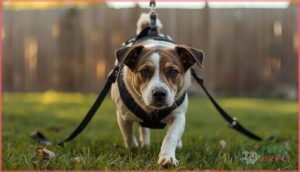
Yes, an ill-fitting restraint system is one of the fastest routes to an escape attempt. Even the best-trained dog can slip out if the straps are too loose, the size is wrong, or the fit hasn’t been checked in months.
Let’s look at the three main fit problems that give your dog a direct path to freedom.
Loose or Incorrectly Tightened Straps
A restraint can seem secure one moment and fail the next if straps aren’t properly adjusted. Loose straps shift during movement, creating enough slack for your dog to wriggle free, while over-tightened ones cause discomfort that triggers escape attempts.
- Check strap adjustment before every walk—you should slide just one finger between strap and fur with gentle pressure
- Inspect buckle safety weekly for dirt or wear that reduces grip and restraint security
- Re-tighten after vigorous activity to maintain proper fit and prevent slipping out
Wrong Size for Dog’s Breed and Body Shape
Choosing a vest based on weight alone can be a recipe for escape when body proportions tell a different story. Deep-chested greyhounds and basset types routinely outgrow standard chest straps, while short-legged stocky breeds slip through narrow shoulder coverage.
| Breed Type | Common Fit Challenge | Key Measurement to Prioritize |
|---|---|---|
| Sighthounds (greyhounds, whippets) | Deep chest, narrow waist creates strap imbalance | Torso length and chest depth |
| Dachshunds, corgis | Short legs, wide chest cause shoulder slip | Chest girth and shoulder width |
| Bulldogs, pugs | Proportionally large neck relative to chest | Neck circumference precision |
| Toy breeds (Chihuahuas, Yorkies) | Larger neck-to-chest ratio risks choking or backing out | Neck-to-chest differential |
Vest sizing charts assume average proportions, yet sloped shoulders in certain breeds reduce contact area, turning a snug vest fit into a loose one during movement.
Lack of Regular Fit Adjustments
Even a perfect initial vest fit won’t stay that way forever, yet many owners assume their dog’s gear is still secure weeks or months later. Strap Tension Drift happens gradually, so you won’t notice your pup slipping out until it’s too late.
- Routine Delays push back remeasurements, causing the vest to loosen over time.
- Seasonal Reset after coat or weight changes means the vest size needs rechecking.
- Assumption Bias tricks you into thinking the current fit is still proper fit.
- Regular vest adjustment every few weeks prevents your dog from slipping out during walks.
Which Dog Behaviors Lead to Harness Backing Out?

Your dog’s behavior plays a major role in whether they can slip out of a vest, and recognizing these patterns helps you prevent future escapes.
Some dogs actively try to back out due to emotional triggers, while others create opportunities through their physical reactions during walks.
Let’s look at the specific behaviors that make vest backing out more likely.
Nervousness and Fear Responses
Fear hits fast—your dog’s amygdala response can trigger backing out before you even realize what’s happening. When nervousness spikes, the startle reflex and fight-flight-freeze pattern kick in, flooding your dog with stress hormones.
This creates a perfect storm for collar escape, especially if anxiety issues run deep. Understanding dog behavior and using patient dog training techniques helps you tackle the underlying issue instead of fighting the symptom.
Pulling, Lunging, or Sudden Movements
Explosive lunges start with rapid weight shifts that challenge even the best vest fit. When your dog bolts toward a squirrel or another dog, sudden stops can create enough backward momentum for slipping out, especially if leash handling isn’t steady. Movement triggers like visual stimuli or ground texture changes increase the risk, turning routine walks into potential vest escape scenarios.
- Core strengthening exercises improve balance during quick directional changes, reducing the twisting that leads to backing out.
- Grounding techniques before walks help lower arousal levels, so your dog responds more calmly to distractions instead of lunging impulsively.
- Proper leash training teaches your dog to check in with you during excitement, preventing the powerful forward pulls that loosen straps and create gaps.
When front legs propel your dog forward with locked knees, the sudden snap backward to regain balance can pull shoulders through loose openings. You’ll notice this pattern more during late-walk fatigue, when muscular control drops and escape attempts spike, making consistent dog behavior management essential.
Association With Negative Experiences
Past trauma from leash jerks or painful escapes can lock in fear conditioning that makes your dog resist any vest routine.
Even after the original discomfort fades, negative reinforcement patterns persist, triggering avoidance behaviors the moment you reach for the vest.
Stress management through gradual phobia treatment helps rebuild trust, preventing slipping out attempts rooted in canine behavior shaped by prior negative experiences.
Are Some Dogs More Likely to Slip Harnesses?
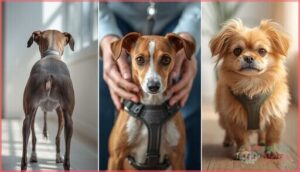
Yes, certain dogs seem hardwired to slip out of vests no matter how carefully you adjust the straps.
Body shape, temperament, and past experiences all play a role in whether your dog becomes an escape artist or accepts the vest without issue. Let’s look at three types of dogs that are more likely to back out of their vests.
Deep-Chested and Lanky Breeds
Your dog’s body type matters in terms of escape. Deep chested traits like those in Greyhounds, Great Danes, and Dobermans create unique challenges for proper fit and equipment adjustment:
- Chest depth extends well below the elbow, creating vertical space for backing out
- Narrow, oval rib cages don’t fill standard equipment the same way barrel-chested breeds do
- Slim waists behind the chest offer little resistance during escape attempts
- Long body profiles shift weight distribution, loosening straps during movement
- Athletic builds enable quick, flexible maneuvers that exploit gaps in equipment size
Breed specific issues demand specialized equipment designed for lanky breed challenges and chest depth factors.
High-Anxiety or Rescue Dogs
Beyond body shape, rescue dogs and anxious dogs present unique restraint escape risks rooted in fear responses and stress management challenges.
Heightened startle reactions to sudden noises or new environments trigger flight instincts, prompting these dogs to back out when anxiety triggers overwhelm them.
Calming techniques, rescue training with positive reinforcement, and proper vest fit reduce escape attempts while addressing the underlying dog behavior and training needs that compromise dog safety.
Strong or Stubborn Escape Artists
Some dogs possess exceptional Escape Artist Traits, combining flexibility, timing, and Intelligent Evasion Methods that make leash escape a repeatable skill. These Canine Escape Tactics require targeted Stubborn Dog Training and vigilant leash adjustment to overcome what amounts to deliberate Leash Hacking.
- They exploit loose leash fit by waiting for distraction moments to slip straps
- They coordinate breathing and body contortion to reduce leash size contact areas
- They target weak buckle points through repeated practice and precise movements
- They adapt quickly when standard leash adjustment methods fail to contain them
What Harness Styles Prevent Escaping?
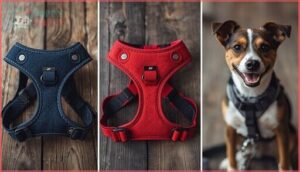
If your dog has a knack for slipping free, the right restraint design can shut down those escape attempts for good.
Some styles are built specifically to prevent backing out, with features that tighten as your dog pulls or add extra security points around the body. Here are the restraint types that give you the upper hand against even the craftiest escape artists.
Escape-Proof and No-Escape Harnesses
Escape-proof vests use a vest design that wraps snugly around your dog’s chest and belly, creating multiple contact points to prevent slipping out. These systems incorporate secure buckles, reinforced stitching, and safety features like dual-closure mechanisms that resist your dog’s twisting or backing maneuvers.
The vest materials and construction work together to stop vest escape attempts, giving you real control and preventing dog escape during walks.
Harnesses With Belly Straps or Locking Buckles
A belly strap wraps under your dog’s torso, reducing pressure on the neck while keeping the vest centered for balanced load distribution. Locking buckles add extra vest escape protection by requiring a deliberate two-stage release that resists accidental opening during pulls.
- Adjustable strap designs accommodate different chest depths and girth measurements for precise vest fit
- Secure fastening systems with reinforced buckles prevent casual escape attempts during walks
- Chew-resistant materials and high-strength hardware guarantee long-term vest adjustment stability
Head Halters and Front-Clip Designs
Head halters guide your dog’s attention by placing a nose band and chin strap that redirect pulling, while front-clip designs attach at the chest to steer momentum away from escape routes.
Both vest designs improve leash control during walks, reduce neck strain, and require gradual training techniques with treats to build positive associations. Quality vest materials and proper vest adjustment prevent your dog from slipping backward or twisting free.
How Do Materials and Design Affect Security?
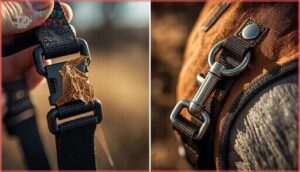
The materials and hardware you choose directly affect how well your restraint holds up against pulling, chewing, and escape attempts. Some fabrics resist wear and damage better than others, while quality buckles and fasteners prevent sudden failures that could let your dog slip free.
Here’s what to look for when evaluating restraint construction and materials for maximum security.
Durable and Chew-Resistant Fabrics
A restraint built from high-quality materials won’t buckle under pressure when your dog pulls or tries to squirm free. Coating technology and reinforced seams mean your dog restraint stands up to daily wear, chewing attempts, and sudden lunges.
Look for these restraint materials and design features:
- High tenacity nylon weave that resists fraying and abrasion
- UHMWPE blends offering up to five times greater tear resistance
- Abrasion-resistant coatings protecting restraint straps from teeth damage
Soft, Comfortable Materials for Sensitive Dogs
When your dog flinches at the sight of their vest, the fabric might be the culprit. Breathable fabrics like cotton and bamboo fiber reduce itchiness for sensitive dogs, while soft padded linings cushion pressure points on the chest and shoulders.
Hypoallergenic materials resist allergens, and gentle textures prevent chafing during movement. Comfortable straps with flexible weaves allow easy slipping over the body without pulling hair, making vest fit less stressful for anxious pups.
Importance of Quality Hardware and Fasteners
Cheap buckles bend under pressure, letting your dog twist free when you least expect it. Quality hardware keeps your pup secure through every pull and lunge, so invest in components built to last.
- Stainless steel buckles resist bending and wear during active use
- Locking mechanisms prevent accidental opening mid-walk
- Corrosion-resistant coatings extend life in wet conditions
- Reinforced stitching around fasteners stops tear-out at stress points
How to Properly Fit and Adjust a Harness
A vest fit that doesn’t fit right is like trying to hold water in your hands—your dog will find a way out every time. Getting the fit dialed in isn’t guesswork; it requires accurate measurements, attention to the manufacturer’s specs, and careful strap adjustments that account for your dog’s unique build.
A harness that doesn’t fit right is like trying to hold water—your dog will find a way out every time
Here’s how to fit a vest so your dog stays secure without feeling trapped or uncomfortable.
Measuring Chest and Neck Accurately

Getting the right fit starts with precision. Wrap a flexible measuring tape around the widest part of your dog’s chest, just behind the front legs, keeping it snug but not tight.
For neck sizing, measure at the base where a collar normally sits. These two measurements prevent slipping out and guarantee proper adjustment, giving you control and your dog comfort during every walk.
Consulting Sizing Charts and Manufacturer Guidelines

Once you have those measurements, match them to the brand’s size chart before you buy. Each manufacturer publishes guidelines with chest girth and neck ranges, often in both inches and centimeters. Some charts also list breed recommendations or weight brackets.
Don’t guess—charts vary widely between brands, so double-check the specific model you’re choosing to guarantee proper fit and prevent escapes.
Step-by-Step Strap Adjustment for a Snug Fit
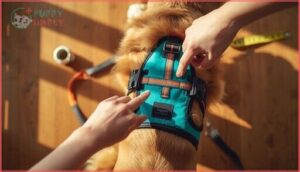
After you’ve confirmed the right vest size, lay it flat and loosen every strap before slipping it over your dog’s head. Center the chest piece on the sternum, then tighten the shoulder straps just enough to remove slack without pinching. Check vest alignment by sliding two fingers under each strap—snug fit prevents slipping out while allowing comfortable movement and breathing.
- Adjust buckle security one notch at a time, testing strap tension after each change to avoid over-tightening.
- Recheck vest fit after your dog walks a few steps, tightening any section that shifts upward during movement.
- Document your adjustment techniques and measurements so you can replicate the perfect fit every time.
What Training Helps Prevent Harness Backing Out?
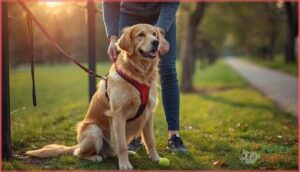
Training your dog to accept and respect the leash is one of the most effective ways to prevent escape attempts, and it doesn’t require fancy tricks or weeks of work.
The key is building a positive association while teaching your dog to stay calm during the entire process, from putting it on to heading out the door. Here are two essential training strategies that will help your dog see the leash as the gateway to good things, not something to wiggle out of.
Associating Harness With Rewards and Walks
Your dog won’t resist the vest introduction if it means good things are coming. Pair each vest introduction with high-value treats and enthusiastic praise, rewarding calm associations during walk preparation.
Use positive reinforcement by marking each successful vest adjustment with a treat, delivered immediately after each buckle clicks. With consistent reward timing during leash walking and control sessions, your dog will anticipate adventures instead of anxiety, transforming vest selection and use into a tail-wagging routine.
Calm Handling During Harnessing
Gentle touch and a soft-spoken tone prevent vest escape before it starts. Stand to the side rather than hovering over your dog, supporting the chest with one hand while guiding straps with the other to avoid pinching.
Choose a quiet environment free from distractions, and buckle from the top down, checking vest fit by sliding one finger between strap and body for proper vest adjustment.
When Should You Replace or Upgrade a Harness?

Even the best dog vest won’t last forever, and knowing when to upgrade can mean the difference between a secure walk and a scary escape.
Your dog’s safety depends on recognizing warning signs that it’s time for a replacement, whether that’s visible damage, changing body dimensions, or ongoing fit issues.
Watch for these clear indicators that your current dog vest has reached the end of its useful life.
Signs of Wear and Tear
Your dog vest won’t last forever, and recognizing when it’s compromised keeps your dog secure. Fabric fray along edges, cracked stitching on seams, and buckle damage like rust or bending all signal it’s time for replacement.
Check dog restraint straps for material deterioration near fasteners, and inspect hardware failure points regularly. Worn Velcro reduces dog vest fit, allowing dogs to slip free despite proper dog restraint adjustment and dog vest size.
Outgrowing Current Harness
Your puppy’s chest can expand one to two inches per month during active growth patterns, quickly turning a snug vest size into a vest escape risk.
Monitor vest fit weekly for young dogs, checking that straps stay flat and you can slide two fingers beneath the chest band. When vest adjustment hits its limit or fabric twists, upgrade immediately to prevent slipping out.
Persistent Escape Attempts Despite Adjustments
Repeated escapes signal that even perfect vest adjustment won’t solve a design flaw or a mismatch between your escape artist dogs and the current vest style. When your dog keeps slipping out after you’ve triple-checked vest fit and tried multiple adjustment techniques, the vest itself is the problem.
- Stitching separates at stress points, compromising material durability and secure fastening systems
- Buckles loosen during walks despite tightening, allowing vest escape mid-stride
- Design lacks chest depth or belly support needed for escape proof security
Frequently Asked Questions (FAQs)
Can I use a collar and harness together safely?
You can wear both if you attach the leash to only one device, keep the collar high, choose a front-clip vest design, and regularly inspect hardware for secure fastening and proper vest adjustment.
Do certain harness colors affect dog behavior?
Color psychology doesn’t directly alter canine behavior, but bright vest tones improve dog visibility and signal handlers’ intentions to bystanders.
Color coding helps humans interpret behavioral cues during vest selection and use.
How often should I inspect my dogs harness?
Your dog’s safety hinges on checking the restraint before every single walk—buckles secure, straps flat. Monthly visual inspections catch frayed stitching, while biannual hardware checks prevent sudden failures.
Whats the best harness for arthritic dogs?
For arthritic support and joint comfort, choose a front-clip dog vest with padded panels, breathable materials, and four-point strap adjustment.
Quality vest design with a built-in handle aids rehabilitation and provides gentle pain relief during movement.
Should puppies wear harnesses during crate training?
A crate should feel like a sanctuary, not a trap.
Puppies should never wear harnesses inside crates due to choking risk. Use them only during supervised training, then remove for Crate Safety before your puppy settles.
Conclusion
Imagine this: your dog walking calmly beside you, collar secure, no backward shuffles or vanishing acts. That’s not wishful thinking—it’s achievable. Understanding why does my dog back out of collar comes down to fit, comfort, and trust.
Measure properly, choose escape-proof designs, and pair the gear with patient training. The payoff? Confidence on every walk, knowing your dog stays safe, secure, and right where they belong—by your side.