This site is supported by our readers. We may earn a commission, at no cost to you, if you purchase through links.
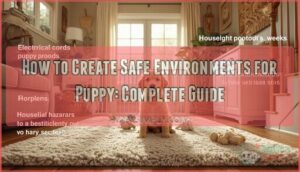
Your eight-week-old puppy just swallowed a sock, and you’re racing to the emergency vet at midnight—trust me, I’ve seen this scenario play out more times than I can count. Puppies explore the world mouth-first, which means that lamp cord looks like a chew toy, those cleaning supplies under the sink smell fascinating, and your daughter’s hair ties? Absolute treasures worth investigating.
The good news is that most puppy emergencies are completely preventable with some smart planning upfront. Creating safe environments for puppy doesn’t require a complete home renovation or a degree in risk management—just a willingness to get down on all fours, see your space from their perspective, and tackle the most common hazards before your curious little explorer finds them first.
Table Of Contents
Key Takeaways
- Puppy-proofing your home—by securing cords, locking away toxins, and removing choking hazards—prevents most emergencies and keeps your pup safe.
- Creating designated safe zones with gates, non-slip surfaces, and cozy retreats gives your puppy freedom to explore without constant worry.
- Outdoor spaces need just as much attention: sturdy fencing, toxic plant checks, and active supervision are essential for safe play.
- Safety isn’t a one-time job—daily checks, routine adjustments, and monitoring your puppy’s health help you stay ahead of new risks as they grow.
Why Safe Environments Matter for Puppies
Bringing home a puppy feels like pure joy—until you realize your fluffy bundle of curiosity treats your house like an all-you-can-chew buffet.
That’s why effective puppy training at home starts the moment they walk through your door—before the couch cushions become casualties.
The truth is, puppies don’t understand that electrical cords aren’t teething toys or that your favorite houseplant might land them in the emergency clinic. Creating a safe space isn’t about being overprotective; it’s about giving your pup the freedom to explore without you having a minor heart attack every five minutes.
Common Risks Puppies Face at Home
Your home’s a minefield of household hazards for curious pups. They explore everything mouth-first, turning everyday items into serious threats. Here’s what you need to watch for:
- Toxic Substance Exposure from cleaners, medications, and chocolate left within reach
- Electrical Shock risks from tempting cords and outlets
- Choking Hazards like coins, buttons, and kids’ toys scattered around
- Furniture Safety concerns—unsecured bookcases can topple during zoomies
Household poisons and toxic plants lurk in surprisingly common spots, making puppyproofing essential for puppy safety. For detailed advice on preventing common puppy hazards at home, consult veterinary safety resources.
Benefits of Puppy-Proofing
Puppyproofing delivers immediate peace of mind—you’ll worry less about vet emergencies and costly accidents. Here’s what smart safety measures give you:
| Benefit | Impact on Puppy | Impact on You |
|---|---|---|
| Accident Prevention | Fewer injuries from home hazards | Lower vet bills, less stress |
| Pet Wellness | Healthy puppy development without toxic exposures | Confident, relaxed pet parenting |
| Safe Play Areas | Freedom to explore without constant intervention | More quality bonding time |
| Hazard Control | Protected from household hazards like cords and chemicals | Sleep better knowing they’re secure |
Puppyproofing basics create a win-win for everyone. Homes and gardens should be regularly checked for to guarantee your puppy’s safety.
How Safety Supports Healthy Development
When your puppy feels secure, their brain can actually focus on learning instead of scanning for threats. Safe exploration during critical developmental stages builds confidence that lasts a lifetime.
A secure puppy can focus on learning and build lifelong confidence through safe, worry-free exploration during key developmental stages
Puppy socialization thrives in hazard-free zones where health monitoring catches problems early. Think of puppy proofing as environmental enrichment—every protected outlet and gated stairway promotes animal welfare while your pup’s personality blossoms. That foundation matters more than most people realize.
Puppy-Proofing Your Home Step by Step
Think of your home as a giant playground for a toddler with fur and zero sense of danger—because that’s exactly what your puppy sees.
Before you bring your new pup home, run through a solid puppy-proofing checklist to catch hazards you’d never notice at human height.
Before you bring your new pup home, you’ll need to tackle the biggest threats lurking in every room, from electrical hazards to tempting toxins.
Let’s walk through the essential puppy-proofing steps that’ll keep your curious companion safe while saving your sanity.
Securing Electrical Cords and Outlets
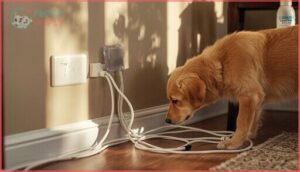
Electrical cords and outlets pose serious shock prevention challenges—puppies don’t understand household hazards, they just see chewable toys. Start with tamper-resistant receptacles and ground fault circuit interrupters in damp areas, then tackle wire management with cord clips, cable sleeves, and furniture-mounted power strips.
Your home safety checklist should include:
- Installing outlet covers with childproof squeeze removal
- Bundling excess cord length with Velcro ties
- Using bitter spray deterrents on accessible electrical cords
- Inspecting daily for frayed insulation or bite marks
Storing Medications, Food, and Chemicals

Inside your cabinets and pantry, medication safety and chemical handling demand locked storage solutions. Keep meds in original packaging inside secure cabinets with childproof latches—never near food or cleaning products. Store puppy food in sealed containers away from household hazards, and refrigerate opened wet food within two to three days.
Here’s your quick-reference guide:
| Item Type | Storage Location | Safety Tip |
|---|---|---|
| Medications | Locked cabinet, cool & dry | Original packaging only |
| Puppy food (dry) | Sealed container, pantry | Away from sunlight & moisture |
| Chemicals & cleaners | High cabinet, locked | Never transfer to unlabeled bottles |
Label everything clearly, audit expiration dates weekly, and keep poison control numbers handy—because toxic substances don’t give second chances.
Removing Choking Hazards and Toxic Plants
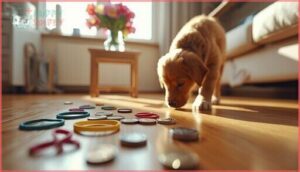
Your curious pup treats the world like a buffet—and that’s a recipe for trouble. Toxic plant identification and choking hazard removal are lifesaving steps in puppyproofing your home against household hazards.
Start by sweeping floors daily for these common culprits:
- Rubber bands and hair ties that block airways
- Sago palm leaves causing liver failure
- Small coins and marbles from low surfaces
- Oleander flowers disrupting heart rhythm
- Baby bottle nipples and dental flossers
Choose safe plant alternatives like basil or rosemary, use raised planters for pet-friendly gardening, and keep poison control saved in your phone—because household hazard control and childproofing mean protecting against toxic substances before accidents happen.
Using Gates, Barriers, and Secure Storage
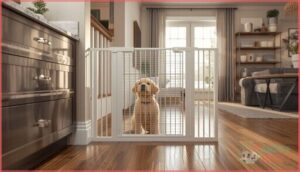
Behind every safe puppy zone, you’ll find smart Gate Installation and Barrier Materials working overtime. Baby gates with tamper-resistant latches block stairs while maintaining visibility—because PuppyProofing Your Home means supervision, not isolation.
Pair those with cabinet locks for Storage Solutions that keep medications unreachable, and outdoor safety fencing with keypad Access Control. Dog proofing transforms hazardous zones into Secure Fencing that adapts as your pup grows.
Creating Safe Play and Rest Areas

Your puppy needs more than just a safe house—they need their own zones where they can zoom around without getting hurt and crash when they’re wiped out.
Think of it like creating a mini kingdom with clear boundaries, comfy floors, and zero access to the scary stuff like staircases or wobbly bookshelves.
Let’s walk through how to set up spaces that keep your pup safe whether they’re in full play mode or snoozing off their latest adventure.
Choosing The Right Space for Your Puppy
Your puppy’s safe zone is the foundation of smart puppy proofing and creating a safe environment that fosters healthy development.
When you’re planning your puppy room design, pick a quiet, low-traffic spot with stable temps and good airflow—away from drafts and direct sun. This calm environment tips the scales toward faster settling and less stress for everyone involved.
Setting Up Washable, Non-Slip Surfaces
Think of your puppy’s play zone as a skating rink—slick floors turn excitement into emergency room visits. You’ll want washable mat solutions like rubber-backed rugs or textured vinyl tiles that grip paws during zoomies while handling inevitable accidents.
Non-slip coatings and surface texture options transform household hazards into accident prevention zones, making puppy proofing practical. Floor safety measures using slip resistance materials protect growing joints and boost confidence during those wild play sessions.
Blocking Off Stairs and High Furniture
Stairs are basically puppy death traps—one tumble can mean broken bones or worse. Install baby gates at least 28 inches tall with vertical slats and secure latches for accident prevention.
Pressure-mounted Stair Gate Options work for temporary setups, while fixed Furniture Barriers offer maximum security. Don’t forget High Shelf Safety—those curious climbers will attempt furniture Everest.
Proper Pet Enclosures using sturdy Barrier Materials transform Household Hazards into zones where Dog Safety and Security actually mean something, completing your Puppy Proofing the Home mission.
Providing a Cozy, Quiet Retreat
Beyond gates and barriers, your pup needs a personal sanctuary—a Quiet Space where overwhelmed nerves can reset. Think Soft Lighting (warm 2700K bulbs), Cozy Textures like washable cotton throws, and Calming Colors that don’t scream “chaos.” Your DogProof Retreat Design transforms a Crate Area into a Safe Space where pups actually want to decompress.
- A dimmable lamp that shifts from task light to gentle glow
- Layered blankets with machine-washable covers for easy cleanup
- A white noise machine blocking sudden household clatters
Outdoor Safety for Puppies
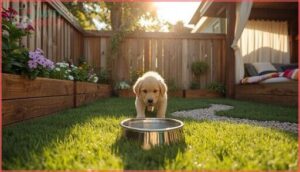
Your backyard can be a puppy’s paradise or a minefield of hazards—it all depends on how well you’ve set it up. From wobbly fences to toxic plants lurking in the garden bed, outdoor spaces need just as much attention as your living room.
Let’s walk through the essential steps to make your yard a safe zone where your puppy can explore, play, and grow without you holding your breath.
Fencing and Gate Security
Before your pup can roam free, you’ve got to think like an escape artist—because puppies are natural Houdinis. A solid perimeter starts with checking fence height (aim for at least 4 feet) and gate material that won’t bend or break. Baby gates work great for sectioning off risky zones indoors, while outdoor boundaries need secure locks and access control to keep your curious explorer safe.
Here’s what transforms a basic yard into Fort Knox for fuzzy adventurers:
| Security Feature | Why It Matters | Puppy-Proof Standard |
|---|---|---|
| Fence Height | Prevents jumping and climbing escapes | Minimum 1.2–1.8 meters (4–6 feet) |
| Gate Material | Resists chewing and forced entry | Welded steel or reinforced wood |
| Secure Locks | Stops clever paws from opening latches | Deadbolt-style with 1.5 inch throw |
| Access Control | Limits unauthorized entry | Keypad locks or sash locks |
| Boundary Marking | Defines safe play zones clearly | Visual markers plus physical barriers |
Dog proofing the home extends to your outdoor spaces—walk the perimeter monthly, checking for gaps, loose boards, or digging spots. Household hazards and puppies don’t mix, so make sure trash cans have locking lids and tools are stored high. Puppy training and safety go hand-in-hand here; teach “boundary” commands early while your fencing does the heavy lifting. Remember, outdoor safety for puppies isn’t set-it-and-forget-it—hardware loosens, wood warps, and growing pups test limits daily.
Checking Yards for Toxic Plants and Hazards
Once you’ve locked down those gates, it’s time for some serious Toxic Plant Identification—because azaleas, oleander, and yew can turn playtime deadly. Walk your yard with a pet-friendly landscaping checklist in hand, noting cocoa mulch (toxic!), fertilizer stashes, and antifreeze spills.
Yard Hazard Assessment means crouching low to spot what your pup sees: sharp tools, compost temptations, and pesticide-treated zones need immediate Outdoor Chemical Safety fixes.
Safe Supervision During Outdoor Play
After you’ve cleared the hazards, your eyes become your best Pet Safety tool. Position yourself centrally—no scrolling through your phone—so you catch every sniff, sprint, and potential choking grab.
Assign zones if multiple puppies play, use a quick headcount during transitions, and teach a whistle cue for instant attention.
Active Supervision Techniques and Accident Prevention mean staying laser-focused, documenting near-misses, and reinforcing safe Outdoor Play Rules through positive cues.
Leash Use and Outdoor Training Basics
Start with a lightweight vest and a four-to-six-foot leash—both essential Training Equipment for Outdoor Safety and Puppy Socialization. Practice loose-leash Walk Techniques indoors first, rewarding calm steps beside you with treats.
Stop when your pup pulls, resume only when slack returns. This foundational Leash Training builds Dog Behavior and Training skills while safeguarding Puppy Health and Wellness during every outdoor adventure in your pet care routine.
Establishing Routines for Ongoing Safety
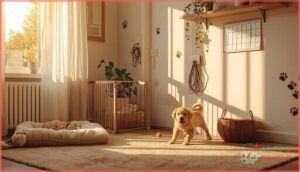
Puppy-proofing isn’t a one-and-done deal—it’s an ongoing commitment that evolves as your little explorer grows and discovers new ways to get into mischief.
Building simple, consistent routines helps you stay ahead of potential dangers while giving your pup the structure they crave. Let’s walk through the daily habits and check-ins that’ll keep your furry friend safe from puppyhood through adolescence.
Daily Safety Checks and Hazard Inspections
Think of daily inspections as your morning coffee routine—non-negotiable and life-saving. You’ll want to scan floors for puppy hazards like coins or buttons within 60 seconds of entering each room.
Test gates to confirm they latch securely, check cords for chew marks, and verify trash bins stay locked. These safety protocols transform accident prevention from wishful thinking into household reality, creating a safe environment your pup can explore without landing in the ER.
Consistent Feeding and Exercise Schedules
Regular feeding times and exercise routines aren’t just nice-to-have—they’re essential for puppy nutrition and growth monitoring. A predictable schedule adjustments approach keeps your pup’s development on track while promoting dog health and managing stress and anxiety.
- Feed three meals daily at consistent 30 to 60 minute windows to regulate digestion.
- Schedule 5–10 minute play sessions multiple times throughout the day.
- Wait 60 minutes post-meal before vigorous exercise to prevent bloat.
This routine establishes a rhythm your puppy can count on.
Monitoring Health and Behavior for Early Signs of Trouble
Your puppy’s body language tells a story before symptoms get serious. Track energy levels, appetite, and sleep patterns daily—persistent vomiting beyond 12 hours, pale gums, or limping warrant immediate veterinary care and advice.
Watch for behavioral shifts like sudden withdrawal or compulsive licking; these pain signals often flag health checks needs. Catching developmental red flags early, from house-training delays to extreme fear responses, protects your pup’s wellbeing and ensures proper canine behavior development.
Adapting The Environment as Your Puppy Grows
As your little explorer hits each growth phase, you’ll need to rethink your setup.
Environmental adjustments aren’t one-and-done—swap those baby gates for taller versions when puppy development gives them hops, raise storage as reach expands, and upgrade flooring in high-traffic zones.
Space optimization means creating adaptive safety measures that scale with your growing pup, protecting joints and curiosity alike.
Frequently Asked Questions (FAQs)
What household items are unexpectedly toxic to puppies?
Beyond the obvious culprits, seemingly innocent items like hand sanitizers, sugar-free gum with xylitol, cocoa mulch, and even acetaminophen lurking in bathroom cabinets pose serious poisoning risks—household hazards hiding in plain sight.
How do I puppy-proof a multi-story home?
Install baby gates at every stairwell for multi-level safety, and use cord protection on each floor. Create designated puppy zones with secure storage.
Consistent gate installation and floor planning reduce household hazards across stories.
Can puppies safely interact with other pets initially?
Yes, but hold your horses—introductions need careful choreography. Start with neutral ground, keep sessions brief, and supervise closely.
Watch for stress signals, reward calm behavior, and never rush the process of building household dynamics.
What emergency supplies should I keep on hand?
Keep first aid kits with gauze, antiseptic, and tweezers handy.
Stock emergency food, pet medications, and your pup’s health records in waterproof containers.
Don’t forget a sturdy leash, flashlight, and portable crate for disaster plans.
How do I handle puppy teething destruction safely?
Redirect puppy biting with calm cues and offer approved Teething Toys. Use positive reinforcement for chew safety, inspect toys daily, and gate off rooms—creating a safe environment prevents destruction while supporting healthy puppy development.
Conclusion
What’s the real cost of skipping puppy-proofing? One emergency vet visit will answer that question—usually in the form of a four-digit bill and a whole lot of stress.
Creating safe environments for puppies isn’t about wrapping your home in bubble wrap; it’s about staying one step ahead of that relentlessly curious nose.
Check your space today, adjust as they grow, and you’ll spend less time worrying and more time enjoying those wonderfully chaotic puppy months.