
This site is supported by our readers. We may earn a commission, at no cost to you, if you purchase through links.
A dog lunges toward a squirrel, and in that split second, the gear chosen determines whether you face a minor tug or a potential trip to the vet. The difference between collar and vest for dogs goes far beyond where you clip the leash—it affects your dog’s throat health, your ability to manage pulling, and even whether your escape artist stays safely by your side.
Collars wrap around the neck, concentrating every pull into a small area that houses the trachea, while vests distribute force across the chest and shoulders, protecting delicate structures from repeated strain. Breed size, temperament, and existing health conditions (like tracheal collapse or respiratory issues) shape which option keeps your dog comfortable and secure.
Understanding how each design performs in real-world walks helps you match the right gear to your dog’s specific needs.
Table Of Contents
- Key Takeaways
- Key Differences Between Collars and Harnesses
- Pros and Cons of Dog Collars
- Pros and Cons of Dog Harnesses
- Types of Dog Collars Explained
- Types of Dog Harnesses Explained
- Choosing for Puppies Vs. Adult Dogs
- Factors to Consider When Choosing
- Impact on Dog Health and Safety
- Performance, Price, and Durability Comparison
- When to Use Both Collar and Harness
- Frequently Asked Questions (FAQs)
- What is better for a dog, a harness or collar?
- Does a dog harness count as a collar?
- What is the best collar or harness for a dog that pulls?
- Can dogs wear collars and harnesses overnight safely?
- How often should I replace my dogs collar?
- Are retractable leashes better with collars or harnesses?
- Which option works best for dogs with arthritis?
- Conclusion
Key Takeaways
- Harnesses distribute leash pressure across your dog’s chest and shoulders instead of concentrating force on the trachea like collars do, making them safer for pullers, small breeds, and dogs with respiratory issues or tracheal collapse.
- Front-clip harnesses redirect pulling force sideways to discourage lunging behavior during training, while back-clip designs allow natural movement for calm dogs and dual-clip options let you switch attachment points based on your dog’s behavior.
- Collars work well for well-trained, non-pulling dogs and provide the most secure attachment point for ID tags, but they create neck strain and airway compression risks when dogs pull hard or have flat-faced breed anatomy.
- You don’t have to choose just one—many owners use both a collar for carrying identification tags throughout the day and a harness for actual walks to balance safety, control, and practical ID accessibility.
Key Differences Between Collars and Harnesses
When you’re standing in the pet store aisle deciding between a collar and leash, the choice might seem simple at first glance, but these two tools work quite differently on your dog’s body.
Getting the right fit is crucial, so make sure you know how to measure your dog for a harness before making your purchase.
Understanding the core differences in how they’re built, what they’re made of, and how they keep your dog safe will help you make the right call for your specific situation. Let’s break down the key distinctions you need to know before making your decision.
Physical Structure and Fit

The architecture of dog collars and harnesses differs dramatically in how they connect with your dog’s body. A dog collar wraps a single loop around the neck, while a harness distributes contact across the chest and shoulders, reducing neck strain for comfortable walking.
Key structural differences include:
- Collar widths range from 1 inch (small breeds) to 2.5 inches (large dogs)
- Harnesses feature adjustable chest support straps that sit behind the front legs
- Proper fit allows two finger widths between your dog’s neck and collar
- Harness designs position attachment rings on the back, chest, or both locations
- Fit adjustments prevent restricted shoulder movement and guarantee strap comfort throughout walks
Harness options usually require more precise sizing than a standard dog collar due to multiple contact points.
Material and Style

Material choices shape both function and appearance when comparing dog collar and vest options. Nylon and polyester fabrics offer water resistance and quick drying for active dogs, while leather care requires regular conditioning to prevent cracking.
Reflective materials improve visibility during evening walks, and synthetic alternatives like biothane provide ripple-free surfaces for dogs with skin sensitivities. Aesthetic designs range from solid colors to embroidered patterns that match your personal style.
Adjustability and Safety
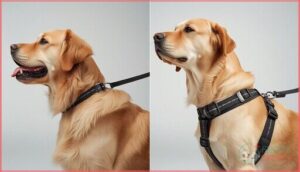
Beyond appearance, safety depends on how securely each option adjusts to your dog’s frame. Proper adjustability means you can slide two fingers between the strap and your dog’s body, balancing comfort with control while minimizing neck strain and throat problems during leash training.
- Adjustable fittings at multiple points let harnesses conform to chest support needs better than single-buckle collars
- Trachea protection improves when front-clip designs shift tension away from delicate neck structures
- Leash control becomes more predictable with dual-clip harnesses that redirect pulling force across the shoulders
Pros and Cons of Dog Collars

Dog collars offer real benefits for everyday pet care, but they’re not the right fit for every dog or situation. Understanding both the advantages and drawbacks will help you make a safer choice for your companion.
Let’s examine what collars do well and where they fall short.
Everyday Use and Convenience
If you’re looking for quick leash attachment and Daily Wear Comfort, a dog collar wins on Pet Owner Convenience. Flat collars slip on in seconds, while a dog vest requires threading legs through straps—fine once or twice, but tedious during rushed morning walks.
Quick Release Systems on collars simplify removal after dog walking, though vests excel at distributing pressure when your dog pulls during leash walking.
Identification Tag Attachment
Collars provide the most reliable fastening systems for identification tags, with attachment clips sized to standard tag holes (0.2 to 0.3 inches in diameter). Most tag clip designs use stainless steel or high-strength plastics for durability, while locking mechanisms prevent accidental detachment during active play.
Key advantages include:
- Side-mounted clips keep ID tags upright and visible when your dog stands or walks
- Anti-slip ribs reduce shifting, maintaining tag legibility in crowded spaces
- Multi-tag compatibility lets you add vaccination or municipality tags without crowding
- Temperature-resistant clip materials maintain integrity across climates
- Spring-action tension preserves attachment security over years of use
Dog harnesses lack dedicated tag attachment points, forcing you to clip ID tags to awkward locations where fur can obscure critical contact information. Advanced features are now seen in that improve ease of removal and durability for pet identification tags.
Risks for Pullers and Small Breeds
Persistent pulling transforms leash walks into hazardous moments for toy and small breeds, where concentrated neck strain from collars can trigger tracheal pressure and throat problems. Even moderate tugging raises injury risk in dogs under 15 pounds, making traditional canine equipment dangerous for pullers.
Consider this comparison:
| Risk Factor | Collar Impact | Dog Vest Alternative |
|---|---|---|
| Tracheal Pressure | High concentration on windpipe | Distributed across chest |
| Neck Injury Risk | Cervical strain, nerve irritation | Eliminates neck contact |
| Small Breed Safety | Escape potential, whiplash injuries | Secure torso fit |
| Pulling Hazards | Coughing, respiratory distress | Gentle redirection leverage |
| Leash Strain Effects | Muscle soreness, gait changes | Shoulder protection |
Martingale collars reduce slipping but don’t eliminate tracheal compression during pulls, leaving small dogs vulnerable to chronic airway irritation and soft tissue damage. Chronic discomfort and injury risks are outlined in these.
Pros and Cons of Dog Harnesses

Harnesses offer distinct advantages that make them the go-to choice for many dog owners, particularly in terms of safety and training challenges. However, they’re not without their drawbacks, and understanding both sides helps you make the right decision for your dog’s specific needs.
Let’s break down what harnesses bring to the table and where they might fall short.
Pressure Distribution and Safety
When your dog pulls on a dog collar, pressure concentrates around the trachea and throat, raising the risk of neck injury and breathing difficulty.
A well-designed dog vest spreads force across the chest and shoulders, protecting trachea safety by eliminating direct neck compression. Front-clip styles redirect tension to the chest, lowering pressure points, while padded materials cushion contact zones for ideal neck health and dog safety.
A well-designed dog harness spreads force across the chest and shoulders, protecting the trachea by eliminating direct neck compression
Control and Training Benefits
Front-clip vests turn your dog toward you when they pull, making leash training and behavior modification simpler than neck-based correction.
Dual-clip designs let you switch attachment points as dog obedience improves, while no-pull vest styles deliver consistent tension feedback without compressing airways.
You’ll maintain better pulling control during extended dog training sessions because chest pressure prevents fatigue, keeping your companion focused on walking techniques.
Suitability for Different Dog Sizes
Your dog’s breed and size shape every vest detail, from strap width to buckle strength, ensuring safe walks without rubbing or slipping.
- Small Breed Needs: Lightweight vests prevent neck strain during quick movements
- Medium Dog Fits: Adjustable straps balance comfort with secure tension control
- Large Dog Harnesses: Wider chest panels distribute force across strong shoulders
- Extra Large Comfort: Padded seams reduce pressure points on long walks
Puppy Sizing Tips include measuring chest girth weekly as your companion grows.
Types of Dog Collars Explained
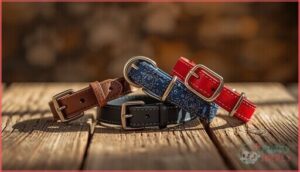
Choosing the right collar starts with understanding what’s actually out there. Different collar designs serve specific purposes, from everyday wear to preventing escape artists from slipping free.
Let’s look at the three main collar types you’ll encounter when shopping for your dog.
Flat Collars
You’ll find flat collars sitting snug around most dogs’ necks because they’re the go-to option for everyday wear. These simple bands (made from nylon or leather) fasten with a buckle or quick release clasp and include a metal D ring for leash attachment and ID tags. Proper fit means you can slip two fingers between the collar and your dog’s neck.
| Feature | Nylon Flat Collars | Leather Flat Collars |
|---|---|---|
| Durability | Water resistant, easy to clean | Lasts longer with conditioning |
| Weight | Lightweight for small breeds | Slightly heavier, classic look |
| Maintenance | Wipe clean after walks | Requires drying and care after rain |
| Visibility | Often includes reflective stitching | Limited reflective options |
Martingale Collars
When your dog can slip out of flat collars like a magician, martingale collars offer escape prevention through a two-loop design. The control loop tightens gently when tension occurs (unlike harsh chokers), making them ideal training aids for sighthound breeds like Greyhounds whose narrow heads escape standard dog collars.
You’ll find these collar materials include durable nylon and leather, bridging the gap between flat collars and restrictive alternatives in the collar vs vest debate.
Rolled Collars
While martingale collars solve escape issues, rolled designs protect long-haired and wrinkle-prone dogs from fur breakage and skin irritation. These cylindrical collar materials (usually leather or nylon rope) eliminate the flat edge that catches delicate coats, offering exceptional pet comfort for breeds like Poodles, Spaniels, and Bulldogs with sensitive skin folds.
Key rolled collar advantages include:
- Prevents matting and hair loss around the neck area
- Reduces friction-related hot spots and dermatitis
- Distributes pressure evenly for collar safety without chafing
Types of Dog Harnesses Explained
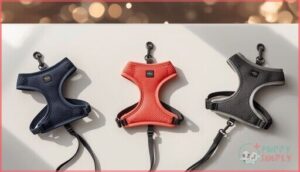
Dog vests come in several distinct styles, each designed to address specific walking challenges and training goals.
The attachment point location (back, front, or dual) determines how the vest influences your dog’s movement and your control during walks. Understanding these three main categories will help you select the vest that best matches your dog’s behavior and your handling preferences.
Back-Clip Harnesses
Among the most popular dog vests, the backclip vest attaches your leash to a D ring centered between your dog’s shoulders. This design redirects pulling forces away from the neck, distributing pressure across the chest and torso for better walking comfort and pet safety. Unlike dog collars, back clip hardware reduces tracheal strain while allowing natural movement.
| Feature | Description |
|---|---|
| Clip Hardware | Stainless steel D ring positioned between shoulder blades for balanced tension |
| Vest Materials | Reinforced nylon or polyester webbing with reflective stitching for visibility |
| Adjustability | Multiple strap adjustments at neck, chest, and belly to accommodate growth |
| Safety Design | Padded panels distribute pressure evenly, preventing chafing during long walks |
| Maintenance | Machine washable components or wipeable fabrics simplify cleaning after outdoor use |
Front-Clip Harnesses
If your dog pulls ahead, a front-clip vest moves the leash attachment to your dog’s chest, giving you better leash control by redirecting pressure sideways instead of forward. This design protects your dog’s throat while discouraging lunging, making it one of the most effective training aids when combined with consistent walks. The chest protection also reduces neck strain during daily use.
- Nylon webbing base provides lightweight strength and abrasion resistance
- Padded chest panels reduce chafing on sensitive skin during extended wear
- Adjustable neck and girth straps accommodate different ribcage shapes
- Reflective trim improves visibility during early morning or evening walks
- Quick release buckles enable easy on and off without compromising security
Dual-Clip and No-Pull Harnesses
When your dog needs flexible leash control, a dual-clip vest gives you both front-clip and back-clip vest options in one design, letting you switch attachment points based on pulling prevention needs or casual walking. No-pull vest models add reinforced chest plates to redirect forward momentum, while vest materials like padded nylon reduce rubbing. Many dog vests include reflective stitching and adjustable straps for secure, comfortable fit.
| Feature | Front Clip | Back Clip |
|---|---|---|
| Leash Attachments | Chest control for training | Shoulder freedom for casual walks |
| Pulling Prevention | Redirects forward motion | Minimal resistance |
| Clip Designs | Reinforced hardware | Standard ring attachment |
| Best For | Strong pullers, training sessions | Well-trained dogs, everyday use |
Choosing for Puppies Vs. Adult Dogs

Your dog’s age plays a big role in whether you should reach for a collar or vest first. Puppies need gentle gear that won’t harm their developing bodies, while adult dogs require equipment that matches their strength and training level.
Here’s how to choose the right option for each life stage.
Puppy Training and Safety
Starting your puppy’s leash training requires a properly fitting collar or vest to avoid injury during those early sessions. Vests distribute pressure safely across the chest and shoulders, which protects delicate airways while you teach basic commands like sit and recall. For puppy socialization in new environments, a no-pull vest offers gentle control without restricting movement or causing discomfort.
| Equipment Type | Primary Benefit | Best Use Case |
|---|---|---|
| Flat Collar | Lightweight, ID tag attachment | Supervised indoor training |
| Back-Clip Vest | Even pressure distribution | Calm puppies learning basics |
| Front-Clip Vest | Discourages pulling behavior | Active pups needing redirection |
Adult Dog Walking and Control
For fully grown dogs, selecting the right leash setup depends on behavior patterns and your dog’s physical characteristics. Calm, well-trained companions respond well to flat dog collars with standard leash attachments, while strong pullers benefit from nopull vest designs that redirect momentum sideways.
Front-clip dog vests improve control methods during walking techniques by steering the chest rather than the neck, which protects airways and enhances canine communication through gentle pressure cues.
| Walking Equipment | Control Level | Best For |
|---|---|---|
| Flat Collar | Moderate | Well-trained, non-pullers |
| Front-Clip Vest | High | Dogs learning leash training |
| Dual-Clip Vest | Variable | Mixed dog behavior scenarios |
Factors to Consider When Choosing

Picking the right collar or leash isn’t a one-size-fits-all decision, and your dog’s unique characteristics should guide your choice. What works perfectly for a calm Golden Retriever might be completely wrong for a feisty Pug or an anxious rescue dog.
Let’s walk through the three main factors that’ll help you make the safest choice for your specific companion.
Dog’s Breed and Size
Your dog’s breed and size directly influence whether a collar or vest will work best. Small breeds under 25 pounds often need vests to protect delicate tracheas, while giant breeds exceeding 100 pounds require front-clip vests for control.
Medium and large dogs weighing 25 to 100 pounds can wear either, depending on body type and pulling behavior. Consider breed characteristics and weight limits when selecting equipment.
Temperament and Training Level
Your dog’s temperament and training level shape which option suits them best. High-energy dogs benefit from front-clip harnesses that redirect pulling, while calm, well-trained dogs can wear flat collars during everyday walks.
Puppy training and early socialization work well with harnesses that distribute pressure evenly, reducing stress during canine behavior shaping. Training methods should match your dog’s responsiveness—some dogs need immediate rewards, others require patience and gradual cue building for training versatility.
Health Conditions
Health conditions require thoughtful gear choices to protect your dog’s well-being. Respiratory issues and tracheal collapse demand harnesses that eliminate neck strain, while skin irritations call for soft, padded materials that won’t chafe sensitive areas.
- Brachycephalic breeds (like Bulldogs and Pugs) need harnesses to prevent throat problems and support compromised airways
- Dogs with spinal problems or neck injuries benefit from chest-distributed pressure instead of collar-based force
- Canine health issues including chronic respiratory health concerns make harnesses the safer, veterinarian-recommended option
Impact on Dog Health and Safety

Your choice between a collar and restraint directly affects your dog’s physical wellbeing, especially in relation to vulnerable areas like the neck, throat, and respiratory system.
Dogs that pull on leash face different risks depending on which option you use, and certain breeds or health conditions make one choice substantially safer than the other.
Understanding these health implications will help you protect your dog from preventable injuries while ensuring comfortable, safe walks.
Tracheal and Neck Protection
Pressure from a collar can lead to neck strain, throat problems, or even airway injury, especially for dogs prone to respiratory issues.
Tracheal Guards and Neck Supports help shield the windpipe, distributing force safely. Harness Comfort offers exceptional airway protection, avoiding direct pressure on the throat. For collar safety, choose designs with protective panels or soft neck cushions to minimize risk.
Respiratory Health
Beyond protecting the neck, your dog’s lung function and breathing issues demand attention. Dogs with flat faces or airway protection concerns can experience restricted air exchange when collars compress the trachea, so dog harnesses offer better respiratory care.
Tracheal safety depends on distributing pressure across the chest rather than the throat, ensuring canine health and wellness during walks and promoting better dog health and safety overall.
Injury Prevention
Vests protect against neck injury and spinal damage when your dog pulls suddenly, while collars concentrate force directly on vulnerable throat structures.
Proper pressure distribution across the chest (especially with a no-pull vest) prevents tracheal care emergencies and reduces escape prevention failures.
Leash safety improves through secure fitting that won’t slip during unexpected lunges, giving you pulling prevention without risking your companion’s spine or airways.
Performance, Price, and Durability Comparison

When you’re choosing between a collar and a vest, price isn’t the only thing that matters—you also need to think about how long each option will last and how well it performs over time.
Collars are generally less expensive and easier to maintain, but vests often provide better value when you consider their durability and the comfort they offer your dog during walks. Here’s what you need to know about cost, upkeep, and overall performance to make the smartest choice for your budget and your dog’s needs.
Cost Differences
Your wallet feels the difference when you compare dog vests and collars across material costs and budget options. Basic nylon collars run $3 to $15, while padded versions cost $8 to $25. Standard vests start at $10 to $40, with dual-clip models reaching $70. Premium leather pet accessories add $20 to $80 to your expense, though adjustable features and reinforced hardware justify the price comparison for better control and safety.
| Product Type | Basic Price Range | Premium Price Range |
|---|---|---|
| Flat Collar | $3 – $15 | $15 – $30 |
| Martingale Collar | $6 – $25 | $25 – $60 |
| Back-Clip Vest | $10 – $40 | $40 – $70 |
| Dual-Clip Vest | $25 – $50 | $50 – $70 |
Durability and Maintenance
Material durability sets collars and vests apart when you’re watching your investment over time. Nylon webbing on a quality dog vest endures over 1,000 load cycles without losing strength, while stainless steel buckles resist rust for at least five years with routine cleaning. Material testing confirms that reinforced stitching withstands 5,000+ tug cycles, though wear resistance varies between basic collars (requiring replacement yearly) and premium options (lasting two to three years).
Most fabrics offer ease of cleaning through machine washing on gentle cycles, while metal components need drying after rain exposure to prevent corrosion—enzyme cleaners tackle odor sources effectively. Repair options include modular designs that let you swap worn buckles or frayed webbing rather than buying new gear, and many manufacturers cover defects for one to two years.
| Feature | Collars | Vests |
|---|---|---|
| Machine Washable | Limited (leather needs conditioning) | Yes (most nylon/biothane models) |
| Stitching Durability | Moderate (3,000 cycles) | High (5,000+ cycles) |
| Metal Hardware Lifespan | 3-5 years with care | 5+ years (stainless steel) |
| Repair Options | Replace entire unit | Modular parts available |
Design and Comfort
Fabric Choices determine how your dog walking equipment performs during daily use. Collar materials include nylon, leather, and metal buckles that provide everyday durability and soft edges to prevent skin irritation. Vest designs use padded chest panels to distribute weight evenly, reducing neck pressure.
Adjustable straps on both collars and vests allow custom fitting for different shapes and growth stages, while breathability matters most during extended walks—mesh or woven nylon prevents heat buildup better than solid materials. Frontclip vest designs influence pressure points during pulling.
| Feature | Collars | Vests |
|---|---|---|
| Primary Materials | Nylon, leather, metal buckles | Padded nylon, mesh panels |
| Cushioning Options | Minimal (soft edges only) | Chest and back padding |
| Breathability Matters | Moderate (narrow contact area) | High (ventilated mesh) |
| Adjustable Straps | 1-2 adjustment points | 3-5 adjustment points |
| Sizing Considerations | Neck circumference only | Chest girth and body length |
When to Use Both Collar and Harness

You don’t have to choose between a collar and leash—many dog owners find that using both offers the best of both worlds.
A collar can stay on your dog throughout the day for identification purposes, while you reach for the leash when it’s time for walks or training sessions.
Understanding when to use each piece of equipment (or when to combine them) helps you keep your dog safe, comfortable, and under control in different situations.
Walking and Identification Needs
You might wonder why many experienced handlers pair a collar with dog vests for daily walks. The collar provides a secure anchor for identification tags and ensures your contact details remain visible, while the vest offers better leash control and safe handling during movement.
For night visibility, consider reflective materials on both pieces. This dual approach aids pet tracking needs without compromising comfort or ID tags accessibility.
Training and Safety Scenarios
During leash training sessions, combining a collar with a no-pull vest creates distinct advantages for safety protocols and injury prevention. The collar holds ID tags while the vest protects your dog’s canine body from strain during emergency stops or sudden movements.
Consider pairing both when you’re:
- Teaching loose-leash walking to minimize tracheal pressure during pulls
- Practicing recall drills in unfamiliar environments with escape risks
- Managing reactive behaviors where quick control prevents injury
Frequently Asked Questions (FAQs)
What is better for a dog, a harness or collar?
Choosing between a vest or collar depends on your dog’s behavior, breed, and health.
Vests help halt heavy pulling and protect airways, while collars offer convenience for calm, controlled canines during daily walks.
Does a dog harness count as a collar?
No, a dog vest doesn’t count as a collar.
Vests distribute pressure across the chest and shoulders, while collars fit around the neck for leash control and carrying ID tags, serving distinct safety purposes.
What is the best collar or harness for a dog that pulls?
If your pup thinks walks are a tug-of-war competition, a front-clip vest or martingale collar works best.
Front-clip dog vests redirect pulling motion sideways, while martingales tighten gently without choking, improving leash training and dog comfort.
Can dogs wear collars and harnesses overnight safely?
Most veterinarians recommend removing collars and harnesses overnight to prevent skin irritation, hair loss, or snagging hazards.
If your dog must wear one, make sure of proper fit with two-finger clearance for nighttime safety tips.
How often should I replace my dogs collar?
You should inspect your dog collar monthly for fraying, rust, or weak stitching, replacing nylon collars every six to twelve months and leather options every twelve to twenty-four months to maintain identification tags securely.
Are retractable leashes better with collars or harnesses?
Harnesses generally offer safer leash use because they distribute tension across the chest and shoulders, reducing tracheal compression risks.
Front-clip designs improve control during sudden pulls, protecting your dog’s neck and airways more effectively than collars.
Which option works best for dogs with arthritis?
When joint pain turns every walk into a challenge, a well-fitted vest offers arthritis support by distributing pressure across the chest and shoulders, sparing inflamed neck joints while providing gentle control for dogs with mobility issues.
Conclusion
Your dog’s next walk hinges on a single decision that ripples through their comfort, safety, and your peace of mind. The difference between collar and dog vest for dogs isn’t a trivial preference—it’s a health strategy shaped by breed vulnerabilities, pulling habits, and respiratory needs.
Match the gear to your dog’s body and behavior, and you’ll transform daily walks from a strain-filled battle into confident, controlled adventures that protect delicate structures while keeping both ends of the leash secure.