
This site is supported by our readers. We may earn a commission, at no cost to you, if you purchase through links.
That jumbo bag of kibble tumbling out of your pantry every morning isn’t just annoying—it’s costing you money in wasted food and possibly making your pup sick. Stale dog food loses nutritional value fast, and poor storage invites pests, mold, and mystery smells that take over your kitchen.
The good news? You don’t need a fancy pantry system or Pinterest-perfect setup to keep your dog’s food fresh and your space tidy. With the right containers, a smart storage spot, and a few simple organizing tricks, you can build a feeding station that actually works for your daily routine. Getting your dog food storage area under control takes less time than you think, and your furry friend will thank you with every crunchy, fresh bite.
Table Of Contents
Key Takeaways
- Airtight containers made from glass containers, stainless steel, or BPA-free plastic keep kibble fresh for months by blocking moisture and preventing pests, with material choice affecting durability and chemical safety.
- Store dog food in a cool, dry spot between 50-70°F with humidity below 50%, keeping containers at least three feet from heat sources and direct sunlight to preserve nutrients and prevent spoilage.
- Create a dedicated feeding station that groups food containers, bowls, scoops, and accessories in one zone for streamlined mealtimes, using labels with dates to track freshness and rotate stock every 2-4 weeks.
- Clean containers monthly with hot soapy water and dry completely before refilling, while checking for signs of spoilage like rancid odors, mold, or unusual texture changes that signal it’s time to toss the food.
Choosing The Right Dog Food Storage Containers
The right container makes all the difference between fresh kibble and stale disappointment.
If you’re wondering whether dogs can safely eat kiwi skin along with their kibble, proper storage ensures both stay fresh and nutritious.
You’ll want to weigh four key factors before you commit to any storage system. Let’s break down what actually matters when you’re choosing containers that’ll keep your dog’s food safe and your space organized.
Before stocking up, it’s worth checking whether certain foods pose hidden risks to your dog so you can store treats and meals with confidence.
Airtight Vs. Non-Airtight Options
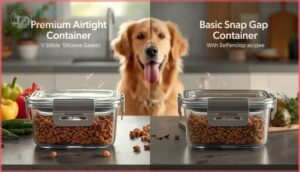
Airtight containers seal completely with silicone gaskets or locking clasps, blocking moisture and airflow to preserve freshness for months. Non-airtight options use simple snap tops that allow air exchange, speeding up staling but working fine for short-term pet food storage.
For dog food storage ideas that reduce pantry odors and keep pests away, airtight designs offer advanced seal technology and freshness preservation. Storing pet food in containers with an airtight seal prevents spoilage and helps maintain quality over time.
Proper placement also plays a key role, as preventing bugs in dog food storage requires controlling temperature and humidity levels where containers are kept.
Material Choices (Glass, Stainless Steel, BPA-Free Plastic)
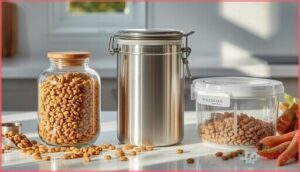
Once you’ve locked down the seal, the material itself matters just as much. Glass benefits include zero chemical leaching and complete odor resistance—perfect for eco-friendly options. Stainless steel brings serious material durability that survives daily scoops without dents. BPA-free plastic keeps pet food storage lightweight and budget-friendly, though it may absorb smells over time. For more details on safe materials, see this breakdown of chemical leaching and food safety.
Why these food storage solutions protect your pup:
- Glass containers never taint kibble with plastic chemicals
- Stainless steel survives years of heavy handling
- BPA free designs keep toxins away from every meal
Size and Capacity Considerations
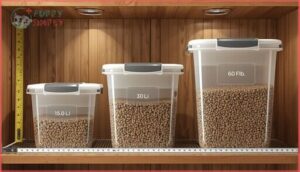
Right material in hand, now match container sizing to your actual dog food storage needs. A 20-pound bag demands at least 30 liters for easy scooping—leaving room matters.
Measure your kitchen storage or pantry shelf before buying so you’re not stuck shoving oversized bins under counters.
Multi-dog homes benefit from bulk storage of 40 to 60 liters, cutting refill trips in half while maximizing space optimization.
Stackable and Space-Saving Designs
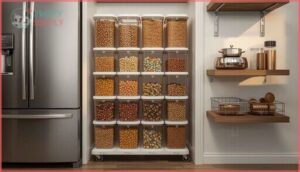
Vertical storage turns narrow gaps into dog food storage gold. Pick stackable containers that fit between your fridge and wall—two bins high keeps them stable and reachable.
- Modular systems pair large and small bins so kibble lives alongside treats in one compact tower.
- Rolling containers with casters slide under shelves, freeing floor space.
- Wall mounts near feeding stations keep accessories grouped above bowls.
Planning The Perfect Dog Food Storage Location
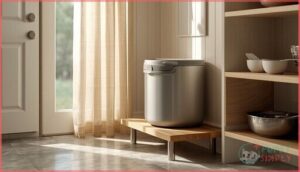
You can have the best containers in the world, but if you store them in the wrong spot, your dog’s food won’t stay fresh.
Keep containers in a cool, dry place away from sunlight, and if you’re exploring safe protein options for your dog, proper storage becomes even more important.
Location matters just as much as the container itself in protecting kibble from heat, moisture, and pests.
Let’s look at the key factors that’ll help you pick the perfect storage spot in your home.
Ideal Room Temperature and Humidity
You want your dog food storage area to stay between 50 and 70 degrees Fahrenheit with humidity levels below 50 percent.
Temperature control and humidity levels directly impact food freshness, so aim for climate monitoring in your storage spot.
Good airflow management prevents moisture pockets that invite mold. Use a digital thermometer and hygrometer to track storage conditions and keep your pup’s food safe.
Avoiding Sunlight and Heat Sources
Keep dog food storage at least three feet from ovens, stoves, and other heat sources that can warm the container surface.
Direct sunlight speeds fat oxidation and nutrient loss, so choose opaque containers or tuck them behind cabinet doors. These heat protection methods and sunlight filtering habits preserve freshness far longer than exposed storage solutions, giving you real climate control without expensive pet food storage upgrades.
Best Spots in Kitchens and Pantries
Lower pantry shelves give you the best spot for large dog food bins because you can scoop without heavy lifting. Adjacent to your feeding station cuts spills when you carry food just a few steps.
- Deep base cabinets fit rolling bins that slide in and out smoothly
- Closed cabinet doors reduce odors and keep curious noses away from kibble
- Pantry door organizers hold treats vertically without wasting shelf depth
- Dedicated pet zones separate dog food storage from human groceries for better kitchen organization
Keeping Food Away From Pests
Pests sniff out kibble faster than you’d think. Airtight containers with tight rubber gaskets block scent trails that lure ants and beetles, while chew-resistant metal bins stop mice from gnawing through in hours.
Sweep spills daily and wipe shelves to remove crumbs that attract roaches. Seal baseboards and add door sweeps to cut off entry points before rodents discover your dog food storage.
Step-by-Step Guide to Organizing Dog Food Storage
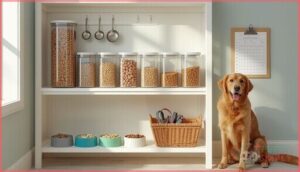
Getting your dog food storage under control doesn’t have to be complicated. You just need a clear plan that separates different types of food, keeps everything labeled, and puts your feeding supplies where you actually use them.
Let’s break down the exact steps to transform your messy pet food situation into a system that works.
Sorting Dry, Wet, and Treats Separately
Grouping food types keeps your dog food storage clean and safe. Use at least three separate containers for dry kibble, wet food, and treats to avoid cross-contact and maintain freshness.
This simple separation tip helps you track what needs refrigeration versus what stays at room temperature. Color-coded bins make it easy to grab the right container options during meal prep.
Labeling and Dating Containers
A clear label design transforms your pet food storage from guesswork to foolproof. Write the food name, opened date, and best-by date on each container marking using waterproof labels or freezer tape.
This simple expiration tracking system prevents waste and keeps your dog safe. Add storage signs like “use first” for date coding older kibble, and you’ll master rotation without thinking twice.
Grouping Scoops, Bowls, and Accessories
Once your containers are labeled, gather all your pet utensils in one spot for real scoop organization. Hang hooks inside a cabinet door to keep measuring cups and scoops within easy reach.
Store dog bowls on a dedicated low shelf or in a basket near the food. This pet kitchen organization trick streamlines feeding time and eliminates the daily hunt for accessories.
Creating a Feeding Station Zone
Now bring it all together with a dedicated feeding zone right next to your dog food storage ideas. Position your pet station in a quiet corner where bowls, mats, and cleanup supplies live within arm’s reach.
Custom feeding station designs work best on hard flooring with waterproof mats underneath for spill control. Keep water and food bowls side by side in your dog corner to support pet hygiene and make mealtimes smoother for everyone.
Creative and DIY Dog Food Storage Solutions
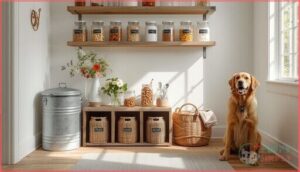
You don’t need to spend a fortune on fancy pet storage systems when you probably have great options sitting around your house already. With a little creativity and some basic DIY skills, you can build storage solutions that work perfectly for your space and actually look good too.
Let’s explore some clever ways to organize your dog’s food without breaking the bank or sacrificing your home’s style.
Repurposing Household Items (Jars, Tins, Baskets)
You don’t need fancy containers when your kitchen already holds perfect storage solutions. Cleaned glass jars from pasta sauce hold 4 to 6 cups of kibble and let you see levels at a glance.
These household storage hacks cost nothing and work beautifully, as items like tea tins with tight lids keep treats crisp, while sturdy baskets corral canned food on pantry shelves.
Custom-Built Feeding Stations
Building your own dog food station puts storage and feeding in one smart zone. Modular designs let you adjust bowl heights for perfect feeding ergonomics while a base cabinet holds kibble bins below.
Station materials like sealed wood or stainless steel stand up to daily use. These custom feeding stations optimize space optimization and boost pet accessibility without grabbing more floor space than a small nightstand.
Wall-Mounted and Under-Bed Storage Ideas
Wall-mounted dispensers and under-bed storage turn tight spaces into your new secret weapon. Wall mounts hold 10 to 40 pounds of kibble up high where curious paws can’t reach. Under-bed bins with wheels slide out like drawers and stash 20 to 50 pounds of food in that forgotten zone below your bed.
- Wall-mounted dispensers free up floor space and use gravity-fed chutes for quick portioning
- Under-bed rolling containers keep bulk kibble out of sight in climate-controlled rooms
- Stackable storage bins on wall rails separate treats and different diets vertically
- Hidden compartments in drawer-style under-bed frames organize scoops and supplements
- Space savers like pegboards or magnetic hooks above bins hold measuring cups and collapsible bowls
Decorative Storage That Matches Your Home
Your dog food storage can blend right into your farmhouse kitchen or modern living room. Pick decorative containers and furniture style cabinets that echo your existing color schemes and room themes. A white shaker-style pet cabinet sits next to your pantry like it belongs there. Galvanized bins with custom label designs work in rustic spaces while matte black canisters complement contemporary kitchens.
| Style | Decorative Bins & Storage Ideas |
|---|---|
| Farmhouse | Distressed white cabinets, galvanized metal bins with vintage lettering |
| Modern Minimalist | Clean-lined containers in solid gray or charcoal, hidden hinges |
| Coastal | White or light blue canisters with simple script fonts |
Match hardware finishes like brushed nickel to your drawer pulls so stylish storage ideas feel intentional. Home decor for pet owners now includes multipurpose pieces that double as sideboards while hiding 100 pounds of kibble. These pet food storage furniture options keep feeding zones tidy without sacrificing your design vision.
Maintenance and Safety Tips for Dog Food Storage
Getting your dog food storage set up is just the beginning.
The real magic happens when you keep everything clean, fresh, and safe over time.
Let’s walk through the key maintenance habits that protect your pup’s food and keep your storage area working smoothly.
Cleaning and Sanitizing Containers Regularly
Your dog food container isn’t self-cleaning—grime and rancid oils build up fast. Wash dry kibble bins monthly with hot soapy water, then rinse completely so detergent doesn’t taint food. For wet storage, clean after every use.
- Use one tablespoon bleach per gallon of water as a sanitizing method, letting it sit one minute
- Air-dry containers fully before refilling to stop mold
- Reserve dedicated sponges for pet food storage and organization
Monitoring Expiration Dates
Your pantry isn’t a time capsule—expired dog food loses nutrients and can spoil. Set up a storage labeling system by writing the purchase date on every bag with a permanent marker. Check date codes monthly and rotate stock so older items move forward.
| Food Type | Unopened Shelf Life | Opened Lifespan | Safety Tip |
|---|---|---|---|
| Dry Kibble | 12-18 months | 4-6 weeks | Mark opening date on bag |
| Canned Food | 2-5 years | 3-7 days (refrigerated) | Discard bulging or dented cans |
| Freeze-Dried | 12-24 months | Few weeks | Store in original bag inside bin |
| Treats | Varies by type | Check packaging | Watch for rancid smell or mold |
Track expiration dates alongside your food management routine. Place a “use next” bin near your feeding station zone for pet food storage that’s within thirty days of expiring. First-in-first-out rotation keeps food safety checks simple—newest bags go behind older ones every time you restock.
Portion Control Tools and Safe Handling
Get portion control right and you’ll avoid overfeeding while keeping your dog food storage tidy. Use measuring cups or food scales for exact portions—digital scales give gram-level precision that feeding guides recommend.
Keep portion scoops labeled and stored right in your airtight containers for quick access. Follow safety precautions by washing scoops between refills to prevent bacteria buildup in your pet food organization system.
Preventing Mold, Odors, and Contamination
Moisture is the enemy of fresh kibble—mold and odors follow fast when your dog food storage isn’t managed right. Keep contamination risk low and storage hygiene strong with these freshness tips.
- Wash airtight containers with hot soapy water and dry completely before refilling
- Store pet food storage bins in cool spots below 80 degrees
- Use desiccant packets for odor control and moisture absorption
- Check seals monthly for cracks that harbor mold
- Follow food storage and safety rules by rotating stock first-in, first-out
Frequently Asked Questions (FAQs)
What is the 80/20 rule for dog food?
You’ll hear the 80/20 rule tossed around in pet nutrition circles, but it actually means different things.
Some premium foods follow an 80% meat to 20% fruits-and-veggies diet composition for ideal nutrient balance in raw feeding.
How often should I rotate my dogs food stock?
You’ll want to rotate your dog food storage every 2 to 4 weeks for ideal food management.
This rotation schedule promotes digestive health while maintaining nutrient balance through food variety across different protein sources.
Can I freeze dry dog food for longer storage?
Freeze drying locks in nutrients like preserving memories in amber.
This process extends shelf life beyond standard kibble when you store rehydrated portions in airtight containers and follow proper refrigeration guidelines within 24 hours.
What are signs dog food has gone bad?
Check for rancid odors, visible mold, or unusual discoloration in your dog food.
Clumping kibble signals moisture intrusion.
Expiration signs and texture changes mean it’s time to toss that bag immediately.
Should different dog breeds have separate storage areas?
Separate storage zones by breed aren’t strictly necessary, but they work great for managing different dietary needs and portion sizes.
Label containers clearly to prevent mix-ups and maintain each dog’s food integrity.
How do I store homemade or raw dog food?
Store homemade dog food in airtight, BPA-free containers inside your refrigerator at 34–40°F.
Freeze portions for long-term freshness preservation and nutrient retention, then label each container with dates for safe handling.
Conclusion
Like a well-oiled machine, your dog food storage area should work quietly in the background while keeping everything fresh and accessible. You’ve got the containers, the location, and the system down—now stick with it.
A few minutes spent organizing how to organize dog food storage area saves you from scrambling during mealtime and protects your pup’s health. Your furry friend deserves fresh food every single day, and you deserve a storage setup that actually works.
- https://www.avma.org/resources-tools/pet-owners/petcare/safe-handling-pet-food-and-pet-treats
- https://www.earthbornholisticpetfood.com/blog/dog-cat-tips/tips-for-your-dog-food-storage-container/
- https://www.fda.gov/animal-veterinary/animal-health-literacy/proper-storage-pet-food-treats
- https://www.aosom.com/blog-how-to-organize-dog-stuff-effective-tips-for-indoor-outdoor-gear.html
- https://www.extraspace.com/blog/home-organization/creative-pet-storage-organization-ideas/