This site is supported by our readers. We may earn a commission, at no cost to you, if you purchase through links.
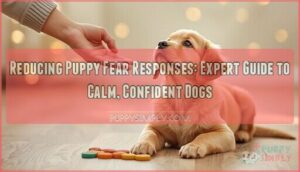
Your puppy freezes—ears pinned, whites of eyes showing—when the neighbor’s toddler reaches out. That split-second reaction? It’s not stubbornness or defiance. It’s an amygdala hijack: primal fear circuitry firing faster than conscious thought, bypassing logic entirely.
And here’s what most owners miss—these fear responses don’t fade with time alone. Left unaddressed, that fleeting moment of panic can calcify into chronic anxiety, fear aggression, or complete social shutdown by adolescence. The window for intervention is narrow: usually 12-16 weeks for critical socialization, though neural plasticity remains surprisingly strong through six months.
Reducing puppy fear responses isn’t about forcing exposure or “toughening up” your dog—it’s about systematic desensitization paired with counterconditioning protocols that literally rewire threat perception at the neurological level.
Table Of Contents
Key Takeaways
- Fear responses in puppies form through amygdala hijacks—primal reactions that bypass conscious thought—and without systematic desensitization paired with counterconditioning during the critical 12-16 week socialization window, fleeting panic calcifies into chronic anxiety or fear aggression by adolescence.
- Puppy fear builds from three converging forces: early socialization gaps during weeks 3-14, genetic predispositions in serotonin and dopamine pathways inherited from anxious parents, and traumatic experiences that brand high-definition fear memories into neural pathways that echo for months.
- Reducing fear demands precision exposure therapy—identify your puppy’s exact threshold through distance tolerance and duration limits, then pair barely-noticeable triggers with high-value rewards delivered within 1-2 seconds, tracking progress on a 0-10 scale and adjusting intensity only after three consecutive calm sessions.
- Fear aggression isn’t rage but panic dressed as protection, signaled by tail tucked tight, ears pinned flat, and rigid freezing before the snap—punishment escalates this defensive behavior through cortisol spikes, while positive reinforcement rewires the fearful brain by creating new emotional associations that replace threat with safety.
Why Puppies Develop Fear Responses
Fear doesn’t just happen—it builds from a perfect storm of missed opportunities, hardwired vulnerabilities, and experiences that teach your puppy the world isn’t safe. Understanding the root causes means you can intervene early, before fear becomes your dog’s default setting.
Recognizing common fear period training mistakes helps you avoid accidentally reinforcing anxious behavior during your puppy’s most sensitive developmental windows.
Here’s what actually creates a fearful puppy:
Early Socialization Gaps
Your puppy’s fear didn’t appear overnight—it sprouted during critical periods you may have missed. Between weeks 3–14, inadequate exposure to doorbells, strangers, unfamiliar surfaces, and daily chaos leaves lasting scars.
If your dog is already showing signs of anxiety or aggression, addressing dog behaviour problems early can prevent these issues from becoming ingrained habits.
Socialization techniques demand more than casual outings: deliberate puppy handling by diverse people, controlled desensitization to sounds, textures, mobility aids.
For families considering beagle mixes and their specific socialization needs, early exposure to children, other pets, and household routines proves especially valuable.
Skip this window? You’re engineering fear responses that demand months of remediation later. Research shows that understanding early socialization strategies can have significant impact on reducing negative behavioral outcomes.
Genetic Predispositions
Some puppies inherit anxiety before they take their first breath. DNA variants in serotonin and dopamine pathways—passed from anxious parents—dictate how your pup processes stress and novelty. Breed traits matter, yes, but individual genetics and epigenetic factors run deeper:
That’s why early socialization during the critical puppy period becomes essential—it rewires stress responses before inherited anxiety hardens into lifelong reactivity.
- Family history of shy temperaments increases fear susceptibility
- Inherited anxiety shapes baseline reactivity levels
- Gene variants modulate fear learning capacity
- Canine behavior reflects genetic testing patterns
Biology writes the script; environment determines the ending.
Genetics loads the gun, but experience pulls the trigger
Traumatic Experiences and Negative Associations
Your pup’s brain records trauma like a high-definition camera—one scary encounter brands itself into neural pathways, building negative associations that echo for months. A stranger’s harsh grab during week six? That touch becomes a trigger. Fireworks at the park? Thunder now equals panic.
Here’s how trauma reshapes your puppy’s world:
| Traumatic Event | Fear Memory Formed | Lasting Association |
|---|---|---|
| Rough handling during bath | Touch = danger signal | Grooming avoidance, muscle tension |
| Loud noise at vet visit | Clinical settings = threat | Medical exam resistance |
| Aggressive dog encounter | Other dogs = attackers | Fear-based reactivity, defensiveness |
| Sudden car accident scare | Motion/transport = unsafe | Travel anxiety, freeze responses |
Trauma recovery demands patience—your puppy isn’t being difficult; their amygdala hijacks rational thought when fear triggers appear. Negative associations strengthen with each scary repetition, creating resilience deficits that counterconditioning and desensitization must slowly unravel. Trigger management starts by recognizing these branded memories exist.
Biological Mechanisms of Fear
Understanding what happens inside your puppy’s skull transforms fear management from guesswork to science. When fear triggers appear, the amygdala function kicks in—this almond-sized threat detector fires before rational thought catches up.
Fear circuitry floods the system with cortisol and norepinephrine, driving that fight-or-flight hormonal response you witness as trembling or barking.
Brain plasticity means hope:
- Glutamate strengthens fear-based reactivity through repeated scary encounters—each trigger reinforces the fear hierarchy
- GABA calms overactive circuits after danger passes, supporting canine anxiety management protocols
- The prefrontal cortex can learn to regulate the fear response through counterconditioning
- Neurotransmitter role determines whether your pup freezes or flees when confronting stressors
Researchers continue to uncover more about the distributed brain networks underlying fear, broadening the understanding of how these responses develop and can be managed.
Recognizing Fear in Puppies
Your puppy’s body speaks before they do—frozen paws, tucked tails, whale eyes that scream “get me out of here.” Missing these signals means missing your window to intervene before fear escalates into full-blown panic or aggression.
Here’s how to decode what your puppy’s trying to tell you—and identify the exact moment they’ve hit their breaking point.
Common Fear Triggers (visual, Auditory, Tactile, Social)
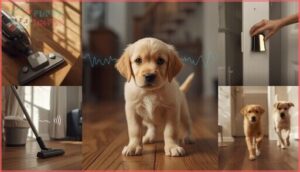
Your puppy’s world is a minefield—and knowing exactly what detonates fear is step one. Visual triggers include bright flashing lights, sudden hand movements, and high-contrast patterns. Auditory triggers such as door slams, smoke detectors, and thunder can also provoke fear. Tactile triggers like rough handling, cold floors, and restraint constraints are equally important to consider.
Early puppy kindergarten socialization classes expose your dog to controlled versions of these triggers in a safe, supervised environment.
Social triggers play a significant role as well, including direct eye contact, unfamiliar dogs, and crowded gatherings. Environmental factors, such as chemical smells or slippery surfaces, can heighten sensory overload. Identifying these triggers is crucial, as it drives every socialization technique forward.
Signs and Body Language of Fear

Reading fear isn’t rocket science—it’s pattern recognition. Watch for facial expressions like whale eye, pinned ears, or tight lips. Body posture shifts include cowering, tail-tucked, and weight pulled back. Vocal signals range from whining to growling to eerie silence. Calming behaviors emerge—yawning, lip-licking, and head-turning.
These fear cues telegraph your puppy’s internal chaos before fear reactivity or fear aggression erupt. Master this vocabulary now.
Identifying Your Puppy’s Threshold

Threshold management begins with simple observation—your puppy’s emotional tipping point lives between calm learning and reactive shutdown. You’ll spot it when treats lose appeal and focus fractures.
Track these threshold markers:
- Distance tolerance: How close trigger proximity pushes your pup before puppy fear sparks
- Duration limits: Seconds of calm exposure before desensitization stalls
- Recovery speed: Time needed to reset after crossing into fear reactivity
Measure this baseline. Puppy socialization depends on it.
Creating a Safe Environment for Fearful Puppies

Your puppy’s environment isn’t just physical space—it’s the foundation for neurological regulation during fear episodes. When the amygdala hijacks rational thought, having structured zones for retreat becomes non-negotiable.
Here’s how to architect spaces that actively reduce cortisol and build resilience.
Safe Spaces and Designated Retreat Areas
Your fearful puppy needs a sanctuary—one quiet corner where the world can’t reach them. Design your retreat area with soft bedding, dim lighting, and a secure crate in a low-traffic zone. Keep temperatures between 68–72°F to prevent stress spikes.
This safe space becomes your foundation for fear reduction and confidence building—a predictable refuge that bolsters every desensitization protocol you’ll implement.
Managing Exposure to Triggers
Exposure therapy isn’t about flooding your puppy—it’s precision work. Start with barely-noticeable triggers: a muted doorbell, a distant visual from 20 feet. Monitor fear thresholds obsessively.
Reactivity management demands sensory control: adjust volume, distance, or intensity every 3-5 sessions based on stress signals. Pair each exposure exercise with counterconditioning—treats, praise, play.
Gradual desensitization builds resilience. Rush it? You’ll deepen fear instead of reducing it.
Calming Aids and Tools
Your toolkit matters—not as a substitute for training, but as neurological scaffolding. Pheromone Therapy (diffusers, collars) mimics maternal calming signals; Calming Wraps and Anxiety Vests apply gentle pressure, releasing endorphins. Sensory Toys with heartbeat simulation redirect nervous energy. Calming Supplements (L-theanine, tryptophan) support desensitization protocols.
Combine these anxiety reduction tools with counterconditioning and positive reinforcement—they enhance fear reduction techniques, not replace them.
Using Desensitization and Counterconditioning

Your puppy’s fear won’t vanish overnight—but you can rewire the emotional response through systematic exposure and positive association. Desensitization and counterconditioning work together like a one-two punch: the first reduces the intensity of your puppy’s fear reaction, while the second builds a new, positive emotional connection to the trigger.
Here’s how to implement both techniques with precision and compassion.
Step-by-step Desensitization Process
Desensitization demands discipline—not desperation. Build a Fear Hierarchy: start with your puppy’s gentlest trigger at maximum distance, then inch closer across daily 2-5 minute sessions. Gradual Desensitization in Calm Environments prevents amygdala hijacks during puppy development stages.
Document each step’s success before advancing. Exposure Therapy works only when you respect thresholds—push too fast and fear-based reactivity reduction collapses. Trigger Management plus patience equals progress.
Counterconditioning With Positive Reinforcement
Counterconditioning flips the script—pair Fear Triggers with high-value treats the instant your puppy notices them. Reward Timing matters: deliver chicken or cheese within 1–2 seconds, sustaining the flow while the trigger remains visible.
This positive reinforcement training rewires dog behavior modification at the emotional level, replacing dread with anticipation. Calming Techniques merge seamlessly with Desensitization Methods—your puppy learns that scary predicts delicious, not dangerous.
Tracking Progress and Adjusting Intensity
Progress Metrics anchor your behavior modification plan. Log fear scores on a 0-to-10 scale after each exposure session, tracking both intensity and proximity. When calm reinforcement stays consistent across three sessions, nudge Exposure Techniques up 5–10 percent.
If fear-based reactivity spikes—cowering beyond five seconds—you’ve crossed Fear Thresholds; dial back intensity for two rounds. Positive reinforcement training plus data reveals when counterconditioning clicks.
Building Confidence and Social Skills

Your puppy’s fear won’t vanish through desensitization alone—confidence must be built from the ground up. Think of it like emotional strength training: controlled exposure creates resilience, purposeful activities rewire the nervous system, and foundation skills give your dog something to do instead of panic.
Here’s your three-pronged protocol for transforming a fearful puppy into a socially competent, emotionally stable companion.
Controlled Socialization Exercises
Think of controlled socialization as exposure therapy—but with guardrails. You’ll structure brief, predictable sessions: pair your puppy with one calm, well-socialized dog for 5–10 minutes daily. Keep environments stable. Use high-value rewards after each encounter.
This deliberate pacing prevents overwhelm during critical puppy development windows—teaching your dog that new faces don’t equal danger. Desensitization works when counterconditioning reinforces safety.
Confidence-building Activities
Momentum—the shift from timid to tenacious—builds through structured play-based learning. Deploy these confidence games daily in calm environments:
- Puzzle feeders that reward persistence and problem-solving
- Novel textures introduced gradually (fleece, rubber, grass)
- Obstacle courses at ground level to encourage exploration
- Scent work using hidden treats to spark curiosity
- Victory sessions ending with high-value reward systems
Each win rewires fear pathways. Positive reinforcement accelerates puppy development—counterconditioning fear with competence during critical dog socialization windows.
Desensitization through play-based confidence work transforms uncertainty into autonomy.
Foundation Training and Response Substitution
Your puppy can’t think when the amygdala hijacks rational processing—that’s why response substitution reshapes fear into action. Foundation training teaches substitute actions through incremental desensitization paired with positive reinforcement. Counterconditioning rewires triggers into calm responses.
Distance, duration, intensity—adjust only after success.
| Trigger Control Phase | Substitute Actions | Behavior Modification Goal |
|---|---|---|
| Baseline exposure | Sit-watch cue | Calm responses established |
| Gradual intensity increase | Touch-redirect | Fear reduction measurable |
| Environmental variation | Focus-return | Generalization achieved |
| Long-term maintenance | Auto-check-in | Sustained behavioral change |
Managing Fear Aggression in Puppies

Fear aggression isn’t rage—it’s panic dressed as protection. Your puppy’s warning growls and snaps are survival strategies born from feeling cornered, overwhelmed, or threatened.
The good news: you can redirect this defensive behavior before it hardens into a lifelong pattern by focusing on three critical interventions.
Identifying Early Signs of Fear Aggression
The line between fear response and fear aggression is thinner than you think—and it vanishes fast. Watch for tail tucked tight, ears pinned flat, and that rigid freeze before the snap.
A low growl paired with a locked stare? That’s your puppy’s final warning. Recognize these aggression signs early—dilated pupils, raised hackles, stiff-legged stance—and you’ll prevent fear-based reactivity from escalating into bites.
Positive Reinforcement for Calm Behavior
Your most powerful fear reduction tool isn’t force—it’s reward. Deliver high-value treats within 1–2 seconds of calm behavior to lock in the association. Pair positive reinforcement with a soft verbal cue, then fade rewards gradually while rotating treats, praise, and play.
This behavior modification protocol—rooted in counterconditioning and desensitization techniques—rewires your puppy’s fearful brain, one calm moment at a time.
Avoiding Punishment and Ensuring Consistency
Punishment triggers amygdala hijacks—escalating fear-based reactivity instead of reducing it. Your protocol must center on positive reinforcement and gentle discipline, never corrections that spike cortisol.
- Use consistent rewards tied to specific calm behaviors every time
- Enforce clear boundaries with identical consequences across all caregivers
- Create a calm environment free from punishment-based methods
- Apply desensitization and counterconditioning with predictable timing
- Document your behavior modification plan so everyone follows the same rules
Frequently Asked Questions (FAQs)
How to help a puppy overcome fear?
Research shows 80% of dogs display fear-based reactivity—yet proper socialization techniques and desensitization methods before 14 weeks dramatically reduce fear responses.
Confidence building through positive reinforcement training transforms anxious puppies into calm, resilient companions.
Can medication help my fearful puppy long-term?
Medication—fluoxetine, clomipramine, trazodone—can reduce baseline puppy anxiety over weeks to months when paired with behavioral therapy.
It creates space for desensitization work, builds calm behavior patterns, and fosters long-term fear reduction in severe cases.
When should I consult a veterinary behaviorist?
Behavior assessment becomes critical when fear-based reactivity escalates despite training.
Seek urgent consultation if aggression endangers others, or standard behavior modification plateaus after six weeks, requiring professional guidance and possible medical clearance.
How do fear periods affect puppy development?
Fear periods—occurring around 8–11 weeks and 6–14 months—are critical socialization windows when brain maturation shapes your puppy’s fear reactivity.
Gentle handling during these phases prevents fear-based reactivity and fear aggression in dogs long-term.
Are certain breeds more prone to fearfulness?
Yes—toy breeds and herding dogs often show stronger genetic tendencies toward fear-based reactivity. But breed temperament alone doesn’t seal your puppy’s fate: early dog socialization and environmental factors reshape even the most anxious genetics.
Can my anxiety transfer to my puppy?
Your emotional state doesn’t doom your pup—anxiety transfer isn’t automatic. Puppies mirror calm routines and body language more than internal stress.
Consistent structure, steady tone, and visible stress management create environments that prevent fear-based reactivity.
Conclusion
What separates a resilient dog from one paralyzed by everyday life? Reducing puppy fear responses through systematic counterconditioning—not time, not exposure alone. You’ve got neuroplasticity on your side until six months, maybe longer. But that window closes.
Start today: identify thresholds, pair triggers with high-value rewards, track micro-progress religiously. Because confidence isn’t inherited—it’s engineered through repetition, precision, and unwavering consistency. Your puppy’s entire emotional architecture depends on what you do next.
- https://www.adaptil.co.uk/pages/adaptil-calm
- https://petcalmingdiffuser.com
- https://vetriscience.com/long-lasting-calm-confident-for-dogs.html
- https://thegoodkennelguide.co.uk/post/do-dog-appeasing-pheromones-daps-work
- https://www.dogmaster.com.au/blog/how-dog-anxiety-vests-work-and-when-you-should-use-it