This site is supported by our readers. We may earn a commission, at no cost to you, if you purchase through links.
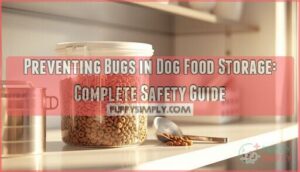
Opening a fresh bag of dog food only to find tiny insects crawling through the kibble isn’t just unpleasant—it’s a safety issue that affects thousands of pet owners every year. Weevils, grain beetles, and pantry moths don’t discriminate between cheap brands and premium formulas. They’re attracted to the same starches and oils that make the food nutritious for your dog.
Once these pests establish themselves in your storage area, they multiply fast and contaminate every bag you bring home. The good news is that preventing bugs in dog food storage doesn’t require expensive equipment or complicated procedures. A few strategic changes to how you store, handle, and monitor your dog’s food can eliminate pest problems entirely.
Table Of Contents
- Key Takeaways
- Why Bugs Infest Dog Food Storage
- Signs of Bug Infestation in Dog Food
- Risks of Feeding Bug-Infested Dog Food
- Choosing Quality Dog Food to Prevent Bugs
- Proper Storage Containers for Dog Food
- Best Locations for Storing Dog Food
- Cleaning and Maintenance to Deter Bugs
- Natural Methods to Repel and Remove Bugs
- When to Discard and Replace Dog Food
- Frequently Asked Questions (FAQs)
- How to store dog food to avoid storage mites?
- How to get rid of bugs in dog food?
- How to stop roaches from getting in dog food?
- Can bugs infest sealed dog food bags?
- How often should storage containers be replaced?
- Are grain-free foods less prone to infestations?
- Can bug infestations spread to other pet foods?
- Conclusion
Key Takeaways
- Store dog food in airtight containers kept in cool, dry locations below 70°F with humidity under 60% to block weevils, grain beetles, and pantry moths from accessing or breeding in kibble.
- Inspect packaging and food weekly for visible bugs, larvae, webbing, holes, off-odors, or mold—severe infestations require immediate disposal of the entire bag to prevent health risks like vomiting, diarrhea, and bacterial infections.
- Clean storage areas and containers weekly with hot soapy water, vacuum up all crumbs and spills, and rotate food using first-in-first-out methods to eliminate pest attraction points before infestations start.
- Freezing kibble for 48-72 hours kills bugs at all life stages without chemicals, while natural deterrents like food-grade diatomaceous earth and bay leaves offer supplemental protection when combined with proper storage practices.
Why Bugs Infest Dog Food Storage
Dog food storage can turn into a pest magnet faster than you’d think. Bugs don’t just wander in by accident—they’re drawn to specific conditions and ingredients that make your dog’s kibble irresistible.
If you’re exploring alternative protein sources like frozen chicken for your dog, proper storage becomes even more critical to prevent contamination and keep pests away.
Understanding what attracts these unwanted visitors and which pests you’re dealing with helps you stop infestations before they start.
Common Types of Bugs in Dog Food
The most common culprits attacking your dog’s kibble are weevils, grain beetles, and pantry moths. The Indian meal moth stands out as the number one stored product pest in dry pet food facilities nationwide. You’ll also encounter red flour beetles, warehouse beetles, and the emerging red legged ham beetle.
Just as digestive issues from kiwi skin affect dogs through fiber imbalance and stomach upset, contaminated kibble can trigger similar gastrointestinal problems.
Even ants and cockroaches can crash the party when bags sit open. To better understand and prevent problems, learn about how insect infestations occur when storing pet food.
Factors That Attract Pests to Dog Food
Bugs don’t show up by accident—they’re drawn to dog food by a perfect storm of moisture, warmth, and poor packaging.
Keep opened bags sealed tight and stored in cool, dry spots—similar to how you’d protect foods like plum skins that can pose risks to dogs if not handled carefully.
Maintaining proper sanitation practices is essential, as poor cleanliness directly attracts pests to areas where food is stored.
Humidity levels above 60% create ideal breeding grounds, while storage temperature above 70°F accelerates infestations. Grain types high in starch attract beetles and weevils.
Expired food loses protective oils, making it vulnerable. Preventing bug infestations means controlling moisture and choosing cool, dry locations.
Signs of Bug Infestation in Dog Food
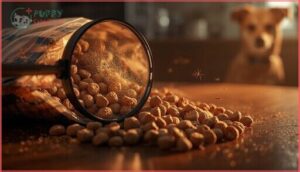
Catching a bug problem early can save your dog from serious health issues.
You need to know exactly what to look for when you check your dog’s food. Here are the key warning signs that tell you it’s time to throw out that bag and start fresh.
Visible Insects and Larvae
If you spot tiny crawlers, webbing, or squirming larvae in your dog’s kibble, you’re dealing with an active infestation that needs immediate attention.
Common culprits include:
- Weevils – small brown beetles that bore into kibble
- Pantry moths – leave silky webbing and pale larvae
- Ants – cluster around food in visible trails
These insect infestations mean your dog’s food is compromised and unsafe.
Nutritional gaps from contaminated food can lead to severe deficiencies, much like how dogs eating chicken poop may develop dangerous zinc deficiencies that shorten their lifespan.
Holes or Damage in Packaging
Check the bag itself—tiny punctures, tears, or gnawed edges are telltale signs that pests have breached your dog’s food supply.
| Damage Type | What It Means |
|---|---|
| Small holes | Weevils or beetles chewed through |
| Torn seams | Seal integrity compromised during shipping |
| Gnawed corners | Rodents accessed the food |
| Rips near closure | Poor container quality or rough handling |
| Sticky residue | Leak prevention failed; moisture invited bugs |
Damaged packaging destroys airtight containers’ protection, creating ideal storage conditions for insect infestation and threatening food safety.
Odors, Mold, and Other Warning Signs
Your nose often picks up trouble before your eyes do—off-putting smells or visible mold mean contamination has set in and the food isn’t safe for your dog. Foul smells signal food decay from moisture or insect infestation.
Mold growth appears as fuzzy patches—green, white, or black—indicating spoilage signs you can’t ignore. These contamination risks stem from poor storage conditions that compromise food safety.
Risks of Feeding Bug-Infested Dog Food
Feeding your dog dog food that’s been contaminated by bugs isn’t just unpleasant—it can genuinely harm their health.
If your dog shows signs of illness after eating contaminated food, focus on gentle recovery activities like safe indoor exercises and short walks while they heal.
The risks range from mild stomach upset to serious infections, depending on what type of pest got into the kibble and how long the infestation lasted. Here’s what can happen when your dog eats bug-infested food.
Health Issues for Dogs
Dogs who eat bug-infested food can suffer from vomiting, diarrhea, and stomach pain within hours of ingestion.
Beyond gastro issues, your dog faces allergic reactions to insect bites and waste. Some pests carry harmful bacteria that enable disease transmission.
Long-term exposure compromises dog nutrition, leading to nutrient deficiency as contaminated food loses its value for pet health and safety.
Contamination and Food Spoilage
Bug infestations don’t just bring unwanted guests—they transform fresh kibble into a breeding ground for mold, bacteria, and toxins that destroy the food’s safety and nutritional integrity.
Food contamination accelerates when insects introduce moisture and waste into your dog’s meals. Poor storage conditions speed up food spoilage, turning once-nutritious kibble rancid.
You’ll notice discoloration, foul odors, and slimy textures—all spoilage signs demanding immediate action for infestation control and storage hygiene.
Choosing Quality Dog Food to Prevent Bugs
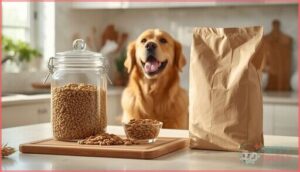
The dog food you choose makes a real difference in preventing bug problems before they start.
High-quality products with solid packaging and proper ingredient sourcing naturally resist pest infestations.
Here’s what to look for when selecting bug-resistant dog food.
Importance of High-Quality Ingredients
Premium ingredient sourcing directly impacts your dog’s safety and nutrition. Quality control during formulation ensures nutrient stability and palatability factors that keep your dog eating consistently.
When manufacturers prioritize formulation integrity—controlled processing with minimal additives—they reduce contamination risks and pest attraction during storage. High-quality food means fewer pathogens, better digestion, and reliable traceability. Don’t compromise on food quality and safety.
High-quality dog food with controlled processing and minimal additives naturally resists contamination and keeps pests away
Packaging That Deters Pests
Seal Technology makes all the difference when you’re choosing dog food. Pest Proof Packaging with triple-seal bags or metalized liners creates physical barriers against moths, beetles, and rodents looking for entry points.
- Reinforced Barrier Materials block insect access better than standard bags
- Tamper-evident features alert you to compromised Packaging Design
- Tight closures reduce gaps that pantry pests exploit
- Treated containers support Infestation Prevention before you transfer kibble to airtight containers
Checking Expiration Dates and Seals
Before tossing a bag of kibble into your cart, flip it over and check two critical details. The expiration date tells you how long the food maintains its nutritional value and freshness. An intact seal—whether it’s a vacuum band or tamper-evident strip—confirms no air or pests have breached packaging quality during transport or storage conditions.
| Inspection Point | What to Check | Red Flag |
|---|---|---|
| Expiration Date | “Best by” or “use by” marking | Date already passed |
| Seal Integrity | Vacuum seal, tamper band | Broken, loose, or missing |
| Storage Conditions | Cool dry locations, airtight containers | Warm, humid exposure |
A compromised seal means you’re risking food safety before you even pour the first bowl. Always verify both markers at purchase and again before feeding if the bag has sat in dog food storage for weeks. These simple checks protect your pup from spoiled or contaminated meals.
Proper Storage Containers for Dog Food
The right container makes all the difference in keeping bugs out of your dog’s food. You need something that seals completely and won’t break down over time.
Let’s look at the container types that actually work and how to use them correctly.
Airtight, Food-Grade Containers
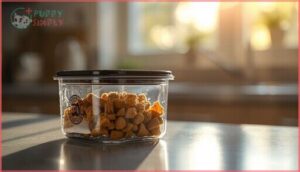
You need food grade containers that meet certification from the FDA or similar authorities—this prevents chemicals from leaching into your dog’s kibble. Look for BPA-free options with airtight seals that pass vacuum tests, keeping moisture and pests out.
The best airtight containers use gasket materials resistant to fats and oils. Choose shatter-resistant designs, because cracks create entry points for bugs and compromise your dog food storage completely.
Plastic Vs. Stainless Steel Options
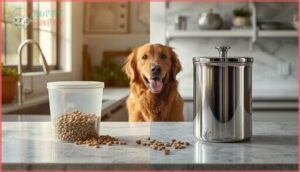
Both materials work well for dog food storage, but plastic and stainless steel each bring different advantages to your kitchen or pantry.
- Plastic containers cost less and weigh almost nothing, making them easy to move around.
- Stainless steel resists scratches that harbor bacteria, boosting storage hygiene.
- Both provide airtight seals for pest control.
- Steel won’t absorb odors or leach chemicals over time.
Labeling and Rotation Practices
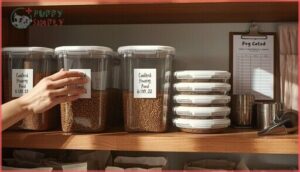
Once you’ve picked your container, dog food safety depends on smart food tracking and inventory management. Set up a simple labeling system that includes the brand, batch number, purchase date, and expiration dates on every bag. Use first-in, first-out storage rotation so older food gets used before newer batches spoil or attract pests.
| Label Element | Why It Matters |
|---|---|
| Product name & brand | Identifies food type quickly |
| Batch/lot number | Tracks recalls or quality issues |
| Purchase date | Monitors storage duration |
| Opening date | Ensures freshness window |
| Expiration date | Prevents feeding spoiled food |
Check your dog food storage area weekly to confirm labels stay readable and rotation stays on track.
Best Locations for Storing Dog Food
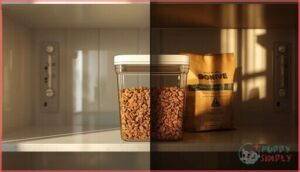
Where you keep your dog’s food matters just as much as how you store it. The right location can prevent bugs from ever becoming a problem, while the wrong spot practically invites them in.
Let’s look at the best places to store dog food and the areas you should avoid.
Cool, Dry Places Vs. Warm, Humid Areas
Storage conditions make or break dog food safety. Where you keep your dog’s food directly affects pest risk and nutritional quality. Here’s why cool, dry locations win every time:
- Humidity control below 50% prevents mold growth and slows insect reproduction cycles, especially for flour beetles and pantry moths that thrive above 60% humidity.
- Temperature effects matter—cooler environments preserve fats and vitamins while discouraging pest lifecycles.
- Airflow importance can’t be ignored, as proper ventilation prevents moisture pockets that attract bugs.
Choose a cool dry place inside your home for ideal dog food storage and moisture management.
Avoiding Garages and Sheds
Garages and sheds expose your dog’s food to temperature swings, high humidity, and unwanted pests like rodents and insects. These outdoor-access structures lack climate control, creating ideal breeding grounds for bugs while degrading nutrients faster.
Veterinary food-safety guidelines recommend safe zones inside your home instead. Choose storage alternatives with consistent humidity management—a pantry or utility closet beats any garage for pest deterrents and long-term dog food storage quality.
Protecting Food From Sunlight and Moisture
Direct sunlight and excess moisture accelerate food spoilage while creating a welcome mat for pantry pests. UV rays degrade nutrients in kibble, while humidity over 60% triggers mold growth and insect activity.
Follow these dog food storage techniques for ideal moisture control and sunlight protection:
- Store containers in dark cupboards or pantries away from windows
- Use opaque, airtight containers that block light penetration
- Keep a dry environment with humidity management below 50%
- Place silica gel packets inside storage bins
- Monitor temperature stability between 50-70°F
These food storage tips maintain freshness and keep bugs away.
Cleaning and Maintenance to Deter Bugs

Keeping your storage area clean is one of the most effective ways to stop bugs before they become a problem. Even the best containers won’t help if crumbs and spills create an open invitation for pests.
Here are three maintenance practices that’ll keep your dog’s food safe and bug-free.
Regular Cleaning of Storage Areas
Think of your dog food storage sanitation like setting up a bug barrier—you can’t defend what you don’t maintain. Clean your storage areas weekly with a mild disinfectant to eliminate spilled kibble and crumbs that attract household pests.
Vacuum floors every 2–3 days and inspect corners for moisture or early signs of infestation. Establish a cleaning schedule and stick to it for effective pest control and infestation prevention.
Removing Crumbs and Old Food
Crumbs and leftover kibble act like a welcome mat for pests—they’re the first thing bugs look for when scouting your food storage.
Tackle Food Residue Removal and Old Food Disposal with these steps:
- Empty containers completely and wash with warm, soapy water to remove oils
- Vacuum fine particles from lids, seams, and shelves weekly
- Dispose of stale dog food in sealed bags immediately
- Inspect your storage area every few days for spills or crumbs
Inspecting Food and Containers Frequently
Regular pest detection starts with quick container checks—catching problems early keeps your dog safe.
| Inspection Area | What to Check |
|---|---|
| Dog food appearance | Live bugs, larvae, or webbing |
| Packaging integrity | Tears, punctures, or broken seals |
| Container interior | Moisture buildup or mold spots |
| Storage area | Crumbs, droppings, or pest trails |
| Expiration dates | Freshness and proper rotation |
Monitor your food storage weekly for infestation prevention. Document any pest management concerns in a simple log to track patterns.
Natural Methods to Repel and Remove Bugs
If you’ve spotted bugs or want to keep them away without harsh chemicals, natural solutions can work surprisingly well.
These methods rely on simple household items and smart temperature tricks to eliminate pests and prevent future problems.
Here’s what actually works to protect your dog’s food naturally.
Using Bay Leaves and Diatomaceous Earth
Bay leaves and diatomaceous earth offer natural pest control methods, but understand their limits. Bay Leaf Effectiveness depends on species and volatile oils that fade over time—they’re mild repellents, not guaranteed solutions.
Here’s how to use these Non Toxic Methods safely:
- Place 2-3 dried bay leaves in your dog food storage container
- Replace bay leaves monthly as oils evaporate
- Apply food-grade diatomaceous earth around container bases
- Keep DE dry for maximum bug-killing action
- Monitor containers weekly—natural doesn’t mean foolproof
Diatomaceous Earth Safety is high for pets when using food-grade products. These organic repellents work best alongside airtight containers and proper storage.
Safe Use of Essential Oils
Essential oils sound appealing for Natural Pest Control Methods, but Pet Friendly Oils aren’t guaranteed safe near dog food. Many oils—tea tree, cinnamon, clove—pose toxicity risks if your dog licks containers or breathes concentrated vapors.
If you choose Aromatic Pest Control, follow strict Oil Concentration Guidelines:
| Oil Type | Safety Level | Application Method |
|---|---|---|
| Lavender | Moderate caution | Apply to exterior surfaces only |
| Peppermint | High caution | Dilute heavily, avoid food contact |
| Tea tree | Avoid | Too risky for dogs |
| Citrus | Moderate caution | Never apply near feeding areas |
Essential Oil Safety requires applying diluted oils to container exteriors—never inside where food sits. Natural Repellent Methods work better when they don’t create ingestion hazards.
Freezing Dog Food to Kill Pests
Freezing dog food for 48 to 72 hours kills bugs, larvae, and eggs without introducing chemicals or toxins into your dog’s meals. This Freezer Storage method works because Cold Temperature Effects destroy insect life cycles at every stage.
For effective Pest Control Methods:
- Spread kibble in single layers on baking sheets before freezing
- Transfer frozen food to airtight containers for ongoing dog food storage
- Label bags with freeze dates to track Frozen Food Safety
Freezing won’t damage kibble quality, making it one of the safest insect prevention approaches you can use.
When to Discard and Replace Dog Food
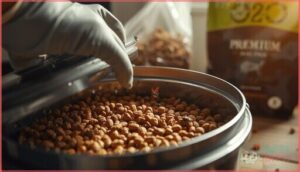
When you find bugs in food, you need to act quickly to protect your pet’s health. Not every infestation requires the same response—some situations call for immediate disposal while others might allow you to salvage unaffected portions.
Here’s how to assess the damage, dispose of contaminated food safely, and prevent bugs from coming back.
Handling Severe Infestations
If you spot live bugs crawling through your dog’s kibble or find webbing and larvae clumped inside the bag, you’re dealing with a severe infestation that requires immediate action. Don’t try salvaging the food—your dog’s health isn’t worth the risk.
Here’s what insect infestation and removal looks like:
| Action | Pest Control Methods | Why It Works |
|---|---|---|
| Seal bag immediately | Prevents spread | Stops bugs from contaminating other food |
| Discard entire contents | Bug eradication | Removes all life stages of pests |
| Vacuum storage area | Insect control | Eliminates eggs and larvae |
| Wash with hot soapy water | Contamination protocols | Destroys remaining traces |
Natural pest control like diatomaceous earth can prevent future problems, but severe cases need thorough cleaning first.
Safe Disposal of Contaminated Food
Once you’ve sealed the infested food, proper disposal protects your household from re-infestation. Double-bag the contaminated waste in sealed plastic bags, then place it directly into your covered outdoor trash receptacle.
This safe handling method prevents pests from accessing the infested food during waste management. Never compost bug-ridden kibble—it can harbor pathogens and toxins that compromise pet food safety.
Preventing Future Bug Problems
Inspect your storage containers every 3–6 months to catch hairline cracks before they become entry points for pests. Rotate food using purchase dates you’ve labeled on each bin, and store bags in environments between 50–70°F with moderate humidity.
Monthly checks for moisture, odd smells, or insect activity keep bug prevention on track. Pair airtight storage solutions with natural repellents like diatomaceous earth for reliable pest control methods.
Frequently Asked Questions (FAQs)
How to store dog food to avoid storage mites?
Storage mites thrive in warm, humid conditions—your first defense is an airtight container placed in a cool, dry location.
Mite prevention demands humidity control below 40 percent, regular container sanitizing, and smart food rotation practices.
How to get rid of bugs in dog food?
Discard infested food immediately to protect your dog’s health.
Clean storage containers with hot soapy water, vacuum debris, then apply diatomaceous earth or bay leaves as natural repellents for effective pest management.
How to stop roaches from getting in dog food?
Keep dog food in airtight containers made of glass, metal, or heavy-duty plastic. Clean feeding areas daily, removing all crumbs.
Store containers in dry locations, and seal wall cracks to block roach entry points.
Can bugs infest sealed dog food bags?
Unfortunately, bugs can penetrate sealed dog food bags through tiny manufacturing defects, air vents, or pre-existing eggs inside.
Infestation sources include warehouse contamination before packaging. Proper storage temperature and bag material quality matter substantially.
How often should storage containers be replaced?
You should replace dog food storage containers every two to three years, or sooner if you notice cracks, worn seals, or persistent odors that compromise airtight protection and food freshness.
Are grain-free foods less prone to infestations?
Grain-free foods don’t offer bug resistance advantages.
Moths and beetles infest any dry dog food when storage conditions favor them.
Pet food formulations—whether grain-based or grain-free—require identical protection through airtight containers and proper handling.
Can bug infestations spread to other pet foods?
Yes—bug infestations spread easily through cross contamination when you store pet food together.
Storage mites and insects migrate between bags, creating shared storage risks.
Separate dog food storage from other pet food prevents bug migration and protects pet food safety.
Conclusion
Think of your dog’s food storage like a fortress—one weak point invites an entire invasion. Preventing bugs in dog food storage isn’t complicated, but it demands consistency.
Use airtight containers, maintain clean storage areas, and inspect food regularly. These simple habits create an environment where pests can’t establish themselves.
Your dog depends on you for safe nutrition. Taking these precautions means every meal stays fresh, uncontaminated, and exactly what your pet deserves.
- https://www.catchmaster.com/blogs/news/pet-food-and-pests-your-guide-to-safe-pest-control
- https://www.petfoodinstitute.org/insects-want-steps-prevent-infestation-ingredient-bowl/
- https://www.petzpaws.com/blogs/pet-food-storage-container-cleaner-news/fda-recommends-cleaning-pet-food-containers
- https://seattlecanineclub.com/the-dangers-of-using-plastic-containers-for-dog-kibble-storage/
- https://www.kohepets.com.sg/blogs/articles/bugs-in-dog-food