This site is supported by our readers. We may earn a commission, at no cost to you, if you purchase through links.
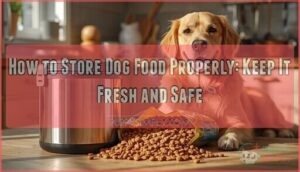
Your dog’s food sits in that bag or container day after day, but each hour of improper storage strips away essential nutrients, invites bacterial growth, and risks making your pet sick. Most dog owners don’t realize that kibble starts degrading the moment you break the seal, and exposure to air, moisture, or heat accelerates that process dramatically.
Even premium dog food loses its nutritional punch when stored incorrectly, leaving your dog underfed despite a full bowl.
The difference between safe, nutritious meals and potential health hazards often comes down to a few simple storage decisions—decisions that protect not just the food’s freshness, but your dog’s long-term well-being.
Table Of Contents
Key Takeaways
- Store dry dog food in airtight containers at 50–70°F with humidity below 60% to prevent nutrient degradation, fat oxidation, and bacterial growth that compromise your dog’s health.
- Refrigerate opened wet food immediately at 40°F or below and consume within 3–5 days, discarding anything left at room temperature for more than 2 hours to avoid foodborne illness.
- Clean storage containers and feeding bowls weekly with pet-safe disinfectant to eliminate bacteria buildup, and use pest-resistant containers elevated off floors to prevent contamination from rodents and insects.
- Check for spoilage signs like mold, rancid odors, texture changes, or damaged packaging before feeding, and report suspected contamination to manufacturers and the FDA while consulting your veterinarian if your dog shows illness.
Why Proper Dog Food Storage Matters
You mightn’t think much about how you store your dog’s food, but it makes a real difference in keeping your pup healthy. Poor storage can drain away nutrients, invite bacteria, and even make your dog sick.
Investing in proper dog food storage containers helps lock in freshness and protects your dog from contamination.
Let’s look at three key reasons why proper storage shouldn’t be an afterthought.
Preserving Nutritional Value
Nutrient retention hinges on how you handle your dog’s kibble after opening. Store dry food in a cool, dry place below 77°F to slow vitamin stability loss and prevent fat oxidation. Use airtight containers or resealable bags to limit oxygen exposure, which degrades essential nutrients.
Choosing high-quality dog food brands with natural preservatives can also help maintain nutritional value during storage.
Proper pet food storage techniques preserve freshness and shelf life—keeping pet nutrition intact for your dog’s health.
Storing gently cooked dog food properly in the fridge or freezer helps maintain its nutritional value and prevents spoilage.
Preventing Contamination and Spoilage
Beyond nutrient loss, improper pet food storage and handling opens the door to food contamination—bacteria, mold, and pests thrive in warm, moist environments. Storage containers with airtight seals block moisture control issues and keep out unwanted visitors.
A quality dog food storage container with proper sealing prevents exposure to air and humidity that accelerate spoilage.
Food safety tips include:
- Store between 50–85°F in a stable, dry location
- Use food-grade, airtight containers to prevent moisture ingress
- Keep food away from chemicals and strong odors
- Inspect packaging for damage before purchasing
- Wash hands and scooping utensils regularly
These freshness preservation steps safeguard your dog’s meals.
Protecting Your Dog’s Health
When food safety and nutrition break down, your dog’s health is on the line. Bacterial growth from poor pet food storage and handling increases foodborne illness prevention concerns, while vitamin degradation weakens immunity.
Veterinary care often traces digestive issues back to contaminated meals. Proper storage directly bolsters dog wellness by maintaining pet nutrition standards and reducing health risks—protecting your companion from preventable illness every single day.
Proper storage protects your dog from preventable illness by maintaining nutritional standards and reducing contamination risks every day
Best Practices for Storing Dry Dog Food
Storing dry dog food correctly keeps it fresh, safe, and nutritious for your dog. The right approach involves choosing proper containers, finding the best location, and using smart sealing techniques.
Here’s what you need to know to protect your dog’s kibble from spoilage and contamination.
Using Original Packaging Vs. Containers
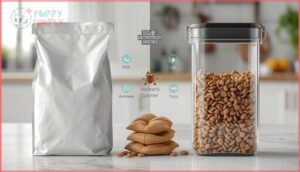
You can keep dry dog food in its original bag or transfer it to an airtight container—both work if handled correctly. The original bag preserves ingredient lists and feeding guidelines when resealed properly.
Many manufacturers recommend placing the entire sealed bag inside a storage container for the best freshness preservation and container safety. This dual approach protects against air, moisture, and pests while keeping batch information accessible for recalls.
Ideal Storage Locations and Conditions
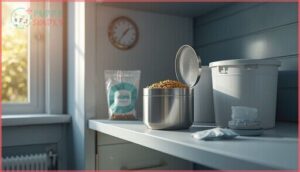
Where you stash your pup’s kibble makes all the difference. Choose a secure location with stable temperature (50–70°F) and humidity below 60% to protect shelf life and air quality. Follow these rules:
Pairing the right spot with one of the best dog food containers on Amazon keeps your pup’s meals fresh and nutritious for weeks.
- Store in a cool, dry pantry away from ovens and direct sunlight.
- Use airtight containers or keep the original bag sealed inside a storage container.
- Avoid garages or sheds with fluctuating temperature and humidity levels.
- Raise containers off floors to deter pests.
Sealing and Portioning Techniques
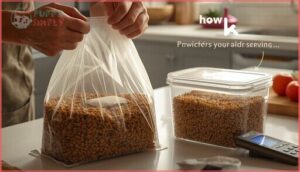
Once you’ve chosen the right spot, how you seal and portion matters just as much. Squeeze air from the original bag before folding it tightly, then place it inside an airtight container with a desiccant pack—this cuts oxygen exposure by 98% and keeps kibble fresh for up to six weeks.
Here’s how sealing and portioning stack up:
| Method | Benefit |
|---|---|
| Vacuum-sealed bags | Preserve scent and dryness for 6 weeks |
| Single-serving pouches | Minimize air ingress, extend shelf stability 14 days |
| Pre-portioned servings | Reduce waste 5–15% monthly |
Use a digital scale for gram-accurate portions to match your dog’s energy needs, preventing over- or under-feeding. Reseal immediately after scooping to block humidity and keep fats from going rancid.
Avoiding Common Storage Mistakes
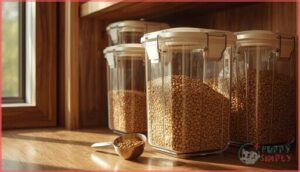
Oversight can ruin even the best storage solutions. Many pet owners unknowingly compromise freshness and pet safety through simple missteps. Here are five food storage tips to keep your dog’s meals safe:
- Use airtight containers to block oxygen and prevent rancidity
- Store kibble away from direct sunlight to preserve nutrients
- Keep bags on raised shelves, never on garage floors where moisture collects
- Never mix old and new batches—rotate using first-expired, first-out practices
- Check seals after each scoop to maintain proper food storage techniques and block pests
How to Store Wet and Canned Dog Food
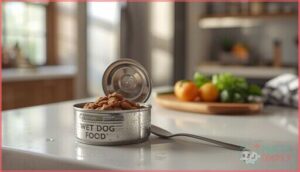
Wet and canned dog food requires different handling than dry kibble, especially once you open the container. Temperature control becomes critical the moment you pop that lid, since moisture creates the perfect environment for bacteria to grow.
Let’s walk through the essential steps to keep your dog’s wet food fresh, safe, and nutritious from the pantry to the bowl.
Storing Unopened Cans Safely
Before you crack open that canned food, store unopened cans on a stable shelf in cool, dry places between 50°F and 80°F to extend shelf life and prevent can damage. Keep cans off the floor, away from heat sources and direct sunlight, which speeds nutrient breakdown.
Check for bulges, dents, or leaks before storage—these signal contamination. Temperature control protects both can integrity and your dog’s meal quality.
Refrigerating Opened Wet Food
Once you pop the lid, refrigerate opened wet food immediately at 40°F or below to prevent bacterial growth—your dog’s safety depends on it. Use an airtight cover to lock in freshness and keep out odors that compromise nutritional quality.
Here’s your refrigeration checklist for pet food storage tips and advice:
- Consume within 3 to 5 days for maximum shelf life
- Discard after 2 hours at room temperature
- Check for off smells or slime before serving
Handling Leftovers and Portion Control
Store leftovers in airtight containers within two hours to stop bacterial growth—proper pet food storage keeps your dog safe. Reheat food handling leftovers to 165°F, and toss anything that’s moldy or sat out too long.
Measure portions with a cup or scale based on weight and activity level, then track what’s left after meals. These food safety tips protect nutrient preservation while preventing waste.
Identifying Signs of Spoilage
Even with careful pet food safety and handling, wet food can still go bad. Watch for these spoilage indicators to protect your dog from foodborne illnesses:
- Mold detection: Visible fuzzy spots or unusual colors signal contamination
- Odor analysis: Sour, rancid, or fermented smells mean discard immediately
- Texture changes: Slimy coating or separation indicates spoilage
- Best by date: Expired food loses food freshness and food storage and shelf life guarantees
Trust your senses—food safety depends on it.
Cleaning and Maintaining Dog Food Storage Areas
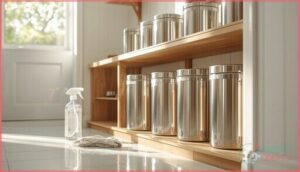
A clean storage area is your first line of defense against contamination and pests. Regular maintenance prevents harmful bacteria buildup and keeps your dog’s food safe to eat.
Here’s what you need to do to maintain proper hygiene in your storage spaces.
Regular Cleaning Routines
You’ll want to clean and sanitize storage containers and shelves at least weekly to remove crumbs and spills that compromise pet food safety and handling. Wipe all surfaces with a pet-safe disinfectant, rinse thoroughly to prevent chemical residues, then dry completely.
Empty and wash pet food bowls and scoopers daily to prevent bacterial growth. Establishing cleaning schedules with a simple checklist helps maintain storage hygiene consistently.
Preventing Pest Infestations
Pests see your dog’s food as an open buffet, so choosing airtight pest-resistant pet food containers made of hard plastic, glass, or metal is your first line of defense. Place storage containers on elevated shelves away from the floor to deter rodents, and maintain storage conditions between 50–70°F with humidity below 60%.
Inspect regularly for infestation signs like droppings or gnawing, and vacuum weekly to eliminate crumbs that attract unwanted visitors.
Safe Handling of Bowls and Utensils
Keeping pests at bay is just half the battle—your dog’s bowls and utensils need attention too. Wash them daily with hot water and dish soap to maintain bowl hygiene and prevent cross contamination.
Use separate drying racks for pet dishes, and sanitize weekly with a pet-safe disinfectant or dilute bleach solution. Store clean bowls upright to air dry completely, protecting your dog’s health through consistent sanitary practices.
Safety Tips and When to Discard Dog Food
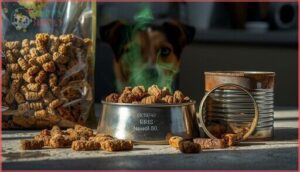
Even with careful storage, dog food won’t last forever, and knowing when to toss it can prevent serious health issues. You need to spot the warning signs of spoilage, understand what those dates on the package really mean, and know what to do if something seems off.
Here’s how to keep your dog safe and handle problems before they become emergencies.
Recognizing Spoiled or Contaminated Food
Your dog’s health depends on catching spoilage signs early. Check for mold growth, bulging or leaking cans, and unusual sour or rancid odors before feeding. Changes in color or texture signal degradation, while visible pests require immediate disposal.
These food safety checks protect against contamination risks and food allergies, ensuring pet food quality and freshness well before the best if used by date passes.
Following Expiration and “Best By” Dates
Best if Used By dates indicate peak freshness rather than safety cutoffs, so inspect dry pet food for odor or texture changes even within that window. Use unopened products by the labeled date to optimize nutritional value and follow expiration guidelines that recommend consuming opened bags within six to eight weeks.
Proper date labeling and storage recommendations preserve shelf life, ensuring food safety and pet food quality throughout your dog’s feeding routine.
Reporting Issues and Protecting Your Pet
Vigilance protects your dog when something seems off. Report suspected contamination to both the manufacturer and the FDA’s Safety Reporting Portal, including lot numbers, purchase details, and any clinical signs your pet shows.
During pet food recalls, stop feeding the product immediately and consult your veterinarian if illness occurs. Following FDA guidelines and veterinary advice on safe handling helps you catch problems early and contributes to broader pet food quality and safety monitoring.
Regular checks for pet food recalls are essential for maintaining your dog’s health and safety.
Frequently Asked Questions (FAQs)
Can I freeze dry dog food for longer storage?
Freezing standard dry kibble won’t extend shelf life safely. Instead, store it in airtight containers below 80°F and use within five to six weeks of opening to maintain freshness and nutritional quality.
How does humidity affect kibble shelf life exactly?
Humidity raises kibble moisture content by up to three percentage points over weeks, enabling mold growth within two weeks at 75% relative humidity.
It also accelerates fat oxidation, which shortens shelf life considerably.
Are plastic or metal containers better for storage?
Regarding container durability and pest prevention, metal wins hands down. Stainless steel resists odor control issues, maintains secure sealing, and protects pet food packaging better than plastic under varying storage conditions.
What temperature kills bacteria in contaminated dog food?
Heating dog food to at least 165°F (74°C) for a few minutes generally inactivates most harmful bacteria.
Commercial canned pet food undergoes sterilization above 212°F, ensuring safety through proper temperature control.
Should different dog foods be stored separately together?
Like keeping spices in separate tins, store each dog food in its own container with clear labels.
Separate storage preserves food quality, prevents allergen control issues, tracks freshness, and simplifies food rotation in a secure location.
Conclusion
Think of spoiled kibble as a silent threat lurking in plain sight—one that proper storage easily prevents. When you learn how to store dog food properly, you’re building a safeguard between your pet and preventable illness.
Seal bags tightly, monitor temperatures, check dates regularly, and clean containers often. These straightforward steps preserve nutrients, block contaminants, and guarantee every meal delivers the nourishment your dog deserves without compromise.
- http://mailto:AskCVM.gov
- https://www.fda.gov/animal-veterinary/animal-health-literacy/proper-storage-pet-food-treats
- https://blog.wordvice.com/formatting-research-paper-headings-and-subheadings/
- https://www.avma.org/resources-tools/animal-health-and-welfare/animal-health/reporting-adverse-events
- https://nmspetemergency.com/recognizing-pet-food-poisoning-symptoms-to-prevent-serious-illness/