This site is supported by our readers. We may earn a commission, at no cost to you, if you purchase through links.

Your clippers are halfway through a golden retriever’s coat when you feel it—that unmistakable warmth radiating through the metal. Within minutes, the blades are hot enough to make your dog flinch, and you’re forced to stop mid-groom. This isn’t a sign your equipment is failing; it’s basic physics meeting the demands of grooming.
Dog clippers generate heat through blade friction, motor strain, and limited cooling capacity, especially when you’re working through thick or matted fur. Understanding why dog clippers get hot during grooming helps you protect your dog’s skin, extend your blade life, and complete sessions without interruption.
The good news is that overheating isn’t inevitable—proper maintenance, smart grooming techniques, and choosing the right equipment make all the difference.
Table Of Contents
- Key Takeaways
- Why Do Dog Clippers Get Hot During Grooming?
- How Blade Sharpness and Material Affect Heat
- The Role of Motor Type and Design in Overheating
- Grooming Practices That Increase Clipper Heat
- Preventing Clipper Overheating During Grooming
- Choosing and Maintaining Clippers for Cooler Operation
- Frequently Asked Questions (FAQs)
- Conclusion
Key Takeaways
- Dog clippers overheat from blade friction against fur, motor strain when cutting thick or matted coats, and poor cooling design in budget models—understanding these causes helps you prevent burns and equipment damage.
- Sharp blades and proper lubrication every five minutes dramatically reduce friction and heat buildup, while dull blades force your motor to work harder and generate dangerous temperatures that can irritate your dog’s skin.
- Taking breaks every 5-10 minutes and rotating between multiple blade sets distributes heat more evenly, preventing overheating while extending your clipper’s lifespan through smart heat management.
- Choosing clippers with adjustable speed settings, built-in cooling fans, and heat sinks gives you real control over temperature during grooming—high-end models with thermal sensors automatically prevent dangerous overheating before it starts.
Why Do Dog Clippers Get Hot During Grooming?
If you’ve ever felt your clippers heating up mid-groom, you’re not alone—it’s a common issue that can affect both your comfort and your dog’s safety. The heat comes from a combination of mechanical friction, motor strain, and design limitations that vary depending on your clipper model and how you’re using it.
Understanding what makes good dog clippers quiet can also help you choose models that run cooler, since better-engineered motors generate less friction and heat.
Clippers heat up during grooming due to mechanical friction, motor strain, and design limitations that vary by model and usage
Understanding these causes helps you recognize what’s normal and what requires attention before the clippers become too hot to handle safely.
Choosing the right dog grooming clippers from the start can prevent overheating issues and keep grooming sessions safe for both you and your pup.
Friction From Fast-Moving Blades
Friction is the primary culprit behind hot clippers. When your blades slice through fur at high speed, blade edge friction converts kinetic energy into heat right at the contact point.
Understanding how dog grooming clippers work helps you see why blade maintenance prevents overheating during every grooming session.
The sharper your blade geometry and the smoother the cut, the less friction you’ll create.
Dense coats and matted fur intensify this effect, raising temperatures faster and demanding more frequent clipper maintenance breaks.
Motor Exertion With Thick or Matted Fur
Beyond blade friction, your clipper’s motor works overtime when it hits thick or matted fur. Dense coats force the motor to pull higher current just to maintain blade speed, and that extra exertion pumps out more heat.
Here’s what happens when your motor strains against matted fur:
The motor overheats fast, the blades drag instead of glide, and you risk burns or uneven cuts—choosing clippers designed to handle thick or coarse coats prevents most of these problems before they start.
- Current draw spikes as the motor compensates for increased blade resistance
- Cutting efficiency drops, forcing longer run times at elevated speeds
- Thick undercoat elevates friction, requiring more motor exertion to maintain performance
- Matted sections can block ventilation paths, reducing cooling effectiveness
- Peak temperatures climb during prolonged sessions, making blade rotation essential
That strain doesn’t just heat up your clippers—it shortens their lifespan and makes grooming uncomfortable for your dog.
Insufficient Cooling Mechanisms in Clippers
Even the sharpest blades and strongest motors can’t beat poor heat management. Many budget clippers lack dedicated heat sinks or active cooling systems, so heat stays trapped near the motor windings and blade housing. Undersized vents can’t pull enough air through, and plastic housings with low thermal conductivity make convection cooling nearly impossible.
| Cooling Feature | Impact on Overheating |
|---|---|
| Heat sinks | Remove heat from motor and blade interfaces efficiently |
| Cooling vents | Allow airflow; undersized vents trap heat during extended use |
| Active cooling fans | Push air through housing; absent in most budget models |
| Thermal conductivity | Metal housings dissipate heat; plastic traps it near components |
| Convection airflow | Requires open design; limited airflow accelerates temperature climb |
That’s why you’ll notice some clippers get uncomfortably hot within minutes—they simply weren’t built to shed heat effectively.
Impact of Clipping Speed on Heat Production
Speed control directly affects thermal generation—when you push clippers faster, blade oscillation increases, and so does friction between the cutter and comb. Higher speeds also force the motor to work harder through dense or matted fur, ramping up heat in seconds.
That’s why clipper efficiency drops and heat dissipation can’t keep pace, especially during extended grooming sessions without blade sharpness maintenance.
How Blade Sharpness and Material Affect Heat

Not all blades are created equal regarding heat generation. The sharpness of your clipper blades and the material they’re made from directly impact how hot your clippers get during grooming.
Understanding the differences between dog and human clippers can help you choose blades that stay cooler and work more efficiently for your pet’s coat type.
Let’s look at how these factors work together to either keep your clippers cool or turn them into miniature heat sources.
Dull Blades Increasing Friction and Heat
When your clipper blades lose their edge, they create far more friction against each dog’s coat during every pass. That extra resistance forces both the blades and motor to work harder, generating markedly more heat than sharp blades would.
You’ll notice slower cutting, more tugging on the fur, and rapidly climbing blade temperatures—all signs that blade sharpness directly impacts heat management and clipper performance.
Ceramic Vs. Steel Vs. Titanium Blades
Your clipper blade material directly influences blade heat and performance during every groom. Ceramic blades stay cooler to the touch and maintain sharpness longer, though they’re more brittle and costly. Steel blades offer outstanding blade durability and clipper compatibility across models, but they generate more heat as they dull. Titanium clipper blades balance heat conductivity with wear resistance, yet proper blade maintenance—regular lubrication and cleaning—matters more than material costs when managing clipper blade material choices effectively.
Blade Tension and Its Role in Overheating
Blade balance depends on proper tension adjustment—you need just the right amount. Too loose, and your blades drift, creating uneven contact that spikes friction and overheating. Too tight, and warped edges force extra passes, building unnecessary heat.
Check tension regularly using manufacturer specs to maintain heat distribution and clipper efficiency. Proper tension means friction reduction, cooler operation, and extended blade life through smart clipper maintenance.
The Role of Motor Type and Design in Overheating
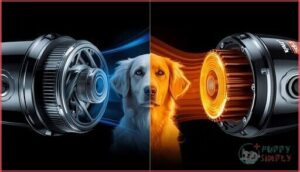
Not all clipper motors are built the same, and the type you’re working with plays a big role in how quickly heat builds up during grooming. Rotary motors and magnetic motors each have their own strengths and weaknesses regarding staying cool under pressure.
Let’s look at how motor design affects temperature, and what features help keep your clippers from overheating.
Rotary Vs. Magnetic Motors
When you’re choosing clippers, motor type shapes how hot they’ll run. Rotary motors deliver higher RPMs and serious cutting power for thick coats, but they generate more heat under heavy use and need fan-cooled housings to manage it.
Magnetic motors operate cooler at moderate loads because they’re more efficient, producing less heat while maintaining steady performance on lighter grooming tasks.
Motor Efficiency and Heat Generation
Every time your motor converts electricity into mechanical work, some energy escapes as heat—and clipper motors usually waste 15% to 40% of their input power this way. Understanding thermal management helps you prevent clipper overheating before it disrupts your session.
Here’s what drives motor efficiency and heat generation during grooming:
- Motor efficiency determines how much electrical input becomes heat instead of cutting power
- Copper loss in the windings increases when thick fur demands higher current
- Duty cycle matters—continuous clipping without breaks raises sustained temperatures markedly
- Friction in motor bearings adds extra heat, especially in older units
Built-in Cooling Fans and Vents
Modern cooling mechanisms can dramatically extend how long your clippers work before heat forces a break. Models with integrated fans direct airflow toward the motor and blade junction, reducing blade temperature through active convection. Vented housings allow heat to escape rather than accumulate internally, while some systems activate automatically at higher speeds to maintain safe operating temperatures during extended sessions.
| Cooling Feature | How It Works | Thermal Benefit |
|---|---|---|
| Integrated fans | Direct airflow to motor and blade areas | Reduce blade temperature during operation |
| Vented housings | Enable convective heat escape | Prevent internal heat accumulation |
| Automatic activation | Engage at higher speeds or temperatures | Maintain safe operating thresholds |
| Targeted airflow design | Focus on motor and gear train zones | Mitigate heat from mechanical friction |
| Thermal cutoff systems | Monitor continuous run time | Trigger cooling intervention when needed |
Grooming Practices That Increase Clipper Heat

Even the best clippers will overheat if you’re not mindful about how you’re using them. Certain grooming habits create extra resistance, forcing the motor and blades to work harder than they should.
Let’s look at three common practices that turn up the heat and put unnecessary strain on your equipment.
Working With Matted or Tangled Fur
Matted fur acts like a brake on your clippers, forcing the motor and blades to work overtime. This added resistance can increase clipper load by up to 40%, generating serious heat.
Before you clip, use a wide-tooth comb or undercoat rake for mat removal and fur detangling. Slow, careful passes through tangles create less friction than aggressive clipping, protecting your blades and preventing overheating.
Extended Grooming Sessions Without Breaks
Prolonged clipping without break intervals creates heat accumulation that even the best cooling systems can’t manage. Your clippers need those pauses to dissipate friction-generated heat and maintain clipper efficiency.
When you push through a long grooming session without stopping, overheating becomes inevitable, reducing performance and risking grooming fatigue for both you and your dog.
Proper heat management means working smarter, not harder.
High-Speed Clipping and Its Effects
Cranking up your clipper speed might seem efficient, but it amplifies heat generation through rapid blade movement and friction. Higher speeds shorten duty cycles for cooling mechanisms, pushing thermal load on both clipper blades and the motor.
Some models feature heat sensors that trigger automatic shutdowns for clipper safety. Without proper speed control, you’re asking for overheating and potential skin irritation on your dog.
Preventing Clipper Overheating During Grooming
Now that you understand what causes clippers to overheat, you can take specific steps to keep them running cool and safe.
These strategies focus on blade care, smart grooming habits, and regular maintenance.
Let’s look at the most effective ways to prevent overheating during your grooming sessions.
Regular Blade Sharpening and Replacement
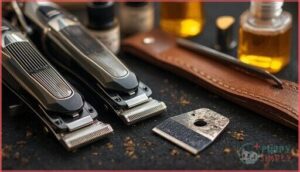
A dull blade works against you, dragging through the coat and generating friction that leads to overheating. You’ll notice the signs: pulling hair, uneven cuts, and increased blade wear at the edges.
Schedule blade sharpening every 6 to 12 months, depending on your workload and the fur types you handle. Regular edge maintenance keeps clipper efficiency high, reduces replacement costs, and protects your dog from uncomfortable heat buildup.
Lubrication and Cooling Sprays
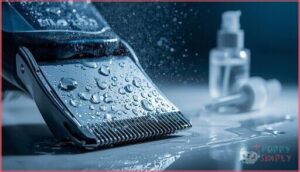
Keeping your blades lubricated creates a protective film between metal and fur, reducing friction and heat buildup. Apply clipper oil or a water-based cooling spray every five minutes during grooming—these sprays can lower blade temperature by several degrees while maintaining hygiene.
Choose low-viscosity lubricants for a smooth glide without heavy residue, and time your spray application between passes for effective thermal management.
Taking Breaks and Rotating Blades

Pause every five to ten minutes to let your clippers cool down—this simple break scheduling prevents overheating and protects your dog’s skin from irritation. Blade rotation across two or three sets distributes heat generation more evenly, reducing friction at any single cutting edge.
These cooling systems improve grooming efficiency while extending your equipment’s lifespan through smart heat management and consistent clipper maintenance practices.
Proper Blade Cleaning and Maintenance
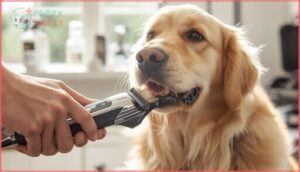
Hair and debris clog blade teeth, so brush them clean after each grooming session to maintain smooth cuts and prevent overheating. Fur removal combined with blade sanitizing using alcohol-based disinfectants keeps bacteria at bay while protecting against rust.
Apply lubrication every few uses to reduce friction, then conduct regular blade inspection for wear.
Proper clipper storage in dry cases and timely coolant application guarantee your clipper maintenance routine facilitates cooler operation.
Choosing and Maintaining Clippers for Cooler Operation
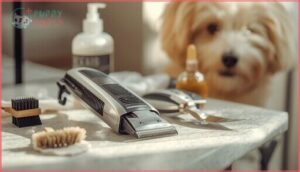
The right clippers can make all the difference in managing heat during grooming sessions. By choosing equipment with smart design features and keeping up with proper maintenance, you’ll reduce friction, improve performance, and protect your dog’s comfort.
Here’s what to look for and how to care for your clippers so they run cooler from the start.
Selecting Clippers With Effective Cooling Systems
Modern clippers with active cooling—built-in fans, heat sinks, and directed airflow technology—keep blades cooler during long sessions. Some models feature thermal sensors that alert you when temperatures climb, automatically adjusting speed or shutting off to prevent clipper overheating.
Look for clippers with published temperature test data and interchangeable blade assemblies rated for higher heat tolerance. Effective cooling system design isn’t a luxury; it’s essential for safe, efficient heat management techniques.
Importance of Adjustable Speed Settings
Speed control gives you real power over heat reduction and motor management. Adjustable settings let you dial down RPMs for delicate areas, minimizing friction and overheating, then ramp up only when thick coats demand it. This approach boosts clipper efficiency and extends blade care:
- Lower speeds reduce blade-on-fur friction during sensitive work
- Gradual speed adjustments prevent sudden heat spikes
- Multiple speed ranges improve motor management across coat types
- Sustained high-speed operation accelerates wear and heat buildup
- Proper speed selection for each grooming technique maintains consistent blade temperature
You’ll preserve your equipment while keeping your dog comfortable.
Storing and Caring for Clippers Properly
Your clippers won’t perform their best if you toss them in a drawer after grooming. Store them in a cool, dry space between 50–86°F, away from sunlight and moisture that cause rust. Clean blades after every session, apply clipper oil to moving parts, and wipe down housings with a damp cloth. Regular maintenance extends blade life and prevents heat-related failures during your next groom.
Proper clipper storage and clipper blade maintenance aren’t optional—they’re your insurance against overheating and costly replacements. Storage solutions like dust-free cases protect your investment between sessions.
| Clipper Maintenance Task | Frequency | Purpose |
|---|---|---|
| Blade sanitizing and cleaning | After each use | Removes debris, prevents bacteria buildup |
| Lubrication with clipper oil | Every few minutes of use | Reduces friction, dissipates heat |
| Inspect blade tension and sharpness | Weekly | Minimizes motor strain, ensures cool operation |
| Wipe housing and vents | After each session | Prevents dust from blocking cooling maintenance |
| Check cords and battery health | Monthly | Avoids electrical issues that increase heat |
Frequently Asked Questions (FAQs)
Can cold weather affect clipper overheating issues?
Cold climate can actually help reduce overheating by slowing heat accumulation, but it also thickens lubricants, increasing friction.
Battery efficiency drops too, potentially generating more heat.
Watch for condensation affecting clipper blades and performance.
Do corded clippers overheat less than cordless?
Generally, yes. Corded clippers maintain consistent power without battery heat, reducing overheating risk.
Cordless models generate extra warmth from battery resistance during heavy use, though proper clipper maintenance and heat dissipation design matter more than power source alone.
How does coat type influence heat buildup?
Dense double coats create more resistance, forcing your clipper blades to work harder and heat up faster. Curly or matted fur traps warmth around the blade, while short coats allow better airflow and cooling.
Are expensive clippers less prone to overheating?
High-end models often include efficient motors and sophisticated cooling features like heat sinks, offering better heat management.
Premium clippers with adjustable speed settings and enhanced thermal testing generally run cooler during extended grooming sessions.
Can clipper overheating harm my dogs skin?
An ounce of prevention is worth a pound of cure—yes, overheating blades can cause thermal burns, redness, and irritation on your dog’s skin, especially with prolonged contact or repeated exposure during grooming sessions.
Conclusion
Think of clipper heat like an early warning system—it tells you when friction, dull blades, or overworked motors need your attention.
Now that you understand why dog clippers get hot during grooming, you can prevent discomfort before it starts. Sharp blades, proper lubrication, and strategic breaks aren’t just maintenance tasks; they’re how you protect your dog’s skin and finish every grooming session safely.
Your clippers will stay cooler, and your dog will thank you.
- https://www.youtube.com/watch?v=O-x1pDmzx_U&t=9s
- https://x.com/godofprompt/status/1990526288063324577
- https://www.sciencedirect.com/science/article/pii/S2949916X23000464
- https://www.scribd.com/document/356795007/Research-Methods-Knowledge-Base
- https://pmc.ncbi.nlm.nih.gov/articles/instance/9553038/bin/pone.0275964.s005.docx