This site is supported by our readers. We may earn a commission, at no cost to you, if you purchase through links.

Most new puppy owners get the food right and completely miss the timing.
A six-week-old Chihuahua and a six-week-old Great Dane might eat from the same "puppy formula" bag, but their feeding schedules should look nothing alike—one risks a blood sugar crash between meals, the other faces joint stress from eating too much at once.
How often puppies should eat per day shifts considerably across those first twelve months, and getting it wrong shows up fast: in energy crashes, digestive upset, or a body condition that’s quietly drifting off track.
The good news is that once you understand the logic behind the numbers, building the right schedule becomes surprisingly straightforward.
Table Of Contents
- Key Takeaways
- How Often Should Puppies Eat Per Day?
- Feeding Schedules for Different Puppy Ages
- Breed Size and Puppy Feeding Frequency
- Creating an Effective Puppy Feeding Schedule
- Nutritional Needs at Each Puppy Stage
- Signs You Should Adjust Feeding Frequency
- Transitioning to Fewer Meals as Puppies Grow
- Puppy Feeding Tips for Busy Owners
- Frequently Asked Questions (FAQs)
- What is the 7 7 7 rule for puppies?
- What is the 3-3-3 rule with puppies?
- Can puppies eat human food as treats?
- What if my puppy skips a meal?
- Should water be available all day long?
- How to switch between puppy food brands?
- When do puppies stop needing nighttime feedings?
- How long should each feeding session last?
- Should puppies eat before or after exercise?
- Do puppies need water between meals?
- Conclusion
Key Takeaways
- Puppies under 3 months need 3–4 meals a day, dropping to 3 meals by 6 months and 2 meals by 12 months — skipping these shifts can cause energy crashes or digestive trouble.
- Breed size matters more than most owners expect: small breeds risk blood sugar crashes without frequent meals, while large breeds need portion control and rest after eating to avoid dangerous bloat.
- Consistent meal timing isn’t just convenient — it trains your puppy’s gut, steadies blood sugar, and makes it obvious when something’s off because a skipped meal suddenly stands out.
- Track your puppy’s progress with weekly weigh-ins and a simple rib check: ribs you can feel easily (without pressing hard) mean you’re in the right zone.
How Often Should Puppies Eat Per Day?
How often your puppy eats each day matters more than most new owners expect.
Slowing things down with dog puzzle feeders for puppies can make a real difference in how well they digest and feel after meals.
right number of meals changes as your puppy grows — and getting it wrong can affect everything from energy levels to long-term health.
simple breakdown based on age and what your puppy actually needs.
Feeding Frequency by Puppy Age
Feeding frequency guidelines for puppies aren’t one-size-fits-all — they shift as your puppy grows, and matching that rhythm matters more than most owners realize. A solid puppy feeding schedule by age helps growth curve alignment and prevents energy crashes between meals.
- 0–3 months: Feed 3–4 meals daily, spaced 3–4 hours apart, allowing for meal portion scaling as your puppy transitions to solid food.
- 3–6 months: Drop to 3 meals per day, adjusting for age-based energy peaks and caloric density adjustments in their food.
- 6–12 months: Shift to 2 meals daily, with feeding schedule flexibility to suit your routine.
For large‑breed puppy meals maintain three meals until nine months to help joint health.
How many times a day should a puppy eat? Exactly as many as their age demands.
Importance of Consistent Meal Times
Knowing your puppy’s feeding frequency is only half the job — the other half is sticking to the clock. Consistent meal timing helps blood sugar stability by preventing the long gaps that cause energy crashes. It also encourages predictable digestion, since your puppy’s gut literally gets ready when meals arrive at the same time each day.
A reliable puppy feeding schedule by age reduces gulping, strengthens training motivation, and makes health monitoring easier — because when regular feeding routines are in place, a skipped meal or sluggish appetite stands out immediately.
Feeding Schedules for Different Puppy Ages
Your puppy’s feeding schedule isn’t one-size-fits-all — it shifts as they grow, and knowing what to expect at each stage makes the whole process much easier. The right number of meals depends largely on how old your puppy is right now.
Here’s a breakdown by age to help you dial in the right routine.
0. 3 Months: Number of Meals and Timing

During the weaning period — roughly 0 to 3 months — your puppy’s tiny stomach can only hold so much at once, which is exactly why four feedings a day work so well. Splitting meals this way promotes smart caloric distribution, keeps energy steady, and helps prevent blood sugar dips that hit small breeds especially hard.
A solid puppy feeding schedule at this age looks like 7 AM, 11 AM, 3 PM, and 7 PM — evenly spaced, predictable, and kind to a developing digestive system.
- Watch for puppy appetite peaks mid-morning and early evening — those are your adjustment cues
- Keep meal interval adjustments gradual (15–30 minutes at a time) if life shifts your timing
- During a growth spurt feeding phase, increase portion size first before adding meals
3. 6 Months: Adjusting Meal Frequency

Around three months, most puppies are ready to drop from four meals down to three — spaced roughly five to six hours apart. A simple schedule like 7 AM, 12 PM, and 5 PM fits most households well.
Use a gradual portion shift over one to two weeks, redistributing daily calories across fewer bowls.
Watch hunger cue timing, energy level monitoring, and stool consistency checks as your real feedback.
Your veterinary growth charts will confirm you’re staying on track.
6. 12 Months: Transition to Fewer Meals

By six to twelve months, most puppies are ready to move from three meals down to two — roughly eight to twelve hours apart. This gradual meal reduction promotes healthy weight as growth starts to slow.
Here’s how to manage it well:
- Meal Portion Scaling — split the day’s total food into two balanced meals, not the same amount twice
- Energy Needs Monitoring — watch weekly weight and body condition to catch changes early
- Owner Routine Alignment — tie meals to your morning and evening schedule for consistency
Breed Size and Puppy Feeding Frequency

Not all puppies eat on the same schedule — and breed size has a lot to do with that. A tiny Chihuahua and a growing Great Dane have very different nutritional needs, and feeding them the same way can cause real problems.
Here’s how size shapes the feeding frequency your puppy actually needs.
Small Breed Puppies and Risk of Hypoglycemia
Small breed puppies have almost no glycogen reserves — their blood sugar can crash faster than you’d expect. That’s why toy and miniature breeds need four to six meals daily during the first 12 weeks.
Skipping meals raises hypoglycemia risk quickly. Watch for hypoglycemia signs like trembling, lethargy, or glassy eyes.
A consistent puppy feeding schedule, energy-dense snacks between meals, and prompt veterinary intervention keep your tiny pup safe.
Large Breed Puppies and Bloat Prevention
Unlike small breeds, large breed puppies face a very real danger when meals are too big or eaten too fast — gastric dilatation, or bloat.
Meal Size Adjustment is your first defense: split daily portions into three measured servings using portion control, and enforce Post-Meal Rest of at least 60 minutes before exercise.
Water Timing by limiting gulping right before and after meals.
A Slow Feeder bowl helps prevent air‑swallowing.
Watch for:
- Restlessness or pacing after eating
- Unproductive retching with a visibly tight abdomen
- Sudden lethargy following meals
Customizing Feeding Schedules for Breed Needs
Every breed comes with its own metabolic fingerprint.
Toy breeds need Metabolic Rate Adjustments through frequent, small meals — their fast-burning energy leaves little buffer.
Large breeds benefit from Joint Health Timing and Caloric Density Tuning to keep growth steady without overloading developing bones.
Factor in Activity Level Matching, any Allergy Sensitive Meals your pup requires, and you’ve got a truly breed-specific feeding plan.
Creating an Effective Puppy Feeding Schedule

Knowing how often to feed your puppy is only half the battle — the other half is actually building a schedule that works in real life.
A few key decisions will shape consistent and stress-free feeding time becomes for both of you.
Here’s what to focus on.
Setting Regular Meal Times
Think of mealtimes as your puppy’s internal clock — once you set it, their body starts running on schedule. A consistent puppy feeding schedule trains your pup’s Meal Time Signals naturally, so their Puppy Appetite Patterns become easier to read each day. Feeding Clock Discipline isn’t about rigidity; it’s about giving their digestion, energy, and behavior a reliable rhythm.
Set your puppy’s mealtimes and their body will run the rest on schedule
- Predictable digestion facilitates regular potty breaks, making regular feeding routines for potty training much simpler.
- Consistent Feeding Ritual helps you spot appetite changes before they become health concerns.
- Scheduled Break Intervals keep blood sugar steadier throughout the day.
- Feeding frequency by age stays easier to manage when your feeding schedule by age is already built around routine.
Choosing The Right Feeding Method (free Choice, Timed, Food-restricted)
Not all feeding methods are equal — and choosing the wrong one early can snowball into bad habits.
Free-choice feeding leaves food out constantly, which invites Puppy Competition and Food Spoilage. Timed feeding offers structure. But food-restricted feeding wins for most puppies: it pairs naturally with Calorie Tracking, helps Behavioral Training, and makes portion control within your feeding schedule by age, genuinely manageable.
Bowl Placement matters too — keep it consistent and quiet.
Tracking and Adjusting for Growth
Once you’ve locked in a feeding method, the real work begins — watching your puppy actually grow. Weekly Weight Logs are your best friend here. Weigh your pup at the same time each week, on the same scale, and plot those numbers on a growth chart. You’re looking for a steady curve, not a rollercoaster.
- Use Body Condition Scoring every 1–2 weeks — ribs should be easy to feel, not hidden
- Apply Calorie Density Monitoring if you switch foods, since cup sizes can mislead you
- Follow feeding frequency guidelines for puppies to match meals to your puppy’s age
- Make Incremental Portion Adjustments — small 5–10% changes beat dramatic corrections
- Run Growth Curve Analysis across 2–4 weeks, not single weigh‑ins, for reliable trends
Nutritional Needs at Each Puppy Stage
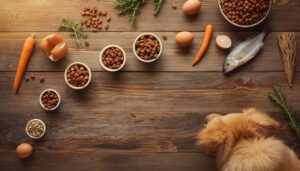
What your puppy eats matters just as much as how often they eat. Nutritional needs shift at every stage, and getting the right balance of protein, fat, vitamins, and minerals is what turns a feeding schedule into real, healthy growth.
Here’s what to keep in mind at each stage.
Protein, Fat, and Carbohydrate Requirements
Your puppy’s daily ration revolves around three macros working in tandem.
Protein quality sources — ideally named meats — supply amino acids for building lean tissue, generally at 22–32% of the diet.
Fat energy density is higher than most owners realize: fat delivers 9 calories per gram, fueling both growth and play.
Carb timing strategy fills the gaps, steadying energy between meals.
A smart caloric distribution across feedings keeps the macro ratio balance working all day.
Essential Vitamins and Minerals for Growth
Macros do the heavy lifting, but vitamins and minerals are where real growth happens.
Vitamin D benefits calcium absorption, and keeping the calcium phosphorus ratio between 1.2:1 and 1.5:1 protects developing joints. DHA omega-3 for brain development enhances sharp vision and cognition. B-vitamin energy keeps metabolism humming, while iodine’s thyroid health regulates growth rate.
Here are the essential vitamins and minerals for developing puppies:
- Calcium & Vitamin D — build dense, properly formed bones
- Zinc immune support — fuels enzymes and healthy tissue repair
- Iron — forms hemoglobin so oxygen reaches growing muscles
- B vitamins — convert food into usable energy between meals
- Iodine — enhances thyroid regulation for steady, healthy development
Special Nutrition for Large and Small Breeds
Vitamins and minerals set the stage — but breed size determines how you apply them.
Large breed puppies need careful Calcium Control and Fat Management to protect developing joints. Their foods often include Omega‑3 Joint Support and L‑Carnitine Supplement to balance growth without excess strain.
Small breed puppies, meanwhile, require high Calorie Density since they burn through energy quickly and risk hypoglycemia between meals.
| Feature | Large Breed Puppies | Small Breed Puppies |
|---|---|---|
| Calcium Control | Strictly limited | Standard levels |
| Calorie Density | Moderate, controlled | High per bite |
| Omega‑3 Joint Support | Included | Sometimes included |
Feeding frequency and meal planning for puppies, portion control and obesity prevention in puppies, and puppy nutritional requirements by age all shift depending on your dog’s size — so matching the formula to the breed matters more than most owners realize.
Signs You Should Adjust Feeding Frequency

Your puppy’s feeding schedule isn’t something you set once and forget — it needs to shift as they grow. A few clear signals can tell you when it’s time to make a change.
Watch for these three things.
Monitoring Body Condition and Weight
Think of body condition scoring as your built-in progress report. Once a week, run your hands along your puppy’s ribs — you should feel them easily without pressing hard. That’s rib palpation, and it tells you more than the scale alone.
For consistent weighing and growth chart analysis, follow these steps:
- Weigh at the same time daily, before meals
- Log weight in grams or pounds
- Plot results on a breed-specific growth chart
- Score body condition weekly using a 1–9 scale
Identifying Overfeeding or Underfeeding
Your puppy’s body tells you plenty — if you know what to look for.
A rounded, tight belly after meals, loose stool, or vomiting patterns that repeat signals overfeeding. Appetite cues like bowl-licking and restless pacing after eating usually mean underfeeding.
Watch energy levels too: sluggish after meals often means too much; consistently thin and searching means too little.
Adjust portion control in small steps using your Body Condition Score.
Consulting Your Veterinarian for Guidance
Your vet is your best partner when feeding questions get complicated. Regular vet health checks catch issues — parasite screening, dental evaluation, medication timing — that directly affect how your puppy eats and absorbs nutrients. A solid follow-up plan keeps you ahead of problems before they snowball.
Your vet covers:
- Veterinary nutrition guidelines specific to your puppy’s breed and age
- Veterinary guidelines for puppy calorie intake adjustments
- Veterinary prescription diets for sensitive stomachs
- Veterinary guidance for puppy diet decisions during transitions
- Veterinary guidance and online nutrition consultations for puppies
Transitioning to Fewer Meals as Puppies Grow

As your puppy gets older, their feeding schedule doesn’t stay the same — and that’s a good thing. Knowing when and how to cut back on meals makes the whole process smoother for both of you.
Here’s what to watch for and how to handle the shift.
When to Move From Three to Two Meals Per Day
Around six months of age, most puppies are ready to drop from three feedings a day to twice daily — but the calendar isn’t the only signal worth watching. Blood sugar stability matters too, especially for smaller breeds still prone to energy dips between meals.
When you make the switch, portion size redistribution is straightforward: keep the same total daily amount, just split it into two bigger servings.
- Shift gradually over one to two weeks
- Use growth curve indicators to confirm steady progress
- Factor in activity level demands when timing meals
Your puppy feeding schedule should flex with your dog, not fight it.
Signs Your Puppy is Ready for Fewer Meals
Your puppy will tell you when they’re ready — you just have to know what to watch for. Steady weight gain over two to four weeks, normal stool consistency, and calm post-meal behavior are the clearest green lights. Reduced hunger cues between feedings and consistent energy levels matter too.
If your puppy’s puppy feeding schedule and puppy growth stages are tracking well, fewer meals are likely the right next step.
Supporting Healthy Transitions
Shifting to fewer meals works best as a slow, steady process — not a sudden leap. Redistribute calories across remaining meals rather than cutting total daily food, and keep water available all day for hydration consistency.
Gradual portion changes reduce stomach upset, so monitor stool quality for a few days after each adjustment.
Your vet can confirm the timing aligns with your puppy’s growth stages.
Puppy Feeding Tips for Busy Owners

Life gets busy, and a puppy doesn’t care about your calendar. The good news is that little planning goes a long way toward keeping mealtimes consistent — even on chaotic days.
Here are a few simple tips that actually work.
Feeding in a Distraction-free Environment
Even the calmest puppy struggles to eat well when the house is buzzing. A quiet feeding area — same spot every time, lights soft, toys cleared away — makes a real difference.
Sound control matters too: sudden noises can interrupt feeding mid-bite.
Try these three simple steps:
- Remove toys before placing the bowl
- Use calm lighting, not harsh overhead lights
- Keep the bowl in a consistent bowl position every meal
Maintaining Routine When Away From Home
Life pulls you away from home — that’s just reality. When it does, keeping your puppy feeding routine intact matters more than most owners realize.
Use automated feeders to hit exact meal times, store dry food in sealed, pre-portioned meal containers kept out of heat, and confirm water access is uninterrupted.
reliable backup caregiver who knows your feeding schedule, portions, and crate temperature checks covers everything else.
Using Feeding Time for Crate Training and Bonding
Your feeding schedule is already doing double duty — you just need to put it to work. Place each meal inside the crate using a consistent crate cue association like “in your crate,” and you’ve quietly started behavioral conditioning without a formal training session.
- pre meal command — sit or lie down — teaches calm eating routine before the bowl appears
- Rewarded crate entry with a small meal portion builds positive associations fast
- Meal based bonding through soft praise during feeding frequency deepens trust naturally
Frequently Asked Questions (FAQs)
What is the 7 7 7 rule for puppies?
The 7 7 7 rule is a socialization guideline encouraging owners to expose puppies to Seven New People, Seven New Places, and Seven New Sounds — plus seven Positive Challenges — to build lasting confidence during key Socialization Milestones.
What is the 3-3-3 rule with puppies?
The 3-3-3 rule maps your puppy’s Adjustment Timeline across three Training Phases: three Decompression Days to settle in, three Habit-Building Weeks to establish routine, and three Bonding Months for full integration.
Can puppies eat human food as treats?
Most human food isn’t safe for puppies.
Stick to safe treat options like plain cooked chicken, blueberries, or carrots — and completely avoid the toxic food list: chocolate, grapes, onions, and xylitol.
What if my puppy skips a meal?
Don’t panic — one skipped meal is rarely an emergency.
Check your hydration check basics first: is your puppy still drinking? If they stay active and alert, simply offer fresh food at the next scheduled time.
Should water be available all day long?
Yes — keep a fresh water bowl within reach at all times. Puppies can’t schedule their thirst, and continuous hydration promotes healthy digestion, energy, and development throughout the day.
How to switch between puppy food brands?
Switch brands gradually over 7–10 days using a gradual mix ratio: start 25% new, 75% old, then shift slowly. Stool observation daily keeps the change timeline on track.
Formula consistency matters — if upset persists, veterinary consultation helps.
When do puppies stop needing nighttime feedings?
Most puppies stop needing nighttime feedings between 12 and 16 weeks, once weaning milestones are behind them and a consistent puppy feeding schedule covers their energy needs through the day.
How long should each feeding session last?
Each meal should last about 10–15 minutes. Short, Supervised Meal Duration keeps sessions consistent and digestion smooth.
Set a Bowl Removal Window, stick to Portion-Based Timing, and apply Slow Eater Adjustments as needed.
Should puppies eat before or after exercise?
After exercise, wait 30–60 minutes before offering a full meal. A small pre exercise snack works better than heavy feeding before play to avoid digestive upset risk.
Do puppies need water between meals?
Yes, absolutely. Fresh water should be available all day long — not just at meals. Dehydration can sneak up fast, especially in young pups after play or on warm days.
Conclusion
Feeding your puppy well isn’t about ideal—it’s about paying attention.
How often puppies should eat per day shifts as they grow, and following those shifts is one of the quietest forms of care you can offer.
Small bodies, big breeds, and every size between have different needs, but the principle stays the same: right food, right amount, right time.
Nail that rhythm, and you’re already doing more for your puppy than most owners ever realize.