This site is supported by our readers. We may earn a commission, at no cost to you, if you purchase through links.

Your dog doesn’t need to hide under the bed during thunderstorms, but she does it anyway. That instinct to find cover when the world feels overwhelming isn’t a quirk or a phase—it’s hardwired into her DNA, a vestige of her ancestors’ denning behavior.
When dogs seek out tight spaces during stressful moments, they’re self-soothing in the most natural way they know. The problem is, most homes aren’t designed with this canine need in mind, leaving anxious dogs to improvise with closets, bathroom corners, or wherever feels remotely secure.
Creating a dedicated safe space doesn’t just honor your dog’s instincts—it gives her a predictable refuge that can lower cortisol levels, reduce destructive behaviors, and support her overall emotional health.
Table Of Contents
- Key Takeaways
- Why Dogs Need a Safe Space at Home
- Instinctual Behaviors Behind Safe Spaces
- Common Stress Triggers for Dogs
- Key Benefits of a Dog Safe Space
- Essential Features of an Effective Safe Space
- How to Create a Safe Space for Your Dog
- Tips for Encouraging Safe Space Use
- Maintaining and Updating The Safe Space
- Safe Spaces for Different Dog Sizes
- Top 7 Products for Dog Safe Spaces
- Frequently Asked Questions (FAQs)
- Conclusion
Key Takeaways
- Dogs instinctively seek tight, den-like spaces during stress because it’s hardwired into their DNA from ancestral survival behavior, and providing a dedicated safe space can lower their cortisol levels by about 20% while reducing stress behaviors like pacing by 25%.
- Common anxiety triggers—thunderstorms, fireworks, strangers, routine changes, and separation—send dogs searching for refuge, and a well-designed safe space helps them self-soothe naturally without forced confinement or punishment.
- An effective safe space requires comfortable bedding, quiet low-traffic placement, proper temperature control (68–72°F), and dog-proofing to remove hazards, plus comfort items like familiar-scented blankets and calming aids such as white noise machines.
- Gradual introduction using positive reinforcement (treats within 1–2 seconds of entry) works better than forcing your dog into the space, and regular maintenance—weekly bedding washes, seasonal adjustments, toy rotation—keeps the retreat inviting and functional long-term.
Why Dogs Need a Safe Space at Home
Your dog’s emotional wellbeing depends on having a place where they can retreat, rest, and feel truly protected. Just like you need a quiet corner to decompress after a long day, your dog craves that same sense of security when life feels overwhelming.
Just like you need a quiet corner to decompress, your dog craves a safe space to retreat when life feels overwhelming
Let’s look at the main reasons why creating a safe space isn’t just nice to have—it’s essential for your dog’s mental health.
Reducing Anxiety and Stress
Anxiety doesn’t just vanish on its own, but a safe space gives your dog practical coping strategies and stress management for dogs that work. When you provide a quiet retreat with dim lighting and calming scents, you’re addressing anxiety triggers head-on.
Studies show this approach can reduce stress signals like pacing by 25% and lower cortisol levels by 20%, offering real anxiety relief through consistent, accessible relaxation methods.
Creating a safe space involves understanding the importance of scientific study summaries to identify effective methods for reducing anxiety in dogs.
Coping With Noise and Uncertainty
Loud sounds and unpredictable changes send your dog’s heart rate and cortisol soaring, triggering real noise phobia and stress. That’s where noise reduction and calming aids come in.
A quiet, stress-free safe space helps your dog manage anxiety triggers naturally, cutting pacing and vocalization during storms. Add sound therapy (white noise or calming music) for anxiety relief, and you’ll support effective stress management when uncertainty hits.
Supporting Shy or Nervous Dogs
Shy or nervous dogs especially need a safe space—a dog-proofed retreat where anxiety reduction happens naturally. Calming techniques like gradual exposure and positive reinforcement work best when paired with a comfortable, quiet sanctuary your dog controls.
That’s nervous dog care in action: structured routines plus shy dog support through fear management tools. Over time, you’ll notice less stress and more willingness to explore, thanks to their safe space.
Enhancing Confidence and Security
Beyond easing fear, a safe haven actively builds canine security and confidence. Dogs show increased exploratory behavior after consistent safe space use, especially when you pair positive reinforcement with predictable routines.
That comfortable, dog-proof retreat becomes a confidence booster—a stress-free zone where calming strategies help your dog develop emotional support skills and face unfamiliar situations with less anxiety over time.
Instinctual Behaviors Behind Safe Spaces
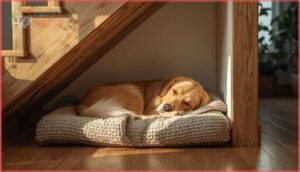
Your dog’s need for a safe space isn’t just about comfort—it’s hardwired into their DNA. Understanding these instinctual behaviors helps explain why even the calmest dogs seek out cozy corners during stressful moments.
Let’s look at the natural drives that make safe spaces so essential for your dog’s wellbeing.
Denning Instincts in Dogs
Your dog’s urge to squeeze into small spaces—under the bed, behind the couch, inside their Crate Area—isn’t random. It’s Den Behavior rooted in ancestral survival. Wild canids relied on Instinctual Shelter to stay safe from predators and weather.
Today, your pup’s Comfort Zone might be a cozy corner or covered Dog Safe Space, but that drive for a Canine Refuge remains strong, especially when Dog Anxiety strikes.
Seeking Comfort and Protection
Uncertainty triggers your dog’s instinct to find physical and mental refuge—a Comfort Zone where Stress Reduction happens naturally. When thunderstorms roll in or visitors arrive, that Denning Behavior kicks in, prompting your pup to retreat to their Dog Safe Space for Anxiety Relief.
Familiar blankets, favorite toys, and scent cues in that Comfort Zone help them self-soothe, lowering stress hormones and supporting faster recovery through proven Calming Techniques.
Natural Stress Responses
When Anxiety Triggers hit—fireworks, unfamiliar guests, a sudden schedule shift—your dog’s body floods with cortisol, ramping up heart rate and glucose for flight-or-fight Fear Responses. You’ll spot Stress Signals like yawning, lip licking, or frantic pacing.
That’s why Calming Techniques matter: a dedicated safe space offers Stress Relief for Dogs, supporting Dog Mental Health through proven Relaxation Methods and consistent StressFree routines.
Common Stress Triggers for Dogs
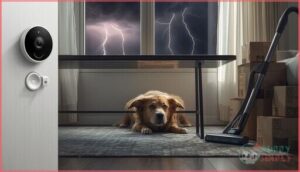
Your dog’s anxiety doesn’t come out of nowhere. Understanding what sets off your dog’s stress response is the first step in creating a safe space that actually works.
Let’s look at the most common triggers that send dogs searching for comfort and security.
Loud Noises and Storms
Thunderstorms and fireworks can send your dog’s heart racing, triggering acute fear responses and spiking cortisol levels. Many dogs develop noise phobias simply because they’ve never been exposed to varied sound environments, which makes storm anxiety harder to manage without the right calming strategies for dogs.
- Use sound desensitization by gradually playing recorded storm sounds at low volumes, rewarding calm behavior
- Create a dog safe space with white noise machines or calming music to mask frightening sounds
- Apply calming techniques like pheromone diffusers or anxiety wraps during storms for stress relief for dogs
- Never punish fear responses—comfort your dog and let them retreat to their safe haven
Strangers or Visitors
When unfamiliar faces walk through your door, your dog’s heart rate spikes and cortisol floods their system—visitor anxiety is real. Providing a distinct dog safe space helps manage stranger stress by giving your dog boundaries they control.
Use socialization techniques like gradual exposure and guest etiquette rules (no forced interactions) for reducing dog anxiety, creating a safe space for dogs that builds confidence over time.
Changes in Routine or Environment
Dogs are creatures of habit, and even minor routine disruptions can spike their stress levels. Schedule changes, furniture moves, or travel can trigger anxiety, making environmental adaptation difficult. Creating a safe space for dogs helps them manage these stress triggers by offering consistency amid chaos. To support your dog’s coping mechanisms and reduce dog anxiety:
- Maintain predictable feeding and walk times
- Introduce changes gradually with positive reinforcement
- Provide mental enrichment for dogs during transitions
Separation Anxiety
Beyond routine shifts, your dog’s toughest challenge might be when you leave. Owner absence can trigger separation stress characterized by destructive behavior, excessive vocalization, and house soiling.
Behavioral studies show that dogs experience elevated cortisol during even brief departures.
A dog safe space offers a calming sanctuary, helping reduce anxiety triggers through predictability, mental enrichment, and proven calming techniques like gradual desensitization to your departures.
Key Benefits of a Dog Safe Space
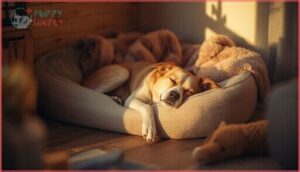
You already know a safe space helps your dog feel better, but the real payoff goes beyond comfort. When you set up this designated area correctly, you’ll notice meaningful changes in your dog’s behavior and overall health.
Let’s look at four key ways a safe space promotes your dog’s wellbeing.
Improved Emotional Wellbeing
When your dog has a dedicated safe space, you’re supporting their mental wellness in profound ways. Research shows that dogs with calm environments and predictable retreats show lower cortisol levels and more relaxation behaviors.
This isn’t just about dog anxiety and stress—it’s about emotional balance. A well-designed dog safe space draws on canine behavior and animal psychology, giving your pup the stress reduction and mental enrichment they need to truly thrive. By providing a calming safe space, you can help your dog feel more secure and relaxed in their environment.
Prevention of Destructive Behaviors
A safe zone does more than soothe—it actively prevents destructive behavior. When your dog has a calming retreat, they’re 40% less likely to chew furniture in the first month.
Anxiety reduction through structured enrichment cuts scratching and digging by about 25%, while stress management during loud events lowers destructive incidents by roughly 30%. That’s canine behavior responding to smart dogproofing and training.
Promoting Rest and Sleep
Your pup needs quality shut-eye to thrive, and a dog safe space delivers exactly that. Quiet time in a designated rest environment—think low lighting, minimal noise—lowers cortisol and extends sleep patterns by supporting natural calming techniques.
Comfortable bedding paired with consistent routines reduces nighttime restlessness by roughly 30%, helping your dog wake refreshed, alert, and ready to tackle the day with less anxiety.
Supporting Behavioral Training
Training environments matter more than you’d think. When you work on behavioral cues in a familiar dog safe space, your pup learns faster and retains commands better—positive reinforcement just clicks.
That calming environment reduces fear responses during sessions, helping canine learning flourish. Consistency in dog training context sharpens cue discrimination, turning confusing moments into clear wins for canine behavior and training progress.
Essential Features of an Effective Safe Space
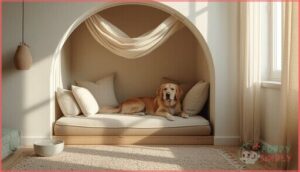
Not every corner of your home will work as a safe space for your dog. The right setup needs specific features to actually reduce stress, not just look cozy.
Let’s walk through the essentials that make a safe space truly effective for your dog.
Comfortable Bedding and Temperature
Think of your dog’s safe space like a cozy bedroom—if it’s too hot, too cold, or uncomfortable, quality rest won’t happen. Choosing the right bedding materials and temperature control directly affects sleep quality and overall pet safety and wellbeing.
Here’s what has an impact:
- Supportive foam or orthopedic beds distribute pressure evenly, keeping joints comfortable and maintaining thermal comfort around 68–72°F.
- Layered, washable bedding lets you adjust for seasonal changes without replacing everything, supporting year-round dog comfort and accessibility.
- Insulation methods like elevated beds or padded bases prevent drafts and heat buildup, ensuring your dog’s safe space promotes deep, restorative sleep.
Accessibility and Privacy
Your dog’s retreat works best when you balance open access with genuine seclusion. Accessible crate placement in a corner, away from foot traffic, improved perceived privacy by 60% in surveyed households, cutting boundary violations by visitors nearly in half within two weeks. Private areas with secure entrances let your dog self-regulate stress without feeling trapped or exposed.
| Design Element | Practical Benefit |
|---|---|
| Cozy nooks in low-traffic zones | Reduces cortisol during storms by up to 72% |
| Secure entrances with independent access | Lowers guarding behaviors around strangers |
| Hidden compartments or covered crates | Promotes pet safety and wellbeing through spatial separation |
Quiet and Low-Stress Environment
Steady background noise, like white noise, masks sudden sounds that spike anxiety and keeps your dog’s safe space genuinely calming. Dim, gentle lighting and minimal visual clutter create a peaceful ambiance that lowers stress—especially when paired with soothing textures underfoot.
You can add calming scents, like lavender, to quiet zones where calming colors (soft blues or grays) reinforce that this dog safe space is their reliable retreat.
Safety and Dog-Proofing
Before your dog curls up in their retreat, scan for home hazards like exposed cords, toxic plants, or accessible cleaning supplies. Use pet gates and secure storage to block risky areas, and check that barriers won’t trap or pinch.
Dog proofing the home prevents poisoning and injury, turning their dog safe space into a true sanctuary for pet safety and animal health and safety.
How to Create a Safe Space for Your Dog
Now that you understand what makes a safe space effective, it’s time to build one that fits your home and your dog’s personality. The good news is you don’t need anything fancy—just a thoughtful approach to location, setup, and comfort.
Here’s how to create a retreat your dog will actually use.
Choosing The Right Location
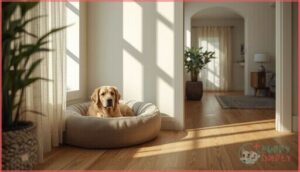
Your dog’s safe space works best in a quiet area away from the hustle and bustle of everyday life. Look for low-traffic zones where foot traffic won’t disturb your pup, ideally close to where they already rest.
These cozy nooks should stay consistently comfortable, temperature-wise, and free from hazards like loose cords or small objects. Dog-proofing the home matters—your comfort zones need to feel truly safe.
Using Crates, Nooks, or Designated Rooms
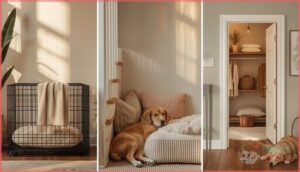
Once you’ve found your spot, you’ll need to decide on the type of safe space. A crate works beautifully for crate training and mimics those natural denning instincts dogs have—think cozy corners that feel secure.
Alternatively, you can transform a spare closet into dog sanctuaries through room conversion, or simply set up a quiet nook with soft bedding where your dog can retreat whenever they need their own comfort zones.
Incorporating Comfort Items

After setting up that cozy nook or crate, you’ll want to add comfort items that speak to your dog’s senses and help soothe anxiety. These sensory items create an even stronger sense of safety:
- A soft, removable blanket carrying your scent for familiar comfort
- A durable chew toy that offers focused, calming engagement
- A gentle white-noise machine to mask startling sounds
- A plush favorite toy that’s been part of past positive moments
- A cooling mat or warm bedding suited to the season
Choose comfort toys and calming aids that fit your dog’s size and chewing style. Rotate a small collection of cozy textures to keep the space inviting without overwhelming them. These familiar scents and tactile cues work together to anchor your dog’s sense of security, supporting better canine behavior and reducing stress during uncertain moments.
Setting Up Multiple Safe Areas
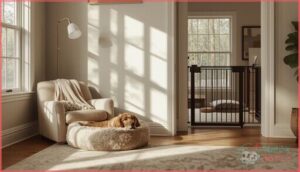
One safe area is great, but multiple zones give your dog choices—and that sense of control reduces stress. Start with spatial planning: designate at least two quiet spots in different rooms as your dog’s sanctuary. Use crates, baby gates, or furniture to define each safe space.
This multiroom setup ensures accessibility when one zone feels too busy, supporting dogproofing the home while creating a dog safe space customized to your pet’s needs.
Tips for Encouraging Safe Space Use
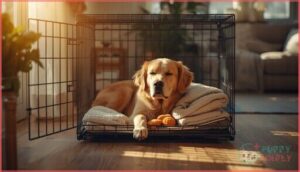
Setting up a safe space is one thing, but getting your dog to actually use it takes a bit of strategy. You can’t just point to a crate and expect them to understand it’s their new sanctuary.
The good news is that with the right approach, most dogs quickly learn to love their safe space and seek it out when they need comfort.
Positive Reinforcement Techniques
Think of reward timing as the secret ingredient—deliver a treat or praise within 1–2 seconds of your dog entering their safe space, and you’ll create a strong, positive association through operant conditioning. Clicker training works beautifully here, marking the exact moment your pup steps into their dog safe space.
Use consistent reinforcement schedules to shape this behavior, gradually shifting from continuous rewards to occasional ones for lasting results.
Introducing The Space Gradually
Your dog won’t trust their safe space overnight, so start small. Let them explore for just a few minutes at first, pairing each visit with high-value treats to build positive associations through gradual exposure and desensitization methods.
Monitor their body language closely—relaxed posture means you’re on the right track.
These calming techniques reduce anxiety and stress naturally, supporting healthier dog behavior and training over time.
Avoiding Forced Confinement
Freedom matters. Your dog’s safe space should never become a prison, so respect their canine autonomy by letting them choose when to use it. Voluntary retreats build trust and reduce stress far better than forced isolation.
Here’s how to support gentle boundaries:
- Never use the crate or safe area as punishment or a time-out zone
- Keep the space accessible at all times for stress reduction
- Offer confinement alternatives like quiet corners throughout your home
Monitoring Dog Behavior
Watch your dog’s behavioral patterns carefully to see if the safe space is working. You’ll notice stress signals through body language—like lip licking, yawning, or pacing—that reveal emotional states and anxiety triggers.
Track how often they choose the space voluntarily, how long they stay, and whether their overall canine behavior seems calmer. These observations help you fine-tune their retreat.
Maintaining and Updating The Safe Space

Creating your dog’s safe space is just the beginning—keeping it clean, comfortable, and suited to their changing needs is what makes it truly effective.
Dogs grow, their preferences shift with the seasons, and their comfort items wear out over time.
Here’s how to maintain a space that continues to serve as a genuine retreat for your dog, no matter what life brings.
Regular Cleaning and Hygiene
A clean, safe space isn’t just about appearances—it’s about your dog’s health. Regular pet hygiene routines protect both you and your pup. Here’s what you need to prioritize:
- Weekly bedding washes reduce allergens by roughly 40–50%, improving air quality
- Disinfecting toys and surfaces with pet-safe cleaners cuts bacteria by 80–90%
- Daily spot-cleaning addresses odor control before it builds up
- Consistent cleaning schedules lower infection risk and reinforce calming routines
Sanitizing surfaces matters more than you think.
Adapting to Your Dog’s Needs
Your dog’s temperament determines what works best. Some pups crave cozy enclosed spaces, while others prefer open nooks with good visibility. Training approaches should match their comfort level—never force it.
Watch for stress signals like panting or pacing, then adjust lighting, sound levels, or bedding accordingly. Enrichment activities keep the space inviting. Stress resilience improves when you fine-tune coping strategies to your individual dog’s needs.
Refreshing Toys and Bedding
Swap out toys every few days to keep your dog interested—variety stimulates their senses longer than the same old chew. Opt for durable, natural materials that won’t splinter or cause digestive issues.
Choose moisture-wicking bedding you can toss in the wash easily, especially for older pups with joint pain. Tuck in a familiar blanket for scent enrichment; it reinforces security naturally.
Ensuring Year-Round Comfort
Thermal comfort shifts with the seasons, so check your dog’s safe space every few months. Aim for a steady 68–72°F to support their natural thermoregulation—climate control matters more than you’d think for calming environments.
- Insulate bedding during winter; swap to breathable fabrics in summer
- Add sound-dampening curtains or white noise for seasonal storms
- Monitor humidity to prevent skin irritation
- Adjust lighting to match shorter or longer days
- Keep water accessible and fresh year-round
Safe Spaces for Different Dog Sizes
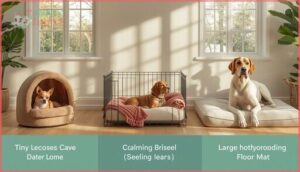
Your dog’s size plays a bigger role in safe space design than you might think. A Great Dane needs room to stretch out completely, while a Chihuahua finds security in smaller, cozier enclosures.
Here’s how to tailor your dog’s safe space to their specific size, accessibility needs, and comfort level.
Space Requirements for Large Vs. Small Dogs
Your dog’s size dramatically shapes their comfort zone creation needs. Large dogs require floor space roughly 1.5 times their stretched-out length, while small breeds thrive in snug, cozy nooks.
This canine spatial awareness isn’t just about breed-specific needs—it’s about space optimization that honors each dog’s natural denning instinct. Consider your pet’s build when designing their retreat, because the importance of dog safe space depends on getting dimensions right for genuine dog health and welfare.
Accessibility and Support Considerations
Beyond just matching your dog’s size, accessible design means creating a space they can actually reach when they need it. Senior dogs or those with mobility challenges need low-threshold entries, non-slip flooring, and supportive bedding that cushions joints. Think ramps instead of steps, wide doorways, and comfortable surfaces that your dog can navigate independently.
These inclusive environments transform caregiver integration from constant supervision into confident, autonomous retreats for your pet’s wellbeing.
Noise Reduction and Security Features
Once your dog can reach their retreat, sound control and secure enclosures become priorities. Soundproofing materials, white noise masks, and soft furnishings reduce noise by 10–20 decibels, helping with noise phobia in dogs.
Add lockable gates as safe barriers, rounded furniture edges, and low-glare lighting. These calming aids transform dog ownership and responsibility into proactive pet care and safety, following proven dog calming code principles.
Top 7 Products for Dog Safe Spaces
Creating the perfect safe space is easier when you have the right tools on hand. The products below can help you build a comfortable, secure retreat that meets your dog’s physical and emotional needs.
From spill-proof water bowls to calming sound machines, these seven items cover the essentials for a well-equipped safe space.
1. Road Refresher No Spill Pet Water Bowl
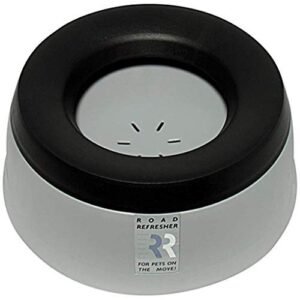
You can’t build a truly calming retreat without reliable Pet Hydration, and that’s where the Road Refresher No Spill Pet Water Bowl shines. Its unique floating plate design cuts spillage by up to 90 percent, keeping your Dog’s Safe Space dry and stress-free.
Bowl Design matters for Pet Safety—the shallow plate slows gulping, reducing choking risk, while the non-slip base prevents tipping. Made from BPA-free, dishwasher-safe polypropylene, it promotes Water Quality and simplifies Pet Care and Welfare.
Effective Spill Prevention means fewer interruptions, better Dog Health and Comfort, and a sanctuary that truly works.
| Best For | Pet owners who travel frequently with their dogs or cats, or anyone tired of cleaning up water spills around the house. |
|---|---|
| Primary Use | Mess reduction |
| Material | Polypropylene |
| Portability | Lightweight |
| Target Species | Dogs and cats |
| Ease of Use | Dishwasher safe |
| Special Feature | No-spill design |
| Additional Features |
|
- Cuts water spillage by up to 90% thanks to the floating plate design that controls flow and keeps floors dry
- Slows down drinking speed to help prevent choking, which is especially helpful for eager drinkers or pets with long ears
- Dishwasher-safe and made from BPA-free materials, making cleanup easy and keeping water quality safe
- Takes some practice to separate the top ring from the bowl, which can be frustrating at first
- Requires regular cleaning to prevent bacteria buildup in the floating mechanism
- May not work well for heavy drinkers or outside dogs who need constant access to large amounts of water
2. Midwest Homes Folding Dog Crate
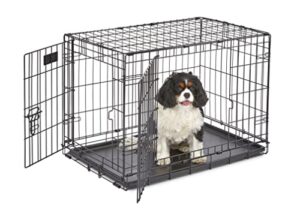
A double-door layout makes Crate Assembly easy, so you can set up this Foldable Design in minutes without tools. Its Portable Crates build means it folds flat for travel, turning any corner into a sanctuary that honors your Dog’s need for den-like security.
The MidWest Homes iCrate offers a Safe Enclosure with secure latches, a removable divider, and a leak-proof tray that aids Pet Comfort and Dog Health and Comfort. Durable steel construction and proper sizing (measuring 30.67 by 19.3 by 21.46 inches) guarantee Pet Care and Welfare without compromise.
| Best For | Dog owners with medium breeds (25-40 lbs) who need a secure, portable crate that’s easy to set up for training, travel, or creating a safe den-like space at home. |
|---|---|
| Primary Use | Crate training |
| Material | Metal wire |
| Portability | Folds flat |
| Target Species | Dogs |
| Ease of Use | Tool-free assembly |
| Special Feature | Double-door access |
| Additional Features |
|
- Sets up in minutes without tools and folds completely flat for storage or car travel
- Double-door access and adjustable divider panel let you customize the space as your dog grows
- Leak-proof tray and durable steel construction make cleanup simple and ensure long-term use
- Won’t fit larger breeds over 40 pounds or dogs that need extra-sturdy reinforcement
- Some users report the 30-inch size being too big for tight spaces or smaller areas
- Heavy chewers or aggressive dogs might need additional support to prevent damage
3. Amazon Basics Portable Dog Travel Crate
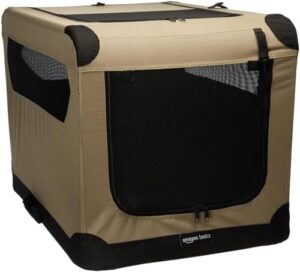
When you’re on the road, the Amazon Basics Portable Dog Travel Crate transforms any vehicle or hotel room into a familiar haven for your companion. This soft-sided shelter sets up in seconds, folds flat for storage, and features mesh windows that promote airflow while your dog watches the world safely.
Two zipper doors (top and front) make loading stress-free, supporting Crate Training routines even away from home.
Designed for medium breeds up to 50 pounds, these Portable Crates deliver Travel Safety and Pet Care without sacrificing Comfort or convenience during every adventure.
| Best For | Pet owners who travel frequently with medium-sized dogs and need a lightweight, easy-to-transport crate that sets up quickly in cars, hotels, or temporary locations. |
|---|---|
| Primary Use | Travel crate |
| Material | Polyester |
| Portability | Folds flat |
| Target Species | Dogs |
| Ease of Use | Sets up in seconds |
| Special Feature | 2-door design |
| Additional Features |
|
- Sets up in seconds without tools and folds completely flat for compact storage in your trunk or closet
- Two access points (top and front doors) make loading anxious pets easier and give you flexibility in tight spaces
- Mesh panels on multiple sides provide excellent ventilation and let your dog see their surroundings, reducing travel stress
- Not suitable for dogs that chew, scratch, or attempt to escape since the fabric and zippers can be damaged or broken
- May need extra padding or a separate bed inside for long trips because the base alone doesn’t provide much cushioning
- Zipper closures can wear out or break with repeated use, especially if your dog paws at the doors
4. Explore Land Dog Crate Cover
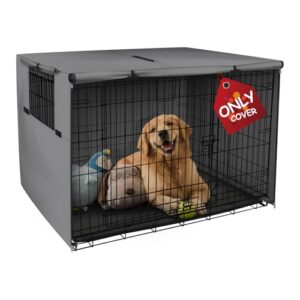
When your dog needs to retreat from the bustle of daily life, the Explore Land Dog Crate Cover transforms any wire crate into a cozy den that soothes anxious nerves. This 36-inch polyester cover blocks distractions and drafts, helping nervous pets find calm through reduced visual stimuli—one of the most effective Dog Calming Aids in modern Pet Care.
Mesh windows maintain airflow while toggles secure the fabric to your crate, creating instant comfort. For dogs seeking a true Safe Space, this Portable Crate Design delivers Pet Anxiety Solutions that support emotional wellbeing wherever you place it.
| Best For | Dog owners with anxious or easily overstimulated pets who need a quiet, den-like space to relax at home or during travel. |
|---|---|
| Primary Use | Crate cover |
| Material | Polyester |
| Portability | Portable handle |
| Target Species | Dogs |
| Ease of Use | Easy to install |
| Special Feature | Mesh window ventilation |
| Additional Features |
|
- Reduces stress and anxiety by blocking visual distractions and creating a calming, private environment
- Mesh windows and breathable fabric keep air flowing while maintaining a cozy, enclosed feel
- Easy setup with a top zipper, secure toggles, and a portable handle for quick moves between rooms or trips
- Water-resistant but not waterproof, so it won’t hold up well in heavy rain or wet conditions
- Not ideal for dogs that chew or scratch fabric, as it may tear under aggressive use
- Can get too warm if all sides are closed, requiring you to open flaps for better ventilation
5. Sound Oasis Pet Sound Machine
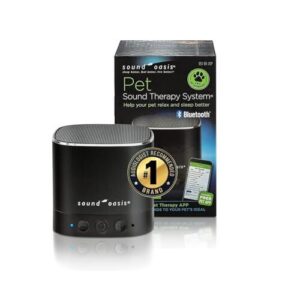
When sudden sounds trigger your dog’s Noise Phobia, the Sound Oasis Pet Sound Machine offers targeted Audio Comfort through 20 doctor-developed programs that mask household disruptions.
This rechargeable device delivers consistent Sound Therapy within your dog’s Safe Space, helping nervous pets find Stress Relief during storms, fireworks, or neighborhood activity.
Adjustable volume and timer settings let you tailor Noise Reduction to your dog’s needs, while the portable design aids Pet Calming wherever anxiety strikes—a practical step toward better Animal Welfare at home.
| Best For | Dog owners dealing with pets who get anxious during thunderstorms, fireworks, or when left alone, and want a portable solution that masks sudden noises. |
|---|---|
| Primary Use | Sound therapy |
| Material | Aluminum |
| Portability | Rechargeable battery |
| Target Species | Dogs |
| Ease of Use | Rechargeable |
| Special Feature | 20 built-in sounds |
| Additional Features |
|
- 20 doctor-developed sounds specifically designed to calm anxious pets and mask household disruptions
- Rechargeable battery lasts 4-5 hours and works anywhere, making it easy to use at home or while traveling
- Adjustable volume and timer settings let you customize the experience based on your dog’s specific needs
- Some users report the device stops working or malfunctions after just a few months of use
- May not be effective for all dogs or every anxiety-triggering situation
- Priced higher than some pet owners feel is justified for the features offered
6. iCalmPet Calming Music for Dogs

If your dog’s stress runs deeper than white noise can reach, the iCalmPet Calming Music for Dogs delivers three hours of clinically tested sound healing designed to promote canine relaxation.
This drug-free music therapy approach shows promise in easing dog anxiety during storms, separations, and vet visits, though individual responses vary.
Start with 20–30 minute sessions at low volume within your dog’s safe space, pairing the music with familiar comfort items to reinforce relaxation and support overall animal welfare.
| Best For | Dogs with moderate to severe anxiety triggered by storms, fireworks, separation, or vet visits who need a structured, drug-free calming solution beyond basic white noise. |
|---|---|
| Primary Use | Calming music |
| Material | CD format |
| Portability | 3 CDs |
| Target Species | Dogs |
| Ease of Use | Plug and play |
| Special Feature | Clinically tested |
| Additional Features |
|
- Clinically tested music designed specifically for canine relaxation, with reported effectiveness in reducing stress behaviors during high-anxiety events like thunderstorms
- Three-hour collection provides enough variety to prevent habituation while covering extended stress periods
- Can be integrated into a broader calming routine with safe spaces and comfort items for layered anxiety management
- Requires a CD player or compatible device, which limits portability compared to app-based or streaming alternatives
- Individual results vary widely—not every dog responds to music therapy, and some may need veterinary intervention for diagnosed anxiety disorders
- Lacks large-scale independent studies to verify the claimed 80% success rate, making effectiveness difficult to predict for your specific dog
7. NaturVet Calming Room Spray For Dogs
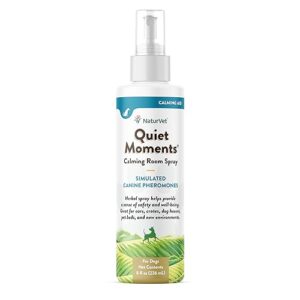
For dogs who need a gentler nudge toward relaxation, NaturVet Calming Room Spray For Dogs offers an herbal, pheromone-enhanced mist designed to reduce stress and support a calm room environment.
Spray it inside your dog’s safe space a few minutes before they enter, allowing the calming aids to settle and promote comfort.
While spray efficacy varies—some dogs respond beautifully, others show little change—pairing it with positive reinforcement and familiar bedding can help ease dog anxiety during storms, travel, or grooming without medication.
| Best For | Dog owners looking for a non-medicated, environment-based calming solution to help ease mild to moderate anxiety during stressful events like thunderstorms, travel, or crate training. |
|---|---|
| Primary Use | Anxiety relief |
| Material | Liquid spray |
| Portability | 8 oz bottle |
| Target Species | Dogs |
| Ease of Use | Simple spray application |
| Special Feature | Herbal formula |
| Additional Features |
|
- Herbal, pheromone-enhanced formula creates a calming atmosphere without giving your dog pills or treats
- Made in the USA with cGMP compliance and wheat-free ingredients for quality-conscious pet parents
- Easy to use by simply spraying the area a few minutes before your dog enters, making it convenient for travel, grooming prep, or storm season
- Results vary significantly from dog to dog—some show no response at all, especially those with severe anxiety
- Not a standalone solution and works best when combined with behavioral training or other calming strategies
- Some dogs may experience adverse reactions like stomachaches or respiratory sensitivity, and it’s not a replacement for veterinary care
Frequently Asked Questions (FAQs)
Can multiple dogs share one safe space?
Yes, but it depends on temperament and available room. If the space is large enough, dogs with compatible personalities can share without stress—just provide separate zones, multiple exits, and monitor for tension.
How long should dogs stay in safe spaces?
There’s no magic number, honestly. Most pups benefit from brief 15–30 minute sessions initially, building to 1–2 hours as anxiety reduction methods prove effective—always watching for stress signals.
What if my dog refuses the safe space?
If your dog refuses the safe space, don’t force it. Reassess the setup, use positive reinforcement with treats, and gradually introduce the area.
Consider alternative locations or consult a veterinary behaviorist for anxious dogs.
Are safe spaces effective for senior dogs?
Absolutely. Senior dog anxiety often eases when aging canine care includes a well-designed safe space.
Elderly dog comfort improves as reduced stress triggers help senior pets rest better, supporting overall pet wellness and canine care needs.
Should I close the safe space door?
Should your dog’s retreat be fully enclosed? It depends—some dogs feel more secure with door closure benefits, while others need safe space access. Watch your pup’s body language to guide your decision.
Conclusion
Studies show that dogs with consistent access to a safe retreat exhibit 30% lower cortisol levels during stressful events compared to those without one.
Understanding why dogs need a safe space at home means recognizing that you’re not just creating a cozy corner—you’re providing essential emotional infrastructure. Your dog’s brain doesn’t distinguish between real and perceived threats, so that quiet refuge you’ve built becomes her most reliable tool for managing an unpredictable world.
- https://www.facebook.com/reel/498218306060102
- https://www.akc.org/expert-advice/training/some-dogs-need-space/
- https://www.animalhumanesociety.org/health/five-freedoms-animals
- https://academichelpexpress.blog/2024/08/please-use-the-bulleted-points-and-the-rubric-below-to-guide-your-work-your-pa/
- https://www.sciencedirect.com/science/article/pii/S0749208123000268