
This site is supported by our readers. We may earn a commission, at no cost to you, if you purchase through links.

Your dog deserves a safe space, but the wrong crate can turn training into a nightmare. Wire crates offer visibility and airflow that keeps anxious dogs calm, while plastic models create cozy dens that help nervous pups feel secure.
The difference between wire and plastic dog crates goes beyond looks—it affects your dog’s comfort, your home’s layout, and whether you’ll breeze through airport security or get stuck at the gate. Some dogs chew through plastic like it’s a toy, while others squeeze through wire bars you thought were escape-proof.
Choosing the right type means understanding what your specific dog needs, not just grabbing whatever’s on sale.
Table Of Contents
Key Takeaways
- Wire crates offer better airflow and visibility for anxious dogs who need to see their surroundings, while plastic crates create den-like spaces that help nervous pups feel secure and protected.
- Your dog’s behavior matters more than convenience—escape artists need reinforced wire with secure latches, while fearful dogs thrive in enclosed plastic designs that reduce visual stimuli.
- Wire crates fold flat for easy storage and cost $40-$150, but plastic models ($60-$250) meet airline regulations and handle travel better with their stackable, secure design.
- Cleaning differs significantly between types—wire crates win with removable trays and open designs you can rinse through, while plastic offers smooth surfaces but may trap debris in seams.
Key Differences Between Wire and Plastic Crates
You’re probably wondering what really sets these two crate types apart beyond the obvious. Wire and plastic crates differ in ways that matter for your dog’s comfort, safety, and your daily routine.
Let’s break down the core differences so you can figure out which one actually works for your situation.
Construction Materials and Design

Wire dog crates use welded steel or steel tubing—check the wire gauge for material strength. Thicker gauges mean better durability. Plastic dog crates rely on molded high-density polyethylene or polypropylene. Crate construction affects how each type holds up under durability tests.
Wire crate frames handle rough use well, while plastic molds resist scratches. Your choice depends on what your dog needs most. When evaluating dog crates, consider the importance of clear science information to make an informed decision.
Visibility and Ventilation

Beyond build quality, you’ll notice dramatic differences in how much your dog can see and breathe. A wire dog crate offers near-complete visibility through mesh panels—your pup watches everything happening around them. Plastic dog crate designs limit sightlines with solid walls and smaller vents.
Airflow dynamics favor wire models too, since breathable materials and open spacing beat the restricted ventilation systems in plastic alternatives.
When considering the design and functionality of dog crates, it’s necessary to apply principles of technical writing skills to evaluate their features effectively.
Security and Safety Features
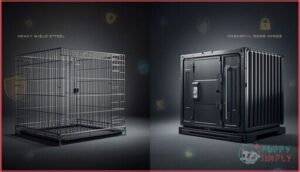
Strong airflow won’t matter if your dog breaks free. Security separates a reliable dog crate from a liability. You’ll want features that prevent escape while protecting your pup from injury.
Look for these must-haves:
- Reinforced corners that won’t buckle under pressure
- Locking mechanisms with double-bolt safety latches
- Secure doors with welded joints on wire models
Escape proofing starts with durability you can trust.
Comfort and Suitability for Dogs

Your dog’s comfort in a crate depends on more than just size. Some dogs feel safest tucked into a cozy, enclosed space, while others need to see what’s happening around them to stay calm.
Let’s look at how your dog’s size, temperament, and natural preferences should guide your choice.
Dog Size and Breed Considerations
Your dog’s size and breed shape which crate works best. Larger breeds need wire dog crates with higher weight limits and reinforced corners that won’t buckle under pressure. Small dogs do well in compact plastic dog crates with chew-resistant edges.
Breed-specific needs matter too—heavy shedders benefit from wire’s easier cleaning, while working breeds often require the extra security wire provides during crate training.
Dog Personality and Anxiety Levels
Temperament shapes everything when crate anxiety shows up. Dogs with nervous personalities often tuck their tails, pace constantly, or refuse to settle—clear anxiety triggers you can’t ignore.
Wire crates let anxious dogs see what’s happening, which calms some and overstimulates others. Plastic crates create cozy boundaries that reduce stress for certain canine behavior patterns.
Gradual crate training with calming techniques and treats works across both types, addressing animal welfare concerns while respecting your dog’s unique needs.
Den-Like Feel Vs. Open Space
Some dogs crave a cozy cave, while others need to watch the world. Plastic dog crates offer that snug, den-like shelter that eases crate anxiety for nervous pups. Wire dog crates provide visibility and airflow, helping curious dogs feel connected.
Space perception drives dog comfort—environmental factors like household noise shift crate preferences. Watch how your dog reacts to each setup before committing.
Cleaning, Maintenance, and Durability

A crate that’s hard to clean or falls apart after six months isn’t doing you or your dog any favors. Wire and plastic crates handle daily wear differently, and you’ll want to know what you’re signing up for.
Here’s how they compare regarding keeping them clean, dealing with damage, and making them last.
Ease of Cleaning and Upkeep
Cleaning a crate shouldn’t feel like a chore. Wire crates win on ease of cleaning—you’ll appreciate the removable trays and open design that lets you rinse debris right through. Plastic crates offer smooth surfaces you can wipe down quickly, though sanitation issues may arise in seams.
Regular upkeep costs stay minimal for both, but wire models require occasional rust checks to maintain hygiene standards.
Resistance to Damage and Wear
Tougher materials mean fewer headaches down the road. Wire crates rely on steel framing that resists bending but can deform if your dog’s a determined escape artist. Plastic models use molded polymer that absorbs impacts well, though sharp blows may crack corners.
Chew-resistant wire shows damage less visibly than plastic, while abrasion leaves marks on both—your dog’s strength and habits determine which holds up better.
Longevity and Material Quality
Quality construction separates a five-year investment from a one-year regret. Here’s what affects pet crate durability:
- Material Testing: Wire dog crates endure load tests while plastic models face impact trials
- Rust Resistance: Powder-coated metal outlasts bare steel in humid spaces
- Frame Integrity: Welded joints trump bolted corners for crate longevity
- Durability Factors: UV exposure weakens plastic; moisture threatens wire
- Crate Material: Heavy-gauge steel and virgin polymer last longest
Your dog’s size and environment determine which type wins the durability race.
Portability and Practical Use Cases

How you plan to use your dog’s crate matters just as much as what it’s made of. Wire and plastic crates handle travel, storage, and setup differently, and understanding these differences will help you make the right choice.
Here’s what you need to know about how each type fits into your daily life.
Travel and Transportation Needs
If you’re traveling with pets, crate choice matters more than you’d think. Plastic crates often meet airline specifications for air travel and handle road trips better—they stack easily and stay secure in vehicle storage.
Wire crates offer enhanced ventilation during dog transportation but may need extra latches for pet safety.
For frequent pet travel and transportation, lightweight plastic designs give you the portability you need without sacrificing crate security.
Home Use and Storage Options
When you’re home, storage solutions matter just as much as travel ease. Wire crates fold flat for tucked-away space efficiency—perfect for small apartments. Plastic crates stack or nest when not needed, keeping garages organized. Look for folding designs with grips or wheels to shift your dog crate around without strain. For outdoor storage, choose rust-resistant wire or weatherproof plastic that won’t degrade.
- Wire crates collapse flat for closet or under-bed storage in tight spaces
- Plastic crates nest together to optimize vertical storage in garages or basements
- Built-in grips and wheels let you relocate crates easily without heavy lifting
- Weather-resistant materials protect stored crates from moisture damage in sheds or porches
Assembly and Disassembly Convenience
Setting up your crate shouldn’t feel like a puzzle. Wire crates with foldable designs and tool-free clips let you collapse them in seconds—ideal for compact storage or quick moves.
Plastic crates snap together through quick release latches, no screwdriver needed. For easy assembly and portability, look for collapsible frames or panels that lock firmly yet separate fast, giving you durable performance without the hassle.
Choosing The Right Crate for Your Dog

Now that you understand the differences between wire and plastic crates, it’s time to match the right one to your dog.
Your choice should reflect your dog’s behavior, your budget, and the specific situations you’ll face most often. Here’s how to make the call that works best for both of you.
Matching Crate Type to Dog Behavior
Your dog’s personality shapes which crate works best. Anxious dogs thrive with plastic crates that feel like safe dens, while social pups prefer wire designs that keep them connected to family life. Here’s how to match crate type to your dog’s behavioral needs:
- Fearful or nervous dogs benefit from enclosed plastic crates with familiar bedding to reduce stimuli
- High-energy breeds need wire crates with excellent airflow and visibility during training sessions
- Escape artists require reinforced wire models with secure latches and sturdy construction
Cost and Value Considerations
Price comparison between wire and plastic crates shows wire models cost $40 to $150, while plastic runs $60 to $250. Budget analysis reveals wire crates offer better cost effectiveness long-term despite needing accessories.
Your purchase decision should weigh durability over initial savings—wire withstands years of use in busy households. Value assessment tips toward wire for most dog owner responsibilities.
Recommendations for Common Scenarios
When you’re juggling frequent trips, plastic dog crates win for portability and noise reduction during transport. For anxious pups, try gradual dog acclimation with familiar bedding in plastic models—solid walls ease household dynamics.
Large dogs with escape tendencies need wire dog crates offering enhanced visibility and ventilation.
Your dog crate comparison should prioritize behavior over convenience, with proper crate placement supporting your dog’s specific needs.
Choose your dog’s crate based on their behavior, not your convenience, and place it where they feel most secure
Frequently Asked Questions (FAQs)
Are wire crates safe for puppies during teething?
Like traversing a minefield of tiny teeth, wire crate risks during puppy teething include chewed wires creating sharp burrs, bent bars from aggressive gnawing, and exposed metal edges that threaten paws and mouths—regular inspections guarantee puppy protection.
Can plastic crates be used for outdoor purposes?
Yes, but you’ll need UV-protected models with proper ventilation systems and moisture control. Place them on elevated surfaces in shaded spots to boost weather resistance and prevent sun damage or water pooling underneath.
Which crate type works better for crate training?
A frantic beagle named Scout learned to love his crate when his owner switched to wire. Both wire and plastic crates work for training, but success depends on pairing the right type with your dog’s temperament and consistent positive reinforcement.
Do airline regulations prefer plastic over wire crates?
Most airlines require plastic crates that meet IATA Live Animal Regulations for pet travel. Wire crates often fail structural and containment standards, making airline-approved plastic models the safer, regulation-compliant choice for flying.
How do temperature extremes affect each crate material?
Wire dog crates conduct heat quickly through metal, risking thermal stress. Plastic dog crates offer better insulation but trap warmth in hot conditions. Both need climate control, ventilation adjustments, and protective placement for durability.
Conclusion
The right tool makes all the difference—and that applies to crate training too. Understanding the difference between wire and plastic dog crates gives you the power to choose based on your dog’s actual needs, not guesswork.
Match the crate to your dog’s personality, your travel plans, and your home setup. When you get it right, the crate becomes your dog’s favorite retreat instead of a source of stress for both of you.