This site is supported by our readers. We may earn a commission, at no cost to you, if you purchase through links.
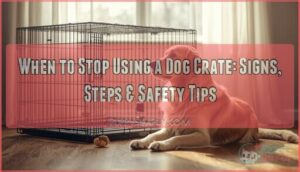
Your dog sits patiently at the crate door each morning, walks calmly to the backyard, and hasn’t had an accident in months. These milestones signal a shift many owners miss—the moment when your dog might be ready to leave the crate behind.
Most dogs reach this point between one and two years old, but age alone doesn’t tell the whole story. Temperament, training consistency, and your home environment all play a role in timing this change.
Rushing the process leads to chewed furniture and regression in housebreaking. Moving too slowly can create unnecessary dependence on the crate. You need to read your dog’s behavior signals and match them with a gradual plan that protects both your home and your dog’s confidence.
Table Of Contents
- Key Takeaways
- What is The Purpose of Dog Crate Training?
- When Should You Consider Stopping Crate Use?
- What Signs Show Your Dog is Ready for Freedom?
- How to Gradually Transition Out of The Crate
- Managing Behavior During The Transition Period
- What if Your Dog Isn’t Ready to Stop Crating?
- Can Some Dogs Always Benefit From a Crate?
- Tips for Maintaining a Safe Environment Post-Crate
- How Stopping Crate Use Impacts Dog Behavior
- Mistakes to Avoid When Ending Crate Training
- Frequently Asked Questions (FAQs)
- Conclusion
Key Takeaways
- Most dogs reach crate independence between one and two years old, but you need to watch for specific readiness signals like consistent housebreaking, calm alone behavior, and solid obedience rather than relying on age alone.
- Transition out of the crate gradually by increasing unsupervised time in five-minute weekly increments, pairing freedom with enrichment toys and tracking any regression through behavior logs to avoid rushing the process.
- Some dogs will always benefit from crate access due to high-energy breeds, anxious temperaments, or lifestyle needs like travel and nighttime routines, and that’s perfectly normal for their wellbeing.
- Common mistakes like stopping crate use too soon or maintaining inconsistent routines can undo months of training progress, so keep predictable schedules and watch for red flags like accidents or destructive chewing before expanding freedom.
What is The Purpose of Dog Crate Training?
Crate training isn’t about locking your dog away—it’s about giving them a secure home base where they can relax and feel safe. Understanding why crates work helps you use them the right way and know when it’s time to move on.
Crate training gives your dog a secure home base where they can relax, not a prison to lock them away
Here are the main reasons crate training benefits both you and your dog.
Benefits for Housebreaking and Safety
Crate training creates a safe, controlled space that reinforces housebreaking and prevents accidents. Your dog won’t want to soil their den, so consistent potty breaks on schedule make bathroom habits click faster.
A properly sized crate also keeps your pup away from electrical cords, toxic plants, and other hazards when you can’t watch them. This structure builds routine while reducing stress-driven behaviors like submissive urination.
Effective writing techniques, such as using clear science information, can help pet owners communicate their experiences and tips for crate training.
Providing a Safe Space for Dogs
Beyond keeping accidents at bay, your dog crate becomes their personal retreat—a safe zone where stress melts away. When life gets overwhelming, your pup can mellow out in a space that feels predictable and secure. Proper crate sizing matters here:
- Enough room to stand and turn
- Space to stretch out comfortably
- Snug enough to trigger natural dog denning instincts
Add calming aids like soft bedding or white noise to boost stress reduction even more. Understanding the importance of clear communication, such as scientific writing techniques, can help in creating effective dog training guides.
Crate Use During Travel and Stress
That same secure space works wonders when you’re packing up for a road trip or flying across the country. Travel crates keep your dog calm during unfamiliar scents and sudden stops, preventing driver distractions and escape attempts.
Proper crate ventilation and padding matter for dog safety and wellbeing—especially on longer journeys. You’ll help your pup handle separation anxiety and stress management by maintaining that familiar routine, even miles from home.
When Should You Consider Stopping Crate Use?
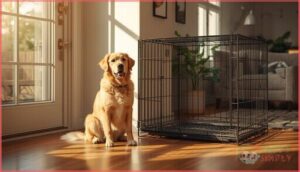
You don’t want to stop crate use too early, or you’ll end up with accidents and chewed furniture. Most dogs start showing signs of readiness between one and two years old, but every dog moves at their own pace. Timing depends on your dog’s maturity, breed, and how consistently they’ve been following house rules.
Typical Age Ranges for Crate Independence
Most dogs hit crate maturity between 6 and 18 months, but don’t treat that like a countdown timer. Small breeds often mellow out earlier, around 6 to 12 months, while working dogs with high energy may need closer to 18 months.
Your pup’s puppy phase, training duration, and socialization impact when they’re truly ready for freedom.
Factors That Influence Timing
Dog age factors, breed variations, and household dynamics all shape your timeline. A high-energy herding breed takes longer than a calm lapdog. Your work schedule, family routines, and available space matter too.
Health considerations like joint pain or separation anxiety shift crate use needs.
Training milestones—consistent housebreaking, solid obedience—tell you more than any calendar date ever will.
What Signs Show Your Dog is Ready for Freedom?

You can’t just guess whether your dog’s ready to ditch the crate. There are clear signals that tell you when it’s time to give your dog more freedom. Watch for these three key signs that your dog has earned the privilege of unsupervised time outside the crate.
Reliable Housebreaking and No Accidents
You can’t let your dog roam free until housebreaking is rock solid. Most dogs nail this by 4 to 6 months with consistent schedules and crate-to-outside routines.
Watch for quick outdoor elimination without hesitation and longer stretches between bathroom breaks. If accidents stop appearing for several consecutive weeks, your dog’s telling you they’re ready for crate freedom and more independence.
Calm Behavior When Left Alone
Patience during your absence reveals true readiness. Start by leaving your dog alone outside the crate for just 5 to 10 minutes, watching for quiet, relaxed behavior with no pacing or whining. Gradually extend that time to 2 hours over several weeks.
If separation anxiety surfaces, slow down and use positive reinforcement to build solo confidence. Calm environments and consistent separation techniques prevent setbacks.
Maturity and Obedience Indicators
True obedience levels shine when your dog waits patiently at mealtime and reacts to commands in high-distraction settings. Impulse control—like skipping jumps during greetings—marks real maturity signs.
Look for behavioral cues such as consistent recall from a distance and calm behavior during training. These training benchmarks signal canine development and readiness for reduced crate training benefits and drawbacks, pointing toward a smoother shift.
How to Gradually Transition Out of The Crate
Moving your dog out of the crate doesn’t happen overnight. You’ll need a phased approach that builds trust and tests readiness at each step.
Below are the key stages to follow as you give your dog more freedom.
Step-by-Step Transition Plan
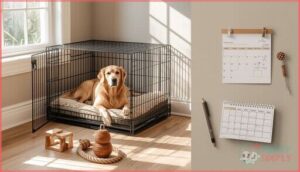
Think of crate weaning like teaching your dog to walk without a leash—you need clear shift phases. Start by tracking current crate use over two to four weeks to establish your baseline.
Then, map out crate freedom in five-minute weekly increments, pairing each step with enrichment toys.
Monitor dog readiness through behavior logs, noting accidents or anxiety. If regression happens during this shift period, dial back temporarily and rebuild confidence.
Increasing Alone Time Without The Crate

Once your dog manages five-minute crate-free adjustment periods without stress, push alone time management to ten, then fifteen minutes over several weeks. Pair gradual freedom with puzzle toys and treat games as safe space alternatives. Watch for separation anxiety signals—whining or destructive chewing means you’re moving too fast.
Successful post-crate care depends on predictable routines that build confidence in alone time, helping your dog embrace a crate-free lifestyle naturally.
Managing Behavior During The Transition Period

Your dog won’t sail through this shift without a few bumps in the road. Even the most well-behaved pup might test boundaries, have an accident, or show signs of stress when adjusting to newfound freedom.
Let’s tackle the most common challenges you’ll face and how to handle them with patience and smart training.
Preventing Destructive Chewing
Chewing often spikes when you end crate training. Your dog needs healthy outlets for that extra energy and freedom. Here’s how to redirect destructive behavior:
- Rotate durable chew toy options made from safe materials like rubber or nylon to keep your dog interested and prevent boredom.
- Apply safe deterrents to furniture or cords your dog targets.
- Increase exercise before alone time to reduce anxiety-driven chewing.
Handling Accidents and Setbacks
Even with careful planning, accidents happen during crate training. Clean up fast with enzymatic cleaners to remove odors that trigger repeat incidents.
Track when and where accidents occur—patterns reveal if you’re moving too fast. If housebreaking regresses, dial back the freedom and reinforce consistent potty schedules.
Most dogs bounce back within two to four weeks with patience.
Addressing Separation Anxiety
Accidents aren’t the only challenge—separation anxiety affects up to 40% of dogs and can derail your progress. Watch for pacing, whining, or destruction in the first 30 minutes alone.
Start with five-minute separations paired with puzzle toys to build positive associations. Gradually extend alone time over weeks, using calming techniques like white noise.
If stress escalates, consult your vet about behavioral support.
What if Your Dog Isn’t Ready to Stop Crating?
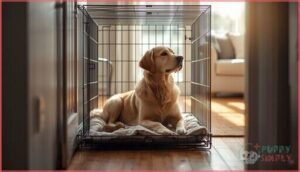
Not every dog is ready to give up the crate at the same time, and that’s okay. Sometimes you’ll notice signs that your dog needs more time before you can leave them unsupervised.
Here’s what to watch for and when it makes sense to keep using the crate a bit longer.
Signs of Anxiety or Regression
Your dog’s behavior will tell you if freedom came too soon. Watch for regression signs like sudden house-training accidents, increased whining when you leave, or destructive behavior that wasn’t there before. These behavioral red flags signal separation anxiety and stress building up.
Key anxiety triggers to monitor:
- Excessive clinginess when you approach the door or prepare to leave
- Pacing or panting during alone time, even in short bursts
- Destructive chewing on furniture or door frames you hadn’t seen before
Separation stress doesn’t always show up immediately. Some dogs mask their discomfort for days before crate phobia or full-blown separation anxiety surfaces. If your dog regresses, that’s not failure—it’s information about what they need right now.
When to Resume or Continue Crate Use
When should you hit pause and bring back the crate? If your dog shows consistent accidents for more than two days, resume crate use immediately. Reintroduction isn’t defeat—it’s smart post-shift care that protects your dog’s progress and your sanity.
| Scenario | Action |
|---|---|
| Accidents 2+ days in a row | Resume full crate training schedule |
| Separation anxiety symptoms appear | Consult vet; gradual crate reintroduction |
| Destructive behavior returns | Increase crate time; add enrichment toys |
| Major life changes occur | Maintain or resume crate use temporarily |
Long-term crating works for some dogs based on temperament and dog maturity level. Crate dependence isn’t always negative—your dog may simply need that secure den space. Keep ongoing training consistent, and remember that crate use can flex with your dog’s changing needs throughout their life.
Can Some Dogs Always Benefit From a Crate?
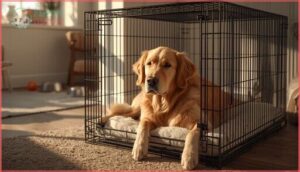
Not every dog reaches a point where they can ditch the crate completely. Some pups will always need that secure space because of their breed traits, temperament, or lifestyle demands.
Here’s a look at when long-term crate use makes sense for your dog.
Breed and Temperament Considerations
Your dog’s breed traits and temperament play a huge role in whether they’ll ever truly outgrow the crate. Some dogs just need that secure den forever, and that’s okay. Consider these canine behavior patterns:
- High-energy breeds often struggle with crate-free time without serious exercise first.
- Anxious or sensitive temperaments may always lean on their crate as a safe retreat.
- Independent breeds usually handle freedom earlier than clingy companions.
- Working-line dogs with strong drive benefit from ongoing crate dependency as part of structured training.
Temperament tests can reveal your dog’s readiness better than breed size alone.
Crate Use for Nighttime or Travel
Beyond home life, your dog crate plays two critical roles: nighttime routines and travel safety. Secure the crate door during car trips to prevent injury, and choose crash-tested models for long journeys.
At night, maintain consistent bedtime crate training until housebreaking sticks. Proper crate sizing and ventilation needs matter most—your dog should stand, turn, and stretch without separation anxiety triggers.
Tips for Maintaining a Safe Environment Post-Crate

Once your dog has the run of the house, you’ll need to make sure your space is set up for success. A crate-free dog needs a home that’s safe, engaging, and free from temptations that could lead to trouble.
Let’s look at the key steps to protect both your dog and your belongings.
Dog-Proofing Your Home
Your home becomes a whole new playground once your dog leaves the crate behind. Secure furniture that could topple, stash toxic substances like cleaners and medicines high up, and cover electrical cords with chew-resistant sleeves.
Block off kitchens with baby gates, lock trash cans, and remove dangerous houseplants. Think of it as creating a den without walls—safe, supervised freedom that prevents accidents and protects your pup.
Using Toys and Puzzles for Engagement
Your dog needs a job now that the crate training chapter’s closed. Puzzle toys and interactive play become your best tools for canine enrichment and curbing destructive chewing. Here’s how to keep engagement high:
- Rotate treat-dispensing toys every 2–3 weeks to maintain novelty
- Start with moderate-difficulty puzzles for 15–30 minute sessions
- Inspect toys daily for wear and choking hazards
- Pair puzzle time with a consistent cue for independence
These engagement strategies help ease separation anxiety while reinforcing good dog behavior.
How Stopping Crate Use Impacts Dog Behavior

When you stop crating your dog, you’ll notice changes in how they act and feel throughout the day. Some dogs gain confidence and independence, while others might need extra support to adjust.
Let’s look at how this shift affects your dog’s behavior and what you can expect.
Effects on Confidence and Independence
When you phase out the dog crate, you’re not just giving your pup more space—you’re unlocking confidence building and dog autonomy. Structured crate training creates predictable routines that strengthen canine self-control. As freedom readiness grows, your dog learns independence training naturally. Dogs with solid crate foundations often show reduced separation anxiety and improved behavior when shifting to unsupervised time.
| Crate Training Impact | Confidence & Independence Effect |
|---|---|
| Predictable routines | Builds self-regulation skills |
| Safe alone time practice | Reduces clingy behaviors |
| Controlled freedom phases | Strengthens impulse control |
| Positive crate associations | Increases calm resting states |
This canine behavior modification approach helps your dog mellow out and feel secure even without confinement.
Long-Term Training and Socialization
Once your dog gains freedom, you’ll want to keep up with obedience training and dog socialization. Consistent behavioral reinforcement strengthens social learning—regular sessions of 15–20 minutes daily outperform longer, sporadic blocks.
Mixing puppy training with play and housebreaking methods aids canine development across multi-pet homes. Exposing your pup to 100 different people by year one reduces fear responses and boosts training consistency long-term.
Mistakes to Avoid When Ending Crate Training

Rushing the shift out of crate training can undo months of hard work and create new behavioral problems. Many dog owners make common mistakes that set their dogs up for failure instead of success.
Here are two key mistakes you need to avoid when ending crate training.
Stopping Crate Use Too Soon
Impatience can undermine months of solid work. Premature removal of the crate before your dog stays accident-free for several weeks risks setbacks in housebreaking and safety. Watch for these red flags that signal you’re rushing the shift:
- Accidents happening more than once weekly
- Destructive chewing when you’re away
- Anxious pacing or whining
- Inconsistent bathroom habits
Crate dependence beats a chaotic, crate-free lifestyle.
Inconsistent Routines or Boundaries
Mixed messages about when to crate your dog sabotage everything. A chaotic crate schedule—sometimes in, sometimes out—fuels separation anxiety solutions that never stick.
Dogs thrive on boundary setting and routine consistency, not guesswork. Predictable transitions keep stress reduction real and prevent destructive behavior from creeping back.
Lock in fixed crate times, and your dog training and behavior improves fast.
Frequently Asked Questions (FAQs)
Should I remove the crate from my home completely?
You don’t need to completely remove the crate immediately. Keep it available for travel, stress, or nighttime needs. Some dogs appreciate having their secure den space even after gaining more freedom.
What if my dog refuses to sleep outside crate?
Some dogs cling to their crate like a security blanket. If yours won’t sleep outside, slow down the shift strategies, check for sleep anxiety, and adjust environmental factors. Patience beats pressure every time.
Can multiple dogs transition off crates at once?
You can shift multiple dogs at once if each dog demonstrates readiness independently. Start with separate crate-free zones, then introduce supervised joint sessions. Watch pack dynamics closely and adjust based on individual behavior during the shift period.
How does crate freedom affect new puppy introductions?
Crate freedom before meeting other pups can actually help your dog feel more confident and relaxed.
Studies show dogs with gradual freedom greet new friends more calmly, bark less, and interact more naturally during introductions.
Conclusion
Your dog’s readiness and your home’s stability often align at the exact moment you start questioning the crate’s necessity. Trust that timing. Knowing when to stop using a dog crate comes down to reading behavior signals, building gradual freedom, and protecting progress with smart boundaries.
You’ve done the training work. Now give your dog space to prove independence while keeping backup plans ready for setbacks that don’t erase months of success.
- https://sites.google.com/view/yewc/writing-tips/subpoints?authuser=0
- https://www.akc.org/expert-advice/training/why-crate-training-is-great-for-your-dog/
- https://x.com/godofprompt/status/1990526288063324577
- https://www.linkedin.com/posts/bohdanlukianets_tasks-study-research-activity-7373377539521667072-UTEi
- https://www.writingclearscience.com.au/category/writing-guides/writing-research-papers/page/2/