This site is supported by our readers. We may earn a commission, at no cost to you, if you purchase through links.

Your new puppy transforms your slippers into confetti, mistakes your carpet for a bathroom, and seems convinced that 3 a.m. is the perfect time for zoomies. These chaotic first weeks aren’t just exhausting for you—they’re overwhelming for your pup, too. Without structure and boundaries, puppies struggle to understand what’s expected of them, leading to stress, anxiety, and behavioral issues that can persist into adulthood.
The benefits of crate training for puppies extend far beyond keeping your belongings intact. When done correctly, crate training aligns with your puppy’s natural instincts to create a safe haven where they can decompress, develop confidence, and learn essential life skills like housebreaking and self-regulation. This foundation sets the stage for a well-adjusted dog who feels secure in their environment.
Table Of Contents
Key Takeaways
- Crate training taps into your puppy’s natural denning instinct to create a secure sanctuary that reduces stress, promotes better sleep, and builds lasting confidence through predictable routines.
- A properly sized crate accelerates housebreaking by working with your puppy’s instinct to avoid soiling their sleeping space, leading to fewer accidents and faster potty training success when paired with consistent outdoor schedules.
- Crates provide essential safety during emergencies, vet visits, and travel while preventing destructive behaviors by limiting unsupervised access to household items and teaching impulse control through structured confinement.
- Success hinges on positive reinforcement, gradual introduction, and avoiding common mistakes like using the crate for punishment or exceeding age-appropriate confinement times—typically 1.5 to 4 hours depending on your puppy’s age.
Why Crate Training Benefits Puppies
Crate training works because it aligns with your puppy’s natural instincts and provides structure during a critical developmental period. When done correctly, a crate becomes more than just a training tool—it creates a foundation for confidence, security, and emotional well-being.
Understanding these core benefits will help you see why crate training is recommended by veterinarians and trainers alike.
Natural Denning Instincts
Your puppy’s instinct to seek cozy, enclosed spaces isn’t random—it’s denning behavior hardwired into canine DNA. In the wild, dogs naturally gravitate toward small, secure spaces as a puppy refuge from threats and temperature extremes.
Your puppy’s instinct to seek cozy, enclosed spaces is denning behavior hardwired into canine DNA
A properly sized crate accesses this instinctual comfort, creating a canine sanctuary that reduces stress responses and promotes consistent sleep patterns, aligning perfectly with natural denning instincts.
Understanding the importance of scientific research findings can help pet owners make informed decisions about crate training.
Building a Sense of Security
Crate confidence grows when your puppy claims ownership of a personal den, reinforcing secure spaces that buffer against overwhelming stimuli. Consistent crate training establishes puppy boundaries through predictable routines, so separation anxiety decreases as your dog learns self-soothing.
Gentle crate introduction with calming techniques—pairing quiet time with positive rewards—strengthens dog behavior patterns that rely on denning instincts rather than stress responses.
Effective writing techniques, such as using clear science guides, can help pet owners communicate the benefits of crate training.
Reducing Puppy Stress and Anxiety
When security becomes familiarity, your puppy’s stress management improves dramatically. Gradual crate acclimation paired with positive reinforcement lowers cortisol levels and fosters canine relaxation, giving you measurable anxiety relief. Consistent routines minimize separation anxiety during owner absences, helping your dog self-regulate arousal and achieve puppy calming.
- Predictable crate comfort reduces reactive behaviors by limiting triggers
- Gentle exposure encourages steadier heart rate and stress relief
- Proper sizing creates retreats that promote crate training benefits
Crate Training and Housebreaking Success
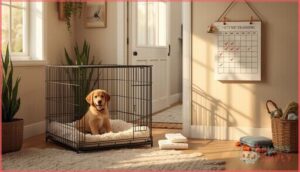
One of the biggest challenges new puppy owners face is housebreaking, and that’s where a crate becomes your most reliable training tool. When you use a crate correctly, you’re working with your puppy’s natural instincts rather than against them, which speeds up the entire potty training process.
Here’s how crate training sets you and your puppy up for housebreaking success.
Potty Training Made Easier
One of the biggest headaches you’ll face brings us to the real magic of crate training: it turns potty training from a frustrating guessing game into a predictable routine. Your puppy’s instinct to avoid soiling their resting area means fewer indoor messes, faster housebreaking, and a cleaner home.
| Crate Training Benefit | Potty Training Impact |
|---|---|
| Natural den instinct | Puppies avoid soiling sleep space |
| Structured confinement | Reduces random indoor accidents |
| Scheduled crate-to-outdoor trips | Builds consistent toilet training habits |
| Predictable feeding times | Easier to anticipate elimination needs |
| Nighttime crate use | Faster nighttime continence development |
Veterinary behaviorists report that structured crate routines paired with outdoor breaks every one to three hours dramatically improve house training success. Puppies housed in appropriately sized crates show markedly fewer overnight accidents than those roaming freely, according to owner surveys.
The key lies in timing: take your puppy directly from the crate to your chosen potty spot. This focused approach strengthens the association between specific surfaces—like grass—and elimination, while preventing distractions that lead to missed opportunities. Many puppies even learn to signal their need through whining or movement, giving you clear cues for timely trips outside.
Preventing Indoor Accidents
Consistency is your strongest ally in accident prevention. By selecting the right crate size—just large enough for your puppy to stand, turn, and lie down—you discourage corner soiling.
Pair that with regular potty schedules, immediate outdoor breaks after crate time, and diligent crate hygiene using pet-safe cleaners.
Training consistency across all caregivers reinforces housebreaking success and minimizes indoor messes.
Establishing Healthy Routines
Regular feeding and sleep schedules anchor successful crate training, housebreaking, and potty training outcomes. When you align crate scheduling with your puppy’s natural 18-20 hour sleep patterns, you’ll notice faster routine consistency and reduced separation anxiety.
Fixed meal times support predictable elimination, while scheduled play blocks manage energy and promote puppy socialization.
This structured approach builds confidence in both you and your puppy during early puppy training phases.
Safety and Comfort in Everyday Life

A crate isn’t just a training tool—it’s a safe haven that protects your puppy when life gets unpredictable. From sudden emergencies to everyday challenges like separation anxiety, a properly introduced crate gives your dog a secure place to retreat and self-soothe.
Here’s how crate training creates safety and comfort in your puppy’s daily routine.
Safe Space During Emergencies
When disaster strikes—whether it’s a fire alarm, tornado warning, or sudden evacuation—your puppy’s crate becomes a lifeline. Emergency preparedness isn’t just about having supplies; it’s about crisis management that keeps your dog safe.
Effective disaster response with a crate includes:
- Quick containment without chasing a panicked puppy through danger zones
- Portable pet safety during evacuations or sheltering in place
- Reduced fear responses when loud noises trigger panic
- Familiar refuge that bolsters your evacuation strategies and safety protocols
Managing Separation Anxiety
Separation anxiety hits when your puppy panics every time you leave. Crate training provides anxiety reduction by creating a predictable routine that lowers cortisol levels during brief absences. Strategic crate placement in familiar areas and gradual separation techniques help with puppy calming and stress management.
| Training Phase | Behavioral Outcome |
|---|---|
| Initial Exposure | Reduced vocalization episodes |
| Gradual Desensitization | Increased voluntary crate time |
| Consistent Routine | Decreased clinginess patterns |
| Enrichment Integration | Better stress coping mechanisms |
| Higher Independence | Improved confidence levels |
Positive reinforcement combined with structured depart-and-return routines teaches your dog that you’ll always come back, building confidence and reducing dog anxiety over time.
Reducing Destructive Behaviors
Crate confinement creates a controlled environment that limits opportunities for chewing furniture, digging, and other destructive behavior when you can’t supervise. Effective puppy management through crate training protects your belongings while teaching impulse control:
- Redirects attention toward safe chew toys inside the crate
- Prevents access to cords, shoes, and household valuables
- Reinforces calming techniques through structured rest periods
Environmental control combined with positive reinforcement reduces destructive behaviors markedly.
Crate Training for Travel and Vet Visits

A well-crate-trained puppy transitions smoothly from home to car, plane, or clinic without the stress that often accompanies new environments. Travel and veterinary visits become manageable rather than chaotic when your puppy already views the crate as a safe, familiar space.
Let’s look at how crate training directly aids these situations.
Stress-Free Car and Air Travel
When traveling with your puppy, whether by car or plane, a properly sized dog crate transforms anxious journeys into calm experiences. Travel crates provide familiar security that reduces flight anxiety and motion sickness during car travel tips.
Airline rules often require crate training, so practicing beforehand ensures pet safety and smoother boarding. Consistent crate routines before traveling with pets minimize separation anxiety and behavioral setbacks.
Easier Veterinary Appointments
A well-trained pup stays calm during vet visits when the crate provides a familiar sanctuary. Veterinarians appreciate puppies who travel in their own space, reducing lobby escape attempts and examination stress.
Crate training fosters clinic etiquette by keeping your puppy secure during transport and waiting periods, allowing staff to perform medical procedures more efficiently while you maintain peace of mind about dog health and safety.
Emergency Preparedness
During natural disasters or crisis management situations, your dog crate becomes a lifesaving tool for pet evacuation. Prior puppy training ensures your companion stays calm when disaster response teams require secure containment.
Include the crate in emergency kits alongside food and water, because pet safety and emergency preparedness depend on familiar routines. Separation anxiety decreases when your puppy recognizes their den as protection during frightening events.
Tips for Effective Crate Training
Getting crate training right comes down to a few key decisions and daily habits that make all the difference. You’ll want to focus on the practical details—from selecting the proper size to rewarding your puppy consistently.
Here’s what you need to know to set your puppy up for success.
Choosing The Right Crate Size
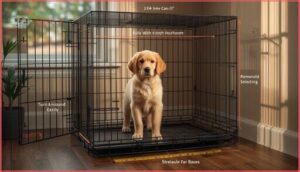
Proper sizing keeps your puppy comfortable and confident in their new space. Measure from nose to tail base and add 4–6 inches, ensuring your dog can stand, turn around, and lie down naturally. A well-fitted crate prevents accidents by discouraging potty areas inside.
- Choose hard-sided materials with stable floors for safety and durability
- Use adjustable divider panels to customize space as your puppy grows
- Verify adequate ventilation to prevent overheating during confinement
Positive Reinforcement Techniques
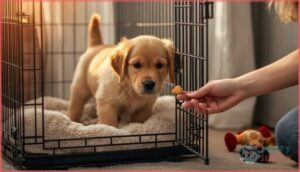
Once you’ve secured the right crate, reward systems transform training into something your puppy looks forward to. Give small treats immediately when your pup enters the crate, pairing each reward with a consistent cue like “crate time.” Short sessions prevent frustration, and as your puppy masters the behavior, you can fade treats and use praise instead.
| Training Method | Best Used For | Timing Tip |
|---|---|---|
| Treat rewards | Initial crate entry | Within 2 seconds of entering |
| Clicker training | Marking exact behaviors | Click as paws cross threshold |
| Verbal praise | Fading food rewards | After puppy settles calmly |
| Toy rewards | High-energy puppies | After 5+ minutes of calm behavior |
| Calm environments | Reducing separation anxiety | During puppy socialization periods |
Creating a Comfortable Crate Environment
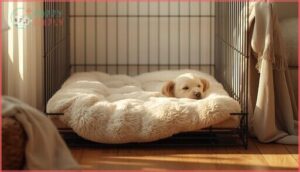
A comfortable dog crate works like a calm sanctuary, delivering powerful crate training benefits when you focus on essential elements. Bolster your puppy training with these proven strategies:
- Install soft, washable crate bedding to guarantee comfort and hygiene.
- Maintain temperature control between 68–72°F with adequate ventilation systems.
- Choose quiet crate placement away from drafts and high-traffic noise.
- Select proper crate size for growth and movement.
- Add familiar scents for noise reduction and security.
Avoiding Common Crate Training Mistakes
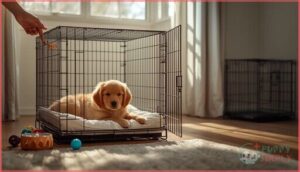
Success depends on avoiding five critical errors. Never force your puppy inside or use the crate for punishment—these trigger Puppy Anxiety and Separation Anxiety. Skip Crate Size Errors by ensuring room to stand and turn. Overcrating Issues arise when confinement exceeds age-appropriate limits.
Instead, establish consistent Training Schedules with gradual Crate Introduction, pairing every session with Positive Reinforcement to build trust and confidence.
Frequently Asked Questions (FAQs)
Can crate training work for adult or senior dogs?
Absolutely—adult training tips emphasize gradual conditioning, while senior dog care demands proper crate size matters and comfortable bedding.
Older dog health improves when gentle conditioning builds trust, making crate rest a practical tool for managing dog behavior.
How long can puppies safely stay in crates?
Crate duration depends on your puppy’s age and development. Puppies under four months need bathroom breaks every 5 to 2 hours, while older puppies can safely rest for three to four hours during daytime training sessions.
What if my puppy cries or whines constantly?
Persistent whining isn’t a catastrophe—most puppies vocalize during early confinement. Address constant crying with gradual desensitization, high-value treats, and predictable routines.
Rule out crate anxiety, potty training needs, or separation anxiety before extending duration.
Should I cover the crate with a blanket?
You can use a lightweight blanket to create a den environment, but guarantee proper crate ventilation.
Monitor for chewing hazards, avoid complete coverage, and adjust based on temperature to maintain puppy comfort and blanket safety.
When can I stop using the crate completely?
Your puppy’s “graduation day” from crate training arrives when house training is solid for several weeks, destructive behaviors disappear, and they handle alone time calmly—usually between 12 to 18 months.
Conclusion
The difference between a puppy who views their crate as a prison and one who seeks it as sanctuary comes down to your approach. When you prioritize patience over speed, the benefits of crate training for puppies compound—transforming chaos into calm, anxiety into confidence, and reactive behaviors into self-control.
Your puppy doesn’t need flawlessness from you; they need consistency. Start today, and you’ll build the foundation for a lifetime of security and trust.
- https://www.beaglestotherescue.org/
- https://www.avma.org/resources-tools/pet-owners/petcare/traveling-your-pet-faq
- https://www.caninecollege.akc.org/class_catalog/category/114997?utm_source=boilerplate&utm_medium=akc_org&utm_campaign=caninecollege_september2025_marketing&utm_id=caninecollege&utm_term=PuppyTraining&utm_content=Everything
- https://fotp.com/learn/education/key-steps-to-make-a-happier-healthier-dog/dogs-setting-boundaries
- https://www.preventivevet.com/dogs/everything-you-need-to-know-about-crate-training-your-puppy-or-adult-dog