This site is supported by our readers. We may earn a commission, at no cost to you, if you purchase through links.
Your puppy finally sits on command, and you reach for a treat—only to watch those hopeful eyes glaze over with disinterest. Not all treats work the same magic, and beginners often discover this the hard way.
The right puppy training treats for beginners don’t just taste good; they’re sized correctly for tiny mouths, offer nutritional value without empty calories, and deliver instant motivation when it matters most. Choosing poorly can mean wasted money, upset stomachs, or worst of all, a puppy who won’t respond when you need cooperation.
The seven treats ahead combine safety with proven results, helping you build trust and teach essential commands without guesswork or risk.
Table Of Contents
- Key Takeaways
- Why Use Training Treats for Puppies
- Choosing Safe and Healthy Puppy Treats
- Nutritional Guidelines for Puppy Treats
- Introducing Treats to Your Puppy
- Best Ingredients for Puppy Training Treats
- Top 7 Puppy Training Treats for Beginners
- Using Treats Effectively During Training
- House Training Tips With Treats
- Common Mistakes to Avoid With Puppy Treats
- Transitioning Beyond Treat-Based Training
- Frequently Asked Questions (FAQs)
- Conclusion
Key Takeaways
- Choose puppy training treats that are pea-sized, soft-textured, and made with limited ingredients to ensure safety, quick consumption during training, and easy tracking of potential allergies or sensitivities.
- Keep treats under 10 percent of your puppy’s daily calories, prioritize high-protein sources like chicken or fish, and avoid toxic foods like chocolate, grapes, xylitol, onions, and macadamia nuts.
- Use treats within 1–2 seconds of correct behavior to create clear associations, then gradually shift to variable reward schedules mixing treats with praise and play to prevent over-reliance.
- Start with soft, high-value treats like Blue Buffalo or Zuke’s Mini Naturals for beginners, introduce new treats slowly while monitoring for digestive issues, and consult your vet before making dietary changes.
Why Use Training Treats for Puppies
Training treats aren’t just snacks—they’re your secret weapon for teaching your puppy good behavior quickly and effectively. When used right, treats tap into your puppy’s natural motivation, making learning feel like a game instead of a chore.
Let’s look at three key reasons why treats work so well for puppy training.
Role of Treats in Positive Reinforcement
The magic of positive reinforcement lies in delivering a desirable outcome right after your puppy nails a behavior. High-value treats work faster than verbal praise alone because they create instant, clear associations. When you pair puppy training treats with cues within 1–2 seconds, you’re speaking your pup’s language—reward-based training that boosts puppy motivation and accelerates training outcomes through solid reinforcement theory.
High-value treats create instant, clear associations when paired with cues within 1–2 seconds—speaking your pup’s language through positive reinforcement
Effective science writing involves using clear science techniques to convey complex information in a concise manner.
Building Trust and Motivation
When you use puppy training treats with gentle handling, you’re laying a foundation of trust. Puppies learn that your cues mean good things—quick rewards, calm praise, and predictable routines.
Here’s how trust and motivation grow:
- Consistent, clear cues paired with treats
- Calm, gentle handling every session
- Reward scheduling that matches your puppy’s progress
Trust building boosts motivation and learning. Effective training also involves understanding methodological rigor to guarantee reliable outcomes.
Treats Vs. Praise and Toys in Training
Treats work faster than praise alone because they offer instant, high-value puppy feedback. While verbal praise reinforces calm behaviors and toys engage enthusiastic learners, puppy training treats accelerate learning during new cues.
A blend of all three—treats, toys, and praise—gives you flexible reinforcement methods. Rotate training motivators to keep sessions fresh, and use treats for difficult tasks while relying on praise for maintenance work. Positive reinforcement with varied reward systems builds reliable responses.
Choosing Safe and Healthy Puppy Treats
Not all puppy treats are created equal, and choosing the right ones can make or break your training sessions. You want treats that are safe, easy to digest, and perfectly sized for those tiny mouths.
Let’s look at three essential factors that will help you pick treats your puppy can enjoy without worry.
Importance of Limited Ingredients
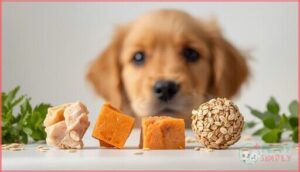
A shorter ingredient list acts like a safety net, protecting your pup from potential food allergens while you’re getting started.
Here’s why limited ingredient puppy treats make training easier:
- Simpler allergy tracking – If your puppy reacts, you’ll pinpoint the culprit quickly.
- Better digestive health – Fewer fillers mean gentler tummies during those vital early weeks.
- Clearer nutrient balance – You know exactly what fuels each reward.
- Safer ingredient safety – Transparent labels give you control and peace of mind.
Avoiding Artificial Additives and Fillers
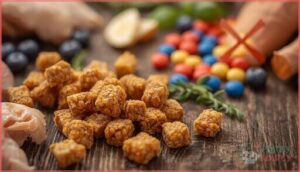
When you scan puppy treat labels, steer clear of synthetic preservatives like BHA and BHT—your pup deserves natural ingredients and healthy alternatives instead. Artificial preservatives, mystery by-products, and unnecessary colorings add zero nutritional value and can trigger sensitivities in delicate systems.
Choose all-natural training treats or organic pet food with freeze-dried dog treats as organic options. Safe consumption starts with recognizing what doesn’t belong in healthy pet treats.
Size and Texture Considerations for Beginners
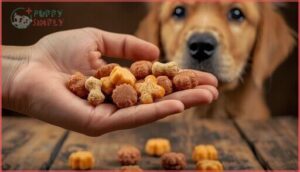
Bite size matters more than most new trainers realize. Your puppy training treats should be pea-sized—roughly 1/8 to 1/4 inch for small breeds, slightly larger for bigger pups.
Soft chewy options work best initially since they’re swallowed quickly without distracting from your cues. Save crunchy alternatives for later; soft treat options prevent choking and keep focus sharp during those critical early sessions.
Nutritional Guidelines for Puppy Treats
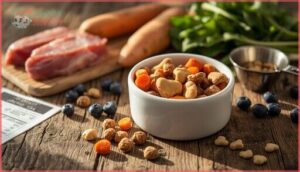
Your puppy’s treats aren’t just rewards—they’re part of their overall nutrition, and getting the balance right matters more than you might think. Too many treats can throw off their diet, while the wrong kinds can’t replace the complete nutrition they need from puppy food.
Let’s walk through three key guidelines that’ll help you treat smart without compromising your puppy’s health.
Caloric Limits and Daily Intake
Your puppy’s daily caloric needs depend on age, breed, and activity level—and training treats should account for no more than 10 percent of that total. Keep puppy training treats low-calorie and high-value to maintain nutrient balance without tipping into calorie restriction.
Monitor growth weekly, adjust puppy feeding schedules as needed, and always weigh portions to support ideal puppy health and canine nutrition.
Treats Vs. Complete Puppy Food
Complete puppy food delivers all the vitamins, minerals, and balanced macronutrients your pup needs for healthy growth—something puppy training treats can’t replicate.
Treats are food supplements for reinforcement, not dietary needs replacements. Using small portions of commercial puppy treats or homemade puppy treats keeps caloric balance in check while your puppy’s main meals provide the nutrient ratio essential for proper puppy nutrition.
Consulting With Your Veterinarian
Before you start training, schedule a veterinary care appointment to make sure your puppy is healthy enough for puppy training treats.
Your vet will offer veterinary guidance on breed considerations, medical clearance for specific ingredients, and nutrition advice customized to your puppy’s development stage.
Health checks help you choose vet-approved options that fit within your pup’s total puppy care and energy needs.
Introducing Treats to Your Puppy

Your puppy’s first experience with treats sets the stage for successful training, so you’ll want to introduce them slowly and carefully. A sensitive stomach means you can’t rush the process, whether you’re using store-bought or homemade options.
Here’s how to introduce treats safely and spot any problems before they become serious.
Gradual Introduction and Monitoring
Think of gradual exposure as your puppy’s safety net—it protects their sensitive stomach while letting you discover which high-value treats work best.
Start small and watch closely as you introduce puppy training treats through positive reinforcement:
- Begin with pea-sized portions to assess treat tolerance without overwhelming their digestion.
- Test one new treat every few days during puppy care routines, making puppy monitoring easier.
- Keep brief training sessions to observe acceptance and comfort with safe introduction methods.
Signs of Allergies or Intolerance
Watch for allergy symptoms like itchy skin, facial rubbing, or digestive issues after introducing new puppy treats. Food intolerance often shows up as loose stools or vomiting, while skin reactions can include redness or hives. Pet sensitivities may also trigger ear infections or paw licking. Keeping an eye on these signs protects your dog’s health and helps you choose pet nutrition options with natural ingredients that work.
| Sign | What to Look For | What It May Mean |
|---|---|---|
| Skin reactions | Itching, redness, hives, swelling | Allergies to treat ingredient |
| Digestive issues | Vomiting, loose stools | Food intolerance or sensitivity |
| Facial symptoms | Rubbing face, ear infections | Allergic reaction developing |
| Paw behavior | Excessive licking or chewing | Pet sensitivities at work |
| Respiratory signs | Coughing, wheezing (less common) | Possible ingredient allergy |
Adjusting Treat Types as Needed
Once you spot signs of sensitivity, it’s time to switch gears. Treat rotation keeps your puppy interested and helps you identify puppy preferences quickly. Try rotating high-value treats with low-calorie options made from natural ingredients. Monitor training outcomes closely—if your pup loses focus, adjust treat texture or swap in puppy training treats with different proteins. Caloric monitoring ensures reward-based training stays healthy and effective.
- Rotate treat types every few days to prevent boredom and maintain engagement during sessions
- Switch to softer textures if your puppy struggles with chewy treats during teething stages
- Track which high-value treats produce the best training outcomes and repeat those choices
- Introduce low-calorie alternatives when daily treat counts climb too high for safe feeding
- Document each treat change and your puppy’s response to build a tailored rotation plan
Best Ingredients for Puppy Training Treats

Not all treat ingredients are created equal, especially when you’re training a puppy with a sensitive stomach. The best training treats focus on whole foods that pack nutrition without triggering digestive issues or allergies.
Let’s look at the safest, most effective ingredients to seek out—and the ones you should always avoid.
High-protein Animal Sources (chicken, Beef, Fish, Pork, Eggs)
Protein sources like chicken, beef, fish, pork, and eggs form the foundation of high-value treats that keep your puppy motivated during training sessions. Real meat offers concentrated nutrition—chicken delivers lean protein with about 165 calories per 100g, while salmon provides omega-3s at roughly 200 calories. Eggs supply complete amino acids, and lean pork contributes B vitamins.
Always cook protein-based puppy treats thoroughly, skip seasoning, and introduce one animal protein at a time to spot sensitivities. These natural ingredients make training rewarding without artificial fillers.
| Protein Source | Key Benefit | Calories (per 100g) |
|---|---|---|
| Chicken | Lean, high protein-to-fat ratio | 165–170 |
| Beef | Dense protein, iron, zinc | 250–260 |
| Fish (Salmon) | Omega-3 fatty acids, EPA/DHA | ~200 |
| Eggs | Complete amino acids | ~143 |
Healthy Vegetables (carrots, Peas, Celery, Sweet Potato, Broccoli)
Vegetables as puppy treats bring healthy snacking into your training toolkit without adding many calories. Carrots deliver crunch and beta-carotene for vision, while sweet potatoes offer fiber that aids puppy digestion. Peas pack plant-based protein, and celery cleans teeth naturally. Broccoli supplies vitamins for immunity.
Always serve these natural ingredients plain, cooked when needed, and chopped small to guarantee vegetable safety and nutrient balance.
Treats to Avoid for Puppies
Some foods pose serious dangers to your puppy’s health, even in small amounts. Never offer raisins, grapes, chocolate, xylitol-sweetened items, onions, garlic, or macadamia nuts—these poisonous substances can trigger kidney failure, anemia, or worse.
Skip ham, bacon, and deli meats too; their sodium and fat content strain developing systems.
Choose safe snack alternatives from natural ingredients instead, protecting your pup while you train.
Top 7 Puppy Training Treats for Beginners
Now that you know what to look for in a training treat, let’s talk about some solid options that work well for beginners.
I’ve selected seven treats that are safe, effective, and easy to use during those early training sessions. Each one brings something different to the table, so you can find the right fit for your puppy’s needs and preferences.
1. Blue Buffalo Soft Dog Treats
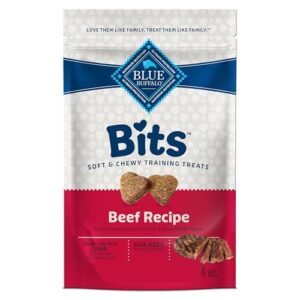
If you’re just starting out, Blue Buffalo soft dog treats can make training feel easier from day one. These soft chewy training treats use real beef as the first ingredient and include DHA to support your puppy’s brain development.
They’re free of artificial preservatives, corn, wheat, and soy, which means you’re feeding cleaner nutrition. The moist texture makes them easy to chew and swallow quickly, keeping your pup focused during short sessions.
Just remember to check batch codes and stick to the 10 percent daily calorie rule to avoid overfeeding.
| Best For | Puppy owners who want a high-quality training treat with brain-boosting DHA and clean ingredients, and don’t mind paying a bit more for better nutrition. |
|---|---|
| Primary Ingredient | Real Beef |
| Form | Semi-moist |
| Weight | 4 oz |
| Made in USA | Yes |
| Artificial Preservatives | No |
| Life Stage | All Stages |
| Additional Features |
|
- Real beef is the first ingredient, plus DHA supports cognitive development in growing puppies
- Soft, moist texture makes them easy to chew and perfect for quick training rewards
- No artificial preservatives, corn, wheat, or soy—just cleaner, more natural ingredients
- Price is on the higher side for a 4-ounce bag, which may not fit every budget
- Delivery times can be longer than expected based on user feedback
- Some batches show packaging inconsistencies, so you’ll want to double-check expiration dates and batch codes
2. Zukes Mini Naturals Dog Treats Peanut Butter
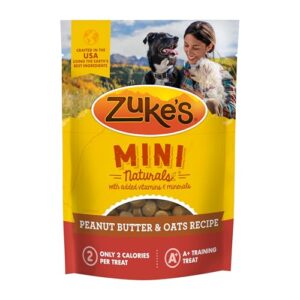
Zukes Mini Naturals dog treats peanut butter deliver bite-sized rewards that fit right in your pocket. These natural dog training treats use real peanut butter as the first flavor, and their soft texture means your puppy swallows quickly without chewing delays.
They’re grain-free, reducing puppy allergies and stomach upset. The low caloric content per piece lets you reward frequently without guilt.
Just watch for peanut butter safety—some pups react poorly. Break pieces smaller for more training effectiveness, and always monitor for signs of intolerance during those essential first sessions.
| Best For | Puppy owners looking for soft, grain-free training treats that deliver quick rewards without digestive issues. |
|---|---|
| Primary Ingredient | Peanut Butter |
| Form | Soft & Chewy |
| Weight | 17 oz |
| Made in USA | Yes |
| Artificial Preservatives | No |
| Life Stage | All Stages |
| Additional Features |
|
- Real peanut butter flavor with a soft texture that puppies swallow fast, keeping training sessions moving
- Grain-free formula reduces the risk of allergies and stomach upset in sensitive dogs
- Low calories per treat let you reward frequently during training without overfeeding
- Not suitable for dogs with peanut allergies or intolerances
- May require breaking into smaller pieces for tiny puppies or extended training
- Should be stored properly to prevent treats from hardening or losing freshness
3. Wellness Natural Puppy Training Treats
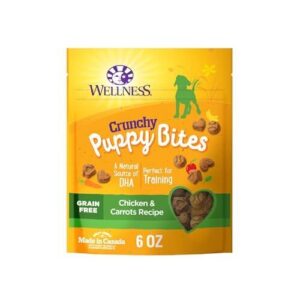
Wellness Natural Puppy Training Treats bring together two kinds of fresh meat in a crunchy, bite-sized formula that aids healthy brain development with natural DHA. These grain-free puppy training treats use real chicken and carrots, plus superfoods like blueberries and sweet potatoes, giving you natural ingredients without byproducts or artificial additives.
They fit caloric balance guidelines while delivering puppy nutrition that aids positive reinforcement training. The pellet form works for quick rewards, though some owners report finding hard shards—so inspect each piece before handing it over during those vital puppy development sessions.
| Best For | Puppy owners who want grain-free, natural training treats with DHA for brain development and are comfortable inspecting each piece for safety. |
|---|---|
| Primary Ingredient | Deboned Chicken |
| Form | Crunchy Pellet |
| Weight | 6.08 oz |
| Made in USA | Yes |
| Artificial Preservatives | No |
| Life Stage | Puppies Under 1 |
| Additional Features |
|
- Made with two kinds of fresh meat plus superfoods like blueberries and sweet potatoes, with no artificial additives or meat byproducts
- Contains natural DHA to support healthy brain development during critical puppy growth stages
- Bite-sized and low-calorie design fits training sessions without exceeding the 10% daily caloric treat guideline
- Some owners have found hard, translucent shards in the treats, raising potential safety concerns that require pre-inspection
- The crunchy pellet texture may be too hard for some puppies to chew comfortably or too small for larger breed puppies
- Limited quantity per package may not be cost-effective for frequent training sessions or multi-dog households
4. Merrick Natural Rabbit Dog Treats
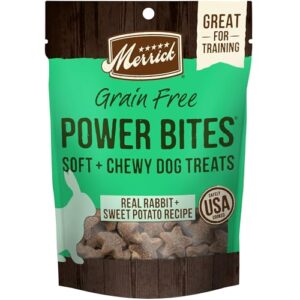
Merrick Natural Rabbit Dog Treats offer you a single-protein formula that’s perfect for puppies prone to allergies or sensitivities with common meats. Deboned rabbit plus sweet potatoes and peas deliver natural ingredients that support puppy development through healthy snacking.
The soft, chewy texture makes these puppy training treats easy to break into pea-sized rewards, letting you maintain training momentum without choking risks.
While these high-value treats work beautifully in dog training sessions, check each piece for hardness—some batches vary—and remember they’re meant for training rewards, not meal replacement.
| Best For | Puppy owners looking for a single-protein, grain-free training treat that works well for dogs with food sensitivities to common meats like chicken or beef. |
|---|---|
| Primary Ingredient | Deboned Rabbit |
| Form | Soft Bites |
| Weight | 6 oz |
| Made in USA | Yes |
| Artificial Preservatives | No |
| Life Stage | Adult |
| Additional Features |
|
- Real deboned rabbit as the first ingredient provides a novel protein that’s great for allergy-prone puppies
- Soft, chewy texture breaks easily into smaller pieces for training without choking risks
- Grain-free formula with no artificial flavors or preservatives keeps ingredients simple and clean
- Texture can vary between batches—some treats may be harder than expected
- Pricier than standard training treats made with common proteins
- Made in facilities that also process corn, wheat, and soy, which might matter for severely allergic dogs
5. Fruitables Pumpkin Dog Treats
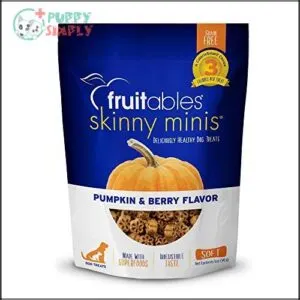
Fruitables Pumpkin Dog Treats pack less than 4 calories per piece, so you can reward good behavior throughout your puppy training sessions without guilt. Real pumpkin provides gentle fiber for puppy digestion, while the soft, chewy texture lets you break each stick into smaller bites for precise positive reinforcement training.
These healthy dog snacks skip wheat, corn, and soy—ideal if you’re managing food sensitivities. Just watch for occasional quality inconsistencies in packaging, and remember these puppy treats complement balanced meals rather than replace them.
| Best For | Puppy owners who want low-calorie training treats with natural ingredients and need flexibility to break pieces smaller for consistent positive reinforcement. |
|---|---|
| Primary Ingredient | Real Pumpkin |
| Form | Soft Stick |
| Weight | 5 oz |
| Made in USA | Yes |
| Artificial Preservatives | No |
| Life Stage | All Stages |
| Additional Features |
|
- Less than 4 calories per treat means you can reward frequently during training without worrying about weight gain
- Real pumpkin adds fiber to support healthy digestion, especially helpful for puppies with sensitive stomachs
- Free from wheat, corn, and soy, making them a safer choice if your pup has food sensitivities
- Small 5-ounce bag can run out quickly if you’re training daily, and some buyers feel the price doesn’t match the quantity
- Contains additives like vegetable glycerin and isn’t a single-ingredient treat, which may not suit every dog’s dietary needs
- Quality control issues pop up occasionally—some customers report damaged packaging or treats that lack the usual aroma
6. Pet Botanics Training Rewards Dog Treats
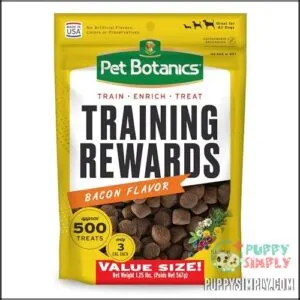
Pet Botanics Training Rewards Dog Treats deliver real pork liver and bacon in bite-sized morsels—about 500 treats per 20-ounce pack—so you’ll have plenty for repetitive puppy training sessions. The soft, chewy treat texture makes them easy for young mouths to swallow quickly, keeping your pup’s motivation high during dog training.
These training treats skip artificial colors and preservatives, reducing dog allergies risk while supporting pet nutrition goals.
Just be aware: some owners find the scent strong, and the size may feel too small for larger breeds, so test a few treats for puppies before committing to bulk orders.
| Best For | Puppy owners who need portion-controlled, soft treats for frequent training sessions and want to avoid artificial additives while keeping their dog motivated. |
|---|---|
| Primary Ingredient | Pork Liver & Bacon |
| Form | Soft & Chewy |
| Weight | 20 oz |
| Made in USA | Yes |
| Artificial Preservatives | No |
| Life Stage | All Stages |
| Additional Features |
|
- Real pork liver and bacon with no artificial flavors or preservatives make these a cleaner choice for sensitive puppies
- Soft, chewy texture is easy for young dogs to chew and swallow quickly during repetitive training
- About 500 treats per pack means you’ll have plenty for extended training sessions without running out
- Strong smell that some owners find unpleasant during training sessions
- Small size may not work well for larger breed puppies who need more substantial rewards
- Higher price point compared to other training treat options on the market
7. Crazy Dog Training Reward Dog Treats
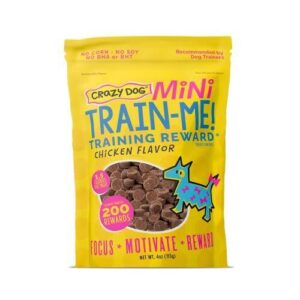
If you’re after a treat that keeps puppy motivation high, Crazy Dog Training Reward Dog Treats are a smart pick. Their soft treat texture makes them perfect for rapid reward scheduling during dog training, and the bite-sized pieces help you control caloric content.
With meat as the first ingredient and a resealable bag for freshness, these training rewards fit easily into reward-based dog training routines.
Plus, their aroma and flavor keep pups engaged, making them a reliable choice for high-value puppy training treats.
| Best For | Puppy owners who need low-calorie, soft training treats that are easy to break into smaller pieces for frequent reward sessions. |
|---|---|
| Primary Ingredient | Chicken |
| Form | Chewy |
| Weight | 4 oz |
| Made in USA | Yes |
| Artificial Preservatives | No |
| Life Stage | All Stages |
| Additional Features |
|
- Soft and pliable texture makes them easy for puppies to chew and swallow quickly during training
- Meat is the first ingredient with no BHA, BHT, or Ethoxyquin, plus approximately 200 treats per resealable bag
- Low fat and low calorie content lets you reward often without worrying about overfeeding
- May dry out or develop mold if the resealable bag isn’t closed properly after each use
- Higher price point compared to other training treat options on the market
- Not suitable for dogs with specific dietary restrictions or allergies to ingredients like pork liver or chicken
Using Treats Effectively During Training
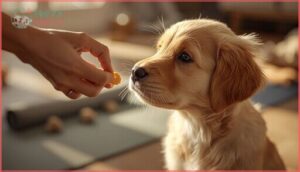
Handing your puppy a treat at the right moment makes all the difference in how quickly they learn. The timing, pairing with commands, and frequency of rewards directly shape whether your training sticks or falls flat.
Let’s walk through three practical strategies that help you use treats effectively without creating a picky eater who only listens when food is involved.
Timing and Frequency of Rewards
Timing is everything when you’re working with puppy training treats. You’ll want to reward within 1–2 seconds of the correct behavior so your pup connects the dots.
During early training sessions, use reward schedules that deliver high-value treats after nearly every success. As your puppy improves, shift to frequency control—rewarding every third or fifth attempt.
This approach keeps motivation techniques strong while preventing over-reliance on reward-based dog training.
Pairing Treats With Cues and Commands
Once your reward systems are down, you can link puppy training treats to specific words. Say “sit,” and when your pup follows through, deliver that treat within 1–2 seconds. This cue timing builds behavior association fast.
Keep command consistency strong by using the same word and tone every time. As you move through training phases, positive reinforcement and reward-based training will feel automatic.
Preventing Treat Dependence
Eventually, you’ll want your pup to respond without a treat every single time. Start by mixing high-value treats with praise, petting, or play so positive reinforcement stays strong. Rotate treat types and use reward schedules—sometimes a snack, sometimes a toy—so reward-based training feels natural, not robotic.
- Swap puppy training treats with non-food rewards like affection or playtime
- Choose low-calorie options to support calorie management during frequent sessions
- Fade treats gradually using variable reward schedules for consistency
- Track daily treat totals to prevent overfeeding
- Maintain training consistency across all family members
House Training Tips With Treats

House training can feel like a long road, but treats give you a powerful tool to guide your puppy toward success. When you reward at the right moment, your pup learns faster and feels more confident about where and when to go.
Let’s look at three key ways to use treats during house training so you can build good habits from day one.
Crate Training and Reward Timing
Crate training works best when you reward your puppy the moment they step inside their crate. This immediate reinforcement builds a strong positive association with their den. Start with high-value puppy training treats during early training phases, then gradually space out rewards as they become comfortable.
Match crate size to your puppy’s needs, and always deliver reward-based dog training calmly to encourage puppy calming and confidence.
Scheduling and Consistency
Nearly every successful puppy training plan hinges on Daily Routine Planning and Predictable Schedules. Puppies thrive when you stick to Consistent Reward Systems and clear Training Session Timing. Here’s what works:
- Set regular potty breaks.
- Use Rewardbased Training with immediate Puppy Training Treats.
- Keep sessions short and frequent.
- Reinforcement Strategies build trust—every time you’re consistent, your puppy learns faster.
Reinforcing Good Potty Habits
Timing is everything when you’re reinforcing good potty habits. Praise your puppy and offer puppy training treats within 1–2 minutes of a successful potty—immediate Reward Timing strengthens the link between the cue and the behavior.
Pair clear Potty Cues like “go potty” with reward-based training, stick to Potty Schedules, and watch Consistency Training and Accident Prevention transform house training into a rewarding routine for both of you.
Common Mistakes to Avoid With Puppy Treats

Even with the best intentions, it’s easy to make mistakes when using treats during puppy training. Some missteps can lead to health issues, while others might accidentally undermine your training progress.
Let’s look at three common pitfalls and how you can steer clear of them.
Overfeeding and Weight Gain
It’s easy to get carried away with puppy treats during training, but overfeeding can tip your dog’s caloric balance and trigger unwanted weight gain. Stick to the 10 percent rule—treats shouldn’t exceed that share of daily intake.
Practice portion control by using pea-sized, low-calorie rewards and track your puppy’s weight regularly. Smart nutrient management and healthy snacking for dogs support effective puppy training without compromising dog nutrition.
Feeding Unsafe Foods
Some everyday foods are toxic to puppies—chocolate, grapes, onions, garlic, and macadamia nuts top the Pet Poisoning list. Keep these off-limits:
- Xylitol in sugar-free treats causes hypoglycemia
- Raw meat or bones risk bacterial infection
- Salty snacks trigger dehydration
- Alcohol depresses the nervous system
- Avocado contains persin, harmful to Canine Nutrition
Safe Feeding means choosing puppy treats, healthy snacking for dogs, and vet-approved homemade treats over risky fruits as puppy treats.
Using Treats as Punishment
Just as unsafe foods harm your puppy’s body, using treats as punishment damages their mind. Withholding puppy training treats or using negative reinforcement creates confusion—your dog won’t understand which behaviors earn rewards.
Canine psychology shows punishment effects undermine positive reinforcement and reward systems entirely. Training ethics demand clear, reward-based dog training where treats for puppies always signal “yes, you got it right!”
Transitioning Beyond Treat-Based Training

Your puppy won’t need treats forever, and knowing how to step back from them is just as important as learning when to use them. As behaviors become reliable, you’ll gradually shift toward other rewards that keep training fresh and rewarding.
Here’s how to make that shift smooth and effective without losing your puppy’s enthusiasm.
Phasing Out Treats for Mature Behaviors
Consistency is your best friend when you’re ready to phase out puppy training treats for mature behaviors. Gradually reduce treat frequency while maintaining your reward timing and reinforcement strategies.
You can still use positive reinforcement—just shift to praise, petting, or play instead of constant treats for puppies. This approach aids caloric management and prevents overreliance on dog training and rewards, keeping your pup motivated without the snacks.
Introducing Variable Rewards
Once your puppy responds reliably, variable rewards can sharpen their motivation. Instead of a treat every time, mix in high-value treats unpredictably—operant conditioning research shows these reward schedules strengthen training outcomes better than fixed patterns.
Your pup stays enthusiastic, never sure when the jackpot arrives. Pair this with positive reinforcement techniques and clear cues, and you’ll maintain puppy motivation without constant snacking during reward-based dog training.
Maintaining Engagement Without Over-reliance on Treats
Beyond treats, play rewards and non-food motivators keep sessions fresh. Try tossing a favorite toy, offering belly rubs, or giving access to an exciting snack area. Mix engagement strategies with variable reinforcement—sometimes a treat, sometimes praise, sometimes chase time—to prevent habituation.
Positive reinforcement techniques and smart reward schedules maintain enthusiasm without constant snacking.
- Rotate between treats, toys, and verbal praise
- Schedule 5–10 minute sessions for peak focus
- Reward unpredictably to sustain interest
- Watch for signs your pup needs variety
Frequently Asked Questions (FAQs)
Can I make homemade puppy training treats?
Yes, you can create DIY training treats using natural ingredients like chicken, sweet potato, or eggs. Homemade recipes give you full control over puppy nutrition, ensuring treat safety and healthy snacking for dogs without allergens.
How do I store puppy treats properly?
Store puppy treats in airtight storage containers in a cool, dry place to maintain freshness monitoring and moisture control.
Refrigerate perishable dog training treats, check for spoilage prevention signs, and follow treat shelf life guidelines for best puppy care.
What if my puppy refuses treats?
Sometimes a pup turns her nose up at snacks, signaling stress, dental pain, or simply the wrong treat.
Switch to softer options, calm the environment, or try praise and toys as alternative reward methods instead.
Are grain-free treats better for puppies?
Grain-free puppy treats aren’t automatically better—most puppies thrive on balanced, grain-inclusive options. True grain allergies are rare, so focus on quality ingredients, limited additives, and portion control.
Consult your veterinarian before switching to grain-free formulas.
When can puppies start having training treats?
You can introduce training treats around 7 to 8 weeks of age, once your puppy is eating solid puppy food consistently. Keep portions tiny—bite-sized pieces prevent overfeeding during early reward systems.
Conclusion
Think of training like planting a garden—you need the right seeds to see growth. The puppy training treats for beginners you’ve explored here give you those seeds: safe ingredients, proper sizing, and nutritional balance.
Your puppy’s progress depends on consistency and smart choices, not luck. Start with one treat from this list, watch how your puppy responds, and adjust as needed.
Every successful session builds the foundation for a well-behaved companion you’ll cherish for years.
- https://www.akc.org/expert-advice/nutrition/best-dog-treats/
- https://www.purina.com/articles/dog/health/nutrition/are-dogs-omnivores-or-carnivores
- https://booking.splootvets.com/
- https://petcorner.pangovet.com/pet-nutrition/dogs/how-to-make-bone-broth-for-dogs/
- http://userealbutter.com/2012/04/18/pumpkin-peanut-butter-dog-treats-recipe/