This site is supported by our readers. We may earn a commission, at no cost to you, if you purchase through links.

Those wrinkled faces and soulful eyes come with a price tag most pug owners don’t fully grasp until the vet bills start arriving. Behind their charming snorts and endearing waddle lies a complex web of breed-specific vulnerabilities, from airways that can barely move oxygen to eyes so prominent they risk popping out during routine play.
The genetic trade-offs that created their distinctive appearance have inadvertently wired these dogs for chronic discomfort, turning everyday activities like breathing, eating, and walking into physiological challenges.
Early recognition transforms outcomes, because the difference between manageable conditions and medical emergencies often hinges on catching subtle warning signs before they cascade into crises. Understanding the specific pug health concerns to watch for prepares you to protect your companion from preventable suffering and respond decisively when intervention matters most.
Table Of Contents
Key Takeaways
- Pugs’ flat-faced anatomy creates brachycephalic obstructive airway syndrome, restricting airflow by 25–60% and making breathing, temperature regulation, and exercise inherently difficult—surgical correction can improve function by 20–60%, but vigilant heat management remains essential.
- Their prominent eyes face constant injury risk, with corneal ulcers accounting for 40–50% of acute eye problems, dry eye affecting 5–15% of dogs, and proptosis (eye displacement) requiring emergency intervention within hours to prevent permanent vision loss.
- Neurological and joint vulnerabilities—including Pug Dog Encephalitis (typically emerging between 6 months and 3 years), hip dysplasia, patellar luxation, and intervertebral disk disease—demand early screening and weight control, since excess pounds double arthritis risk and compound breathing struggles.
- Daily preventive care transforms outcomes: wrinkle cleaning reduces skin infections by 25–50%, tooth brushing cuts plaque by 60–70% and protects vital organs, and maintaining ideal body condition (ribs palpable, visible waist) prevents the cascading health problems that obesity triggers across every vulnerable system.
Brachycephalic Obstructive Airway Syndrome in Pugs
Pugs are among the breeds most affected by brachycephalic obstructive airway syndrome, a condition directly tied to their adorable flat faces and shortened airways.
This anatomical reality means your pug may struggle to breathe efficiently, especially during exercise or in warm weather.
Understanding what causes BOAS, how to spot warning signs, and what you can do to help will make a real difference in your pug’s comfort and longevity.
What Causes BOAS in Pugs
Pugs inherit a distinctive brachycephalic airway anatomy that creates respiratory issues from the start. Narrowed nostrils, an elongated soft palate, and a compressed upper airway restrict airflow, increasing nasal obstruction by 25–60% compared with dogs without brachycephalic syndrome.
These anatomical factors aren’t accidents—they’re tied to genetic predisposition, making breathing difficulties and canine respiratory problems a hallmark of pug health issues. Understanding the main topic is essential for addressing these specific health concerns.
Recognizing Respiratory Distress Symptoms
When your pug’s airway obstruction worsens, you’ll notice breathing difficulties that shouldn’t be ignored. Watch for these urgent respiratory issues:
- Resting respiratory rate above 40 breaths per minute
- Bluish gums signaling oxygen deprivation and potential respiratory failure
- Visible chest retractions with labored breathing
- Sudden collapse during heat exposure, risking heat stroke
Canine respiratory problems in brachycephalic airway syndrome demand immediate attention—early recognition protects your pug’s respiratory health and may prevent the need for oxygen therapy.
Understanding text data analysis is vital for identifying patterns in veterinary research.
Managing and Treating Airway Issues
Once you’ve spotted respiratory distress, effective treatment becomes your priority. Surgical interventions—like staphylectomy to shorten an elongated soft palate or widening stenotic nares—can improve breathing scores by 20–60% in dogs with brachycephalic airway syndrome. These airway surgery procedures address nasal stenosis and other structural pug health problems. Post-op respiratory therapy and careful tracheal care bolster recovery, while breathing exercises help maintain improved function, markedly reducing BOAS-related breathing difficulties and long-term respiratory issues.
| Treatment Approach | Primary Benefits | Success Indicators |
|---|---|---|
| Surgical correction (nares widening, staphylectomy) | Opens narrowed airways, reduces obstruction | 20–60% respiratory improvement |
| Medical management (weight control, anti-inflammatories) | Minimizes secondary inflammation | Decreased exercise intolerance |
| Post-operative respiratory therapy | Bolsters healing, prevents complications | Stable breathing rates |
| Ongoing monitoring and breathing exercises | Maintains surgical gains | Sustained quality of life |
Preventing Overheating and Heat Stroke
After surgical gains stabilize, your focus shifts to heat stroke prevention—because airway limitations severely impair thermoregulation.
Summer safety demands vigilance: avoid exercise when temps exceed 77°F, implement cooling methods like fans or vests, and monitor for heat exhaustion signs (excessive panting, red gums).
Heat stress escalates fast in pugs, especially with obesity compounding pug health problems. Early recognition and emergency care prevent fatal outcomes.
Common Eye Problems Pugs Face
Those big, beautiful pug eyes that melt your heart are also one of their most vulnerable features. Their prominent eye structure makes them susceptible to several conditions that can range from minor irritations to serious emergencies requiring immediate veterinary attention.
Let’s walk through the most common eye problems you’ll want to watch for, along with practical ways to protect your pug’s vision.
Corneal Ulcers and Eye Injuries
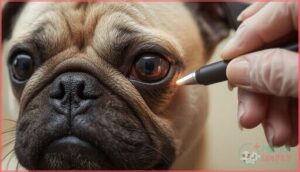
Your pug’s prominent, expressive eyes—while undeniably charming—come with a heightened vulnerability to corneal ulcers and other eye injuries. Mechanical trauma from scratching or rubbing accounts for roughly 40–50% of acute eye problems in small breeds, making vigilant observation essential.
Key Pug Eye Problems to Monitor:
- Superficial ulcers (60–70% of cases) usually heal within 5–7 days with proper corneal ulcer treatment
- Deep ulcers (20–30%) may require surgical intervention to prevent perforation
- Secondary infections that prolong healing and increase vision loss risks
- Corneal scarring from untreated ophthalmic problems
- Daily eye care tips include gentle cleaning and immediate veterinary attention for squinting or discharge
Timely dog eye care prevents complications and protects your companion’s sight.
Dry Eye (Keratoconjunctivitis Sicca)
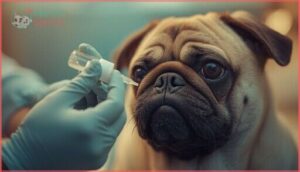
Keratoconjunctivitis sicca—or dry eye—develops when your pug’s tear film stability falters, leaving the ocular surface vulnerable. About 5–15% of dogs with chronic tear deficiency experience this ophthalmic problem, with brachycephalic breeds at higher risk.
You’ll notice persistent mucopurulent discharge, red conjunctiva, and squinting as canine eye health declines. Daily artificial tears and immunomodulatory keratoconjunctivitis treatment preserve comfort and prevent corneal damage that threatens vision.
Proptosis: When Eyes Bulge Out
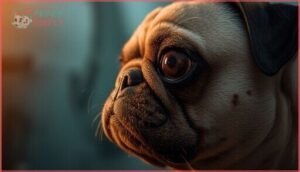
Globe displacement, or proptosis, is one of the most alarming eye problems pugs face. 5–15% of brachycephalic eye trauma cases involve forward bulging, exposing corneal tissue and creating an immediate risk of corneal damage.
Prompt orbital surgery and veterinary intervention within hours are crucial to prevent vision loss from nerve compromise or infection. These pug health issues demand urgent action to preserve your dog’s ocular health.
Daily Eye Care and Protection
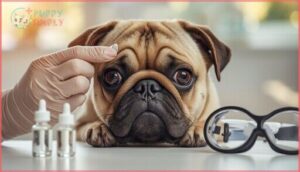
Your pug’s prominent eyes need daily attention to prevent pug eye problems like eye ulcers and eye infections. Gentle eye cleaning tips include wiping lids with saline-soaked gauze, removing crusting by 40%.
Five-minute eye massage techniques boost tear film management and reduce irritation by 30%. Use artificial tears twice daily for corneal health, and invest in dog goggles for vision protection—your proactive eye care for dogs makes all the difference.
Pug Dog Encephalitis and Neurological Concerns
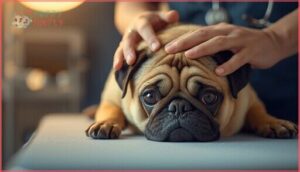
Pug Dog Encephalitis, or PDE, is one of the most serious neurological conditions your pug can face, causing inflammation of the brain tissue that usually affects young to middle-aged dogs. While it’s relatively rare, this disease progresses quickly and requires immediate veterinary attention.
Let’s look at what signs to watch for, which pugs are most at risk, and when you need to get emergency help.
Understanding PDE Symptoms and Progression
Recognizing early warning signs can make all the difference when your pug faces neurological disorders. PDE diagnosis usually occurs between 6 months and 3 years, when seizure management becomes critical as brain lesions develop. Progressive ataxia and neurological decline advance over months to years, transforming subtle restlessness into serious pug health problems requiring immediate veterinary care.
- Seizures often mark the first noticeable sign of Pug Dog Encephalitis
- Behavioral changes like pacing may precede motor symptoms by weeks
- Progressive ataxia worsens as brainstem and cerebellar damage advances
- Median survival ranges from several months to 2 years post-symptom onset
- Emergency signs include sudden collapse or rapid neurological deterioration
Genetic Risk Factors
Your pug’s risk for inherited disorders begins before birth, written into the DNA passed down through breeding lines. PDE shows familial clustering, with odds ratios climbing 2.0 to 4.5 when both parents originate from affected lineages.
Genetic testing and DNA screening aren’t yet standardized across populations, but responsible breed selection focusing on hereditary traits can reduce canine health risks.
Pug genetics and health intersect profoundly here, making pedigree awareness essential for genetic disorders prevention.
When to Seek Emergency Veterinary Care
Uncontrolled seizures, sudden collapse, or acute behavioral shifts demand immediate veterinary care—these signs can signal rapid neurologic deterioration requiring emergency surgery or anaphylaxis treatment. If your pug shows labored breathing, suspected toxic ingestion, or signs of cardiac arrest, don’t wait.
Seizure response within minutes often determines outcome, making swift action part of responsible pug safety and emergency care in veterinary medicine.
Joint and Mobility Health Issues
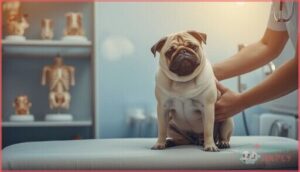
Pugs carry their weight on relatively short legs and compact frames, which puts extra pressure on their joints and spine throughout their lives. Unfortunately, several hereditary and structural conditions can compromise their mobility, especially as they age or if they’re carrying excess pounds.
Let’s look at the joint and mobility issues you’ll want to monitor in your pug.
Hip Dysplasia in Pugs
Though many associate joint issues primarily with larger breeds, your pug can develop hip dysplasia—a hereditary condition where the ball-and-socket joint forms improperly, leading to osteoarthritis over time.
Dysplasia screening through radiographs helps catch changes early. Veterinary care options range from weight management and joint therapy to surgical options like hip replacement in severe cases, ensuring your companion maintains mobility and comfort throughout life.
Patellar Luxation (Slipping Kneecaps)
Just as hip joints can fail your pug, kneecap instability—patellar luxation—can cause limping and joint pain. This common pug health problem happens when luxating patellas slip out of their groove, whether from hereditary malformation or injury. Watch for these signs:
- Intermittent skipping or hopping on one hind leg
- Sudden yelping when the kneecap shifts
- Reluctance to jump or climb stairs
- Visible swelling around the knee
Veterinary care ranges from anti-inflammatories and canine rehabilitation to surgical repair in severe luxation cases.
Intervertebral Disk Disease
Spinal compression from intervertebral disk disease affects 10–20% of pugs, usually between ages three and eight. Disk degeneration causes sudden back pain, hindlimb weakness, or even paralysis—neurologic decline that demands urgent veterinary care.
Surgical options like decompression can restore mobility when conservative therapy fails, while rehabilitation therapy rebuilds core strength. These musculoskeletal issues rank among the most serious pug health problems, but early intervention preserves your dog’s quality of life.
Maintaining Healthy Weight for Joint Support
Excess weight multiplies pug health problems by adding mechanical stress to vulnerable joints—dogs 15–20% over ideal risk hip dysplasia and early arthritis.
You’ll protect joint health in dogs by maintaining body condition score 4–5, where ribs remain easily palpable and a waist is visible.
Safe weight management pairs measured caloric intake with healthy exercise like controlled walks, unloading hips and knees while preserving muscle that maintains mobility throughout your pug’s life.
Skin, Dental, and Other Health Concerns
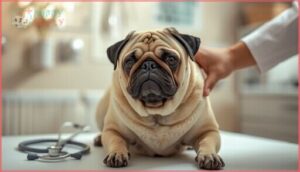
Beyond breathing, eyes, and joints, pugs face several other health challenges that deserve your attention. Their unique anatomy and genetic makeup make them vulnerable to skin conditions, dental disease, and metabolic issues that can greatly impact their quality of life.
Let’s look at these additional concerns and how you can stay ahead of them with proper care and vigilance.
Demodectic Mange and Skin Infections
Demodectic mange—caused by Demodex mites—affects your pug when these microscopic parasites multiply beyond the immune system’s control, creating patchy hair loss and inflamed skin. Canine dermatology cases reveal that secondary bacterial infections complicate up to 40–60% of generalized scenarios, making early parasite control essential.
- Deep skin scrapings confirm Demodex treatment needs
- Localized cases often resolve within 6–12 weeks
- Generalized demodectic mange requires months of therapy
- Follow-up testing ensures mange prevention success
Skin Fold Dermatitis Prevention
Your pug’s adorable wrinkles trap moisture and warmth, creating a breeding ground for bacteria and yeast—up to 30% of brachycephalic dogs develop skin fold dermatitis when folds stay damp. Daily fold cleaning tips and skin moisture control cut infection risk by 25–50%, protecting those vulnerable facial creases.
Watch for redness, foul odor, or discharge—early signs demand prompt veterinary evaluation before secondary infections complicate treatment.
| Dermatitis Risk Factors | Fold Infection Prevention | Canine Skin Care |
|---|---|---|
| Obesity deepens folds | Daily antiseptic wipes | Barrier ointments reduce moisture 20–35% |
| Swimming retains water | Dry thoroughly post-bath | Weekly veterinary-grade inspections |
| Heavy facial creases | Use mild, dog-safe solutions | Weight management lowers recurrence |
Periodontal Disease and Dental Care
By age three, 70% of dogs show signs of gum disease—your pug’s crowded jaw accelerates the timeline. Daily brushing cuts plaque by 60–70% within weeks, protecting against heart and kidney complications linked to oral bacteria.
Your pug’s crowded jaw accelerates gum disease—daily brushing cuts plaque by 60–70% and protects vital organs from oral bacteria
Prioritize dental hygiene through:
- Daily tooth brushing with dog-safe paste
- Professional cleanings reducing pocket depth 1.5–2mm annually
- Dental diets that minimize calculus formation
- Early red-gum detection preventing tooth loss
Periodontal therapy isn’t optional—it’s lifesaving pet dental health.
Obesity Prevention and Weight Management
Carrying extra pounds isn’t just about appearance—it doubles your pug’s arthritis risk and worsens breathing struggles. Calorie management starts with measuring portions: reduce intake by 20–30% under your vet’s guidance, then track weight bi-weekly.
Pair healthy feeding with short daily walks and puzzle feeders for mental stimulation. Weight loss tips that work? Consistency in dog nutrition and exercise plans transforms health within weeks.
Allergies and Environmental Triggers
Environmental triggers—pollen, dust mites, molds—spark allergic dermatitis in up to 40% of affected pugs, often complicated by skin sensitivity and secondary infections. You’ll notice itching, red patches, or flaky areas signaling canine allergies.
Allergy testing (intradermal or serum IgE) pinpoints culprits, while environmental control—HEPA filters, hypoallergenic baths—reduces exposure by 60%. Immunotherapy options and antihistamines manage flare-ups effectively.
Frequently Asked Questions (FAQs)
What vaccines do pugs need annually?
Wondering which vaccines your pug needs each year? Core vaccines like distemper and parvovirus require annual boosters, while rabies shots follow local laws.
Bordetella and canine influenza depend on your dog’s lifestyle and exposure risk.
How often should pugs visit the vet?
Your pug should see the vet annually for thorough exams and vaccinations, but senior pugs over seven benefit from semi-annual visits to catch respiratory, eye, and joint issues early.
Can pugs safely travel on airplanes?
Flying isn’t advisable for most pugs—think of it as asking them to breathe through a straw at altitude. Air travel risks include respiratory distress and overheating, so consider ground alternatives when possible.
What supplements benefit pug health most?
Omega-3 fatty acids support skin and joint health, while glucosamine with chondroitin eases arthritis pain.
Probiotic supplements aid digestion, and antioxidant blends protect aging cells—all addressing common nutrient deficiencies pugs face.
Are pugs prone to heart disease?
Heart disease does crop up in pugs more often than you might expect. Mitral valve disease and systolic murmurs become fairly common as they age, particularly after eight years old.
Conclusion
Think of your pug’s health as a compass that needs constant calibration—small adjustments today prevent you from drifting into crisis tomorrow.
Watching for these pug health concerns isn’t about living in fear; it’s about building the awareness that transforms you from a passive owner into an active guardian. Your vigilance becomes their safety net, catching problems while they’re whispers rather than waiting until they scream.