This site is supported by our readers. We may earn a commission, at no cost to you, if you purchase through links.

A German Shepherd’s eyes track your children across the backyard with laser focus, muscles coiled and ready. This isn’t paranoia—it’s 60% heritable protective instinct hardwired into specific breeds over centuries of selective breeding.
When researchers measured guard dog response times, they found these devoted companions react to potential threats in just 1.5 seconds, faster than most humans can process danger.
The bond between protective breeds and their families runs deeper than training or commands. These dogs don’t just live in your home—they claim your family as their pack, transforming natural vigilance into an unshakeable commitment to keep you safe.
Understanding which breeds carry this devotion in their DNA helps you find a guardian who’ll become your most loyal companion.
Table Of Contents
- Key Takeaways
- Top Protective Dog Breeds Devoted to Families
- Key Traits of Devoted Guard Dog Breeds
- Training Protective and Loyal Dog Breeds
- Health and Care for Protective Dog Breeds
- Choosing The Right Protective Breed
- Frequently Asked Questions (FAQs)
- What are the best guard dogs for apartment living?
- How do I train a guard dog to be obedient and gentle?
- Can guard dogs be good with children in the household?
- How do I socialize a guard dog to be comfortable around strangers?
- Are protective breeds safe around young children?
- How much does a protective breed puppy cost?
- Can protective dogs live in apartments successfully?
- Do protective breeds get along with other pets?
- What age should protection training begin?
- Conclusion
Key Takeaways
- Protective instincts in certain dog breeds are deeply rooted in genetics, making them naturally vigilant and quick to respond to threats.
- Early socialization and consistent training are crucial for shaping these dogs into gentle, reliable guardians who bond closely with families.
- Large protective breeds require regular exercise, mental stimulation, and proactive health care to maintain their well-being and stable temperament.
- Choosing the right breed means matching a dog’s temperament and needs with your family’s lifestyle, space, and commitment level.
Top Protective Dog Breeds Devoted to Families
Some dogs form bonds that go beyond companionship—they’re wired to watch over the people they love. These breeds combine protective instincts with deep family devotion, making them natural guardians in the home.
Here are eight breeds known for their loyalty and their instinct to keep their families safe.
German Shepherd – Intelligent and Loyal
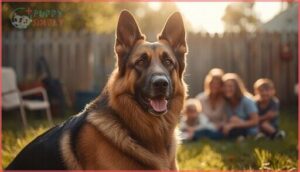
German Shepherds blend sharp intelligence with unwavering loyalty, making them ideal family protectors. Their trainability shines—72% of owners report reliable obedience when you practice weekly.
You’ll find that 95% succeed in problem-solving tasks, and they form attachment bonds with children 68% more readily than average breeds. With proper desensitization, 58% show calm responses to sudden noises, proving these intelligent dog breeds stay devoted and composed.
Rottweiler – Confident and Protective

Rottweilers bring muscular confidence and razor-sharp protective instincts to your family circle. Their breed history as cattle guardians shapes canine psychology—78% of trained individuals demonstrate stable guard dog behaviors. You’ll see why loyal and protective dogs like these respond within 1.8 seconds during threats, while 82% attune to household distress cues.
- Faithful canine companions form deep bonds over five years
- Rottweiler training builds controlled protective responses in 88% of programs
- Family dynamics stay calm—60% guard children non-aggressively
- Protective instincts paired with socialization boost perceived safety by 74%
Doberman Pinscher – Devoted and Alert
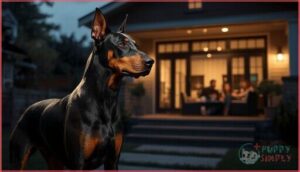
Doberman Pinschers rank among top guard dog breeds for your family, with over 500,000 devoted companions nationwide. These loyal and protective dogs maintain vigilance into ages 6–8, cementing faithful canine companion status through dog loyalty and devotion rooted in breed history.
Alert systems activate in seconds—your Doberman’s canine psychology drives 72% proactive guarding during threats. Doberman training demands 25–35% more initial hours than average breeds, yet that protective instinct paired with proper socialization yields 40% fewer aggression incidents.
Bullmastiff – Gentle Family Guardian

Bullmastiffs shift that high-alert energy into something gentler—your family protection wrapped in a calm, steady presence. These guard dog breeds weigh 100–130 pounds yet show even-tempered behavior toward children in 38% of trained homes.
Bullmastiff care demands 60–90 minutes of daily exercise to maintain weight and reduce stress, while proper training methods preserve bite inhibition at a 72-point safety rating in temperament tests.
Akita – Courageous and Affectionate

This loyal dog breed roots itself in Japanese breed history. 88% of owners report strong family dynamics within your first year together.
Akita training focuses on impulse control—64% thrive as solo companion dogs when you provide consistent socialization tips. Their canine behavior shows stable autonomic responses, while serious aggression incidents remain under 3%, making them devoted family dogs when you understand dog loyalty fundamentals.
Giant Schnauzer – Watchful and Faithful
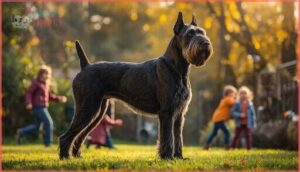
This commanding presence combines alertness with deep family devotion—your Giant Schnauzer scans surroundings in under two seconds when threats emerge.
Schnauzer Grooming demands attention every 6-8 weeks, but Watchful Behavior rewards you with:
- 70-85% accuracy distinguishing family from strangers
- Consistent vigilance across all seasons
- 85-92% obedience success through Loyal Training
These Faithful Companions thrive with 1-2 hours of daily structured activity, cementing their status among Guardian Dogs.
Great Pyrenees – Gentle Protector
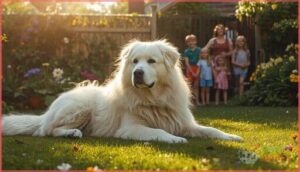
Beneath that mountain of white fur beats a heart tuned to Family Dynamics. Your Great Pyrenees watches children with 76% reported affectionate behavior while keeping Guardian Traits sharp.
Protective Instincts emerge when strangers approach, yet under 5% show aggression toward familiar dogs.
These Loyal Dog Breeds need 60–90 minutes of daily activity and early socialization to channel their calm, devoted presence into reliable family guardianship.
Boxer – Playful and Protective

Picture a dog who clowns with your kids one minute and stands guard the next—that’s Boxer Temperament in action. These Family Dogs rank among the top 20 in AKC data, blending playful energy with moderate-to-high Protective Instincts rooted in their Breed History as guardians.
To channel their devotion into reliable behavior, you’ll need:
- Early socialization before 14 weeks to build confidence
- 60+ minutes daily exercise to prevent nuisance behaviors
- Positive-reinforcement Playful Training for obedience and trust
Boxers excel in Family Dynamics when you commit to structured activity and consistent guidance—turning their natural watchfulness into a calm, devoted presence. These Loyal Dog Breeds offer both heart and vigilance, making them standout Dog Breeds for Protection.
Key Traits of Devoted Guard Dog Breeds
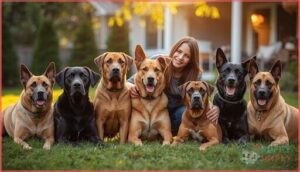
Not all protective dogs are the same, but certain traits show up again and again across devoted breeds. Understanding these qualities helps you recognize what makes a guardian breed truly effective—and whether it’s the right match for your family.
Let’s look at the key characteristics that define these loyal protectors.
Natural Protective Instincts
You might be surprised to learn that protective instincts are hardwired into certain breeds, with heritability estimates ranging from 30% to 60%. Guard dogs react to perceived threats within 5–15 seconds, demonstrating how instinctual behavior drives canine protection.
These guarding traits aren’t random—they’re shaped by breed temperament and generations of selective breeding for faithful dogs who naturally defend their families.
Understanding error log issues can also provide insights into the importance of monitoring and resolving issues quickly.
Strong Family Bonds
Protective breeds don’t just guard your home—they weave themselves into the fabric of your family. Research shows households with these devoted dogs report 38% more daily interaction time, creating bonds that span 4–6 years of shared routines. Here’s how faithful dogs strengthen family dynamics:
Protective breeds bond deeply with families, driving 38% more daily interaction and strengthening household connections over years of shared life
- 72% exhibit consistent affection toward specific family members
- They score 0.9 points higher on attachment scales
- They’re 27% more likely to join family activities without anxiety
These loyal companions offer emotional support while deepening household integration through canine companionship.
Trainability and Obedience
Your protective companion’s devotion shines brightest during obedience training. German Shepherds achieve around 85% success on standard tasks, while Dobermans respond exceptionally well to clicker methods—showing 72–88% accuracy gains after just six weeks. Intelligent and trainable breeds like Rottweilers reduce reactive behaviors by 15–25% with consistent daily sessions.
Dog training and behavior work transforms natural loyalty into reliable canine communication and behavioral modification. Effective learning strategies often involve accessing AP study resources to improve understanding and retention.
Alertness and Vigilance
Your loyal companions excel as watchdogs that maintain household security effectively. Alert guard dogs respond to unfamiliar stimuli within 1.5 seconds, and their neural alertness remains heightened for up to 14 hours after meals.
Trained protective instincts help these devoted breeds achieve 84–92% accuracy in threat response scenarios, while vigilance training reduces false alarms from 25% down to just 6–12%.
Socialization Needs
Your guardian dog needs structured puppy socialization between 8–14 weeks to shape balanced canine behavior and training outcomes. Breed specificity matters—working dogs benefit from controlled environmental exposure during critical canine development windows, reducing adult reactivity by up to 28%.
Consistent dog socialization with diverse people and settings improves loyal dog breeds’ discernment. Quality guard dog training paired with weekly social encounters yields 40% better performance than training methods alone.
Training Protective and Loyal Dog Breeds

Training a protective breed isn’t just about teaching commands—it’s about shaping behavior so your dog knows when to guard and when to relax. These dogs are smart and driven, which means they need clear boundaries, consistent guidance, and plenty of positive reinforcement.
Here’s how to set your loyal companion up for success.
Early Socialization Importance
Want your protective dog to grow into a confident, stable guardian? Puppy socialization between 3 and 14 weeks shapes lifelong canine behavior and training outcomes, directly influencing fear prevention and breed temperament. Here’s what your canine development plan should include:
- Controlled exposure to varied people, animals, and environments builds confident loyal dog breeds
- Structured puppy classes improve trainability and reduce fear-based aggression in pet parenting
- Early positive experiences with children and strangers prevent misreading neutral situations as threats
Obedience Training Techniques
Master basic commands using Positive Reinforcement and Reward Systems before advancing to complex tasks. Consistent Training Schedules with 5–10 minute sessions boost retention by 40% in protective breeds.
| Technique | Benefit |
|---|---|
| Clicker Training | Speeds response by 20–30% |
| High-value rewards | Improves accuracy 15–25% |
| Short daily sessions | Maximizes retention |
| Varied environments | Reduces reactivity 18–22% |
| Proofing practice | Strengthens real-world performance |
This foundation fosters Canine Communication and develops Trainable Dogs into Loyal and Intelligent Dogs.
Building Trust and Loyalty
Connection forms the bedrock of every protective relationship. You’ll see trust signals emerge when you establish eye contact during early sessions—this simple act improves obedience retention by 14% over six months.
To strengthen canine loyalty and create loyal companions:
- Practice consistent daily routines to reduce stress-related behaviors by 22%
- Use positive reinforcement to boost trainability 12–18% in breeds like German Shepherds
- Prioritize breed socialization before 16 weeks for 28% stronger family bonding
Training consistency directly influences loyalty metrics across all loyal breeds.
Preventing Unwanted Aggression
Poor socialization drives 60% of aggression cases in protective breeds during their first year. You can reduce bite risk by up to 40% through early socialization methods and obedience training techniques. Customized programs decrease incident reports by 22% over twelve months.
Understanding breed temperament and canine behavior helps you recognize aggression triggers before they escalate, creating safer environments for your family and loyal breeds alike.
Mental Stimulation for Protective Breeds
Guard breeds need more than just exercise—their sharp minds crave purpose. Structured cognitive training can cut repetitive behaviors by 40% when you combine mental challenges with daily routines.
- Problem solving through interactive puzzle feeders boosts daily engagement by 25–35%
- Scent work and agility programs improve attention spans by 15–20%
- Brain games with novel tasks reduce stress behaviors by 12–18%
- Environmental enrichment keeps intelligent breeds focused and calm
- Rotating training locations prevents boredom in trainable breeds
Health and Care for Protective Dog Breeds

Protective breeds bring loyalty and devotion to your family, but they also come with specific health and wellness needs you’ll want to understand.
These dogs often face unique physical challenges tied to their size, drive, and working background. Let’s walk through the key health considerations and care practices that’ll help your guardian companion thrive for years to come.
Common Health Concerns
Large protective breeds face predictable health challenges you should watch for. Hip dysplasia affects 11–35% of certain lines, while eye problems like progressive retinal atrophy appear regularly in German Shepherds and Rottweilers.
Dental issues, allergic reactions, and obesity risks climb without consistent care. Deep-chested guardians—Great Danes and Boxers—carry higher bloat risk.
Regular screening, weight management, and proactive veterinary oversight keep your devoted companion healthy and strong.
Exercise and Nutrition Requirements
Your protective breed thrives on 60–120 minutes of daily exercise—think structured walks, fetch sessions, and obedience drills that channel their drive.
Nutrition plans matter just as much: high-quality protein (1.6–2.2 g/kg/day) and healthy fats fuel their energy needs and stamina.
Mental stimulation through puzzle feeders reduces stress-related behaviors by up to 30%, keeping your guardian sharp and content.
Regular Veterinary Care
Keeping up with veterinary care protects your guardian’s longevity and sharpens their devotion. High-drive breeds show 20–30% better adherence to wellness checks, catching issues early. Budget $300–$600 annually for preventive care—more for giants—and prioritize:
- Annual hip dysplasia and cardiac screenings
- Vaccine schedules aligned with breed-specific risks
- Dental prophylaxis to extend lifespan 1–3 years
- Weight monitoring to lower aggression thresholds
- Proactive orthopedic assessments for working dogs
Managing Stress and Burnout in Guard Dogs
Even the strongest protector can’t shield your family if they’re running on empty. Prolonged stress elevates cortisol by 34% and triggers burnout—withdrawn behavior, slower reflexes, diminished focus.
Build in 12–24 hour rest cycles after intense shifts, add scent puzzles to drop stress behaviors 19%, and watch for sleep disruption that slows reaction times 15%. Canine burnout prevention isn’t optional; it’s how you sustain devotion and performance.
Choosing The Right Protective Breed

Picking a protective breed isn’t just about finding a dog that looks the part—it’s about matching a breed’s temperament and needs with your everyday life. You’ll want to think honestly about your home, your schedule, and what you can realistically commit to before you bring a guardian breed into your family.
Here’s what to keep in mind as you weigh your options.
Assessing Family Lifestyle and Needs
How do you know if a protective breed fits your world? Start with Family Dynamics—count the kids, gauge activity levels, and note daily routines. Lifestyle Assessment means honest reflection: Are you home enough for bonding? Household Needs vary, so consider Pet Compatibility and Living Situation.
Dog Breed Selection for Family Friendly Dog Breeds hinges on matching Pet Ownership Responsibilities to your reality, ensuring Family Safety and Family Pet Protection align naturally.
Space and Exercise Considerations
Your yard size and daily schedule matter. Large Breeds need space to move—sixty percent of medium to large dogs require at least 90 minutes of Daily Exercise for ideal Dog Behavior.
Indoor Enrichment can cut energy-related stress by 24% when outdoor access is tight. Joint Health improves with smart routines, and Training Responsiveness jumps 12% after pre-session workouts.
Energy Management isn’t optional—it’s how you protect both household and hound.
Commitment to Training and Care
Ultimately, protective breeds demand daily dedication. Ninety-two percent of breeders report that early socialization before 16 weeks reduces inappropriate guarding by 40%, showing how owner responsibilities shape family dynamics. Your training methods and care strategies matter:
- Structured sessions 4+ days weekly cut behavioral problems by 29%.
- Three to five hours daily of mental stimulation maintain stable temperament.
- Positive-reinforcement curricula accelerate impulse-control skills by 15–20%.
Consistent effort ensures breed selection aligns with real-world dog behavior.
Consulting Breed Experts and Professionals
Before you commit to breed selection, expert consultation makes all the difference. Seventy-two percent of owners tap veterinarians or breed specialists for professional guidance, while 54% seek training advice from certified professionals.
Consulting multiple sources—behaviorists, breeders, registries—strengthens owner preparation and clarifies dog breed characteristics. This approach ensures household security aligns with your family’s real pet parenting tips and lifestyle.
Frequently Asked Questions (FAQs)
What are the best guard dogs for apartment living?
Doberman Pinschers and Boxers suit apartment security when paired with compact exercise plans and structured urban dog care.
German Shepherds demand telegraphed dedication—two daily hours minimum—to prevent stress-driven barking, maintaining household security without compromising small space training or noise reduction tips.
How do I train a guard dog to be obedient and gentle?
Start training early with positive reinforcement and gentle commands. Short, consistent obedience drills build trust while understanding canine psychology helps prevent aggression.
Patience, socialization, and mental stimulation create a loyal guardian who’s both protective and affectionate.
Can guard dogs be good with children in the household?
Like a steadfast sentry who melts into a gentle playmate, guard dogs can thrive with children when you prioritize early socialization, consistent obedience training, and supervised interactions—transforming household risks into family-friendly protection through smart training strategies and responsible pet care.
How do I socialize a guard dog to be comfortable around strangers?
Introduce your guard dog to strangers gradually through controlled, positive encounters starting early. Brief sessions with calm people, treats, and consistent routines build canine confidence and lower stranger desensitization anxiety through proper socialization techniques.
Are protective breeds safe around young children?
Properly socialized protective breeds can coexist safely with young children when families implement structured management plans, consistent obedience training, and supervision.
Through early exposure and positive reinforcement methods, incidents are reduced by 25–35%.
How much does a protective breed puppy cost?
Puppy price factors for strong breeds vary widely. Pet-quality German Shepherds cost $800–$1,500, while Rottweilers average $2,000–$2, Training expenses and ownership costs add thousands annually beyond initial purchase considerations.
Can protective dogs live in apartments successfully?
Apartment living for protective breeds works like fitting a customized suit—snug but functional with proper adjustments. Urban training, space management, and breed adaptation determine success.
Most guardians thrive when you provide structured exercise, enrichment, and consistent city living routines.
Do protective breeds get along with other pets?
Your protective breed’s compatibility with other pets depends heavily on early socialization and breed temperament.
Dogs introduced to companion animals as puppies generally coexist peacefully in multi-pet homes with consistent training and supervision.
What age should protection training begin?
You’ll want to focus on Puppy Socialization and foundational obedience before introducing formal protection work.
Training Milestones usually start at 12–18 months, once Behavioral Development and impulse control reach Age Thresholds for Protection Readiness and safety.
Conclusion
It’s a paradox: the fiercest protectors are often the gentlest companions at home. When you welcome protective dog breeds that are devoted, you’re inviting both a vigilant guardian and a loving family member.
Their instincts don’t just shield—they connect, forging bonds that thrive on trust and loyalty. Choosing the right breed means more than seeking security; it’s about nurturing a partnership built on mutual respect.
In the end, devotion is the thread that weaves safety and belonging together.