
This site is supported by our readers. We may earn a commission, at no cost to you, if you purchase through links.
Your dog lunges at the mail carrier, blocks strangers from entering your home, or growls when someone approaches their food bowl—these aren’t signs of a bad dog, but rather protective aggression, a misunderstood behavior pattern that affects nearly half of all household canines at some point. Unlike predatory aggression, protective aggression stems from fear-based defense mechanisms that, when left unaddressed, intensify over time and create dangerous situations for everyone involved.
The good news? Protective aggression dog training using evidence-based methods can reshape these responses, transforming your dog’s reactive patterns into calm, confident behavior. Through systematic desensitization, positive reinforcement, and strategic boundary-setting, you’ll learn to address the root causes rather than just managing symptoms, giving your dog the tools they need to feel secure without resorting to aggressive displays.
Table Of Contents
- Key Takeaways
- What is Protective Aggression in Dogs?
- Causes of Protective Aggression
- Identifying Protective Aggression Signs
- Assessing Your Dog’s Training Needs
- Positive Reinforcement Training Methods
- Desensitization and Counter-Conditioning Techniques
- Setting Boundaries and Leadership
- Managing and Preventing Aggressive Incidents
- When to Seek Professional Help
- Frequently Asked Questions (FAQs)
- How to stop a dog from protective aggression?
- How do you fix guarding aggression in dogs?
- How do I fix my dog’s defensive aggression?
- How do you train a dog with possessive aggression?
- Can protective aggression be fully eliminated?
- What breeds are more prone to protective aggression?
- Is professional training always necessary for aggressive dogs?
- How does environment affect protective aggression?
- Can medication assist in managing protective aggression?
- Can protective aggression be completely eliminated in dogs?
- Conclusion
Key Takeaways
- Protective aggression stems from fear-based defense mechanisms rather than dominance, affecting nearly half of household dogs and intensifying without intervention through systematic desensitization and positive reinforcement training.
- Effective behavior modification requires identifying specific triggers through careful assessment—such as entry points, resource zones, and proximity to family members—then using controlled exposure at safe distances while rewarding calm responses.
- Punishment-based methods worsen protective aggression by escalating fear, while reward-based training shows 25–40% higher retention of desired behaviors and reduces reactivity through gradual counterconditioning paired with high-value treats.
- Professional intervention becomes necessary when aggression exceeds safe thresholds, displays unpredictable patterns, or persists despite consistent home training efforts, requiring certified expertise to implement tailored safety protocols and behavior modification plans.
What is Protective Aggression in Dogs?
Protective aggression is one of the most misunderstood behaviors in dogs, and it’s often confused with other forms of aggression.
Understanding what it is, why it happens, and how it affects your dog’s behavior is the first step toward effective training.
Let’s break down the key aspects you need to know.
Definition and Characteristics
Protective aggression is a defense-driven response your dog displays when they perceive a threat to you, your home, or valued resources. Unlike predatory aggression, this behavior stems from guarding instincts rather than prey drive.
You’ll notice stiffened posture, fixed stares, raised lips, and low growls—all warning signs that your dog is ready to confront rather than retreat from perceived danger. Understanding error code issues can help you better manage your dog’s protective aggression by recognizing potential threats.
Common Triggers and Scenarios
Your dog’s protective responses spike when strangers approach entryways—48% of episodes trigger audible warnings. Resource guarding of people accounts for 62% of shelter dog cases, while proximity during rest periods increases incidents by 34%. Food or toy handling escalates aggression in 41% of breeds, and perceived challenges during separation raise displays in 27% of cases.
Environmental factors and fear and anxiety in dogs heighten these territorial and protective behavior patterns, making trigger assessment essential for aggression management. Understanding AP study guides can help in developing strategies to address these issues.
Impact on Dog Behavior
When protective aggression takes root, your dog’s entire emotional landscape shifts. Canine emotional regulation suffers—arousal spikes make calm responses nearly impossible, and fear responses become automatic. Behavioral modification grows more complex as protective aggressive dog patterns deepen, especially if left unaddressed past 18–24 months.
Once protective aggression takes hold, your dog’s emotional regulation breaks down, making calm responses nearly impossible and behavioral modification increasingly difficult
Aggression triggers multiply, socialization becomes harder, and your dog’s ability to distinguish real threats from everyday situations erodes, demanding targeted canine behavior modification and dog socialization interventions.
Causes of Protective Aggression

Understanding what drives protective aggression in your dog is the first step toward effective training. Several factors, from genetics to early life experiences, shape how your dog reacts to perceived threats.
Let’s look at the three main causes that contribute to this complex behavior.
Genetic Predispositions
Your dog’s genes play a surprisingly strong role in protective aggression. Heritability studies show certain breed traits and inherited behaviors make some dogs naturally more territorial and protective than others.
Canine genetics research reveals that genetic factors influence aggressive behavior patterns, though dog breeding and canine behavior modification can help manage these tendencies.
Understanding your dog’s inherited predispositions helps you tailor training approaches effectively.
Environmental Influences
Your home environment shapes your protective aggressive dog’s behavior more than you might realize. Noise pollution triggers arousal, and studies show households with frequent disturbances see 15–20% more protective reactions. Spatial awareness matters too—dogs guarding territorial boundaries within 1–2 meters of you display heightened vigilance.
Environmental enrichment, combined with dog socialization and canine behavior modification through dog training, helps reduce territorial and protective behavior by addressing social pressures that fuel territorial marking and defensive displays.
Lack of Socialization
Social isolation during puppy development sets the stage for protective aggression later. Dogs with limited early exposure show nearly 50% higher defensive responses toward unfamiliar people, and socialization gaps correlate with 37% more reactivity in shelters.
Without environmental enrichment and canine socialization, fear responses escalate—your protective aggressive dog may misread benign approaches as genuine threats, triggering social deficits that compound over time.
Identifying Protective Aggression Signs
Spotting protective aggression early can mean the difference between a manageable situation and a dangerous one. Your dog’s body language and behavior patterns will tell you everything you need to know, but only if you know what to look for.
Let’s break down the warning signs and how they differ from other types of aggression, so you can respond appropriately.
Warning Signs and Symptoms

Reading your dog’s body language can save you from an escalation you never saw coming. Sixty-eight percent of owners notice raised hair along the back or neck before a protective incident, while 54% observe stiff posture with a lowered head and direct eye contact.
These aggression cues—fixed stares (46%), low growls (39%), and sudden lunges (22%)—signal your dog’s threat response and require immediate, calm intervention.
Differentiating From Other Aggressive Behaviors

Fear-driven aggression stems from anxiety and shows up as cowering or retreating, while territorial aggression appears only when someone enters your dog’s perceived space.
A protective aggressive dog, however, actively guards you regardless of location—watching for threats, intercepting approaches, and escalating from stiff posture to defensive bites.
Recognizing these aggression types through careful trigger analysis and canine body language helps you tackle behavioral issues with the right aggression management strategy.
Assessing Your Dog’s Training Needs

Before you start training, you need to understand where your dog is right now. Every dog comes with a unique temperament, different triggers, and varying levels of readiness for behavior modification work.
Let’s break down how to properly assess your dog’s specific training needs so you can move forward safely and effectively.
Evaluating Temperament and Triggers
Before you can reshape protective aggressive dog behavior, you need to pinpoint exactly what sets your dog off. Trigger mapping—identifying the specific circumstances that spark aggressive behavior—is your roadmap to effective behavior modification. Temperament tests, conducted by professionals or through structured home observations, reveal how your dog’s canine instincts and protective behaviors interact with environmental stressors.
Key elements to assess:
- Entry points: Public access to doors provokes 34% of protective displays
- Resource zones: Food and toys heighten guarding responses in 22% of cases
- Family proximity: Perceived threats to loved ones increase reactions by 1.6–2.3 times
- Lighting conditions: Low-light scenarios boost arousal by approximately 15%
- Nearby dogs: Unfamiliar canines near home trigger responses in 28% of dogs
Understanding these aggression triggers helps you anticipate behavioral issues and design targeted interventions. Dogs with high territoriality show 2.1 times more warning behavior when strangers approach, while those with bite history face 1.9 times higher odds of future incidents.
Canine psychology reveals that protective behaviors often correlate with specific postures—stiff stance, forward ears—in 56% of observed cases, helping you distinguish true protective aggression from fear-based reactions.
Determining Training Readiness
Your protective aggressive dog isn’t ready for behavior modification until baseline readiness markers align. Look for reliable recall and steady sit-stay responses under mild distractions—these foundational skills predict safer outcomes.
Training evaluation shows dogs maintaining calm posture within 5–10 meters of a trigger for 60 seconds demonstrate higher readiness. Canine temperament matters: dogs with consistent routines show 30% fewer incidents during training, making your readiness assessment essential for effective, positive reinforcement-based dog training success.
Safety Considerations
Your protective aggressive dog requires structured safety protocols before training begins. Risk assessment starts with trigger avoidance—identify what sparks reactions, then use leash management and muzzles during high-risk interactions to reduce bite incidents by 40–60%.
Emergency response plans lower incident frequency by 25–40%, addressing fear and anxiety in dogs while protecting everyone involved. Pet safety and dog owner responsibilities demand preparation, not improvisation.
Positive Reinforcement Training Methods

Positive reinforcement training is the most effective and humane approach for addressing protective aggression in dogs. This method focuses on rewarding calm, appropriate behavior rather than punishing reactive responses, which can actually escalate fear and aggression.
Let’s explore three core principles that will help you build a solid foundation for training your protective dog.
Using Praise and Rewards
Consistent praise increases your dog’s desired responses by up to 40%, making positive reinforcement training a cornerstone of behavior modification. When you reward calm behavior immediately—within 1–2 seconds—you strengthen the connection between action and consequence. Variable reward schedules keep your dog engaged longer, preventing plateaus.
Short, daily sessions outperform marathon training, especially with reward-based training and clicker training methods that build trust without fear.
Building Positive Associations
Pairing a high-value treat with the presence of a trigger shifts your dog’s emotional response from fear to calm—studies show 72% of dogs improve tolerance this way.
You’ll see real progress when you identify specific triggers, then gradually introduce them at 15–25% intensity while rewarding relaxed behavior.
This association building, combined with desensitization and counterconditioning, creates lasting change without force.
Avoiding Punitive Techniques
Reward-based methods work better than punishment—programs using non-punitive approaches report 25–40% higher retention of desired behaviors. Gentle training techniques reduce fear-based reactions without triggering defensive responses in your protective aggressive dog.
Humane methods that support lasting change include:
- Praising calm responses near triggers instead of correcting reactions
- Redirecting attention with treats rather than using physical corrections
- Building confidence through positive reinforcement and counterconditioning
- Creating safe learning environments using desensitization protocols
Desensitization and Counter-Conditioning Techniques
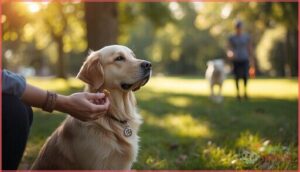
Desensitization and counter-conditioning work hand in hand to reshape your dog’s emotional response to whatever’s triggering their protective aggression. These techniques require patience and careful planning, but they’re among the most effective tools you have for long-term behavior change.
Let’s look at the key strategies you’ll use to help your dog build new, healthier associations.
Gradual Exposure to Triggers
Think of trigger desensitization as turning down the volume on your dog’s alarm system—one notch at a time. Start exposure therapy at a distance where your dog stays calm, then gradually decrease space as reactivity reduction becomes evident.
This stress management approach, called counterconditioning, pairs calm conditioning with positive reinforcement. Sessions 3–5 times weekly accelerate progress, helping socialization training reshape aggressive behavior and protective aggression responses safely.
Creating Controlled Training Scenarios
Scenario Planning is your blueprint for success in Aggressive Dog Training. By using Controlled Environments and clear Training Protocols, you can safely introduce Trigger Exposure while reinforcing calm behavior.
Scenario-Based Training—like mock doorbell rings or visitor arrivals—lets you practice Safety Measures and Protection Dog Training skills, reducing real-world reactivity by up to 33% compared to less structured approaches.
Tracking Progress and Adjusting Methods
Regularly reviewing Progress Metrics and Behavior Tracking is essential for effective dog behavior modification. You’ll want to analyze triggers, adjust your training techniques, and improve Safety Protocols as your dog’s responses change.
For instance, weekly check-ins can boost desensitization outcomes, while real-time Trigger Analysis helps you fine-tune behavioral therapy and positive reinforcement strategies for lasting improvement.
Setting Boundaries and Leadership

Setting boundaries and showing leadership are key to helping your dog feel secure and understand what’s expected. It’s not just about rules—it’s about building a relationship based on trust and respect.
Here’s how you can start laying a strong foundation for your dog’s behavior.
Establishing Clear Rules
Ever notice how a protective aggressive dog thrives on clarity? Rule Setting and Boundary Training aren’t just buzzwords—they’re your roadmap to calm.
To build Leadership Roles and effective Household Management, use:
- Consistent boundaries
- Clear cues
- Positive reinforcement
- Defined leadership routines
- Immediate feedback
This approach minimizes aggressive behavior and streamlines dog training with lasting results.
Teaching Essential Obedience Commands
You need solid Obedience Foundations to redirect protective behavior before it escalates. Start with Basic Cues like “sit,” “stay,” and “come”—studies show 5–15 minute daily Command Training sessions improve recall under stress by 45%.
Pair Leash Manners drills with Positive Reinforcement to build impulse control.
A certified Dog Trainer can tailor Recall Techniques to your dog’s triggers, transforming Canine Behavior through consistent Obedience Training.
Building Trust and Confidence
Think of trust as currency—you earn it through predictable Positive Interactions, not force. Gentle Handling paired with Trust Exercises in Calm Environments raises your dog’s Confidence Boosters naturally.
Owners using consistent routines see 33% fewer reactive incidents over three months, while a Professional Trainer can guide Dog Socialization and Training that utilizes Canine Psychology and Behavior.
Positive Reinforcement transforms fear into security.
Managing and Preventing Aggressive Incidents

Managing protective aggression isn’t just about training—it’s about creating layers of safety that prevent incidents before they happen. You need to understand what sets your dog off, how to use the right tools when situations get tense, and how to set up your home so everyone feels secure.
Let’s break down the practical steps that’ll help you stay one step ahead of potential problems.
Identifying and Avoiding Triggers
Your first line of defense involves spotting the subtle shifts in canine body language before protective aggressive dog behavior escalates. By mastering trigger awareness and recognizing aggression signs early, you can implement safety protocols that prevent incidents altogether.
- Watch for stiff posture, direct stares, or raised hackles when visitors approach your home
- Monitor resource guarding behaviors around food bowls, toys, or resting areas during family interactions
- Track environmental factors like sudden routine changes, new pets, or moving that heighten trigger sensitivity
- Identify pain-related triggers by noting protective responses when handling sensitive areas during grooming
- Document patterns in your dog’s behavioral issues to understand which scenarios consistently provoke defensive reactions
Using Safety Tools (Leashes, Muzzles)
Spotting early warning signs is half the battle; your next move is putting safety tools to work. Leash Training and Muzzle Safety aren’t just protective gear—they’re your shield and compass in Aggressive Dog Management. Used with Trigger Control and clear Safety Protocols, they lower incident rates and help you guide a protective aggressive dog toward calmer behavior.
| Tool | Emotional Impact |
|---|---|
| Leash Training | Confidence, Control |
| Muzzle Safety | Security, Peace of Mind |
Creating a Safe Home Environment
Just as leashes and muzzles guide your protective aggressive dog, your home’s setup can shape behavior every day. Reliable Home Security Measures and Safe Zones Creation keep stress low. Environmental Enrichment, Family Dynamics Management, and Household Routine Optimization all play a role in Dog Training and Behavior.
- Clear boundaries
- Safe retreat spaces
- Predictable routines
- Enrichment activities
- Visitor instructions
When to Seek Professional Help

Sometimes, protective aggression calls for more than patience and practice at home. Knowing when to reach out for expert support can make all the difference for your dog’s safety and progress.
Here’s what to look for when considering professional help.
Benefits of Working With a Trainer
Ever wondered why Trainer Guidance makes such a difference with a protective aggressive dog? Professional Support means you get Individualized Plans, Safety Protocols, and Ongoing Feedback adapted to your dog’s triggers and temperament.
With a professional trainer, you’ll see faster progress, reduced risk, and lasting change—especially when Positive Reinforcement Techniques and dog training expertise are at the heart of every session.
Recognizing When Aggression is Beyond Home Training
Clarity is essential when aggressive behavior pushes past safe Aggression Thresholds. If Trigger Assessment reveals unpredictable reactions, or your Safety Protocols feel stretched thin, it’s time for Professional Intervention.
For instance, escalation prevention is harder when Protective Aggression persists despite consistent efforts. Managing Aggressive Behavior and serious Behavioral Issues in dogs often demand Professional Dog Training for lasting change.
Selecting The Right Professional
The importance of certification can’t be overstated—look for credentials that signal real expertise, like CPDT-KA or a veterinary animal behaviorist designation.
Client reviews reveal how trainers handle reactive cases, while trainer qualities such as safety-first protocols and clear progress benchmarks matter most.
Expert consultation ensures you get professional guidance customized to your dog’s needs, giving every dog owner confidence in the path forward.
Frequently Asked Questions (FAQs)
How to stop a dog from protective aggression?
When Riley lunged at delivery drivers, her owner realized confronting protective aggression requires understanding canine psychology, implementing behavior modification through positive reinforcement techniques, and consistent training strategies paired with safety protocols to reduce aggressive behavior systematically.
How do you fix guarding aggression in dogs?
You fix guarding aggression through desensitization and counter-conditioning, gradually exposing your dog to triggers while rewarding calm behavior.
Behavior modification paired with trigger management tackles resource protection, helping reduce aggressive responses over time through consistent aggression therapy.
How do I fix my dog’s defensive aggression?
To address defensive aggression, focus on Trigger Management and Calming Techniques, using Positive Reinforcement Techniques and Behavior Modification.
Aggression Therapy facilitates Dog Behavior change, helping reduce Fear Responses and Aggressive Behavior through consistent Dog Training and structured Protective Aggression protocols.
How do you train a dog with possessive aggression?
Ironically, the more you try to snatch a prized toy, the tighter your dog clings.
Effective Aggression Management means using Positive Reinforcement Techniques, Trigger Control, and gradual Behavior Modification to reshape Resource Guarding and build calmer Canine Behavior.
Can protective aggression be fully eliminated?
Protective Aggression can rarely be fully eliminated, as Dog Psychology and genetics play a strong role, but with Aggression Therapy and Behavior Modification, you can greatly reduce Aggressive Behavior.
Using consistent Positive Reinforcement Techniques and Elimination Strategies, you can improve Training Outcomes.
What breeds are more prone to protective aggression?
As the saying goes, “like father, like son”—breed temperament and aggression genetics run deep. German Shepherds, Rottweilers, Dobermans, and terrier-types show heightened guard dog traits and protective instincts, shaping canine psychology and behavior toward protective aggressive responses.
Is professional training always necessary for aggressive dogs?
You won’t always need a Dog Behaviorist for every case, but serious aggressive behavior demands Professional Guidance.
Aggression Therapy and Behavior Modification can reduce Owner Liability and Training Costs, especially when Aggressive Dog Training goes beyond basic home management.
How does environment affect protective aggression?
As the saying goes, “a dog is a product of its environment.” High-stress surroundings, inconsistent routines, and limited socialization heighten protective responses, while enrichment activities and stable human interaction reduce territorial behavior and improve overall temperament.
Can medication assist in managing protective aggression?
Yes, medication can help manage severe protective aggression when paired with behavioral modification. Your veterinarian may prescribe SSRIs or other medications to support training, particularly when anxiety intensifies aggressive behavior.
Can protective aggression be completely eliminated in dogs?
Complete elimination isn’t realistic for most protective aggressive dogs. Behavioral therapy focusing on aggression reduction yields better training outcomes than attempting total elimination, since canine temperament and dog psychology influence aggression control feasibility.
Conclusion
Here’s the truth: your dog isn’t trying to dominate you—they’re asking for your help moving through a world that feels threatening. Protective aggression dog training works because it replaces fear with confidence, reactivity with choice.
The methods outlined here aren’t quick fixes; they’re relationship-building tools that require patience, consistency, and unwavering commitment to your dog’s emotional wellbeing. When you address the fear underneath the growl, everything changes—for both of you.