This site is supported by our readers. We may earn a commission, at no cost to you, if you purchase through links.
Most dog owners don’t realize that by the time their pet reaches three years old, there’s an 80-90% chance periodontal disease has already taken hold. What starts as a bit of bad breath can silently progress into infections that threaten your dog’s heart, liver, and kidneys.
The bacteria breeding in neglected mouths don’t stay put—they enter the bloodstream, turning a dental problem into a systemic crisis.
Yet this cascade of complications is preventable with the right approach to oral hygiene. Understanding which daily habits make a difference, which products actually work, and when professional intervention becomes necessary can add years of comfort to your dog’s life.
Table Of Contents
- Key Takeaways
- Why Canine Dental Care is Essential
- Daily Home Dental Care Tips
- Choosing Dental Health Products
- Professional Dental Care for Dogs
- Recognizing and Preventing Dental Problems
- Frequently Asked Questions (FAQs)
- How do you take care of your pet’s dental health?
- What are the ways to take care of oral health?
- How can I Keep my Dog’s dental health?
- How do I take care of my dog’s teeth?
- How often should I brush my dogs teeth?
- What are the signs my dog needs a dental check-up?
- Are there any natural ways to clean my dogs teeth?
- How can I get my dog used to having their teeth brushed?
- Are dental chews and treats safe?
- Can diet alone replace regular teeth brushing?
- Conclusion
Key Takeaways
- By age three, 80-90% of dogs already have periodontal disease, which allows oral bacteria to enter the bloodstream and attack the heart, liver, and kidneys—making daily brushing your most powerful prevention tool.
- Daily tooth brushing reduces plaque far more effectively than treats or chews alone, yet only 8% of dog owners brush regularly, even though consistent home care prevents the $300-$2,000 cost of treating advanced dental disease.
- Small breeds face three times the dental disease risk of larger dogs, and purebred spaniels show heightened vulnerability, making twice-yearly vet checkups essential for high-risk pets instead of the standard annual visit.
- VOHC-approved dental products (treats, chews, water additives) must reduce plaque or tartar by at least 20% in clinical trials, but they complement rather than replace brushing—no product substitutes for mechanical cleaning with a toothbrush.
Why Canine Dental Care is Essential
Your dog’s mouth is more than just the source of slobbery kisses—it’s a window into their overall health. Dental disease doesn’t just cause bad breath and discomfort; it can trigger serious problems throughout your dog’s entire body.
Let’s look at why keeping those canine teeth clean matters so much for your furry companion.
Common Dental Diseases in Dogs
Your dog’s mouth can harbor silent threats that sneak up without warning. The most common dental diseases include:
- Periodontal disease – affecting 80–90% of dogs over three, causing gum inflammation and bone loss
- Tooth fractures – striking 14–27% of pets, with premolars most vulnerable
- Oral tumors – discovered in 60% of oral lesions, often malignant
- Stomatitis – painful ulcers resistant to standard treatment
- Breed predispositions – small breeds and spaniels face considerably higher risk
Untreated, some dogs develop chronic ulcerative stomatitis, a painful immune-mediated condition.
Risks of Neglecting Oral Hygiene
Skipping tooth brushing opens the door to serious trouble. Plaque mineralizes into calculus within 24 hours, triggering gum disease and periodontal disease that destroy bone and loosen teeth.
Bacteria from these infections enter your dog’s bloodstream, threatening the heart, liver, and kidneys. Poor dental health can lead to bacterial infections spreading from the oral cavity.
Early neglect amplifies risk, especially in small breeds, while halitosis signals deeper problems. Professional cleanings average $300–$700, and serious cases can exceed $2,000—an economic burden preventable with daily care.
Impact of Dental Health on Overall Well-being
Beyond visible gum disease, oral bacteria infiltrate your dog’s bloodstream, triggering systemic infections that assault the heart, kidneys, and liver. Dogs with periodontal disease face 17 times higher risk of mitral valve disease, while chronic inflammation shortens lifespan. The oral microbiome acts as a gateway, linking dental neglect to immune response disruptions that compromise quality of life and longevity associations across multiple organ systems.
Oral bacteria from dental neglect invade your dog’s bloodstream, assaulting vital organs and multiplying heart disease risk seventeen-fold
- Heart damage from bacterial showers during chewing
- Kidney stress as glomerular membranes filter oral pathogens
- Behavioral withdrawal when chronic pain diminishes play and social interaction
Daily Home Dental Care Tips
Taking care of your dog’s teeth at home doesn’t have to be complicated. With the right approach and a few simple tools, you can make daily dental care part of your routine.
Here are three practical methods to keep your dog’s mouth clean between veterinary visits.
Brushing Your Dog’s Teeth Effectively
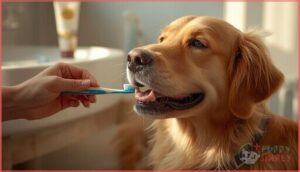
Think of tooth brushing as the best practice for dog dental care—no other home method reduces plaque as effectively. You’ll want to brush daily if possible, or at least three times per week, spending about one minute per session to cover all accessible surfaces. Start slowly with puppies or hesitant dogs, gradually building up brushing duration as they adjust.
| Brushing Frequency | Expected Outcome |
|---|---|
| Daily | Maximum plaque reduction; more than 3x better than chews alone |
| Every other day | Significant improvement over weekly brushing |
| 3 times per week | Maintains healthy gums; prevents inflammation |
| Weekly or less | Plaque and tartar accumulate; gingivitis likely |
Begin by gently handling your dog’s muzzle for 30 seconds, then progress to touching teeth with your finger. Introduce a finger brush around day four, adding dog toothpaste by day six. Gradually increase brushing time by 15 to 30 seconds daily until you reach one minute per side.
This technique improves owner adherence—studies show only 8% of dog owners brush a few times weekly, even though most recognize its importance. Positive reinforcement and patience make brushing dogs’ teeth far less difficult than it seems at first.
Using Dog-Safe Toothpaste and Brushes
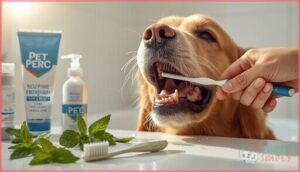
Never reach for human toothpaste when you brush your dog’s teeth—it contains xylitol and fluoride, both dangerous if swallowed. Instead, choose dog toothpaste formulated with safe enzymes like glucose oxidase that break down plaque without rinsing.
For effective dog teeth cleaning and dog dental care, select tools based on your pet’s mouth:
- Finger brushes for sensitive gums
- Three-sided brushes covering multiple surfaces
- Angled grips reaching back molars
- VOHC acceptance confirming plaque reduction
Brushing frequency matters more than perfect technique.
Dental Wipes and Gels for Easy Cleaning

When brushing feels overwhelming, dental wipes and gels offer practical alternatives for at-home dog dental care. Studies show that chlorhexidine gels, applied three times weekly, markedly reduce plaque, while daily wiping with finger cloths decreases gingivitis within 35 days—proof these methods work when you stay consistent.
| Product Type | Key Benefits |
|---|---|
| Dental Wipes | Quick cleaning for dogs resisting brushes; gentle on gums |
| Chlorhexidine Gels | Antimicrobial action; film forms on teeth between applications |
| Microfiber Cloths | Mechanical plaque removal; safe for daily use |
| Enzyme Gels | Break down bacteria; complement mechanical cleaning |
| Antiseptic Wipes | Reduce bacterial load; slow tartar formation |
Choose wipe ingredients carefully—avoid xylitol, alcohol, and harsh detergents that irritate mucous membranes or cause toxicity. For gel application, follow manufacturer instructions on usage frequency, usually ranging from daily to three times weekly depending on formulation strength and your dog’s dental health status.
Watch for safety concerns like vomiting, gingival redness, or hypersensitivity reactions when introducing new products. Use gentle pressure during dog teeth cleaning to prevent tissue trauma, especially with coarser textiles.
Full care combines these tools with professional cleanings. While wipes and gels don’t replace brushing entirely, they provide measurable plaque control and gingivitis reduction when you commit to regular sessions—making them valuable allies in your dental care routine.
Choosing Dental Health Products
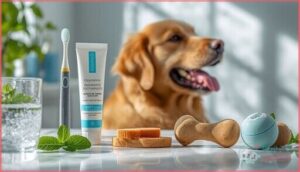
Choosing the right dental products can feel overwhelming with so many options on the market. The good news is that veterinary-approved products exist to support your daily dental care routine.
Let’s look at three effective product categories that can make a real difference in your dog’s oral health.
Dental Treats and Chews With VOHC Approval
When choosing dental treats and chews, look for the VOHC seal—it means the product has met strict efficacy criteria in clinical trials, reducing plaque or tartar by at least 20%. Greenies, WHIMZEES, and C.E.T. VEGGIEDENT are proven options.
Match the chew size to your dog’s weight to prevent choking.
Remember, veterinary recommendations emphasize these treats complement—but don’t replace—daily brushing for best dog dental health.
Dental Toys for Plaque Control
Dental toys offer a powerful mechanical advantage in your dog’s oral care arsenal. During chewing, textured surfaces and honeycomb designs physically disrupt plaque biofilm before it hardens into tartar.
Choose toys wisely for thorough care:
- Match toy design to your dog’s chewing behavior—nubs and ridges work best for vigorous chewers
- Test material safety: if your fingernail can’t dent it, it’s too hard and risks fractures
- Prioritize rubber over rigid nylon for better dog dental health
- Use daily or three times weekly for meaningful plaque control
- Remember: dental toys complement—never replace—brushing
Dental Water Additives and Their Benefits
Think of water additives as insurance between brushings—they won’t replace the toothbrush, but they’re working when you can’t.
VOHC-approved formulas reduce plaque buildup and support tartar removal through daily drinking. Studies show pomegranate-based additives cut plaque by 47% post-cleaning.
Watch for ingredient risks: xylitol safety depends on dosage, and some dogs react poorly to certain formulas.
Professional Dental Care for Dogs
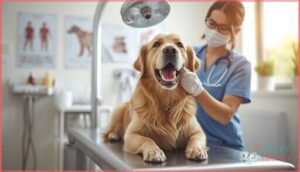
Even with the best home care routine, your dog needs professional dental attention from a veterinarian. These visits go far beyond what you can do at home, catching problems early and keeping your dog’s mouth truly healthy.
Let’s look at why regular vet visits matter, what actually happens during a professional cleaning, and how to know when it’s time to schedule an appointment.
Importance of Regular Veterinary Check-ups
Even with home care, you can’t see beneath your dog’s gumline. That’s why regular veterinary checkups matter—they catch early signs of periodontal disease before it spreads.
Veterinarians recommend dental examinations at least yearly, though small breeds and spaniels benefit from twice-yearly visits. Early detection protects against systemic effects like heart and kidney damage, making preventive care essential for your dog’s long-term health.
What Happens During a Professional Cleaning
Professional cleanings require anesthesia to protect your dog’s airway and allow thorough work below the gumline. Your veterinarian performs a pre-anesthetic evaluation, including bloodwork, then monitors heart rate, blood pressure, and oxygen levels throughout the procedure.
Intraoral radiographs reveal hidden problems like root fractures. Scaling techniques remove tartar above and below the gumline, followed by polishing.
Post-op care instructions guide recovery, with pain medication provided when extractions occur.
Recognizing When Professional Care is Needed
Between scheduled cleanings, watch for visible changes like loose teeth, facial swelling, or bleeding gums—these demand immediate veterinary attention. Bad dog breath, excessive drooling, or pawing at the mouth aren’t quirks to ignore.
Eating habits shift when oral pain sets in: dropping food, favoring one side, or avoiding meals entirely signals trouble.
Systemic signs like lethargy often accompany significant plaque buildup, making timely check-up timing with your veterinarian critical.
Recognizing and Preventing Dental Problems
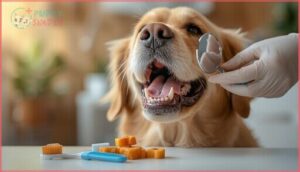
Catching dental problems early can save your dog from pain and you from costly treatments down the road. Some dogs face higher risks than others based on their size, breed, and age, so understanding these factors helps you stay one step ahead.
Let’s look at the warning signs to watch for, the risk factors that matter most, and how to build a solid prevention routine that works.
Early Signs of Dental Issues in Dogs
Catching warning signs early protects your dog from serious dental pain. Bad breath and halitosis serve as your first clues that bacteria are building up.
Watch for gingival changes like red or bleeding gums, tooth discoloration along the gumline, and eating changes such as favoring one side while chewing.
Drooling excessively, facial swelling, loose or broken teeth, and unexplained weight loss all demand immediate veterinary attention.
Risk Factors for Dental Disease
Your dog’s breed, age, and size influence dental disease risk greatly. Small dogs under 10 kg face roughly three times the risk compared to larger breeds, while spaniels and brachycephalic breeds show heightened vulnerability. Age matters too—periodontal disease affects 80% of dogs over three years old.
Feeding wet food instead of dry kibble, neglecting homecare like brushing, and existing systemic diseases like cardiac conditions all compound plaque and tartar buildup.
Creating a Preventative Dental Care Routine
Building a lasting dog dental care routine starts with daily brushing—your best defense against periodontal disease. Aim for every day, though three times weekly maintains oral health in dogs without gingivitis.
Integrate VOHC-approved chews, water additives, and annual professional cleanings.
Most owners never brush their dog’s teeth, but once you establish the habit, adherence becomes second nature.
Frequently Asked Questions (FAQs)
How do you take care of your pet’s dental health?
You protect your pet’s dental health through daily brushing with dog-safe toothpaste, offering VOHC-approved treats, scheduling professional cleanings, and watching for early warning signs like bad breath or visible tartar buildup.
What are the ways to take care of oral health?
Think of oral health as your dog’s shield against silent suffering.
Maintaining dog oral hygiene through brushing techniques, dental diets, VOHC products, professional cleanings, and water additives protects their well-being every day.
How can I Keep my Dog’s dental health?
You maintain dog oral hygiene through daily brushing with pet-safe toothpaste, offering VOHC-approved dental treats, scheduling regular veterinary cleanings, and choosing quality diets—simple preventative measures that protect against periodontal disease affecting most dogs.
How do I take care of my dog’s teeth?
Daily brushing with dog toothpaste and a dog toothbrush prevents plaque buildup effectively. VOHC-approved dental treats, regular vet check-ups, and dental-friendly diets further enhance oral health.
These dog dental care tips maintain healthy gums and fresh breath, ensuring your pet’s overall well-being.
How often should I brush my dogs teeth?
You should brush your dog’s teeth daily for maximum benefit, though three times per week is the minimum to slow plaque buildup and tartar formation between professional cleanings.
What are the signs my dog needs a dental check-up?
Sure, your dog’s breath could smell like roses forever—or you could watch for bad breath, red gums, chewing changes, loose teeth, and facial swelling.
These dental health warning signs mean it’s time for a veterinary visit.
Are there any natural ways to clean my dogs teeth?
Yes, natural chews, raw vegetables like carrots, and specialized kibble texture help mechanically clean dog teeth. Coconut oil and dental additives offer antimicrobial benefits. However, these support—not replace—brushing with a dog toothbrush and dog-safe treats.
How can I get my dog used to having their teeth brushed?
Only about 8% of dog owners brush regularly, yet gradual desensitization works. Start by letting your dog lick pet-safe toothpaste, then gently touch their gums. Use positive reinforcement daily, monitoring stress signals throughout each short session.
Are dental chews and treats safe?
Dental chews can be beneficial for dog dental health, but they carry real risks. Chew hardness matters—antlers and bones often fracture teeth. Obstruction risks exist, especially in small breeds.
Always check for xylitol toxicity, choose VOHC-approved products, and supervise chewing. Consult your veterinarian.
Can diet alone replace regular teeth brushing?
Like relying on a broom when you need a mop, diet and chews can’t replace brushing. While they reduce plaque by roughly 70%, brushing remains the best practice—your veterinary guidelines confirm diet alone won’t prevent periodontal disease.
Conclusion
A single overlooked tooth can unravel your dog’s entire health over time. By applying these canine dental care tips daily—brushing with proper technique, selecting VOHC-approved products, and scheduling professional cleanings—you’re building a defense against preventable disease.
Watch for early warning signs like redness or persistent odor. Your consistency now determines whether your dog experiences comfort or chronic pain years from today. Their quality of life rests in the routines you establish.
- https://pmc.ncbi.nlm.nih.gov/articles/PMC7297050/
- https://pubmed.ncbi.nlm.nih.gov/32955734/
- https://www.rearoadanimalhospital.com/how-often-does-my-dog-need-teeth-cleaning/
- https://journals.sagepub.com/doi/10.1177/08987564231179898
- https://www.rvc.ac.uk/vetcompass/news/new-rvc-research-gets-to-the-root-of-dental-disease-in-dogs