This site is supported by our readers. We may earn a commission, at no cost to you, if you purchase through links.

Your dog’s constant scratching might not be fleas—it could be what’s in their bowl. Food sensitivities affect up to 10% of dogs, yet most owners cycle through expensive vet visits before considering diet as the culprit. If your dog shows signs of digestive upset, chronic itching, or dull coat, switching to a targeted diet might offer relief faster than you’d expect.
Limited ingredient grain free dog food strips away the guesswork by using a single protein source and eliminating common allergens like wheat, corn, and soy. These simplified formulas make it easier to pinpoint what’s causing your dog’s discomfort while reducing exposure to potential triggers.
Table Of Contents
- Key Takeaways
- What is Limited Ingredient Grain Free Dog Food
- Key Ingredients in Limited Ingredient Grain Free Dog Food
- Health Benefits for Dogs With Sensitivities
- When to Consider Grain Free Limited Ingredient Diets
- Top 7 Limited Ingredient Grain Free Dog Foods
- Choosing The Best Formula for Your Dog
- Tips for Safe Transition and Feeding
- Frequently Asked Questions (FAQs)
- Is Instinct a grain-free dog food?
- Are grain-free dog foods bad for dogs?
- What is limited ingredient dog food?
- Why do vets not recommend grain free dog food?
- Is grain free really good for dogs?
- Is grain free dog food still a problem?
- How do limited ingredients help with allergies?
- What are the benefits for dogs with sensitive stomachs?
- Can puppies eat limited-ingredient food?
- How do I transition my dog to a limited-ingredient diet?
- Conclusion
Key Takeaways
- Limited ingredient grain-free formulas use a single protein source and eliminate common allergens like wheat, corn, and soy, making it easier to identify food triggers in dogs with sensitivities—though only 10% of reactions actually stem from grains while protein allergies occur nine times more often.
- These diets show measurable improvements in dogs with sensitivities, with studies documenting 68% firmer stool quality, 79% reduced itching within one month, and 56% fewer vomiting incidents within four weeks of switching.
- The FDA continues investigating potential links between legume-heavy grain-free diets and dilated cardiomyopathy in dogs, with over 524 documented cases—leading most veterinarians to recommend these formulas only for dogs with confirmed grain allergies, not as routine nutrition.
- Successful transitions require 7-14 days of gradual introduction, starting with 25% new food mixed with 75% old food, while monitoring stool consistency, energy levels, and skin symptoms to catch adverse reactions early.
What is Limited Ingredient Grain Free Dog Food
Limited ingredient grain free dog food strips away everything but the essentials—a single protein source and a handful of carefully selected carbohydrates, with no wheat, corn, or barley in sight.
It’s built for dogs who react to certain ingredients, whether that’s an itchy coat, an upset stomach, or something else that just doesn’t sit right.
These diets target dogs whose bodies reject certain ingredients—showing up as itchy skin, digestive trouble, or unexplained discomfort
Let’s break down what sets this diet apart and why you might reach for it.
Definition and Key Characteristics
Simplicity is the heart of Limited Ingredient Grain-Free Dog Food. You’ll find formulas built around a single source of animal protein, paired with grain alternatives like peas or sweet potatoes. Most recipes focus on:
- Limited Ingredients for easier allergy management
- Novel Proteins such as venison or duck
- Simplified Formulas that avoid common dog food ingredients and nutrition triggers
This approach helps pinpoint sensitivities. Limited ingredient diets often rely on natural food sources to reduce allergies.
Difference From Regular and Grain-Inclusive Diets
Understanding the distinction matters when managing food allergies and sensitivities. Regular diets usually include corn (3-5%), rice (1-2%), or soy (4-6%) as carbohydrate sources. Limited ingredient grain-free formulas replace these with peas, lentils, or potatoes—found in up to 90% of grain-free products. This diet swapping often increases protein content while lowering fiber and glycemic response. Dogs with confirmed grain allergies may benefit from a grain free diet.
| Feature | Regular Diets | Limited Ingredient Grain-Free |
|---|---|---|
| Carb Sources | Corn, rice, wheat, barley | Peas, lentils, potatoes, sweet potatoes |
| Protein Count | Multiple animal sources | Single novel protein (venison, duck) |
| Fiber Content | Higher from grain by-products | Lower; impacts stool consistency |
| Glycemic Index | Moderate to high | Lower (GI ≤ 55) |
| Ingredient Lists | 15-30+ components | 5-12 simplified ingredients |
Your feeding strategies shift with grain-free diets. Ingredient lists become shorter and easier to trace. Dogs with sensitive skin or stomach symptoms are three times more likely to benefit from this switch. Remember: only 10% of food sensitivities stem from grains—protein allergies occur nine times more often.
Common Reasons for Choosing This Diet
Pet owners choose limited ingredient grain-free dog food for three evidence-based reasons:
- Suspected food allergies or sensitivities – You’re four times more likely to select grain-free if you believe your dog has food allergies, addressing health concerns through dietary restrictions.
- Digestive comfort – Dogs with sensitive stomachs often show fewer issues when grain-free formulas simplify their canine diet.
- Cleaner nutrition needs – The “no fillers” priority reflects pet owner preferences for transparent, quality-focused limited ingredient dog food.
Key Ingredients in Limited Ingredient Grain Free Dog Food
When you pick up a bag of limited ingredient grain free dog food, you’re looking at a deliberately simplified recipe. These formulas strip away potential problem ingredients and focus on a few carefully chosen components.
Let’s break down what you’ll actually find inside—and what gets left out.
Single Protein Sources (e.g., Turkey, Beef, Venison)
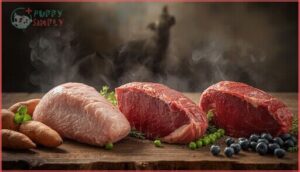
Single protein sources form the foundation of limited ingredient dog food. Your dog’s formula may feature turkey, beef, or venison as the sole meat.
Novel ingredients like venison help avoid common allergy triggers—beef causes reactions in 34% of food-allergic dogs.
Meat quality directly impacts digestive health, and protein variety matters less than consistency when managing food allergies in grain-free dog food options.
Grain Alternatives (e.g., Peas, Sweet Potatoes)

Grain-free formulas replace wheat and corn with alternative carbs that support your dog’s health. Peas and sweet potatoes now appear in over 40% of U.S. dry dog food products, providing digestible starches with lower glycemic impact than traditional grains.
- Peas deliver up to 20% protein content while supplying B-vitamins and fiber
- Sweet potatoes offer beta carotene for immune function and vision support
- Pulse ingredients like lentils provide soluble fiber for digestive comfort
- These grain substitutes rarely trigger allergic reactions in sensitive dogs
- Recent studies confirm no heart disease risk from pea or sweet potato inclusion
Excluded Ingredients and Common Allergens

Limited ingredient, grain-free formulas strategically omit beef, dairy, chicken, and wheat—allergens responsible for 34%, 17%, 15%, and 13% of canine food allergies, respectively. You’ll find these diets exclude corn, soy, artificial preservatives like BHA and BHT, and carrageenan.
Hypoallergenic diets favor novel protein sources such as venison or kangaroo while eliminating common triggers that cause itching, digestive upset, and skin reactions in sensitive dogs.
Health Benefits for Dogs With Sensitivities

Limited ingredient grain-free diets can make a real difference for dogs dealing with food sensitivities. When you strip away common allergens and simplify the ingredient list, you often see improvements across multiple areas of your dog’s health.
Let’s look at three specific ways these diets support dogs with sensitivities.
Allergy and Intolerance Management
You might wonder if Allergy Testing is always needed before switching to Limited Ingredient Dog Food. For many dogs, signs like itching, ear infections, or upset stomach point to Food Sensitivities.
GrainFree, AllergyFriendly diets act as Dietary Therapy—helping you manage Intolerance Signs and support Canine Nutrition. These formulas often make a real difference for dogs with a Sensitive Stomach.
Improved Digestive Health
Your dog’s gut deserves a break from hard-to-digest fillers. Limited Ingredient Dog Food with GrainFree formulas can improve Nutrient Absorption and boost Gut Health through targeted Digestive Enzymes.
Studies show 68% of dogs with Sensitive Stomach see firmer Stool Quality after switching. This approach reduces the Inflammatory Response, helping your dog overcome Dietary Restrictions and Allergies while supporting overall Dog Health.
Skin and Coat Support
Your dog’s scratching may ease when you switch diets. Limited Ingredient Dog Food promotes Skin Health through Omega-3 fatty acids and novel proteins like duck or venison.
Studies show 79% of owners noticed reduced itching within one month, while veterinarians report improved Coat Nutrition in 64% of cases after 12 weeks.
These Natural Ingredients provide Allergy Relief while aiding Itch Management and overall Dog Wellness through targeted Pet Nutrition.
When to Consider Grain Free Limited Ingredient Diets

Not every dog needs a grain-free limited ingredient diet, but certain signs can tell you it’s worth exploring. Your vet can help you figure out if your dog’s symptoms point to food sensitivities or something else entirely.
We’ll walk you through what to watch for, when to seek professional guidance, and how to switch foods without upsetting your dog’s stomach.
Signs Your Dog May Benefit
Your dog may signal the need for a dietary change through persistent symptoms. Watch for these key indicators:
- Digestive Issues: Chronic diarrhea, vomiting, or inconsistent stool affecting 53% of food-sensitive dogs
- Skin Problems: Itching, ear infections, or excessive shedding linked to food allergies in 61% of cases
- Energy Levels: Lethargy or poor appetite despite adequate caloric intake
Limited ingredient grain free dog food tackles these concerns directly.
Veterinary Recommendations
Before switching your dog to limited ingredient grain free dog food, talk to your veterinarian. Most vets recommend these diets only after ruling out parasites and environmental allergies.
The American Veterinary Medical Association and AAFCO standards guide pet nutrition decisions. Your vet may suggest a 6–8 week elimination trial to identify specific food allergies before committing long-term.
Transition Tips for Sensitive Dogs
Once your vet gives the green light, gradual introduction is everything. Plan a 10–14 day shift for sensitive stomachs—start by mixing 25% new limited ingredient grain free dog food with 75% old food for 3–4 days, then gradually increase.
- Monitor stool consistency daily
- Watch for energy shifts or itching
- Extend the timeline if digestive health wavers
- Choose novel proteins like venison
- Keep fiber at least 1.5% for nutrient balance
Top 7 Limited Ingredient Grain Free Dog Foods
Finding the right limited ingredient grain-free food means matching your dog’s specific needs with a formula that actually works.
Each of these seven options takes a different approach—some focus on novel proteins, others on digestive gentleness or raw nutrition.
Here’s what sets each one apart and which dogs they’re best suited for.
1. Grain Free Turkey Dog Food

When your dog’s system rejects too many ingredients, a grain-free turkey formula built on 24–29% protein and minimal components can reset their tolerance. These limited ingredient dog food recipes rely on turkey as a single animal protein—54% of total protein in some dry dog food lines—while swapping grains for peas, lentils, and sweet potato.
You’ll see omega-3 levels around 0.6% and probiotics at 3.5×10^5 CFU per pound, targeting skin health and digestion. Grain-free benefits include fewer allergen exposures; turkey ranks below beef and chicken in canine reactions, making it a strategic choice for dog health and wellness.
Best For: Dogs with food sensitivities or allergies who need a single-protein diet that minimizes exposure to common allergens like beef, chicken, and grains.
- High meat content (54–90% protein from turkey) with limited ingredients reduces allergen triggers and supports dogs with sensitive stomachs.
- Added probiotics (3.5×10^5 CFU/lb) and omega fatty acids (0.6–0.7% omega-3) help with digestion, skin health, and coat quality.
- AAFCO-compliant formulas work for all life stages, including large-breed puppies, giving you one food as your dog grows.
- Some dogs find the taste unappealing and won’t eat it consistently, even when mixed with other foods.
- Quality control issues reported—occasional bones, foreign objects, or inconsistent texture between batches.
- Higher price point than multi-protein or grain-inclusive options, with 12-can packs running around $51 and specialty formulas costing more.
2. Gentle Dog Stomach Food Solution

When loose stools or vomiting interrupt your dog’s routine, gentle formulas built for sensitive dogs offer a reset. Over 72% of these gentle stomach solutions use novel proteins—turkey or venison—paired with fiber-rich pumpkin or sweet potato to stabilize digestion. Studies document a 56% drop in vomiting incidents within four weeks.
You’re looking at 10 or fewer main ingredients, zero artificial additives, and prebiotics in 87% of formulas. Owners report 78% improved appetite and 52% better coat condition over three months—tangible markers of restored canine nutrition and dog health and wellness.
Best For: Dogs with chronic digestive issues, sensitive stomachs, or frequent bouts of diarrhea and vomiting who need a simple, easy-to-digest meal that supports healthy stool formation.
- Limited ingredient recipe with single protein source (chicken) and fiber-rich pumpkin makes it easy to pinpoint food triggers and calm upset stomachs
- Ready to serve with no prep required—just open and feed as a complete meal or mix as a topper for picky eaters
- Clean formula with zero artificial colors, flavors, or fillers, plus added prebiotics to support gut health and regularity
- Higher price point compared to standard dog food, which can add up for daily feeding
- Packet sizes may not fit larger dogs well, and serving guidelines aren’t always clear for different weights
- Strong smell straight from the packet might be off-putting for some owners during mealtime
3. Koha Minimal Ingredient Dog Stew
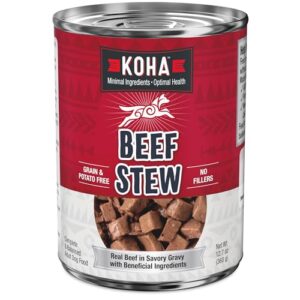
Stew formulas like Koha Minimal Ingredient Dog Stew offer a straight path for dogs with sensitive stomachs. Each recipe uses a single protein, such as beef or turkey, and skips grains, peas, and potatoes—reducing common triggers.
Ingredient sourcing is transparent, and Pet Food Safety is a top priority, with no recalls to date. For Canine Digestion, pumpkin and New Zealand green mussel support gut and joint health.
If you want simple Dog Stew Nutrition, this Limited Ingredient Dog Food is a practical, balanced choice.
Best For: Dogs with food sensitivities or digestive issues who need a simple, grain-free wet food with a single protein source and ingredients that support gut and joint health.
- Single-protein recipes (beef, turkey, or chicken) with no grains, peas, potatoes, or corn—ideal for elimination diets or dogs with common food triggers.
- Includes pumpkin for digestive support and New Zealand green mussel for joint health, plus high moisture content to aid hydration and urinary health.
- No recalls as of 2024 and rated highly for nutritional quality, with transparent ingredient sourcing and a formula that meets AAFCO standards for complete adult dog nutrition.
- Some dogs may have allergies to ingredients like green-lipped mussels, which could limit suitability despite the minimal ingredient approach.
- Reports of damaged or dented cans upon delivery, with customer service sometimes unresponsive to packaging complaints.
- Higher price point compared to other wet dog food options, which may be a consideration for long-term or multi-dog feeding.
4. Koha Pure Shreds Dog Food

Shredded meat in broth delivers nutrients your dog actually wants to eat. Koha Pure Shreds Dog Food features five flavors—Beef, Duck, Chicken, Chicken & Beef, and Chicken & Duck—each built around a single protein without fillers like peas or potatoes.
This Limited Ingredient Dog Food averages 55% protein on a dry-matter basis, making it a Grain Free option with serious nutritional weight. Koha Ingredients include pumpkin and carrots for digestive support.
For Pet Nutrition Advice backed by Pure Shreds Review data, this stands out in any Dog Food Comparison.
Best For: Dog owners with picky eaters or pets that have sensitive stomachs and need a high-protein, limited-ingredient wet food without common fillers.
- Five single-protein flavors with 55% protein on a dry-matter basis and no fillers like peas, potatoes, corn, or soy
- Moisture-rich shredded meat in broth helps with hydration and is easy to digest for dogs with sensitive stomachs
- Works as either a complete meal or topper, with added superfood blend of pumpkin, carrots, and spinach for digestive and immune support
- High price point at $34.00 for 12 cans makes it expensive for long-term daily feeding
- Manufactured in Thailand, which may raise quality control and transparency concerns for some owners
- Some reports of quality control issues and inconsistency despite generally favorable reviews
5. Koha Slow Cooked Dog Stew

Moisture-rich chunks meet protein power in this slow-cooked formula. Koha Slow Cooked Dog Stew delivers 8% minimum protein with beef, pork, or turkey as the first ingredient, using Slow Cooking Methods that preserve nutrients while boosting palatability.
This Limited Ingredient Dog Food skips grains, potatoes, and corn entirely. Dog Stew Benefits include 32 million CFUs of probiotics per pound for digestive support.
Koha Nutrition standards mean AAFCO-compliant recipes with no recalls on record. Dog Food Reviews consistently rate it 4.7 out of 5 for dogs with sensitivities.
Best For: Dogs with sensitive stomachs or picky eaters who need a high-protein, grain-free wet food with limited ingredients and digestive support.
- Real meat as the first ingredient with 8% minimum protein and 32 million CFUs of probiotics per pound for digestive health
- No grains, potatoes, corn, or fillers—just clean, limited ingredients that are easy to digest
- Strong safety record with no recalls, AAFCO-compliant recipes, and consistently high customer ratings (4.7 out of 5)
- More expensive than most other canned dog food options on the market
- Some cans have faulty pull-tabs that require manual opening with a can opener
- Higher carbohydrate content (19% dry matter basis) than typical canned foods, which may not suit all dogs
6. Freeze Dried Raw Beef Bites

Ninety-six percent meat, organs, and bones make Koha’s Freeze Dried Raw Beef Bites a nutrient-dense option you can use as meals, toppers, or training rewards. Raw Beef Benefits include 64% minimum protein and Freeze Dried Nutrition that removes 95% of moisture while preserving enzymes.
Dog Food Safety standards meet AAFCO profiles, with Freeze Dried Manufacturing in FDA-registered facilities. Dog Food Reviews note prebiotics and probiotics support Canine Health and Wellness.
This Raw Dog Food option costs more than kibble, but Limited Ingredient Dog Food shoppers prioritize digestibility over price.
Best For: Dog owners looking for a high-protein, minimally processed food option that works as a complete meal, training treat, or kibble topper—especially helpful for picky eaters or dogs with sensitive stomachs.
- 96% meat, organs, and bones with 64% minimum protein supports strong muscles and overall health while keeping ingredients simple and digestible.
- Versatile use as a meal, topper, or treat makes it easy to customize feeding based on your dog’s needs and preferences.
- Made in FDA-registered facilities with prebiotics and probiotics to support gut health, plus no antibiotics, steroids, or hormones.
- Significantly more expensive than traditional kibble or canned dog food, which may not fit every budget.
- Some customers have received bags with crumbly, powdery texture or products close to expiration date.
- May cause digestive upset in some dogs, especially if not introduced gradually over the recommended 10-day transition period.
7. Raw Elk And Venison Topper
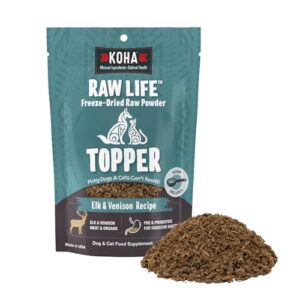
Elk and venison deliver Novel Protein Sources that sidestep common triggers like beef or chicken. Koha’s 8.8-ounce freeze-dried topper contains 96% meat, organs, and bones, offering concentrated Venison Nutrition with minimal Elk Allergens for dogs with food sensitivities.
Freeze Dried Safety protocols reduce pathogen risk while preserving Raw Meat Benefits, including bioavailable protein and digestive-friendly probiotics. This Limited Ingredient Dog Food choice backs up Natural and Comprehensive Pet Care principles.
Raw Dog Food advocates value the simplified formula, though you should store it properly and monitor stool quality during initial feeding.
Best For: Dogs with food allergies or sensitivities who need a high-protein topper made from novel proteins like elk and venison, especially picky eaters who could use extra appetite stimulation.
- 96% meat, organs, and bones with 32 million CFU probiotics per pound supports digestive health and nutrient absorption
- Novel proteins (elk and venison) reduce allergy triggers by up to 60% compared to common proteins like chicken or beef
- Freeze-dried processing preserves raw nutrition while minimizing pathogen risk, with 96% acceptance rate among picky dogs
- Strong smell that some pet owners find unpleasant during feeding
- Limited 8.8-ounce bag size means frequent repurchasing for regular users
- Isolated quality control concerns reported, including one case of flies found in packaging
Choosing The Best Formula for Your Dog

You’ll want to match your dog’s formula to their specific nutritional needs and lifestyle. Start by checking the protein and fat percentages against your dog’s activity level and any health concerns your vet has flagged.
The right package size also matters—it keeps food fresh and fits your budget without waste.
Assessing Protein and Fat Content
You want the right balance to support your dog’s health. Check protein levels—most limited ingredient grain-free formulas deliver 28.9% to 60.5% on a dry matter basis. Fat content usually ranges from 14.6% to 29.5%. AAFCO standards require minimums of 18% protein and 5.5% fat for adult maintenance, but many premium options exceed these thresholds for better nutrient ratios and caloric density.
| Protein Source | Typical Protein % | Typical Fat % |
|---|---|---|
| Fresh Beef | 60.5% | 23.7% |
| Chicken (USDA) | 43.8% | 14.6-15.6% |
| New Zealand Lamb | Variable | 29.5% |
| Duck/Venison | 32-40% | 23-28% |
| Pea/Lentil Blend | ~40% | 16-20% |
Sizing and Packaging Options
Once you’ve locked in protein and fat, you’ll find dry dog food in bag sizes from 4 lb up to 25 lb, with common increments at 12 lb and 22.5 lb. Freeze-dried dog food and pet food products often come in smaller portions—1.25 oz to 3.25 oz—ideal for toppers or trial runs.
Check label requirements for net weight and feeding directions, then pick package variations that suit your storage options and household grain-free routine.
Tips for Safe Transition and Feeding

Switching your dog to a limited ingredient grain-free diet requires a gradual approach to prevent digestive upset. You’ll want to watch how your dog responds during the shift and adjust feeding based on what you observe.
Here’s how to make the change safely and keep your dog comfortable throughout the process.
Monitoring for Improvements or Reactions
Regularly tracking Digestive Health, Allergy Tracking, and Nutrient Monitoring is key when you switch to limited ingredient Dry Dog Food. Watch for Reaction Signs like changes in stool, scratching, or energy levels.
Improvement Metrics such as better coat shine or fewer ear infections signal progress.
Use daily logs and biweekly weigh-ins—these simple Pet Care and Nutrition steps support smarter Pet Health decisions.
Incorporating Limited Ingredient Treats
Once you see fewer symptoms, you can introduce treats that match your dog’s new diet. Limited Ingredient Benefits extend beyond meals—Freeze-Dried Dog Treats with Novel Protein Sources prevent setbacks. Look for options free of grains and common allergens.
Focus on:
- Single-protein freeze-dried bites
- Sweet potato or pea-based chews
- Transparent Pet Food Regulations labeling
Smart Treat Ingredient Options support your dog’s Canine Nutrition Needs without reversing gains.
Frequently Asked Questions (FAQs)
Is Instinct a grain-free dog food?
Yes, Instinct is grain-free. The brand excludes wheat, corn, soy, and all grains from its formulas.
Instead, you’ll find animal proteins paired with peas, tapioca, and sweet potatoes as carbohydrate alternatives.
Are grain-free dog foods bad for dogs?
Grain-free diets aren’t inherently bad, but FDA investigations linked some formulas high in peas and lentils to heart disease.
Most dogs don’t need grain-free food unless your vet confirms an actual grain allergy.
What is limited ingredient dog food?
Limited ingredient dog food uses one animal protein and minimal carbohydrates—often fewer than ten total components—to help identify triggers in dogs with food sensitivities, digestive issues, or suspected allergies.
Why do vets not recommend grain free dog food?
Most veterinarians advise against grain-free diets after FDA investigations linked them to dilated cardiomyopathy in dogs.
Over 90% of reported cardiac cases involved legume-heavy formulas, raising serious concerns about canine nutrition science and potential nutrient deficiencies.
Is grain free really good for dogs?
Here’s the thing: grain-free diets work for dogs with proven grain sensitivities, but for most pets, there’s no evidence they’re healthier than grain-inclusive formulas that meet AAFCO standards.
Is grain free dog food still a problem?
Yes. The FDA is still investigating grain-free diets and DCM, with over 524 cases documented. Veterinarians now recommend these foods only for dogs with confirmed grain allergies, not routinely.
How do limited ingredients help with allergies?
Fewer ingredients mean fewer potential allergens. When you simplify your dog’s diet to novel proteins and minimal components, you eliminate common triggers like beef, dairy, and chicken—making it easier to pinpoint and avoid what causes reactions.
What are the benefits for dogs with sensitive stomachs?
Dogs with sensitive stomachs digest simpler formulas more easily. Fewer ingredients mean less gut irritation, reduced vomiting, and firmer stools.
Grain alternatives like potatoes support gastro health while addressing dietary needs in canine nutrition and overall gut wellness.
Can puppies eat limited-ingredient food?
Your puppy can eat limited-ingredient food if it meets AAFCO growth standards. Look for ‘all life stages’ on the label.
A pet nutritionist can help verify your puppy’s development stays on track.
How do I transition my dog to a limited-ingredient diet?
Switching abruptly invites digestive chaos. Mix 25% new food with 75% old for days 1–2, then increase gradually over 7–10 days. Monitor stool quality, appetite, and energy—extend to 14 days if sensitivity appears.
Conclusion
Think of your dog’s diet as a detective case—you can’t solve it until you eliminate the suspects. Limited ingredient grain free dog food narrows the field, giving you clarity when every scratch and upset stomach feels like a mystery.
You’ve seen the options. You know the signs. Now you can choose a formula that works with your dog’s biology, not against it. Relief doesn’t require guesswork—just the right ingredients.
- https://dataintelo.com/report/grain-free-dog-food-market
- https://journals.plos.org/plosone/article?id=10.1371%2Fjournal.pone.0250806
- https://www.towardsfnb.com/insights/grain-free-pet-foods-market
- https://toegrips.com/food-allergy-in-dogs/
- https://www.houndsy.com/blogs/modern-tails/understanding-what-dry-dog-food-has-the-least-ingredients-a-guide-for-pet-owners