This site is supported by our readers. We may earn a commission, at no cost to you, if you purchase through links.
Your dog just rolled in something unidentifiable at the park, and now your living room smells like a mix of wet earth and regret. Before you speed-dial the groomer and drain your wallet, here’s the truth: dog washing and bathing at home isn’t just possible—it’s a skill that saves money, strengthens your bond, and gives you complete control over what touches your dog’s skin.
Most pet owners assume grooming requires professional expertise, but with the right supplies and techniques, your bathroom can become a perfectly functional dog spa. The secret isn’t fancy equipment or expensive products; it’s understanding your dog’s coat type, using proper water temperature, and following a logical sequence that keeps both of you calm and dry (well, mostly).
Table Of Contents
- Key Takeaways
- Essential Supplies for Dog Bathing at Home
- Preparing Your Dog and Bathing Area
- Step-by-Step Guide to Washing Your Dog
- Drying and Post-Bath Care
- Dog Bathing Safety and Health Tips
- Frequently Asked Questions (FAQs)
- What is the best way to wash your dog at home?
- How often should a house dog be bathed?
- How to professionally bathe a dog?
- What not to do when showering a dog?
- What if my dog hates bath time?
- How do I dry my dogs ears?
- What shampoo should I use?
- How often should I bathe my dog?
- What is a good bath-time treat?
- How does bathing affect my dogs natural oils?
- Conclusion
Key Takeaways
- Dog bathing at home saves you money and strengthens your bond with your pet, but success depends on matching supplies to your dog’s specific coat type and using proper techniques like correct water temperature (98–102°F) and thorough rinsing.
- Your dog’s bathing frequency should align with their coat type and lifestyle—most dogs need a bath every 4–8 weeks, but overwashing strips natural oils and damages the skin barrier that protects against infections.
- Safety essentials like non-slip mats (which cut falls by 70%) and ear protection with cotton balls (reducing infection risk by 20%) prevent the most common bath-time injuries and health problems.
- Positive reinforcement with high-value treats reduces bath stress in 79% of dogs, transforming what could be a struggle into a cooperative routine that builds trust over time.
Essential Supplies for Dog Bathing at Home
Before you turn on the water, you need the right tools to make bath time safe and stress-free for both of you. Having everything within arm’s reach prevents those awkward moments when your soaking wet dog decides to make a run for it.
Let’s walk through the essential supplies you’ll want to gather before you begin.
Choosing Pet-Safe Shampoos and Conditioners
Your dog’s skin is more delicate than yours, so choosing the right shampoo matters. Look for products with natural alternatives like oatmeal, coconut oil, or aloe vera. Avoid toxic ingredients such as sulfates, parabens, and artificial fragrances—up to 18% of dogs experience allergic reactions from these. Check label accuracy for pH balance around 6.2-7.4, and follow vet recommendations:
- Choose shampoos with 95% natural ingredients
- Avoid ammonium lauryl sulfate and synthetic dyes
- Consider shampoo dilution for dogs with sensitive skin
To make an informed decision, research non-toxic ingredients in dog shampoos.
Selecting The Right Towels and Brushes
Once you’ve nailed down the right shampoo, you’ll need towels with strong absorbency and brushes that match your pup’s coat. Microfiber towels absorb up to 7 times their weight, making drying your pup faster and easier. For brushing dog fur, match the tool to their coat—slicker brushes work wonders on long hair, while rubber brushes suit short coats. Knowing the right tool helps, as grooming gloves deshed short-haired dogs effectively.
Here’s a quick breakdown:
| Coat Type | Best Brush | Best Towel | Why It Works | Dog Grooming Tips |
|---|---|---|---|---|
| Short-haired | Bristle brush or grooming glove | Microfiber | Gentle on skin sensitivity, quick-drying | Use circular motions when brushing |
| Long-haired | Pin brush, slicker brush | Shammy (10x absorbency) | Detangles without breakage | Brush before and after bathing |
| Double-coated | Undercoat rake, pin brush | High-density microfiber (300+ GSM) | Handles dense undercoat effectively | Work in sections during drying |
| Curly-haired | Slicker brush, metal comb | Dual-texture towel | Prevents mats, lifts loose hair | Pat dry—don’t rub vigorously |
| Wire-haired | Slicker brush, undercoat rake | Cotton (hypoallergenic) | Reduces irritation, natural fibers | Consider stripping tools occasionally |
Choose towels with hygiene properties like antimicrobial treatments to keep bacteria at bay between washes.
Non-Slip Mats and Bathing Safety Gear
Your towels and brushes are ready—now let’s talk about keeping everyone safe during the bath. A nonslip mat is nonnegotiable for safe bathing. These rubber-based mats boost traction by 75%, preventing falls that can injure your dog.
Senior dog needs include extra stability, as they’re especially prone to slips. Inspect your mat material safety regularly and replace it every 12–18 months to maintain effectiveness and support injury prevention tips.
Ear, Face, and Eye Protection Supplies
Protecting sensitive areas prevents most bath-time injuries. Cotton ball safety means placing large cotton balls just at the ear opening—never push them deep into the ear canal. Remove them immediately after bathing to prevent trapped moisture.
- Place cotton balls at the ear opening before wetting your dog
- Use a saline eye rinse if shampoo contacts eyes—flush for 10–15 minutes
- Choose tearless shampoo types or face-specific cleanser for the muzzle
- Apply washcloth techniques: dampen cloth, wipe gently around eyes and nose
- Dry the ear canal area with cotton after rinsing to prevent infections
Floppy-eared breeds need extra ear protection since their ear canals trap water easily. Dog ear cleaning after baths reduces infection risk by 60%. For tear stains, use gentle, targeted products designed for delicate facial skin.
Preparing Your Dog and Bathing Area
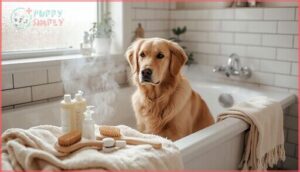
Before you turn on the water, a little prep work goes a long way. Taking time to brush your dog, set up your space, and gather what you need makes the whole process smoother for both of you.
Here’s how to get ready so bath time feels less like a wrestling match and more like a routine your dog can handle.
Brushing and Detangling Your Dog’s Coat
Before you even turn on the tap, brushing your dog’s coat is essential. It removes loose fur and debris, preventing up to 80% of shedding issues. Long-haired breeds need daily sessions, while short-coated dogs do well with once-a-week brushing. Use detangling sprays on stubborn mats and focus on friction-prone spots like behind the ears.
| Coat Type | Brushing Frequency |
|---|---|
| Long-haired | Daily |
| Double-coated | 2-3 times per week |
| Curly-coated | Every 2-3 days |
| Short-haired | Once per week |
| Outdoor-active dogs | Minimum once weekly |
Setting Up a Calm, Safe Environment
Creating a safe environment starts with the right setup. Place a rubber bath mat or non-slip surfaces in your tub to prevent slipping—this alone cuts falls by over 70%. Keep water temperature between 98–102°F for comfort.
Organize your bath space with supplies within reach, and bathe during quieter times to reduce bath stress. Watch for behavioral indicators like relaxed tails and steady breathing—they signal your dog’s comfort in this stress-free environment.
Gathering Treats and Rewards
Treats are your secret weapon for transforming bath time from a wrestling match into a cooperative experience. Research shows that 82% of dog owners use treats during home bathing, and for good reason—positive reinforcement reduces stress behaviors in 79% of dogs.
Treats transform dog bath time from a struggle into cooperation, with positive reinforcement reducing stress in 79% of dogs
- High-value treats like soft, flavorful bites work best for stressful activities
- Lick mats with peanut butter keep anxious dogs distracted throughout the bath
- Small, frequent rewards at each bathing stage maintain calm dog behavior
- Reward timing matters—deliver treats immediately after cooperative actions
- Dietary risks exist with overuse, so account for treat calories in daily feeding
Step-by-Step Guide to Washing Your Dog
Now that you’ve got your supplies ready and your dog is calm, it’s time to walk through the actual washing process.
Getting each step right makes bath time easier and keeps your dog comfortable from start to finish. Here’s how to wash your dog properly, from wetting the coat to that final rinse.
Wetting The Coat Thoroughly
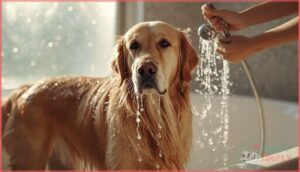
You’ll want to start by wetting your dog’s coat from the neck down using warm water between 98.6°F and 102.2°F—this ideal water temperature matches their body temperature and keeps them comfortable.
Use consistent water pressure to achieve full coat saturation down to the skin, which is essential for shampoo efficacy and skin health.
Proper wetting during the bathing process ensures grooming safety and effective cleaning throughout.
Proper Shampoo Application and Lathering
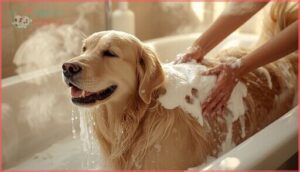
Think of lathering like painting—every stroke matters for complete coverage. Start by diluting your dog-safe shampoo (1:4 ratio works well) to guarantee even distribution. Massage it into your dog’s coat for 3–5 minutes, working from neck to tail in a systematic pattern.
- pH balance matters: Dog shampoo’s 7.0–7.5 pH protects skin health
- Lather duration counts: Proper shampooing time removes 34% more dirt
- Common errors hurt: Over-application causes irritation in 21% of cases
- Even distribution wins: Section the coat into zones for thorough coverage
Cleaning The Face and Sensitive Areas Safely
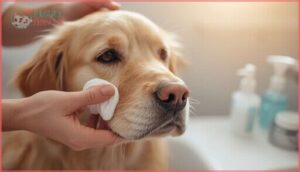
Your dog’s face is like delicate glass—handle it with care. Use pet-safe wipes or damp cotton balls moistened with mild cleanser to gently clean around the eyes, nose, and mouth. Never spray water directly near sensitive areas; it raises injury risk by 18%.
For ear protection, place cotton balls at the opening before bathing. Gentle techniques prevent irritation and keep those sensitive spots healthy.
Rinsing Techniques for a Clean Finish
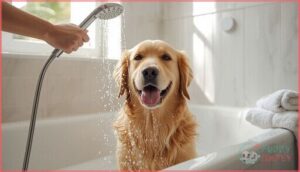
Once sensitive areas are safe, rinsing becomes your key step. Use lukewarm water between 98.6°F and 102.2°F for comfort and proper dog bathing techniques. Rinse each section for 2–3 minutes using a handheld sprayer for deeper allergen removal—achieving an 84% reduction in dander. Continue rinsing until the water runs clear, then add one more minute. Thorough rinsing with dog-safe shampoos prevents irritation and reduces residue by half.
- Check water temperature first—lukewarm prevents thermal stress
- Rinse twice for complete shampoo dilution for dogs
- Use handheld sprayers for better undercoat penetration during dog bath
- Continue one extra minute after water clears
- Focus on frequency considerations—twice weekly maintains allergen control
Drying and Post-Bath Care
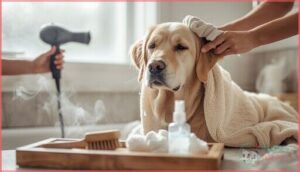
Getting your dog dry and comfortable after a bath is just as important as the washing itself. The way you dry your dog, protect their ears, and care for their coat afterward can make the difference between a smooth routine and a frustrating mess.
Here’s what you need to know to finish bath time the right way.
Towel Drying Vs. Blow Drying Methods
After bath time, you have two main options: towel drying or blow drying. Towel drying is cost-effective—under $40 yearly—and safe, taking about 15–25 minutes per session.
Blow dryers designed for pets cut drying time in half and reduce matting by 40%, but they cost $60–$200 upfront.
Many owners start with towels, then upgrade to dryers for better coat health and convenience.
Protecting Ears and Preventing Matting
Once your dog is mostly dry, turn your attention to two trouble spots: ears and mats. Cotton balls placed in the ear canal before bathing help block water, cutting infection risk by up to 20%. Here’s how to protect your pup:
- Gently dry around the ear canal with a soft cloth
- Use a dog-safe ear cleaner to remove trapped moisture
- Check for tangles while the coat is slightly damp—brushing now prevents dealing with matted dog hair later
Proper ear care and mat prevention keep bath time safe and stress-free.
Post-Bath Brushing and Coat Care
After drying your pup’s ears, grab your dog brush and get to work. Brushing dogs fur while it’s slightly damp prevents tangles and keeps shedding control in check—cutting loose hair by up to 40%. Use slicker brushes for dead hair removal or pin brushes for longer coats.
Regular coat care boosts dog coat care shine and prevents mats, yet only 33% of owners stick with it consistently.
Cleaning Up After Bath Time
Once you’re done drying your dog after a bath, tackle the mess head-on. Grab paper towels or a Swiffer for hair removal—loose fur sticks to tubs when wet.
Mop up water spills fast to avoid slips, since 31% of homes report falls annually.
Use pet-safe disinfectants for tool sanitization and odor control. Cleanup difficulty drops when you stay ahead of it.
Dog Bathing Safety and Health Tips
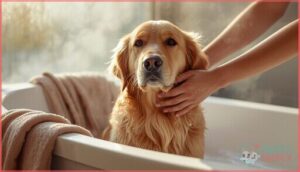
Bathing your dog isn’t just about keeping them clean—it’s about protecting their health and comfort too. Getting the frequency right, avoiding skin problems, and knowing when to call in a pro can make all the difference.
Let’s walk through the key safety and health tips that’ll help you keep your dog happy and healthy at bath time.
Bathing Frequency by Coat Type and Lifestyle
Your dog’s coat type and lifestyle factors shape how often you should bathe them. Short-haired breeds generally need baths every four to six weeks, while long-haired dogs with proper brushing can follow similar schedules. Hairless and oily-coated dog breeds require weekly washing for healthy dog skin.
Active dogs need more frequent dog grooming than indoor companions. Overwashing risks damaging dog coat care, so follow veterinary advice specifically designed for your dog’s breed specifics and daily routine.
Preventing Skin Irritation and Infections
Protecting your dog’s skin barrier starts with smart grooming habits. Contaminated or improperly stored products can harbor harmful bacteria like Pseudomonas aeruginosa, leading to serious infections. Keep your dog safe by following these essential practices:
- Use only dog-safe shampoos, never diluted with tap water
- Rinse thoroughly to remove all residue and prevent irritation
- Dry ears completely with cotton balls for proper ear protection
- Avoid overwashing to maintain natural coat oils and prevent bacterial resistance
Moisture retention creates perfect conditions for infection, so proper drying protects dog skin and promotes long-term dog coat health.
Addressing Allergies and Sensitive Skin
If your dog reacts to certain products, switching to hypoallergenic shampoos can make all the difference. These dog-safe shampoos skip harsh ingredients that trigger skin irritation, supporting dog coat health naturally.
For allergen reduction, washing twice weekly with lukewarm water helps sensitive skin stay calm. Always check ingredient awareness labels—avoid dyes and strong fragrances.
Adjust bathing frequency based on your dog’s needs, and never use shampoo dilution for dogs with compromised skin barriers.
When to Seek Professional Grooming Help
Some tasks are better left to the experts. Severe matting, overgrown nails, and persistent odors often signal the need for professional dog grooming.
A skilled groomer can spot skin disorders early—detecting infections in nearly 20% of appointments—and handle behavioral challenges safely. Breed maintenance for high-maintenance coats also requires expertise.
If you notice any concerns, seek veterinary care or a trusted groomer promptly.
Frequently Asked Questions (FAQs)
What is the best way to wash your dog at home?
Like assembling ingredients before cooking a meal, success starts with gathering dog bathing supplies: non-slip mats, pet-safe dog shampoo, towels, brushes, and ear protection.
Rinse thoroughly using warm water temperature, then apply careful drying techniques.
How often should a house dog be bathed?
Most veterinarians recommend bathing dogs every 2 to 3 months. Adjust frequency based on breed-specific needs, activity level, skin conditions, and allergen control. Veterinarian consultation helps customize your dog’s hygiene routine.
How to professionally bathe a dog?
Picture a spa-like setup: lukewarm water, breed-specific shampoo, and non-slip mats.
Professional grooming techniques involve thorough brushing, even lathering, complete rinsing, and gentle drying—salon setup meets proper dog bathing techniques for perfect results.
What not to do when showering a dog?
Avoid harsh cleansers and human shampoos, which disrupt your dog’s skin pH.
Prevent water temperature extremes, protect ears and eyes, handle gently, and don’t over-bathe—these mistakes compromise safety and skin health.
What if my dog hates bath time?
Does your dog bolt when it’s bath time? Bath aversion often stems from sensory support needs and past stress.
Use positive reinforcement, desensitization methods, treats like peanut butter, and dog training to create a stress-free environment—or seek professional help.
How do I dry my dogs ears?
After bathing, gently pat your dog’s outer ear flap with a soft towel, then use cotton balls to absorb moisture near the ear canal opening—never insert them deeply to prevent infection.
What shampoo should I use?
The best dog shampoo matches your pup’s skin pH balance—between 8 and
Choose sulfate-free options with herbal ingredients for sensitive skin, or medicated formulas for specific conditions.
Always dilute before applying.
How often should I bathe my dog?
Most dogs do well with a bath every 4 to 8 weeks, though coat type, activity level, and skin condition change that timeline.
Your vet can help tailor bathing frequency to your dog’s breed and health needs.
What is a good bath-time treat?
High-value treats like boiled chicken, freeze-dried bites, or peanut butter work best. Calming treats with natural ingredients reduce stress.
Use treat delivery methods like licky mats for nutritional value and owner preferences focused on treat safety.
How does bathing affect my dogs natural oils?
Ironically, the very ritual meant to clean your dog can actually rob their coat of its protective shield.
Frequent bathing strips essential oils, causing dryness, irritation, and weakening the skin barrier that guards against infections.
Conclusion
You might worry that your first attempt at dog washing and bathing at home won’t go smoothly, but even messy starts lead to confident routines. Each bath you give builds your skill and your dog’s trust.
You’re not aiming for flawlessness; you’re creating a cleaner, healthier pet while saving money and stress. Grab your supplies, take a deep breath, and remember: every professional groomer started exactly where you’re now.